
Contextual understanding Grammar Worksheets for Ages 3-7
6 filtered results
Difficulty Level
Grade
Age
-
From - To
Subject
Activity
Standards
Explore our engaging Contextual Understanding Grammar Worksheets designed specifically for children aged 3-7. These worksheets foster essential language skills by helping young learners grasp grammar in context through fun and relatable activities. By connecting words and sentences to everyday scenarios, children enhance their comprehension and writing abilities. Perfect for home or classroom use, our resources combine play with learning, making grammar enjoyable for early learners. With a variety of fun exercises tailored to different learning styles, these worksheets are an excellent way to boost confidence and creativity in language mastery. Start your child’s grammar journey today with our vibrant, easy-to-follow worksheets!
Favorites
With answer key
Interactive
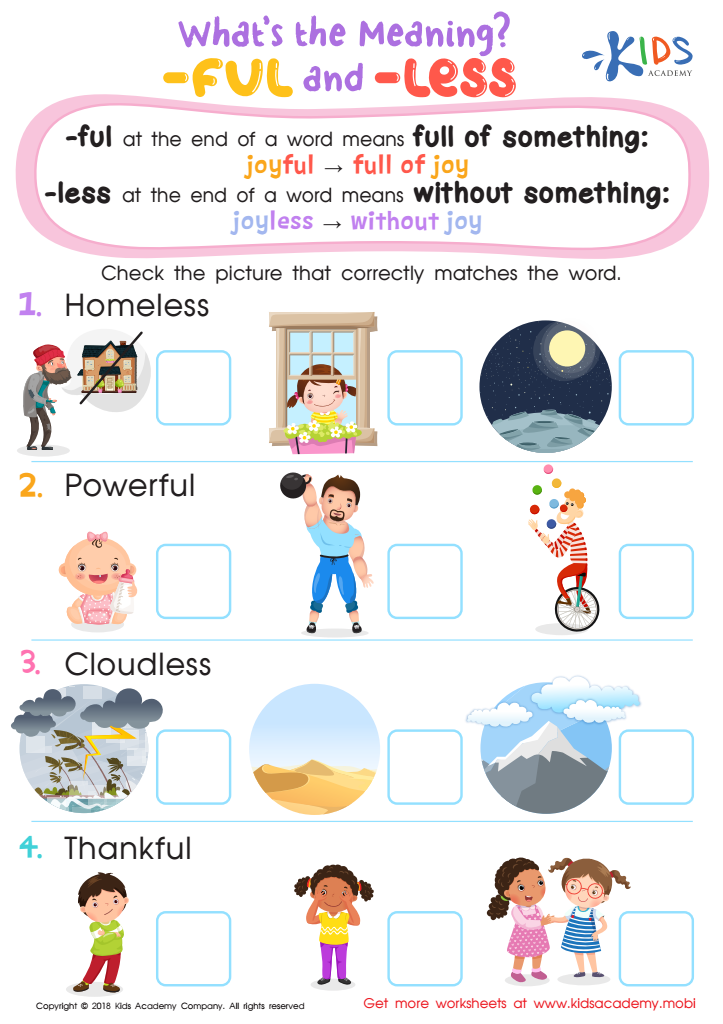
What's the Meaning? Worksheet
Look with your youngster through this colorful worksheet and match the pictures to the words at the top. These words have different meanings due to either a prefix or suffix being added, such as "ful" or "less".
 Assign to My Students
What's the Meaning? Worksheet
Worksheet
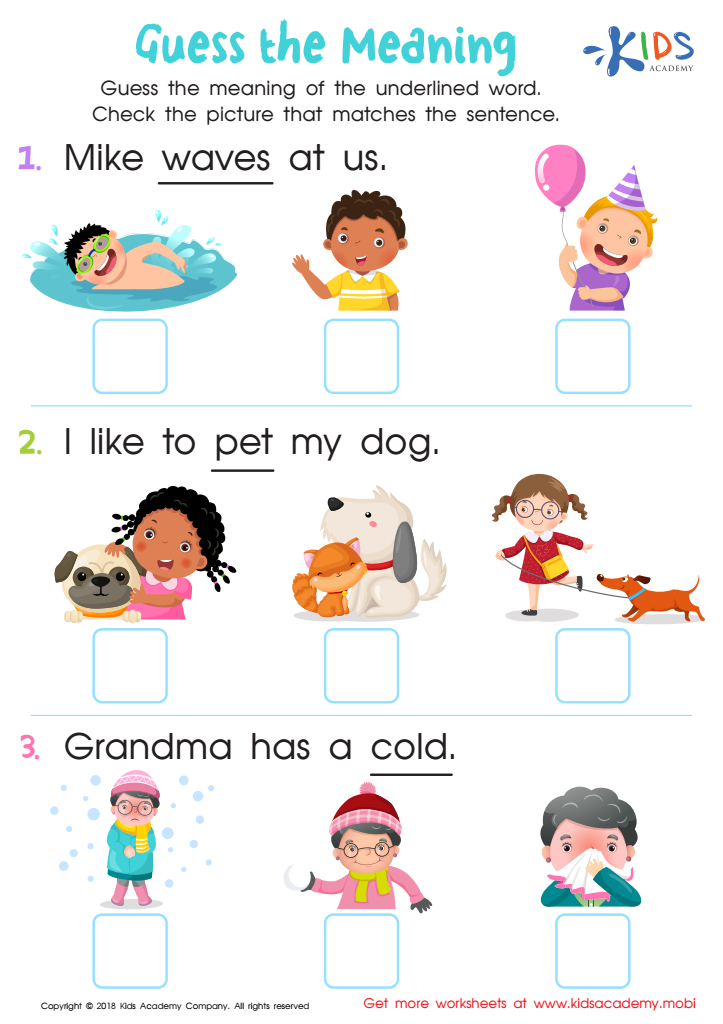
Guess the Meaning Worksheet
Help your child learn the meanings of words in different contexts by using this colourful, free worksheet. What is the meaning of the underlined words in each sentence? Look at the images and pick the one that accurately describes the word's context.
Guess the Meaning Worksheet
Worksheet
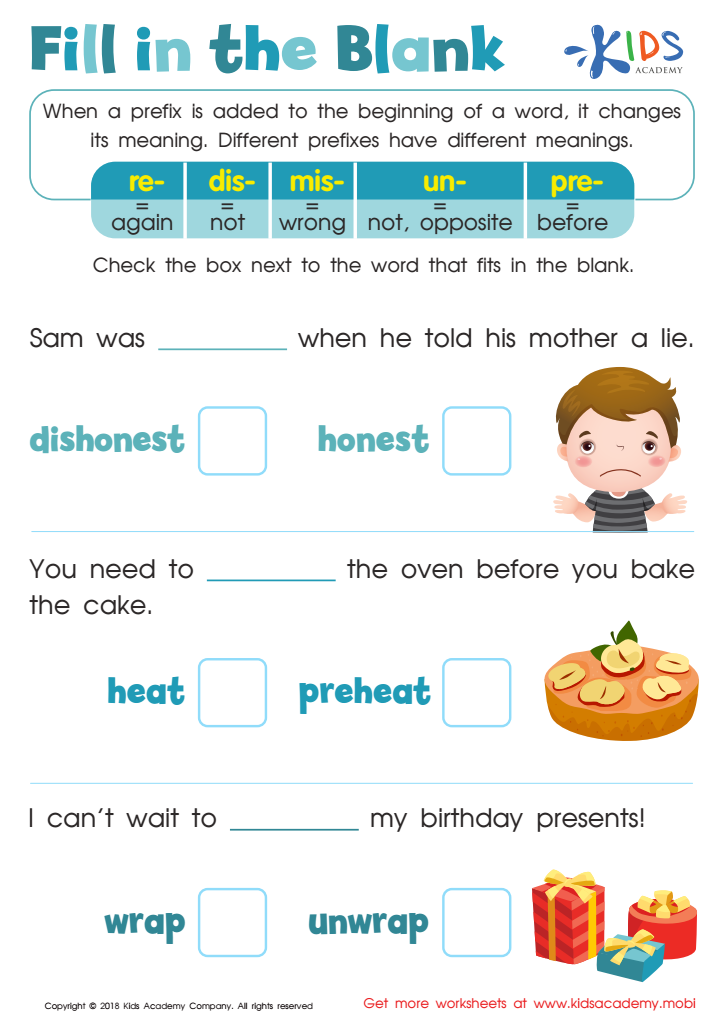
Reading: Fill in the Blank Worksheet
Students can practice understanding the meaning of common prefixes with this worksheet. They read sentences and pick the correct word with the appropriate prefix to complete it. Downloadable and a great addition to reading and vocabulary resources, this helps improve comprehension with mastery of the skill!
Reading: Fill in the Blank Worksheet
Worksheet
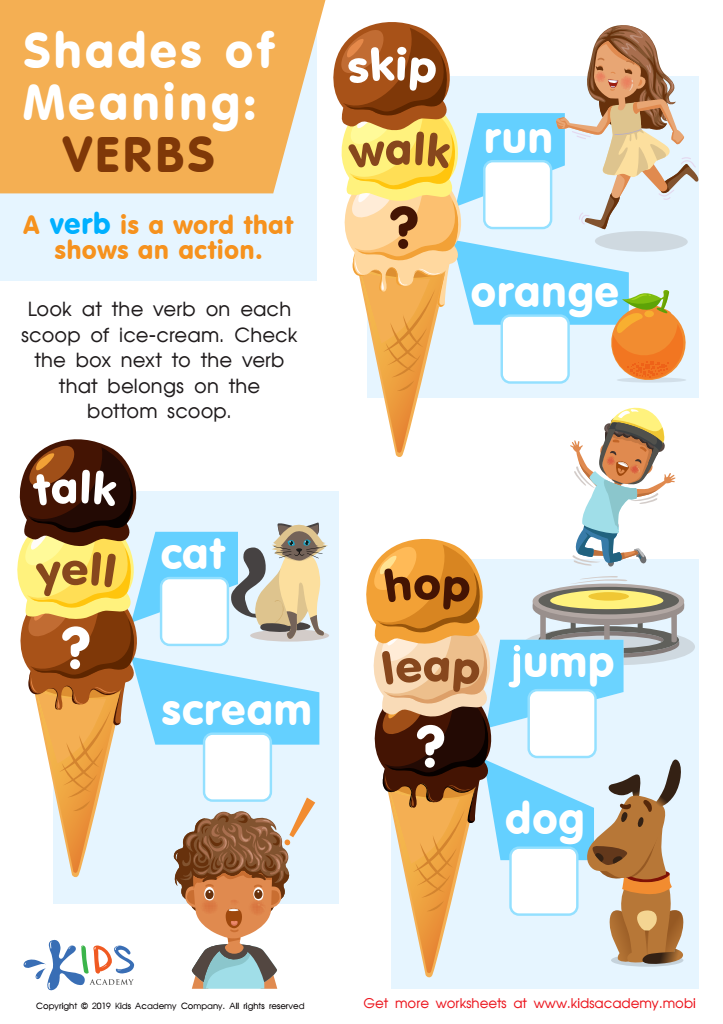
Shades of Meaning: Verbs Worksheet
Verbs are words that show action. Introduce kindergartners to verbs by having them check the box next to the verb that belongs on the bottom scoop in a worksheet. This is a great way to teach them this important part of speech and help them learn to write proper sentences and speak correctly.
Shades of Meaning: Verbs Worksheet
Worksheet
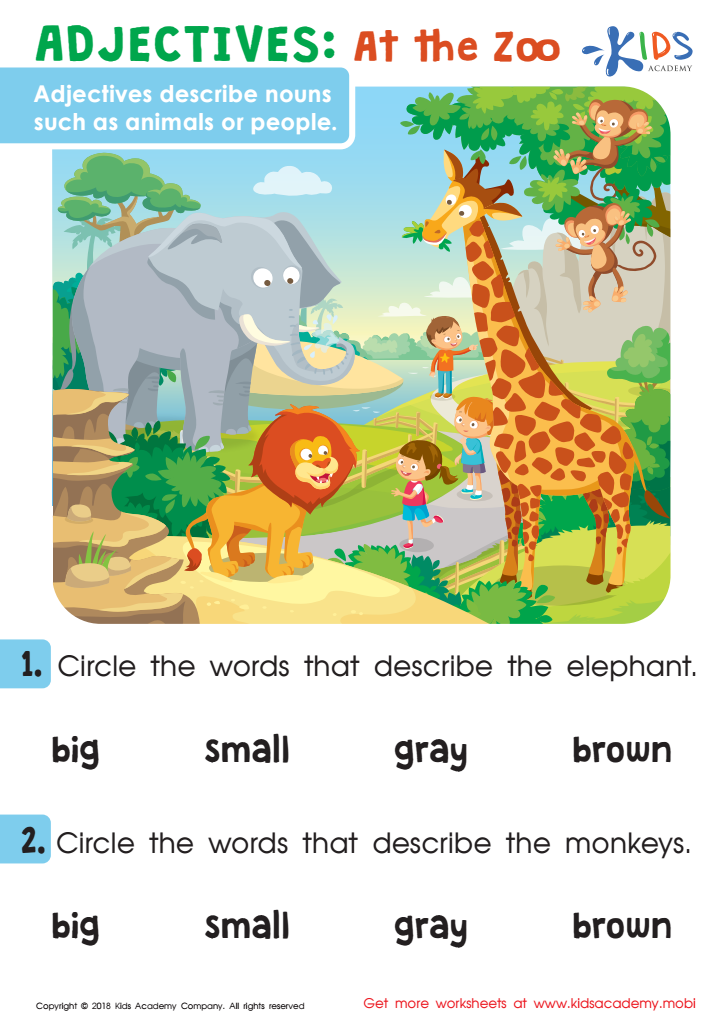
Adjectives: At The Zoo Worksheet
Take your kids to the zoo and ask them about their favorite activities and animals. This worksheet is a great way for kids to learn about adjectives. Explain that adjectives describe nouns like people or animals (e.g. big, tall, dark). Look at the printout with your kids and help them circle words that describe the animals in the picture.
Adjectives: At The Zoo Worksheet
Worksheet
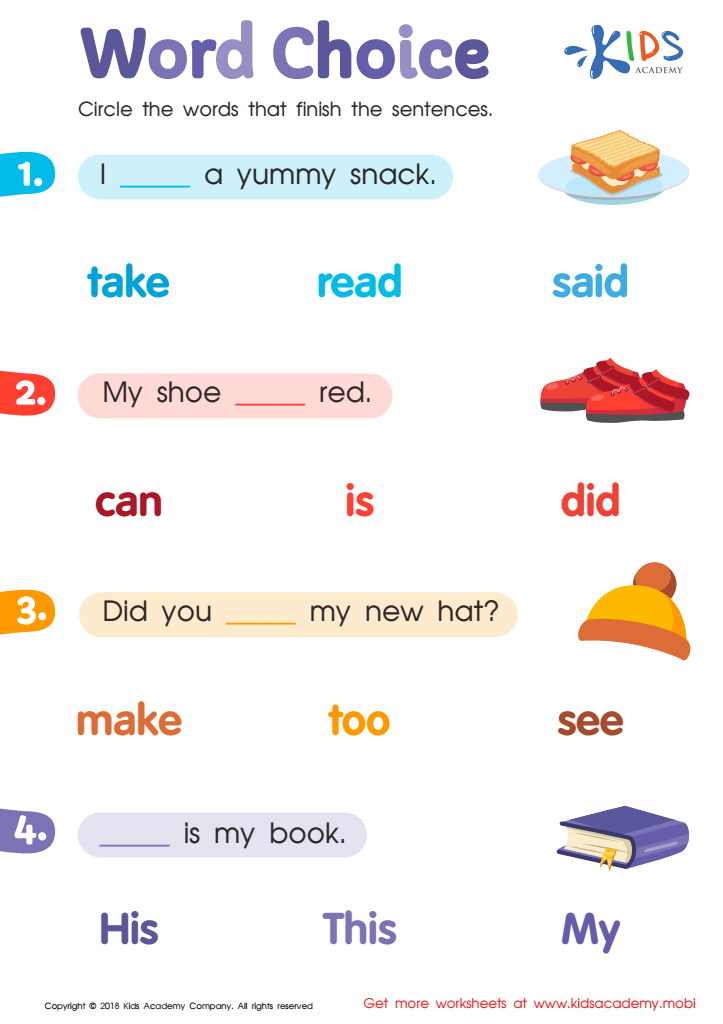
Word Choice Worksheet
This worksheet can help your children become better readers. By now, you should have an idea of their reading level. Read the incomplete sentences aloud and point to the missing piece. Have your students pick the correct word they think best fits the sentence out of the options given.
Word Choice Worksheet
Worksheet
Join Kids Academy for Free
Who is primarily going to use this learning content?





Contextual understanding of grammar is crucial for children aged 3-7, as it lays the foundation for effective communication and cognitive development. For parents and teachers, caring about this aspect means recognizing that children learn language through meaningful interactions with their surroundings. Instead of merely memorizing rules, contextual grammar helps children grasp how language functions in various situations, enabling them to express their thoughts, emotions, and needs more clearly.
At this young age, children are naturally curious and eager to communicate. By incorporating context-based grammar lessons into their daily activities—such as storytelling, conversations, or play—educators can foster a more engaging learning environment. This approach enhances their vocabulary, promotes critical thinking, and builds confidence in language use.
Moreover, understanding grammar contextually aids in combating language difficulties, helping children who may struggle with communication. As parents and teachers highlight real-world applications of grammar, children develop stronger language skills that are essential for academic success in later years. Ultimately, prioritizing contextual understanding in grammar not only enriches children's language abilities but also nurtures their overall social-emotional growth and cognitive skills, equipping them for future challenges in schooling and interpersonal interactions.








