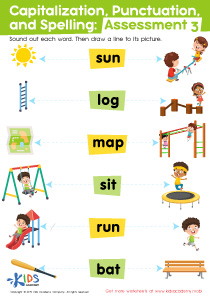
English grammar practice Grammar Worksheets for Ages 3-7
3 filtered results
-
From - To
Enhance young learners' English grammar skills with our engaging Grammar Worksheets for Ages 3-7. Each worksheet is designed to make learning fun and effective, featuring colorful illustrations and age-appropriate activities. Focusing on fundamental grammar concepts such as sentence structure, parts of speech, and punctuation, our resources help children build a strong foundation. Suitable for both classroom and home use, these printable sheets support teachers and parents in providing quality education. Empower your child to excel in English with these delightful and educational worksheets from Kids Academy, tailored to inspire early mastery in grammar skills.
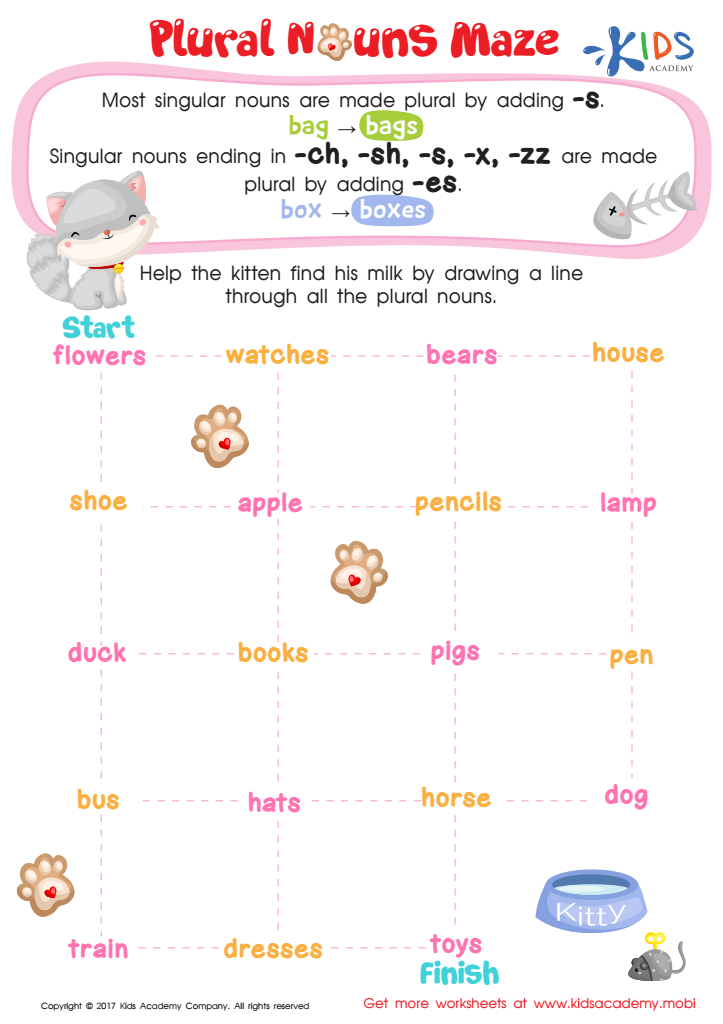
Plural Nouns Maze Worksheet
 Assign to My Students
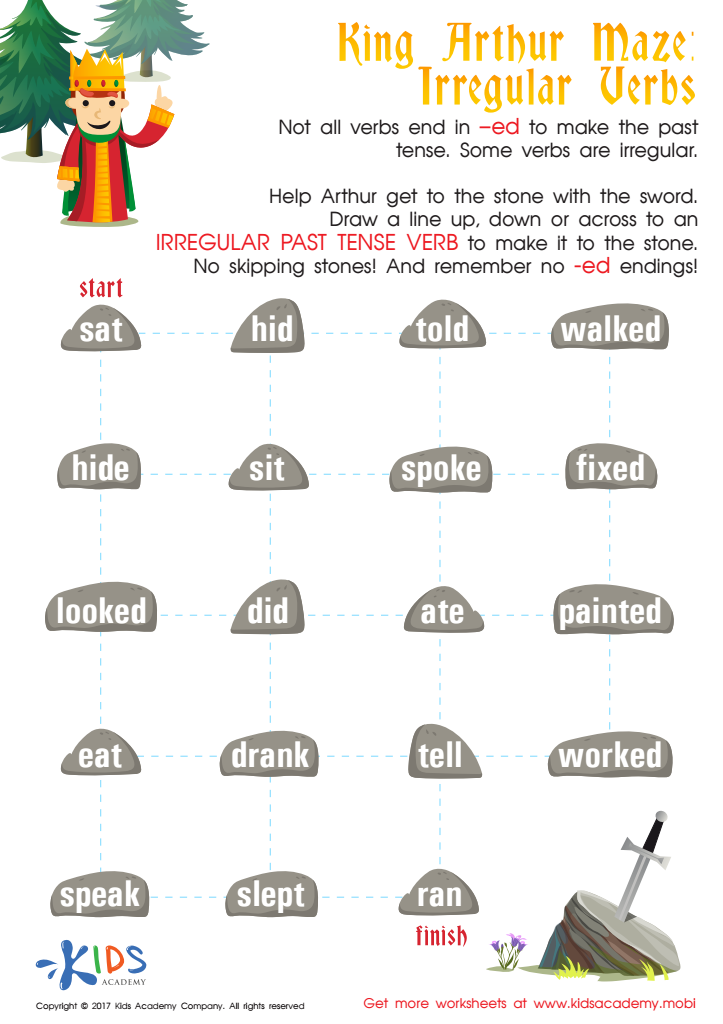
Irregular Verbs: Stones Worksheet
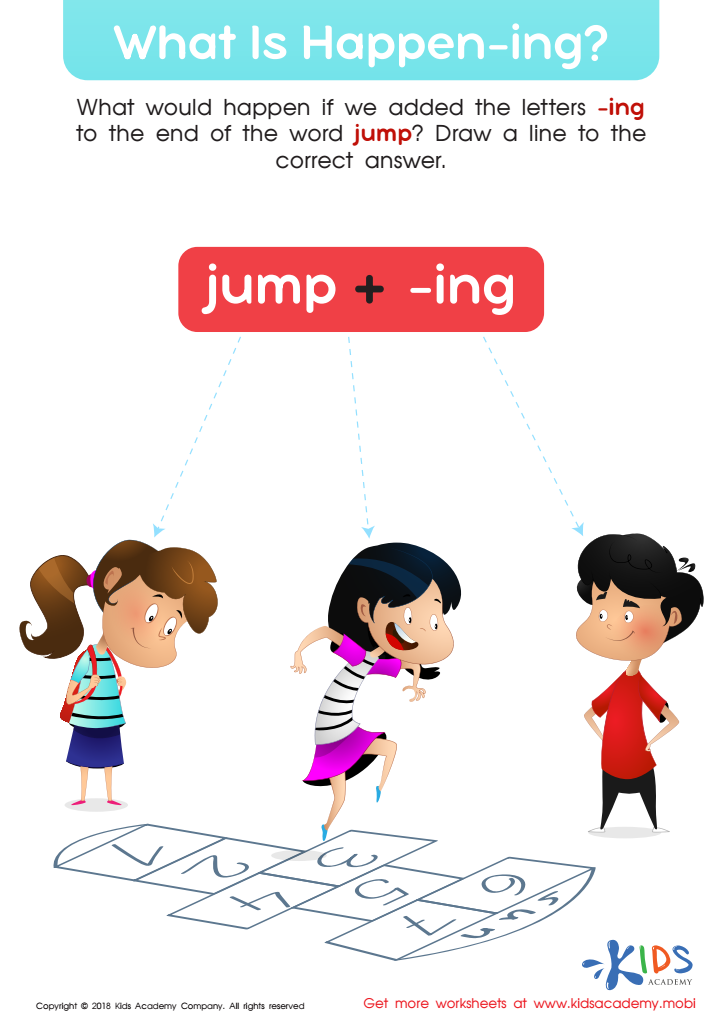
What Is Happen-Ing? Worksheet






.jpg)

Understanding and practicing English grammar at an early age is crucial for children's overall academic and cognitive development. For parents and teachers, emphasizing grammar for ages 3-7 can significantly benefit youngsters in several ways.
First, grammar acts as the foundation of effective communication. When children grasp grammatical concepts, they learn to construct coherent sentences, enhancing their listening, speaking, reading, and writing skills. This foundational skill helps in clear and confident communication, which is vital for their social interactions and academic success.
Second, early grammar practice supports cognitive development. By learning sentence structures, children boost their critical thinking skills and learn to categorize information logically. These cognitive abilities foster better problem-solving skills and understanding of complex concepts later in life.
Moreover, mastery of grammar aids in the development of literacy skills. Proficiency in grammar helps children interpret texts more accurately and express their ideas coherently, boosting their reading comprehension and writing capabilities.
Finally, introducing grammar at a young age instills lifelong learning habits. Early exposure encourages children to be more curious about language and nurtures a love of learning that extends beyond grammar to other subjects.
For these compelling reasons, parents and teachers should prioritize grammar practice for young children, thereby laying a strong educational groundwork that will support their future success.