Spatial awareness Grammar Worksheets for Ages 3-7
3 filtered results
-
From - To
Enhance your child's understanding of spatial awareness with our engaging Grammar Worksheets designed specifically for ages 3-7. These worksheets focus on key grammar concepts while incorporating spatial awareness activities that help children learn directions and positional words. Fun illustrations and interactive exercises promote active learning and facilitate comprehension, making it a joy for young learners to explore language in a contextual setting. Ideal for both classroom and home use, our worksheets support the foundational skills necessary for effective communication. Download our Spatial Awareness Grammar Worksheets today and empower your child with essential language skills in an exciting and playful manner!
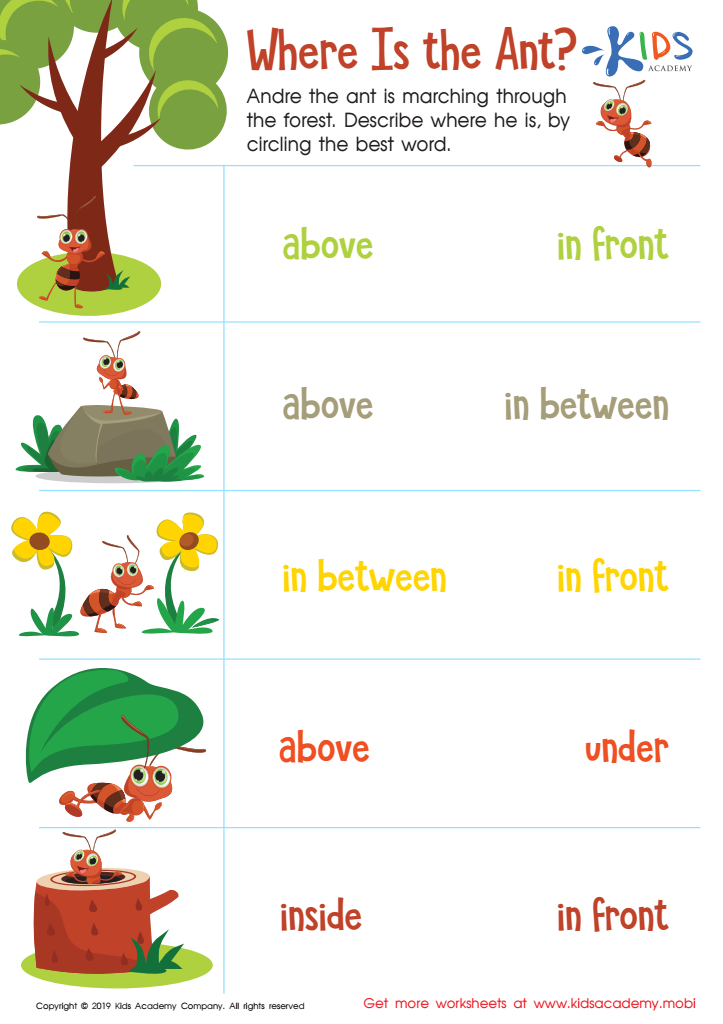
Where Is the Ant? Worksheet
 Assign to My Students
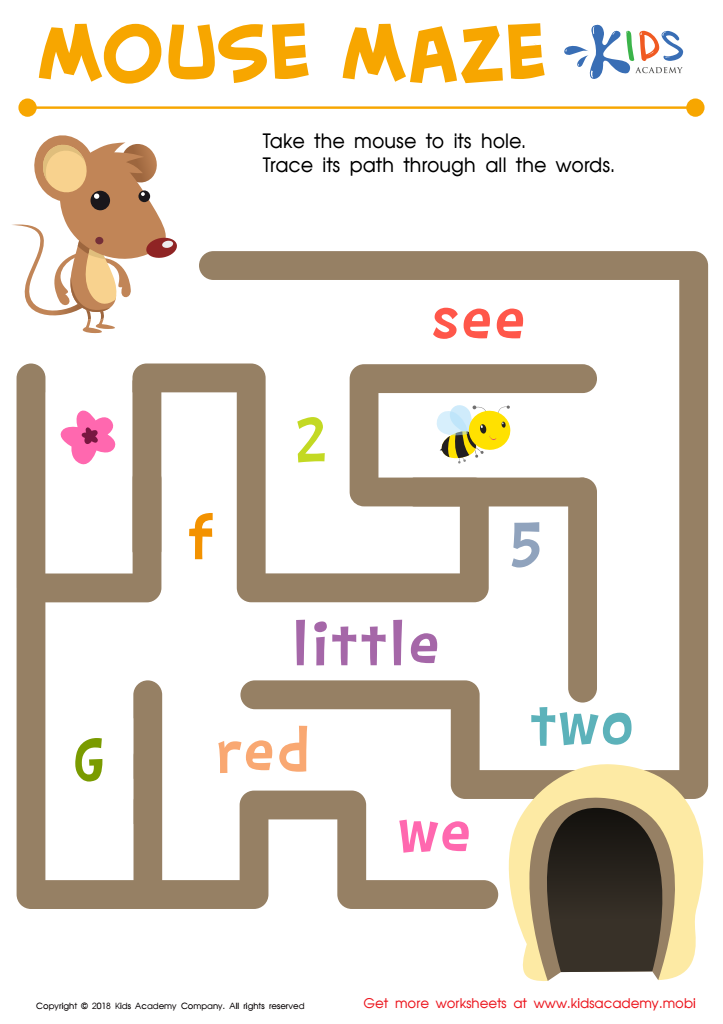
Find Words Mouse Maze Worksheet
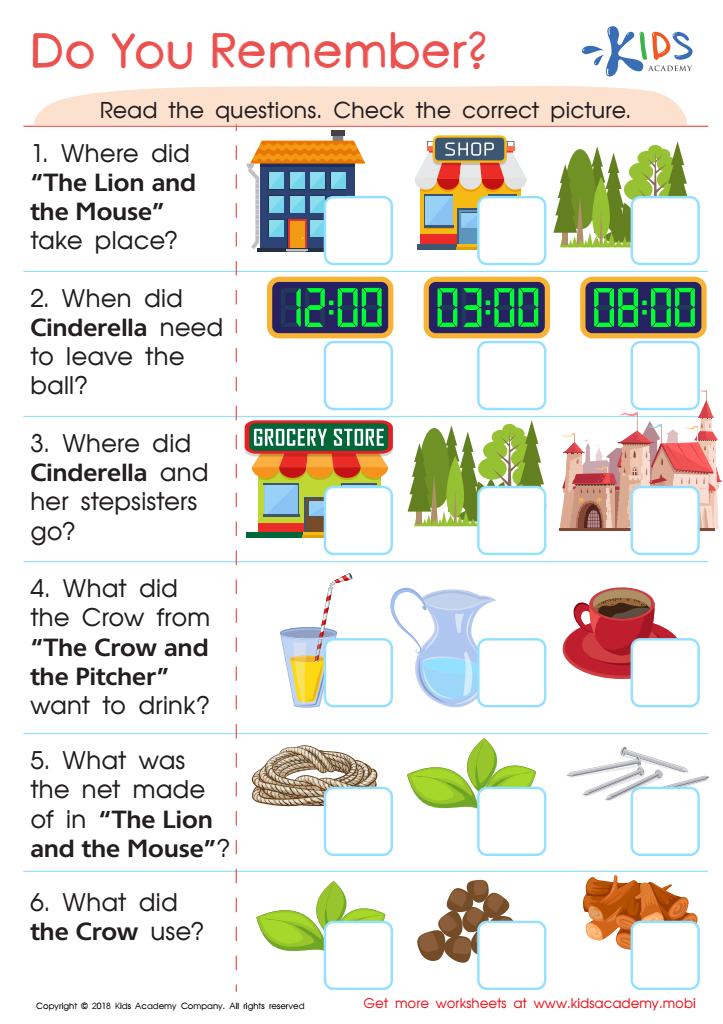
Do You Remember? Worksheet








Spatial awareness is a crucial aspect of early childhood development, particularly for children aged 3-7. This skill forms the foundation for many life tasks, from navigating physical spaces to understanding relationships in math and science. Parents and teachers should prioritize spatial awareness grammar because it helps children to comprehend their environment, improve coordination, and enhance their problem-solving abilities.
By developing spatial awareness, children learn to recognize shapes, sizes, distances, and directions, which are critical for basic literacy and numeracy skills. For instance, understanding concepts like "above," "below," "beside," and "between" can support early reading comprehension and mathematical reasoning.
Moreover, spatial awareness is linked to self-confidence and independence. As children become more adept at navigating their environments, they feel empowered to explore and engage with the world around them. This exploration encourages curiosity, creativity, and cognitive growth.
In summary, fostering spatial awareness grammar in early education nurtures not just academic progress but also physical and emotional development. Parents and teachers play a vital role in providing engaging activities that cultivate these skills, ultimately preparing children for future learning and real-world challenges.








