Spelling Skills Grammar Worksheets for Ages 3-7
3 filtered results
-
From - To
Enhance your child's language development with our "Spelling Skills Grammar Worksheets for Ages 3-7". Designed to boost early literacy, these fun and educational resources help children master spelling fundamentals through engaging activities. With a variety of worksheets tailored for young learners, kids will learn to recognize letters, understand word formation, and improve their spelling accuracy. Our worksheets feature colorful images and interactive elements to keep your child motivated and excited about learning. Great for both classroom and at-home practice, these tools support vital spelling skills essential for future reading and writing success. Help your child become a confident speller today!
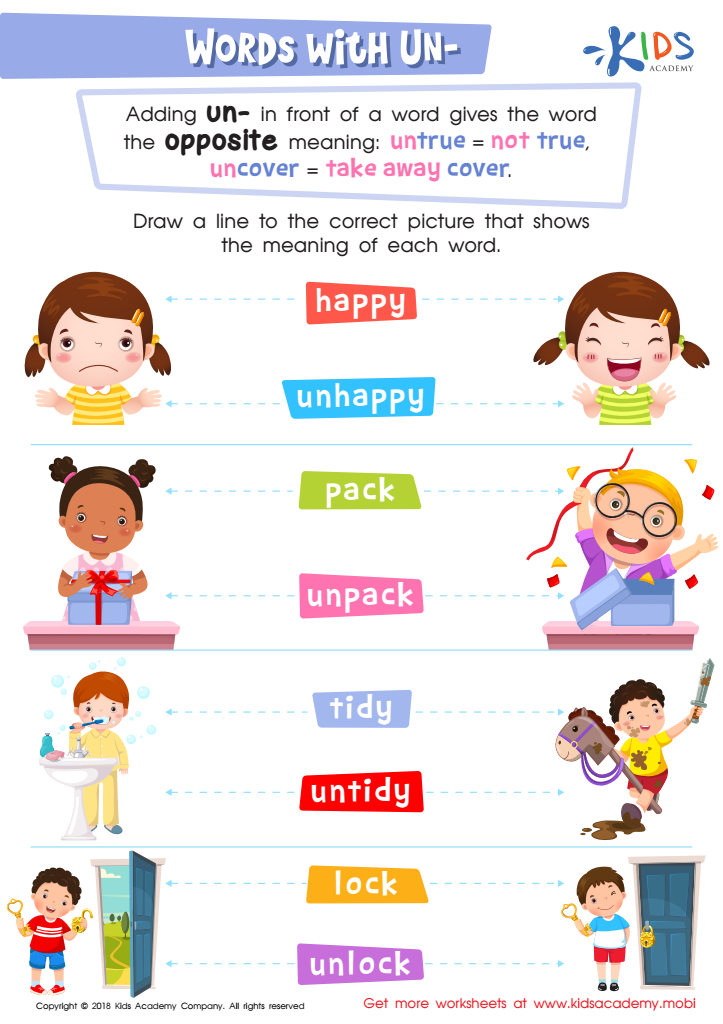
Words with Un– Worksheet
 Assign to My Students
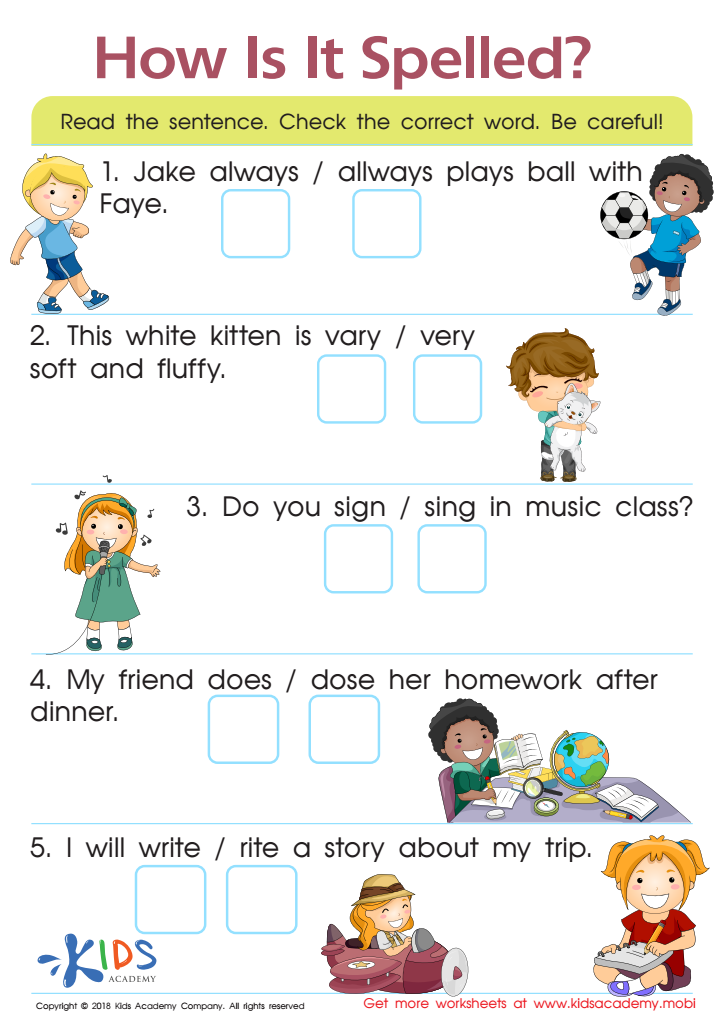
How is it spelled? Worksheet
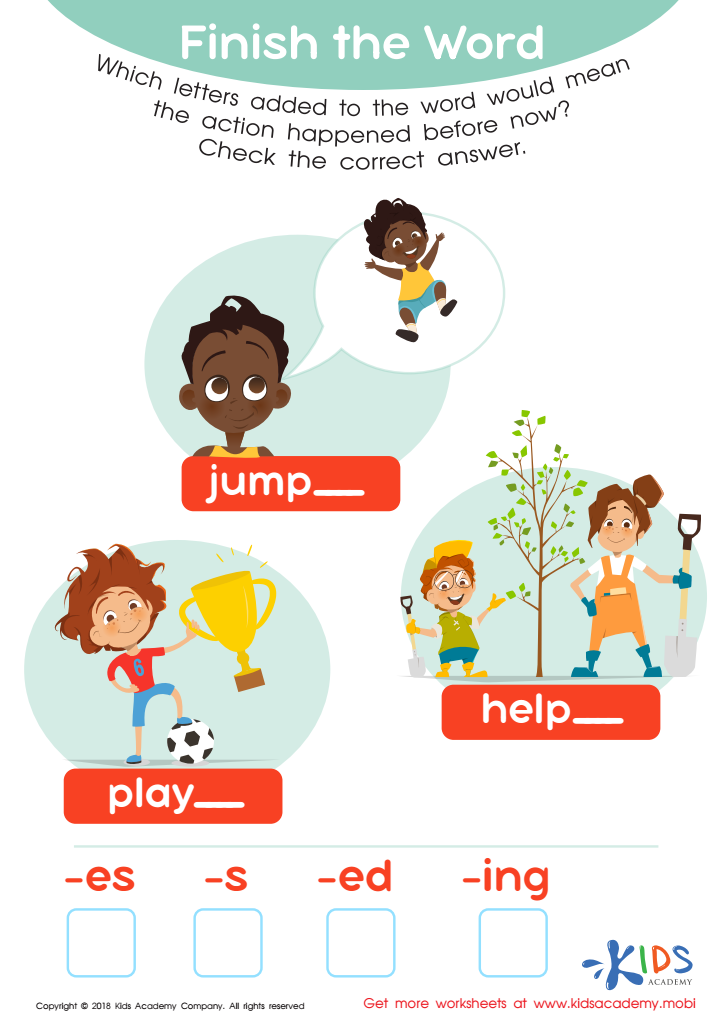
Finish the Word Worksheet








Spelling and grammar skills form the bedrock of early childhood literacy, crucial for children ages 3-7. During this formative period, children's brains are exceptionally receptive to learning, making it the perfect time to instill strong language foundations that will benefit them throughout life.
Firstly, spelling skills are integral to reading proficiency. Familiarity with letters and their corresponding sounds enables children to decode words, making reading less of a struggle and more of an enjoyable activity. This, in turn, fosters a love for reading, which is linked to better academic performance across all subjects.
Grammar introduces young learners to the structural rules that organize words and convey meaning. Understanding grammar enhances a child's ability to communicate clearly and effectively. Precise language use can significantly improve their ability to express thoughts, understand instructions, and engage in meaningful conversations.
Moreover, early mastery of these skills boosts self-esteem and independence. When children can write and speak well, they feel more confident participating in classroom activities, social interactions, and later, in life’s many written and spoken tasks.
Finally, these skills contribute to cognitive development, refining memory, concentration, and problem-solving abilities. Therefore, parents and teachers nurturing spelling and grammar from an early age equip children with essential tools for lifelong learning and success.








