Understanding adjectives Grammar Worksheets for Ages 3-7
3 filtered results
-
From - To
Enhance your child's language skills with our "Understanding Adjectives Grammar Worksheets" designed for ages 3-7! These fun, interactive worksheets help young learners grasp the concept of adjectives effortlessly. Each activity is crafted to engage kids through colorful illustrations, simple sentences, and relatable themes, making learning enjoyable and effective. By identifying and using adjectives, children will improve their descriptive language, creativity, and comprehension. Perfect for home or classroom use, our worksheets offer a solid foundation in grammar, preparing your child for future academic success. Ignite your child's curiosity and watch their vocabulary flourish with our expertly designed resources!
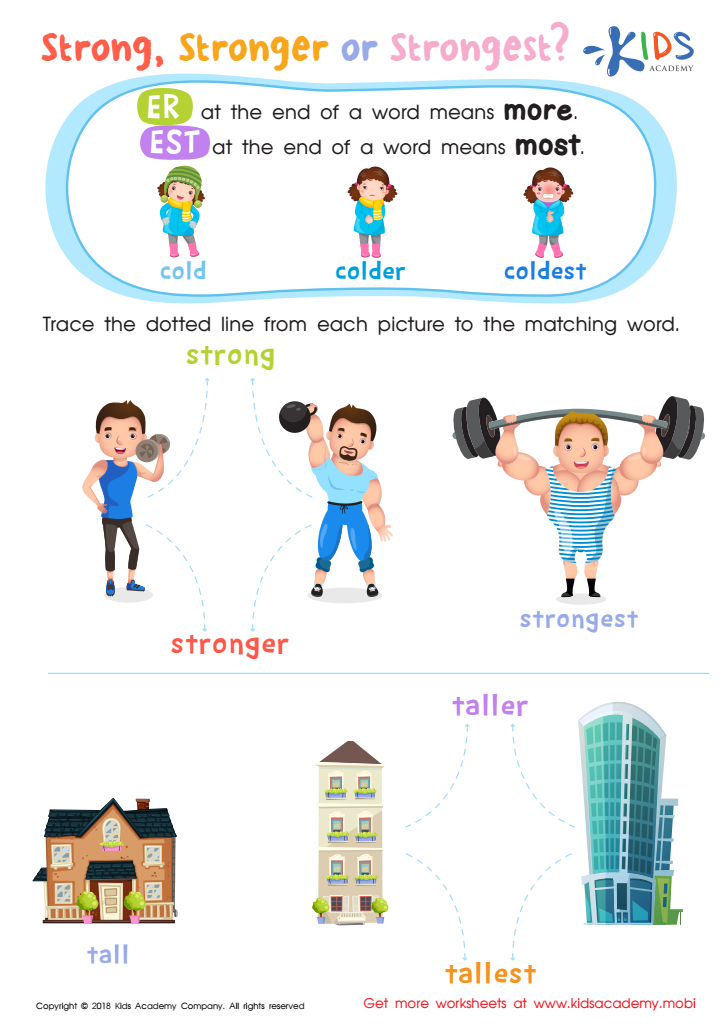
Strong or Stronger? Worksheet
 Assign to My Students
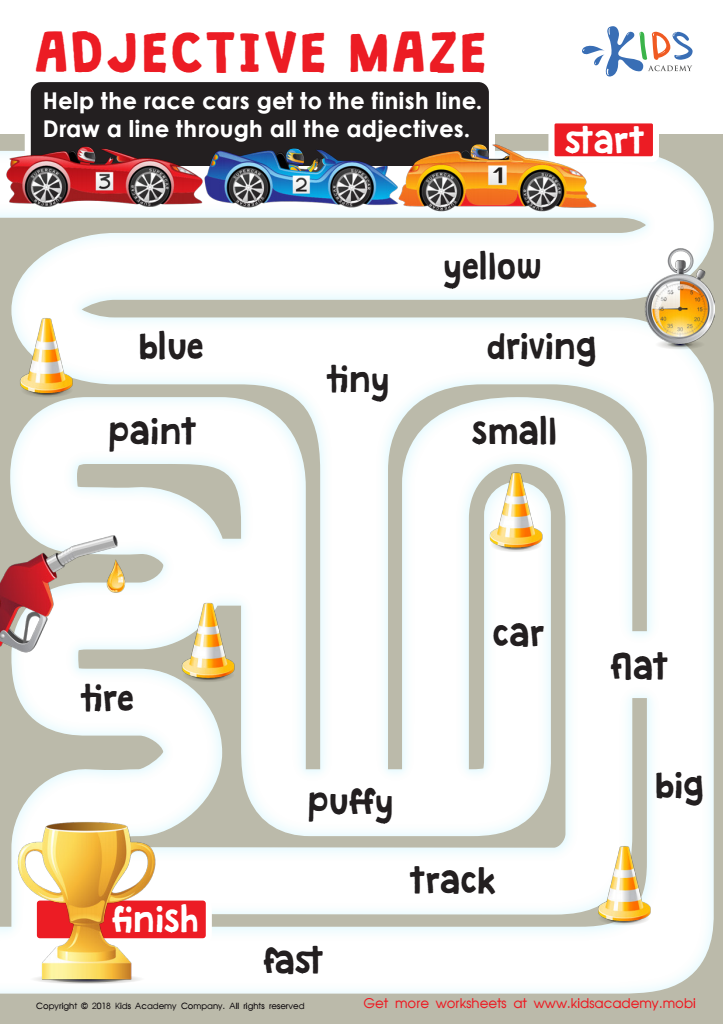
Adjective Maze Worksheet
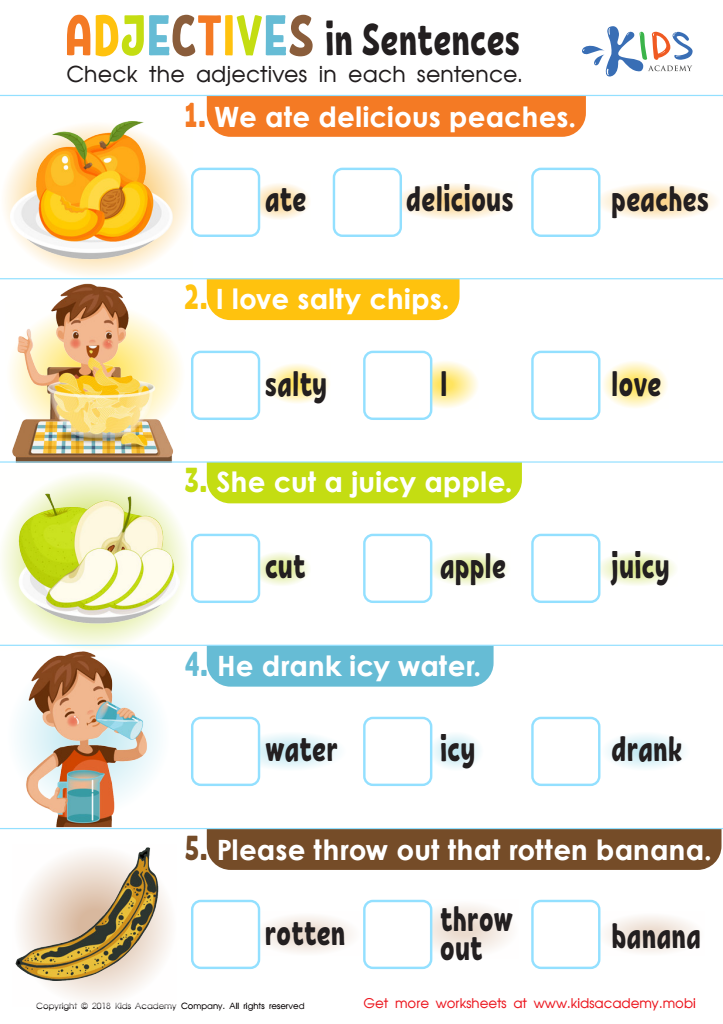
Adjectives in Sentences Worksheet



.jpg)

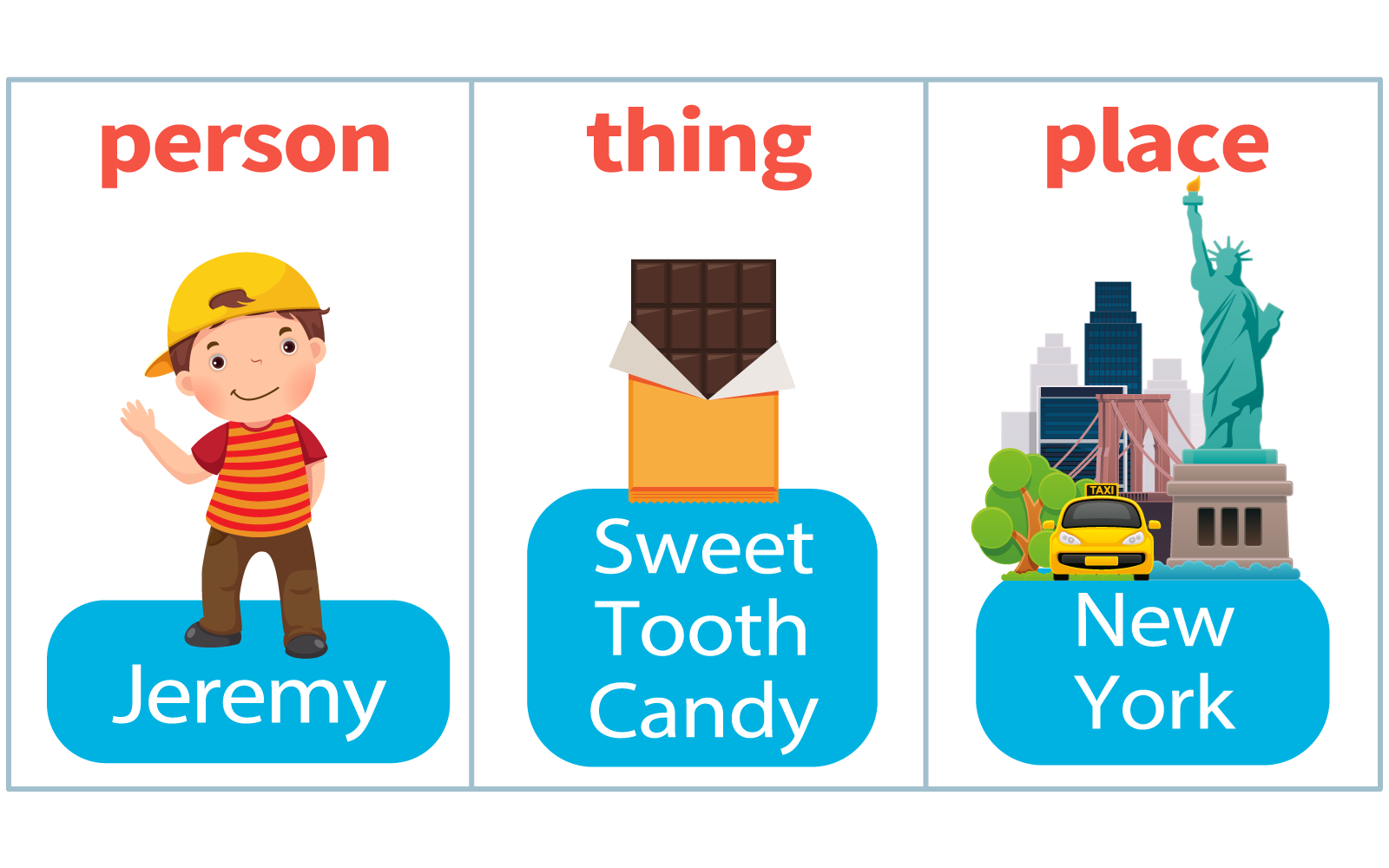


Understanding adjectives is crucial for young children ages 3-7 because it forms a fundamental part of their language development, impacting both their communication skills and cognitive abilities. Adjectives help children describe their world more colorfully and accurately, which is essential for expressing thoughts, emotions, and ideas effectively. For instance, instead of saying "I have a toy," a child who knows adjectives can say, "I have a blue, shiny toy," providing a clearer picture of what they mean.
From an educational perspective, a strong grasp of adjectives aids in reading comprehension and writing skills. Children who understand adjectives can better follow stories, relate to characters, and describe scenes, which enhances their engagement and enjoyment of reading. Furthermore, learning adjectives builds vocabulary, enabling more precise communication and fostering critical thinking as kids learn to categorize and compare objects and experiences.
Early understanding of grammar, including adjectives, lays the groundwork for future language proficiency. It supports the development of complex sentence structures and richer narratives as children grow. Moreover, effective communication fosters social skills, aiding interaction with peers and adults, crucial for emotional and social development. For these reasons, parents and teachers should actively encourage learning adjectives to build a solid linguistic foundation for their children's future.








