
Capitalization rules Writing Worksheets for Ages 3-7
7 filtered results
Difficulty Level
Grade
Age
-
From - To
Subject
Activity
Standards
Introducing our Capitalization Rules Writing Worksheets for Ages 3-7! Designed to make learning fun and engaging, these worksheets help young learners master the basics of capitalization through interactive and easy-to-understand exercises. Perfect for early grade students, they cover key rules such as capitalizing the first word in a sentence, proper nouns, days of the week, and months of the year. Colorful illustrations and simple prompts keep kids excited about practicing their writing skills while building a strong grammatical foundation. Ideal for both classroom use and homeschooling, these worksheets provide a great start on the path to literacy. Get started today!
Favorites
With answer key
Interactive
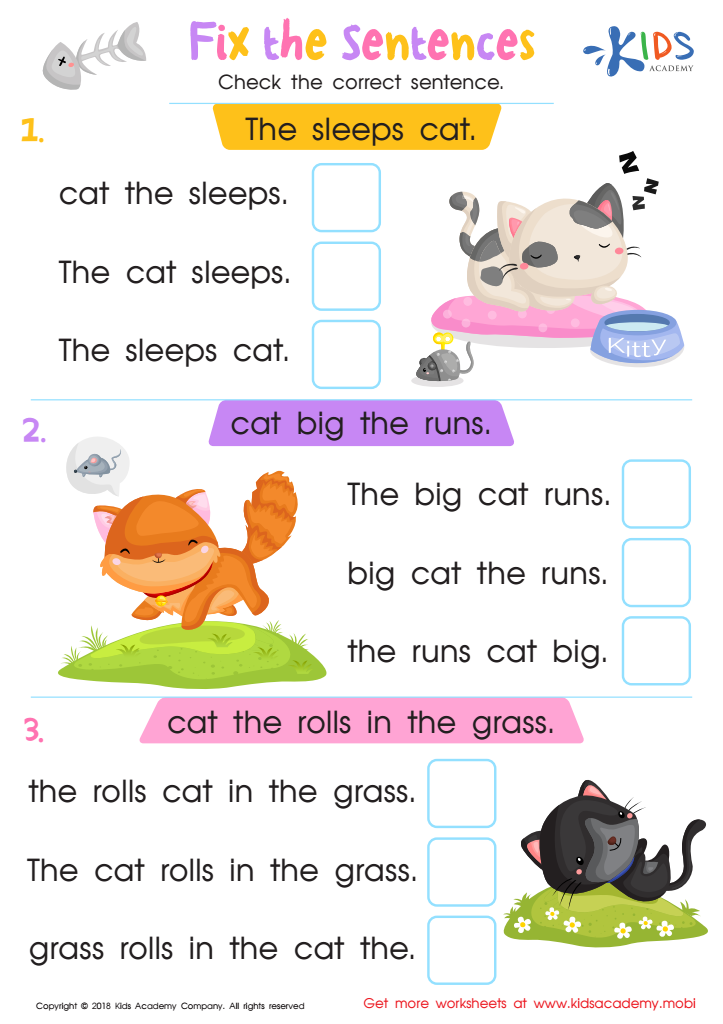
Fix the Sentences Worksheet
Once your students know the alphabet, teach them words. Then move on to constructing sentences. If they have a handle on sentence structure, give them this worksheet. Ask them to read the sentences and check the correct one.
 Assign to My Students
Fix the Sentences Worksheet
Worksheet
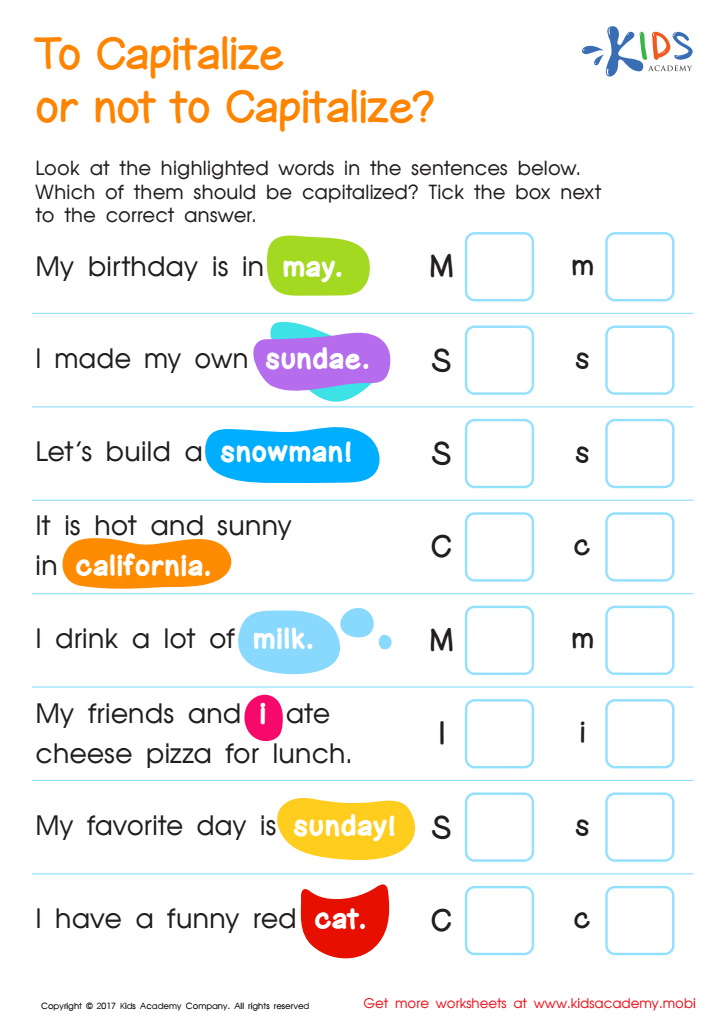
Capitalization: To Capitalize or Not? Printable
Have them answer the questions in "To Capitalize or Not to Capitalize" to check their understanding.
Capitalization: To Capitalize or Not? Printable
Worksheet
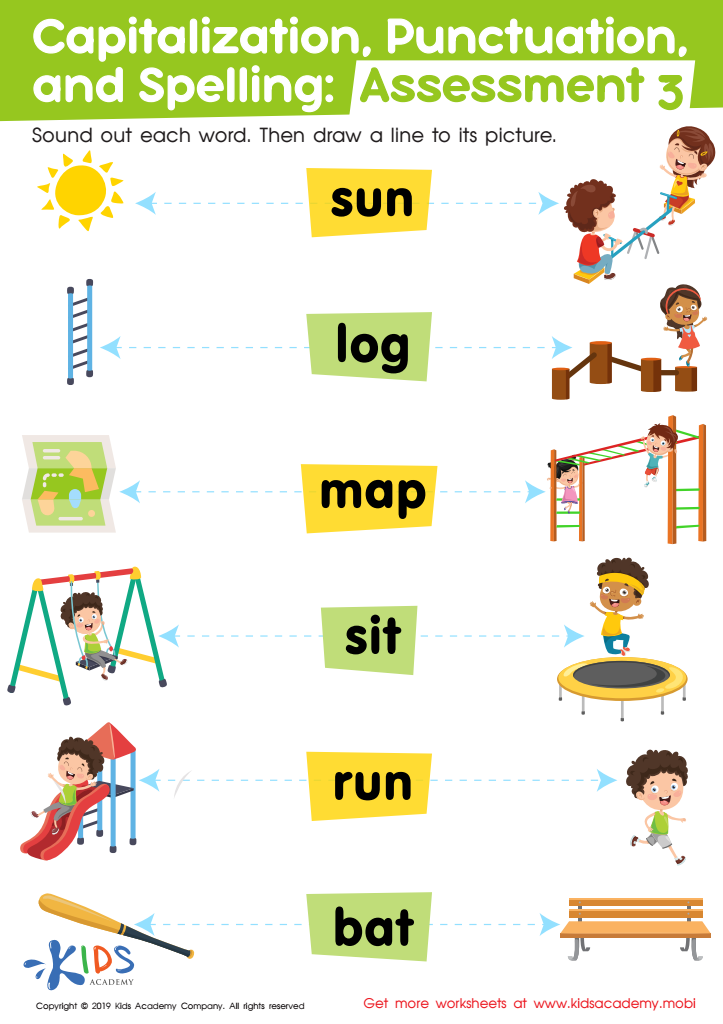
Capitalization. Punctuation. Spelling. Assessment 3 Worksheet
Before starting this worksheet, have your kids spell some simple words. Correct if wrong and show the right spellings. Then, ask them to link the pictures to the words you read out. Spelling is key for a good writer, and kids need to know how to spell to read texts easily.
Capitalization. Punctuation. Spelling. Assessment 3 Worksheet
Worksheet
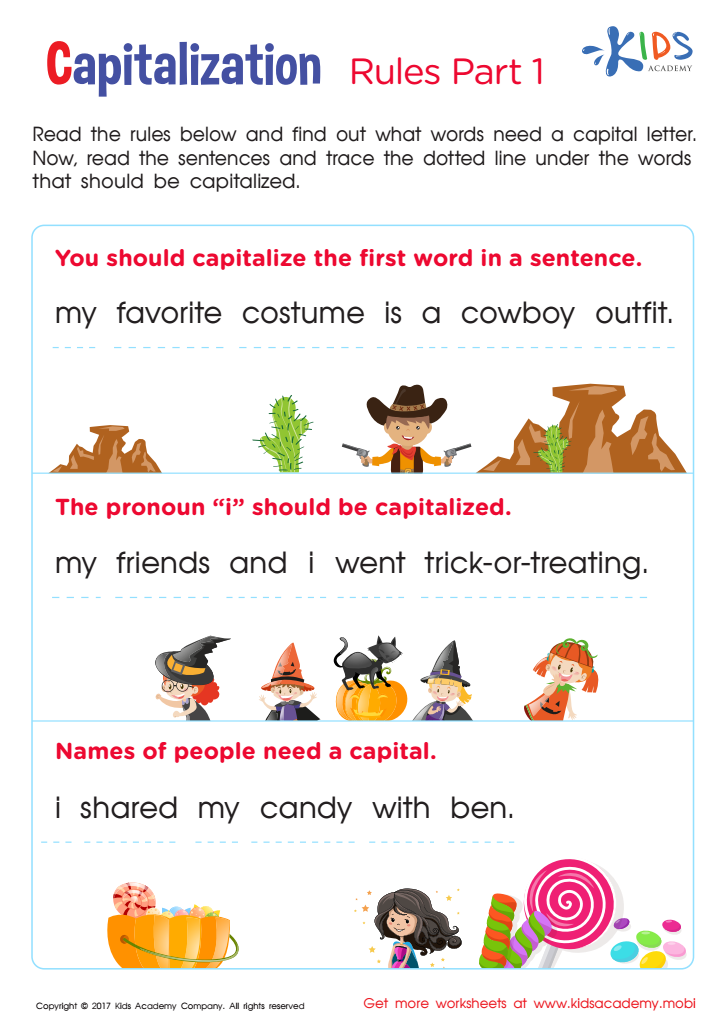
Capitalization Rules: Part 1 Worksheet
Kids entering high school with poor capitalization skills? Equip your 1st grader with the tools to combat this now! This capitalization worksheet will give them the knowledge they need to understand the importance of proper grammar rules and get their writing up to scratch.
Capitalization Rules: Part 1 Worksheet
Worksheet
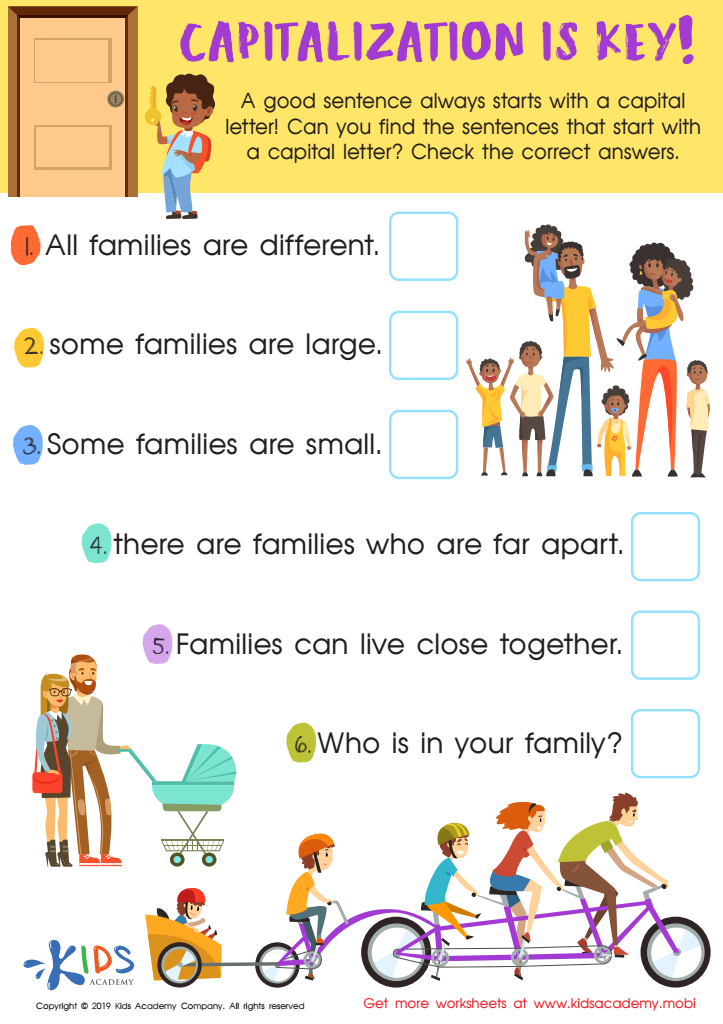
Capitalization Key Worksheet
Help your kids learn the importance of capitalizing at the start of sentences with this fun PDF! It features 6 family-themed sentences, with pictures, that your students have to find the correctly capitalized versions of. Perfect for young learners, this worksheet adds a fun twist to learning.
Capitalization Key Worksheet
Worksheet
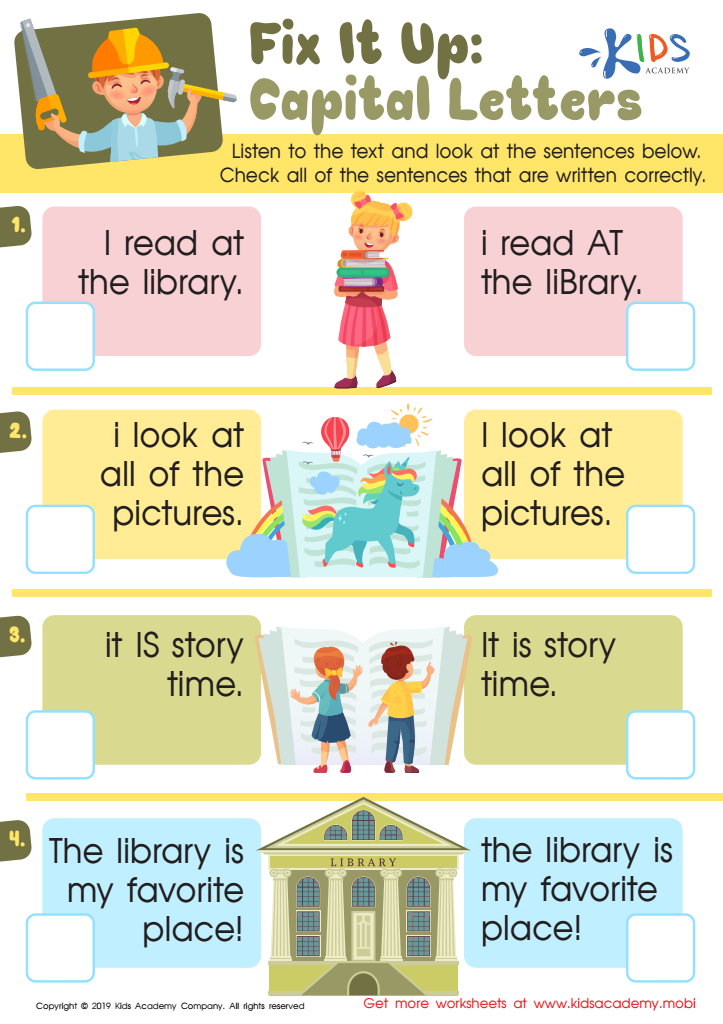
Fix Capital Letters Worksheet
Put on your hardhats and get out the tools - it's time to do some repair work! Have your child identify sentences written with proper capitalization on this fun and colorful worksheet. Ask more advanced students to rewrite incorrect sentences correctly - it'll help them understand letter case better.
Fix Capital Letters Worksheet
Worksheet
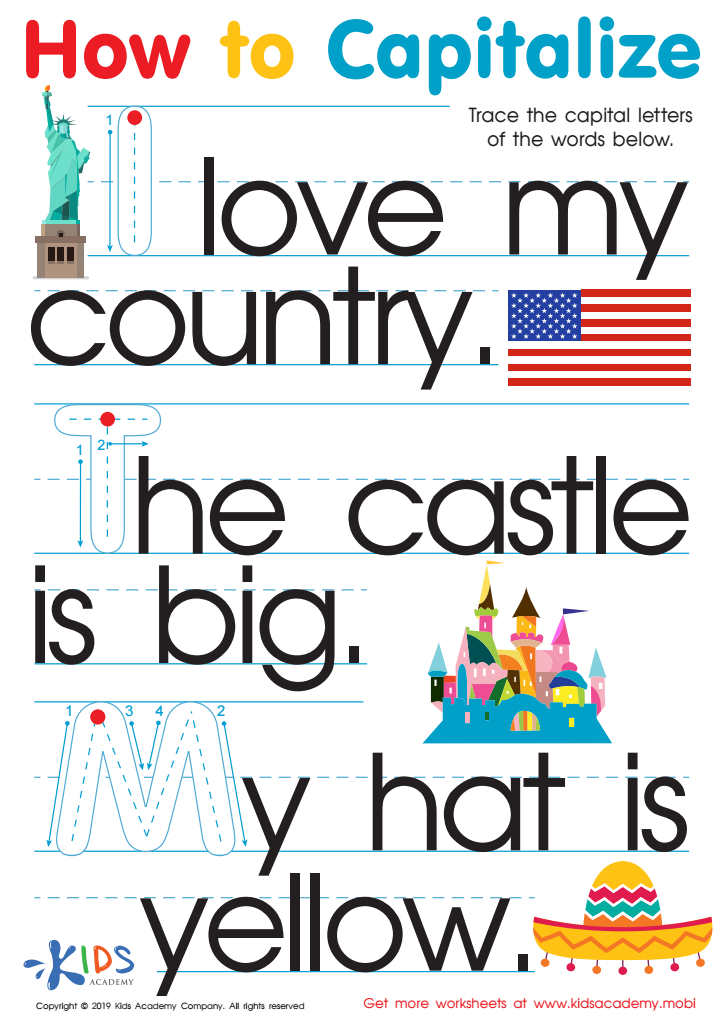
How to Capitalize Worksheet
Capitalizing letters is important in English. This worksheet will help your child learn how to write them. Words such as "the" and "I" will be covered, with visuals such as the Statue of Liberty, the American Flag, a castle, and a sombrero. The "How to Capitalize" PDF is a great way to sharpen your child's writing and aid their success!
How to Capitalize Worksheet
Worksheet
Join Kids Academy for Free
Who is primarily going to use this learning content?








Teaching capitalization rules to children ages 3-7 is crucial for building a strong foundation in writing and literacy. At this early stage, young minds are incredibly receptive, and instilling proper writing habits can benefit them academically and beyond.
Firstly, proper capitalization helps children understand and convey meaning more clearly. For instance, capitalizing the first word in a sentence or the pronoun "I" signals the beginning of a new thought and demonstrates self-reference, impacting overall comprehension.
Secondly, learning capitalization introduces children to the conventions of written English. This knowledge is essential as they progress to more complex reading and writing tasks. For example, recognizing that names of people and places are capitalized helps children differentiate between common and proper nouns.
Moreover, mastering these rules builds confidence. When children write correctly and receive positive reinforcement, they're more likely to feel confident in their skills, fostering a positive attitude towards learning and writing.
Guiding children through the basics of capitalization equips them with the necessary skills for effective communication. Parents and teachers play an integral role in this learning process, ensuring that children are well-prepared for future academic challenges and everyday interactions. By prioritizing these fundamental rules, we empower children to become proficient and enthusiastic writers.








