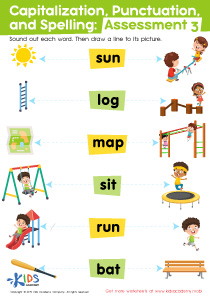
Phonics recognition Writing Worksheets for Ages 3-7
3 filtered results
-
From - To
Discover our engaging Phonics Recognition Writing Worksheets, designed specifically for children ages 3-7. These interactive worksheets support early literacy by helping young learners identify and practice letter sounds, aiding them in grasping foundational phonics skills. Through a variety of fun and educational activities, worksheets improve spelling, reading fluency, and writing confidence. Our user-friendly resources make learning enjoyable, catering to various skill levels to ensure every child can develop critical literacy concepts. Whether used at home or in the classroom, these phonics worksheets offer a valuable tool for nurturing a love of reading and writing in young learners. Start fostering essential skills today!
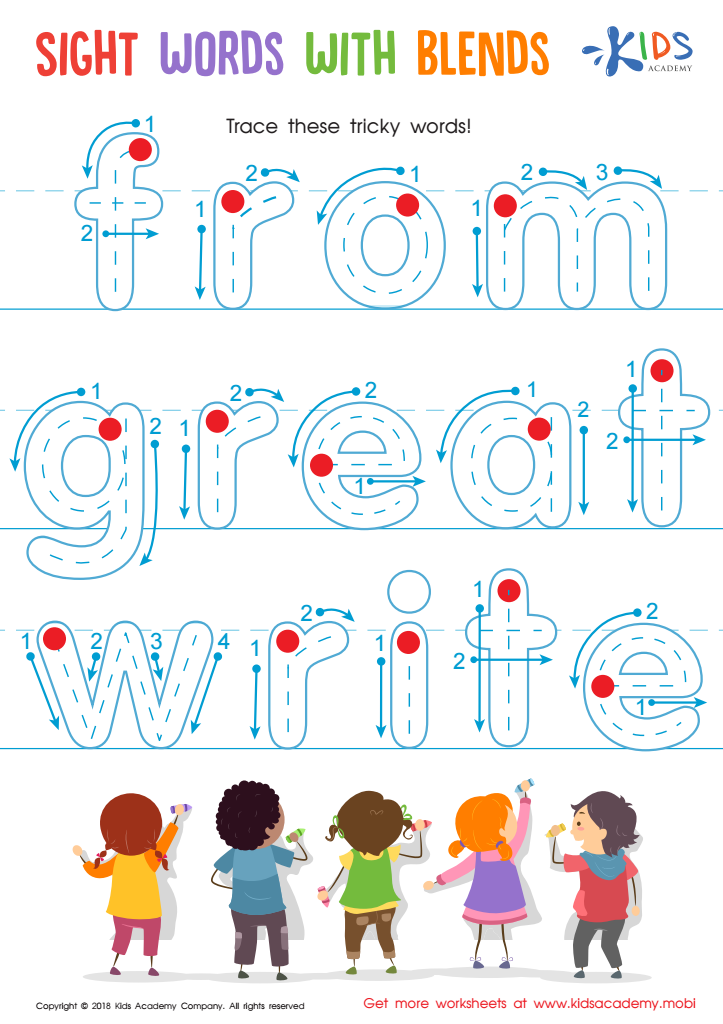
Sight Words with Blends Worksheet
 Assign to My Students
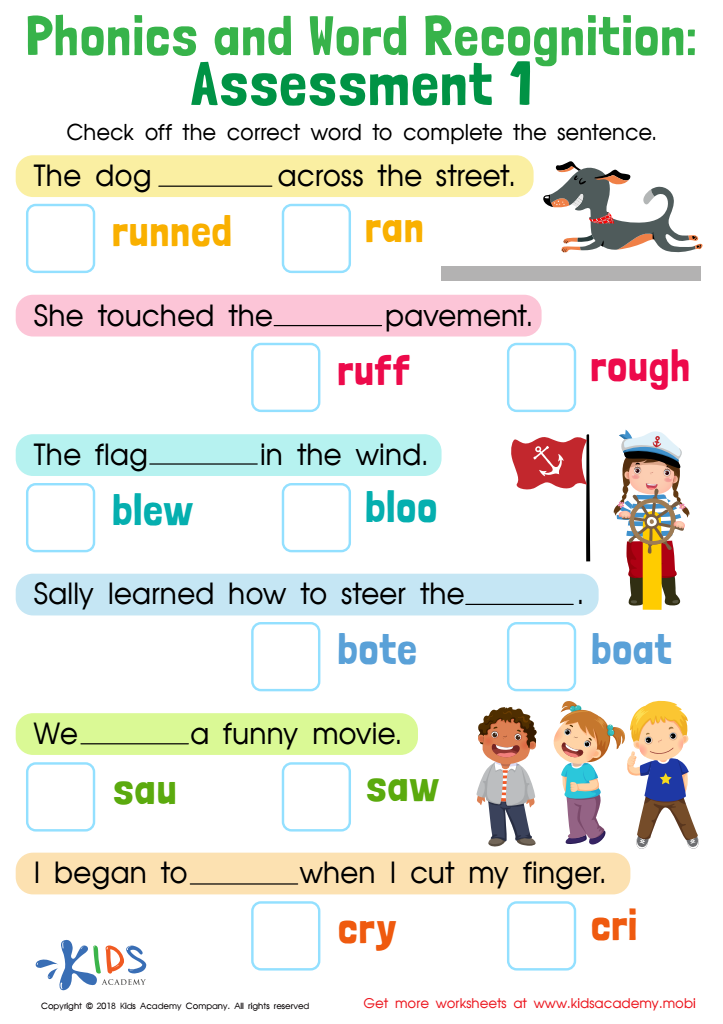
Phonics and Word Recognition: Assessment 1 Worksheet
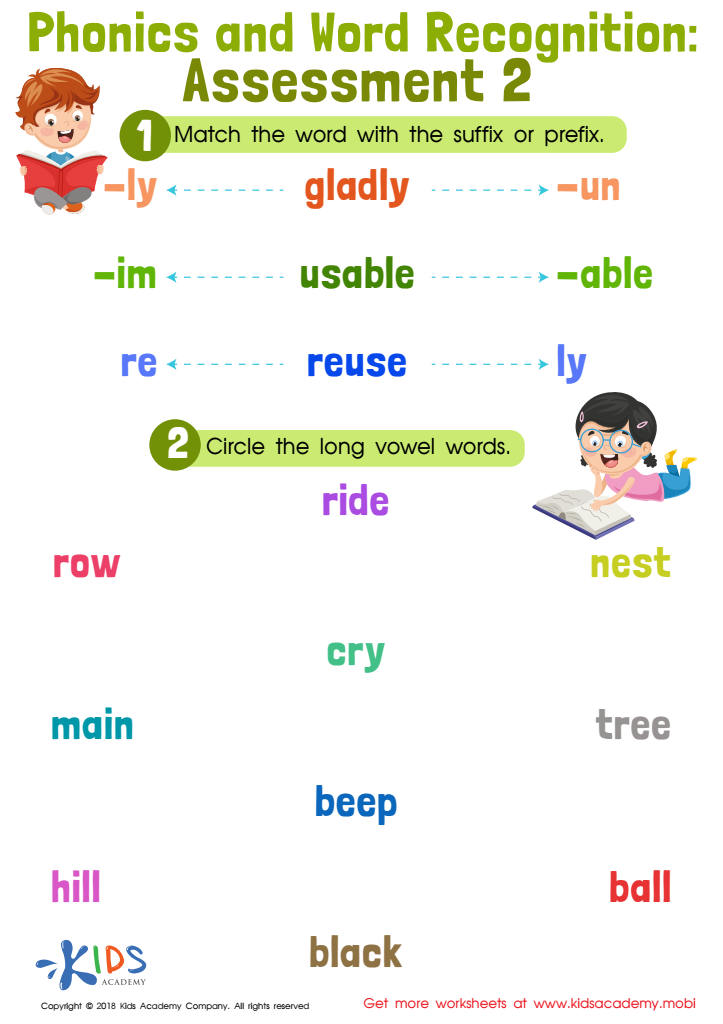
Phonics and Word Recognition: Assessment 2






Phonics recognition writing is crucial for children aged 3-7 as it serves as a foundation for early literacy development. At this age, children are not only learning to recognize letters and sounds but are also beginning to connect spoken language with written forms. Understanding phonics allows them to decode words, enhancing their reading abilities, which are essential for academic success.
Parents and teachers should care about phonics recognition writing because it fosters confidence in young learners. When children begin to read and write through phonics, they experience a sense of achievement that motivates them to explore language further. Engaging in phonics instruction nurtures essential skills, such as blending sounds to form words and recognizing word patterns, promoting not just reading but also writing fluency.
Moreover, early exposure to phonics can lead to better communication skills and greater expressive abilities, laying the groundwork for lifelong learning. Parents and teachers play a vital role in creating an environment rich in phonetic activities, using games, songs, and engaging exercises that stimulate interest. By emphasizing phonics, they equip children with invaluable tools that benefit them both academically and socially as they embark on their educational journey.