Understanding adjectives Writing Worksheets for Ages 3-7
3 filtered results
-
From - To
Unlock your child’s potential with our "Understanding Adjectives Writing Worksheets for Ages 3-7." Designed to enhance vocabulary and descriptive skills, these engaging worksheets make learning fun and interactive. Through colorful exercises and creative activities, young learners will grasp the concept of adjectives, learning to describe objects, animals, and more with ease. Perfect for home or classroom use, these worksheets cater to various learning styles, ensuring every child can succeed. Give your child the tools to express themselves vividly and confidently with our expertly crafted worksheets. Start their journey to becoming passionate, articulate writers today!
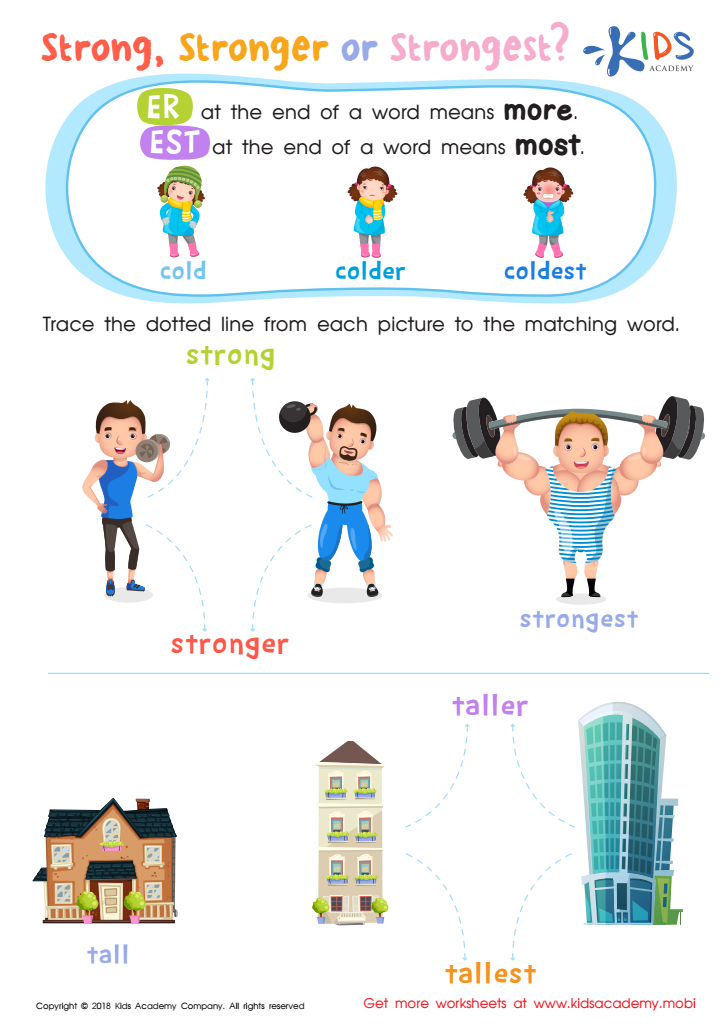
Strong or Stronger? Worksheet
 Assign to My Students
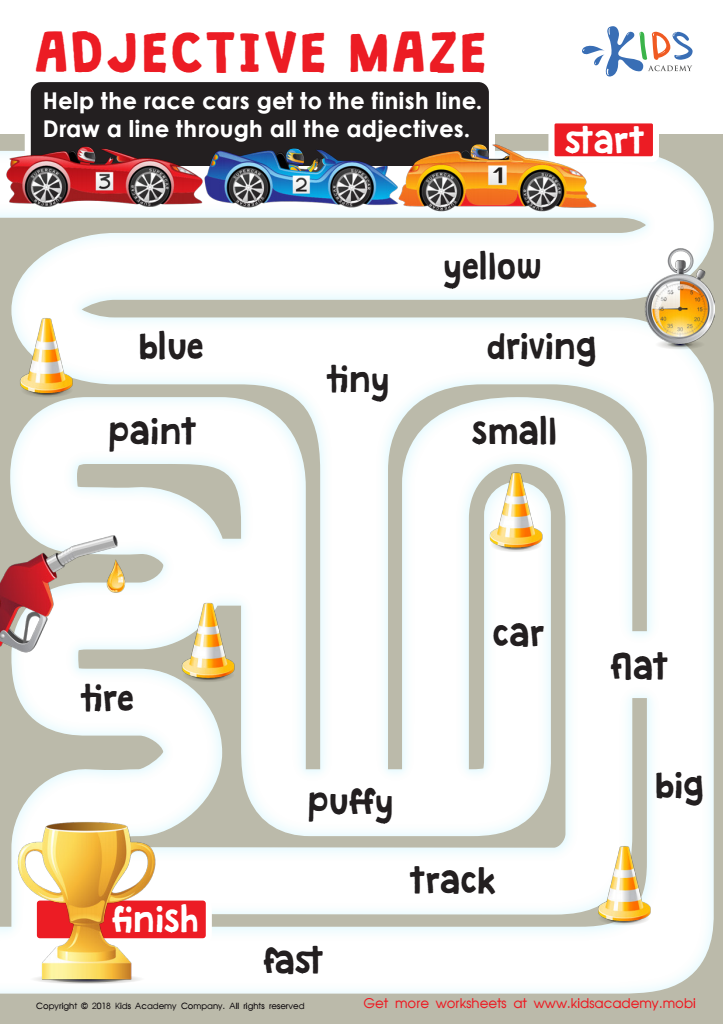
Adjective Maze Worksheet
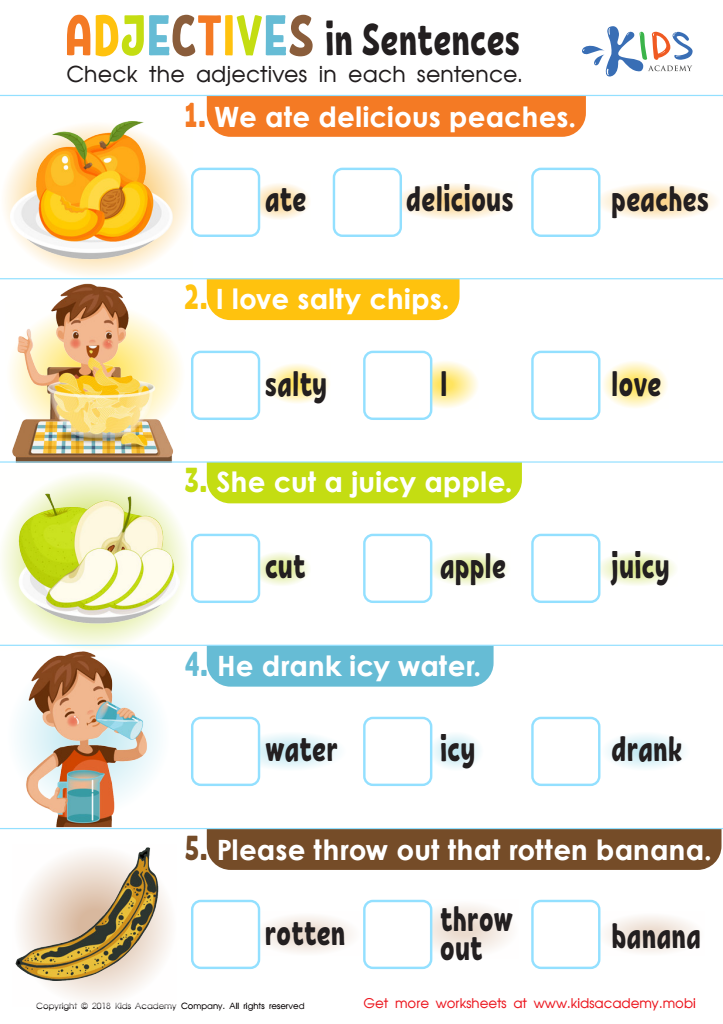
Adjectives in Sentences Worksheet








Understanding and using adjectives is crucial for young children aged 3-7 as it greatly enhances their communication skills and cognitive development. At this formative stage, children's language abilities are rapidly expanding, and adjectives add richness to their expression, enabling them to describe the world around them more vividly. For instance, instead of saying "a dog," they can say "a big, brown dog," which conveys a clearer picture.
Teaching adjectives also supports reading comprehension. When children encounter stories, adjectives help them visualize scenes and characters more vividly, making the narrative more engaging and understandable. This enriched vocabulary lays a strong foundation for future literacy skills, contributing significantly to their academic success.
Moreover, learning adjectives fosters critical thinking and empathy. Children learn to observe details and articulate differences, which are vital skills for problem-solving and understanding diverse perspectives. For example, distinguishing between "happy" and "excited" helps them better grasp and communicate feelings.
In addition, using descriptive language promotes creativity. When children use adjectives, they can create more imaginative stories and express their unique ideas more effectively. For both teachers and parents, focusing on adjectives is an investment in a child's overall linguistic development, setting the stage for more advanced learning and effective communication in the future.








