
Vocabulary development Writing Worksheets for Ages 3-7
8 filtered results
Difficulty Level
Grade
Age
-
From - To
Subject
Activity
Standards
Enhance your child's vocabulary with our engaging Vocabulary Development Writing Worksheets tailored for ages 3 to 7. These interactive resources are designed to make learning fun while building essential language skills. Each worksheet encourages creativity through writing exercises that expand word knowledge and promote literacy. With colorful illustrations and age-appropriate activities, your little ones will enjoy exploring new words, forming sentences, and expressing their thoughts. Ideal for both classroom settings and home practice, our worksheets offer a valuable tool for educators and parents alike. Help your child grow their vocabulary today and set the foundation for strong communication skills!
Favorites
With answer key
Interactive
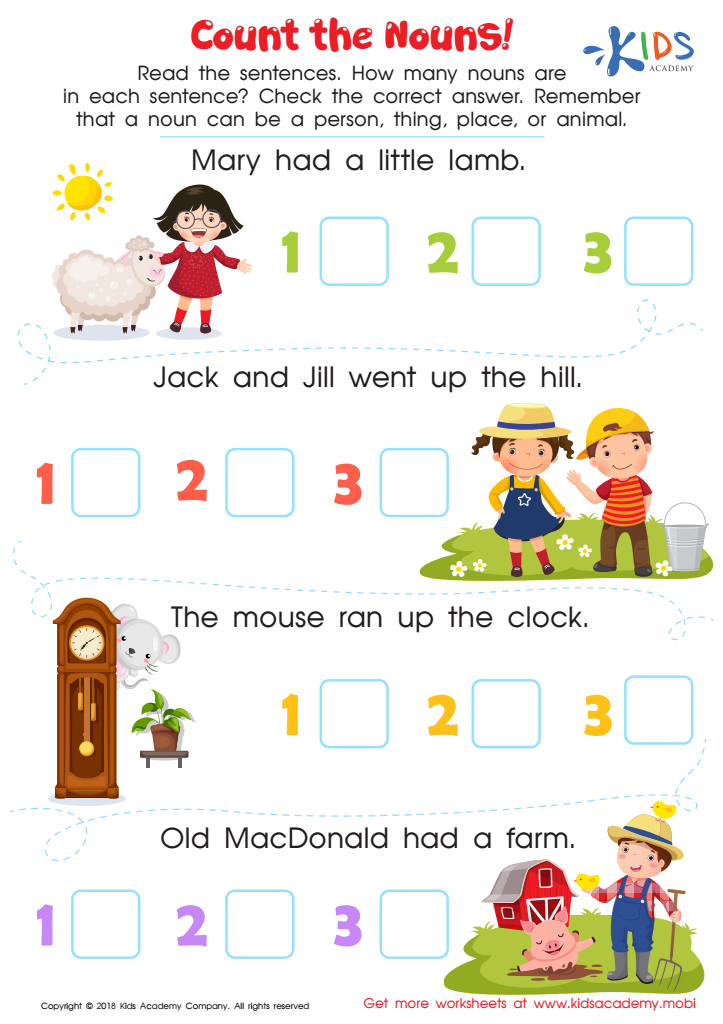
Count the Nouns Worksheet
Read the sentences with your children and ask them to find the nouns. Explain that nouns are names of people, animals, places or things. Point out the boxes with the answers to check.
 Assign to My Students
Count the Nouns Worksheet
Worksheet
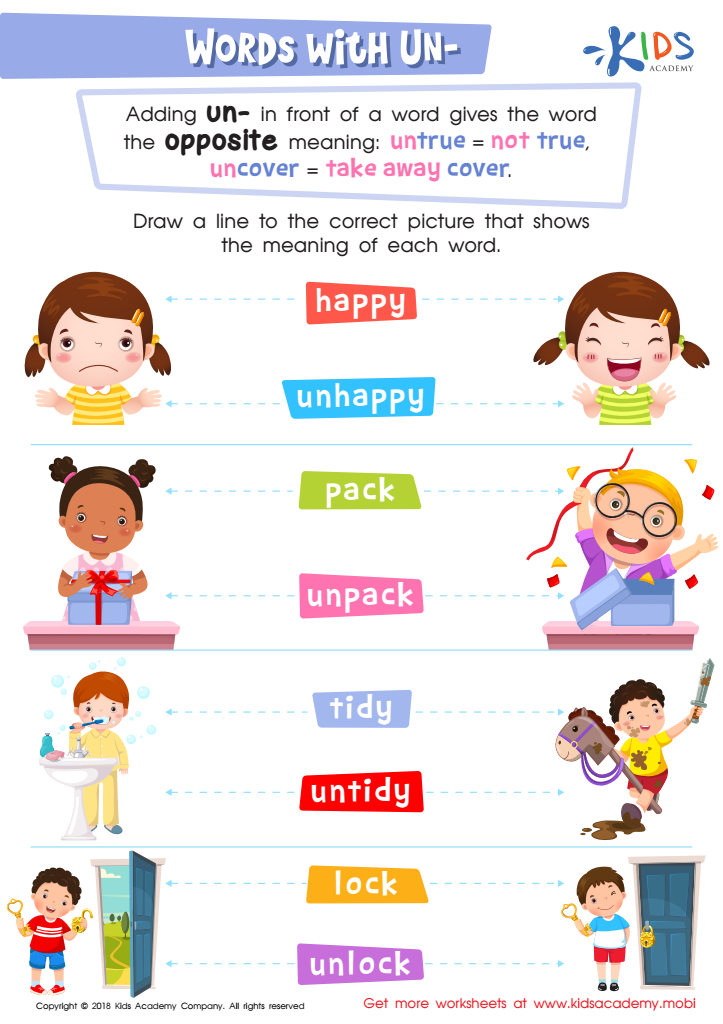
Words with Un– Worksheet
Prefixes can change the meaning of words. Adding "Un-" can give the opposite meaning, like Un-true, Un-happy, and Un-finish. Help your child learn with this worksheet. Draw a line to the picture that shows each word's meaning.
Words with Un– Worksheet
Worksheet
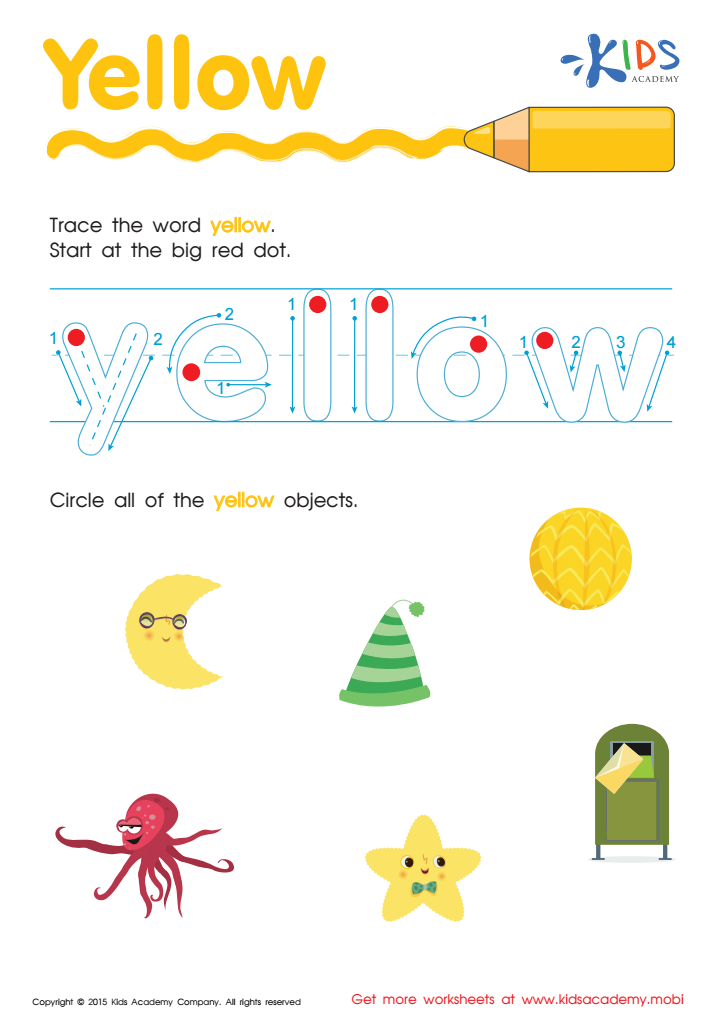
Yellow Tracing Color Words Worksheet
Tracing is a great way to start learning handwriting! Our printable worksheet helps your kindergartener practice and master the basics. They'll trace lines and fill in the word "yellow" with bright colors, sure to captivate and inspire them for more practice. Check out here for more tracing of color words.
Yellow Tracing Color Words Worksheet
Worksheet
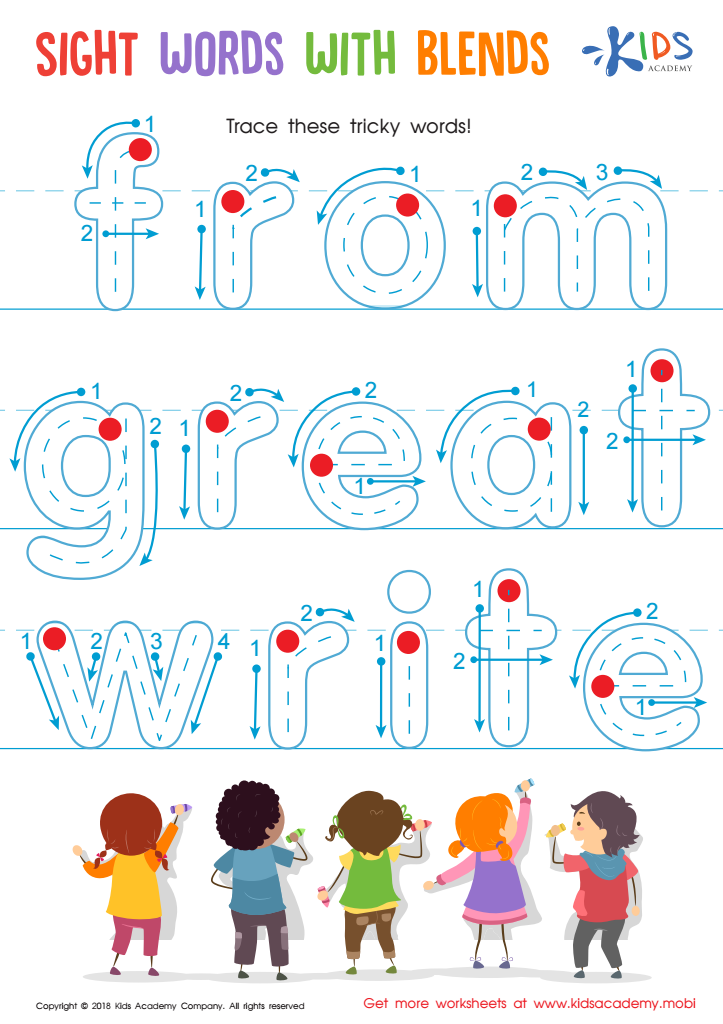
Sight Words with Blends Worksheet
This free PDF lets your children trace and write sight words with tricky blends. The guide numbers help them start from the top, building fine motor skills and enhancing sight word vocab. It's a great way to give your kids a solid foundation for reading!
Sight Words with Blends Worksheet
Worksheet
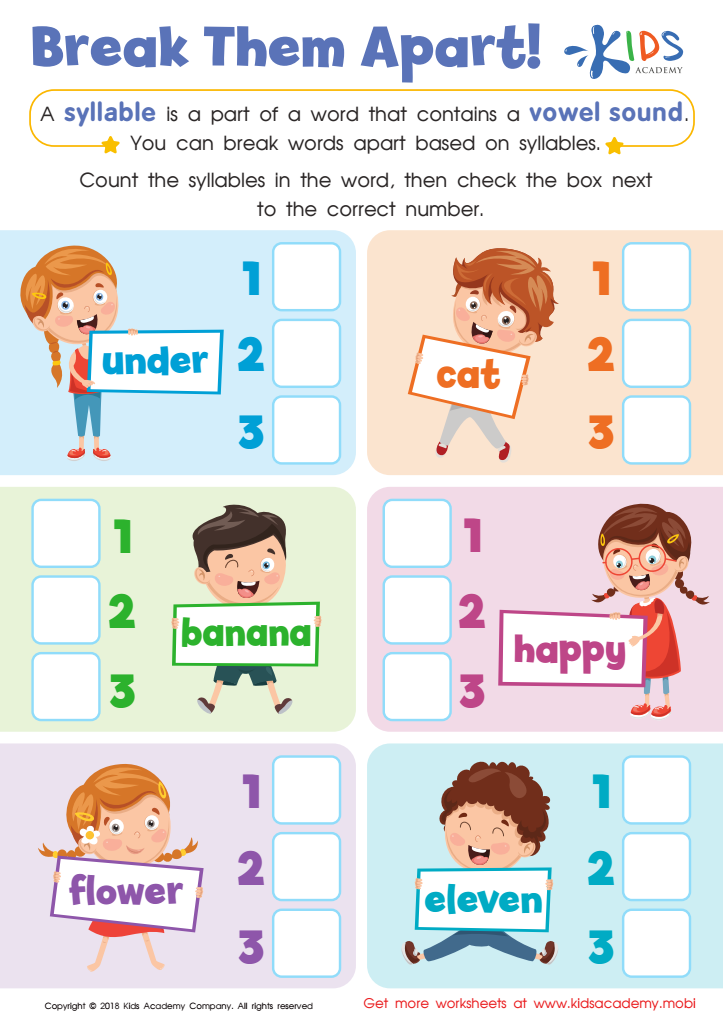
Reading: Break Them Apart Worksheet
See if students understand syllables with this fun worksheet. It teaches them that a syllable is a word part with a vowel sound. Kids read each word and choose how many parts it has. Doing this often helps them decode new words and gain confidence.
Reading: Break Them Apart Worksheet
Worksheet
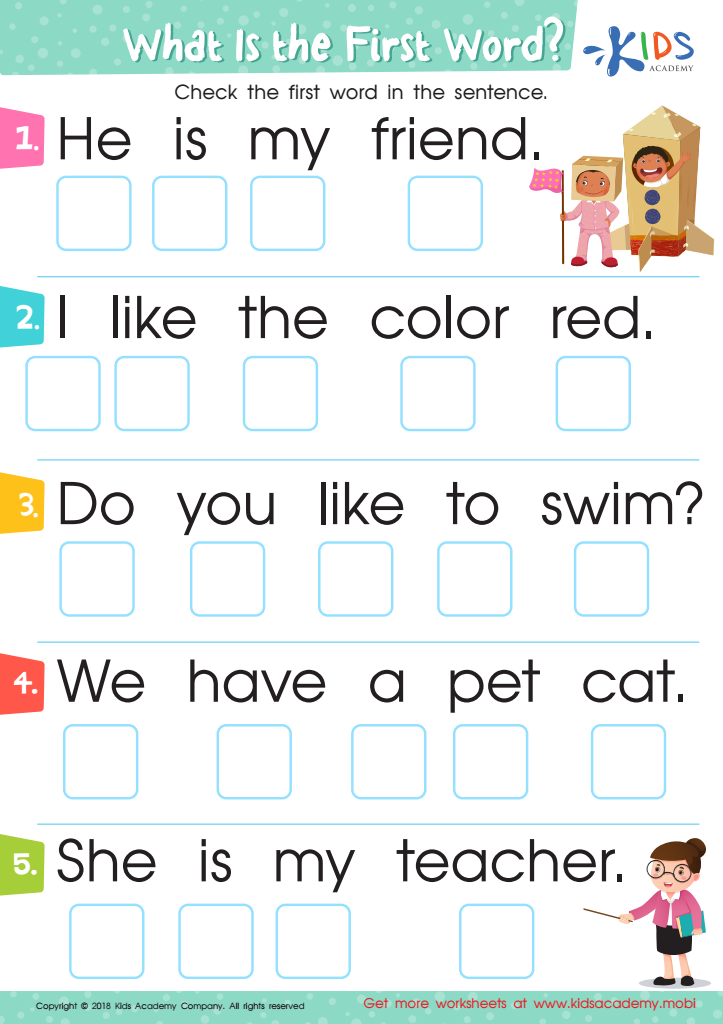
What is the First Word? Worksheet
Help your students test their sentence-reading skills with this printout! After teaching the alphabet, have them identify and write the first word in each sentence. With this exercise, they'll gain reading proficiency and be better prepared to write their own sentences.
What is the First Word? Worksheet
Worksheet
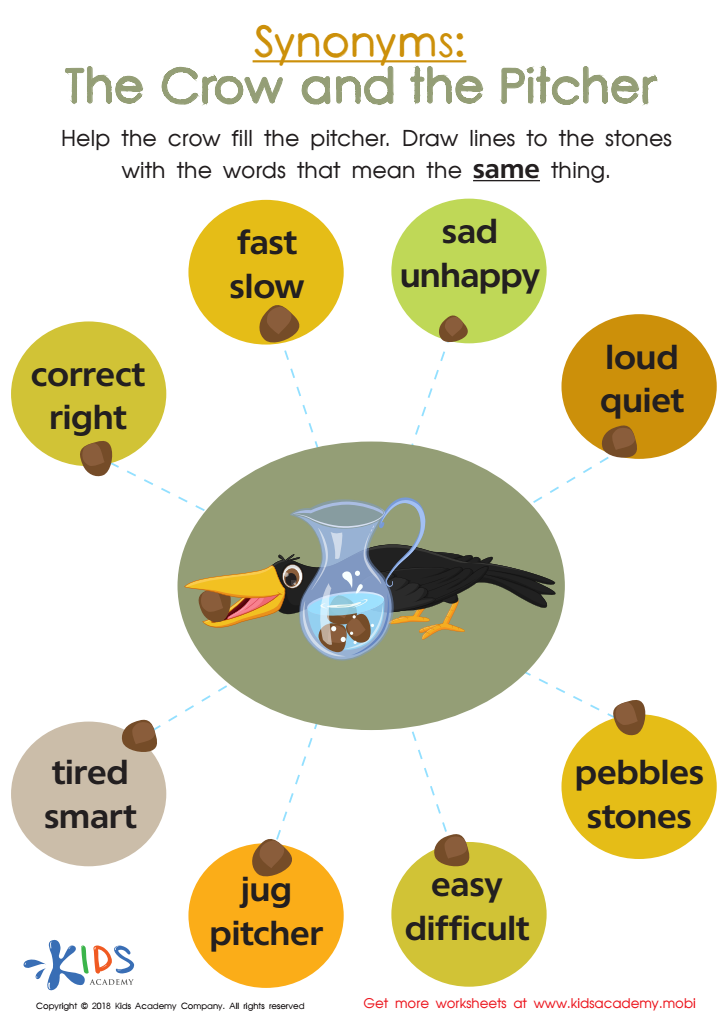
The Crow and the Pitcher Synonyms Worksheet
Give your child the building blocks for effective communication with an ELA lesson! Help the crow in this Kids Academy worksheet find the correct stones to fill the pitcher - only those next to synonym pairs! This is a fun way for kids to learn and expand their vocabulary and language skills.
The Crow and the Pitcher Synonyms Worksheet
Worksheet
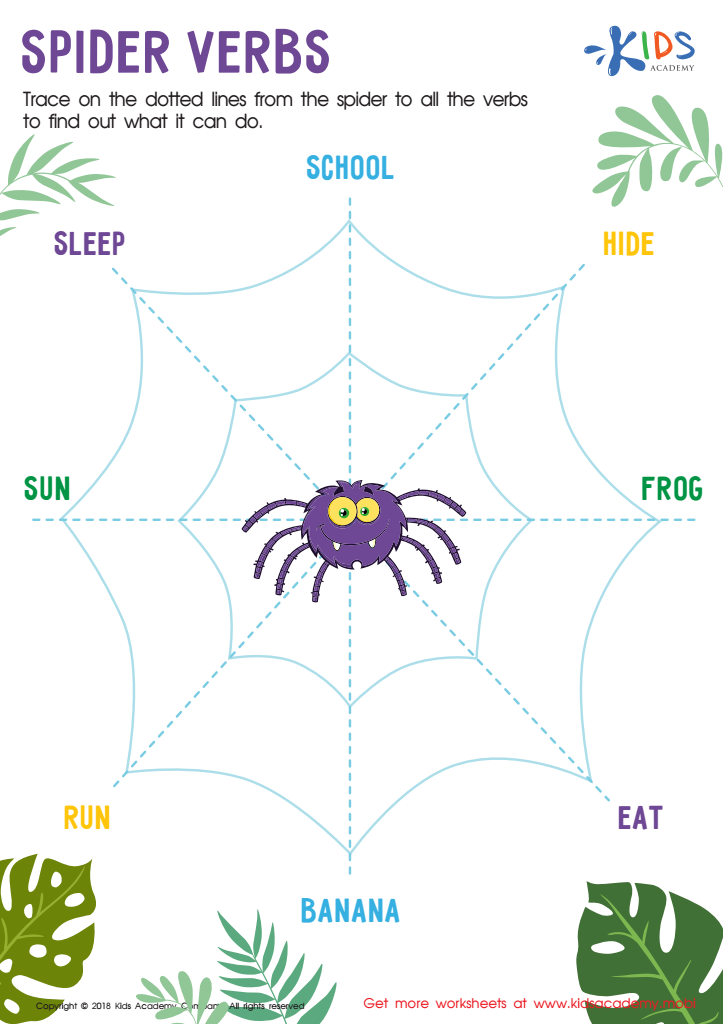
Spider Verbs Worksheet
Verbs are action words. Examples: run, play, talk. Show your child this tracing sheet for them to learn about verbs. Ask them to trace the dotted lines from the spider to the words that are verbs. These words are what the spider can do.
Spider Verbs Worksheet
Worksheet
Join Kids Academy for Free
Who is primarily going to use this learning content?








Vocabulary development in young children, particularly ages 3-7, is vital for several reasons. First, a robust vocabulary lays the foundation for effective communication. Children learn to express their thoughts, feelings, and ideas more clearly, fostering better relationships with peers and adults. As they articulate themselves well, they enhance their confidence, which plays a significant role in their overall social and emotional development.
Moreover, strong vocabulary skills are closely linked to literacy and academic success. Children with a rich vocabulary tend to read better, understand deeper meanings in texts, and perform better in school. Early exposure to diverse words through reading, conversations, and play enhances comprehension skills that are crucial for later complex subjects.
Additionally, vocabulary growth encourages critical thinking. Children learn to categorize, compare, and contrast new words. This cognitive process nurtures curiosity about the world around them.
For these reasons, parents and teachers should prioritize vocabulary development through engaging activities, storytelling, and discussions. By doing so, they can foster a love for language and set the stage for lifelong learning and success in various aspects of a child's life. Investing in vocabulary development at an early age benefits children well beyond their formative years.








