
Hand-eye Coordination ABC Letters Worksheets for Ages 3-8
8 filtered results
Difficulty Level
Grade
Age
-
From - To
Subject
Activity
Standards
Boost your child's hand-eye coordination with our engaging ABC Letters Worksheets, designed for ages 3 to 8! These fun and interactive printables help develop essential fine motor skills while introducing the alphabet. Each worksheet offers a variety of activities, from tracing and coloring letters to matching games, ensuring vibrant learning experiences. As children enhance their coordination through play, they gain confidence in letter recognition and readiness for future learning. Perfect for homeschooling, classrooms, or supplemental activities at home, our worksheets make learning both enjoyable and effective. Join the adventure in mastering the ABCs today with our captivating hand-eye coordination resources!
Favorites
With answer key
Interactive
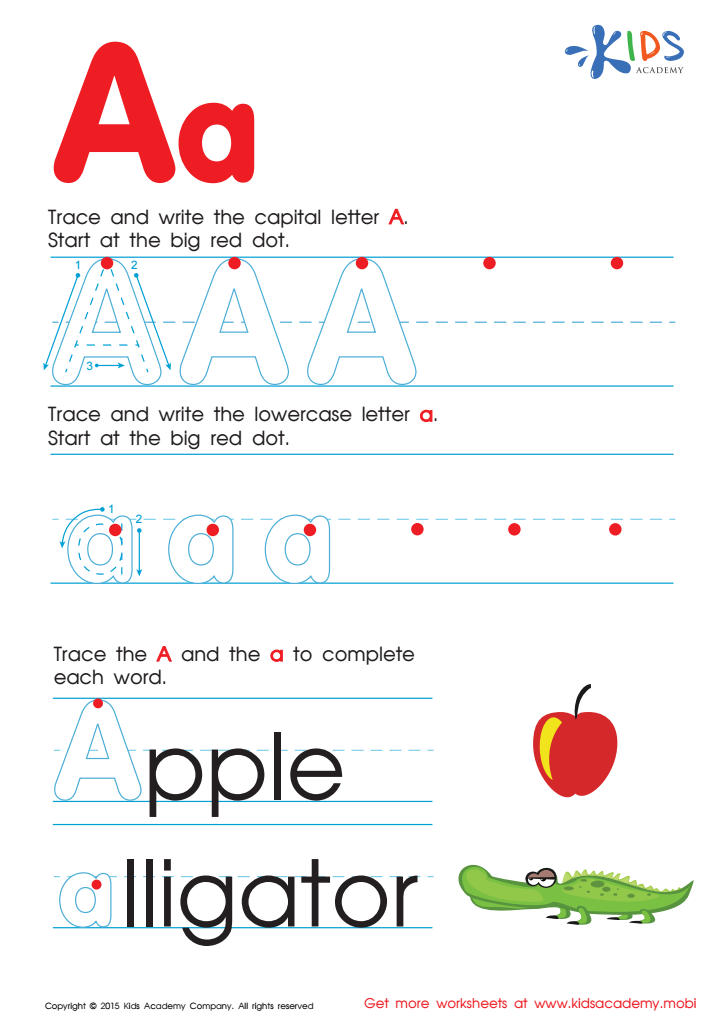
Letter A Tracing Page
Trace and write the letter "A"! Start with the big red dot, then do the capital and lowercase versions. Then write it again with two words - apple and alligator. Download more tracing worksheets at Kids Academy.
Letter A Tracing Page
Worksheet

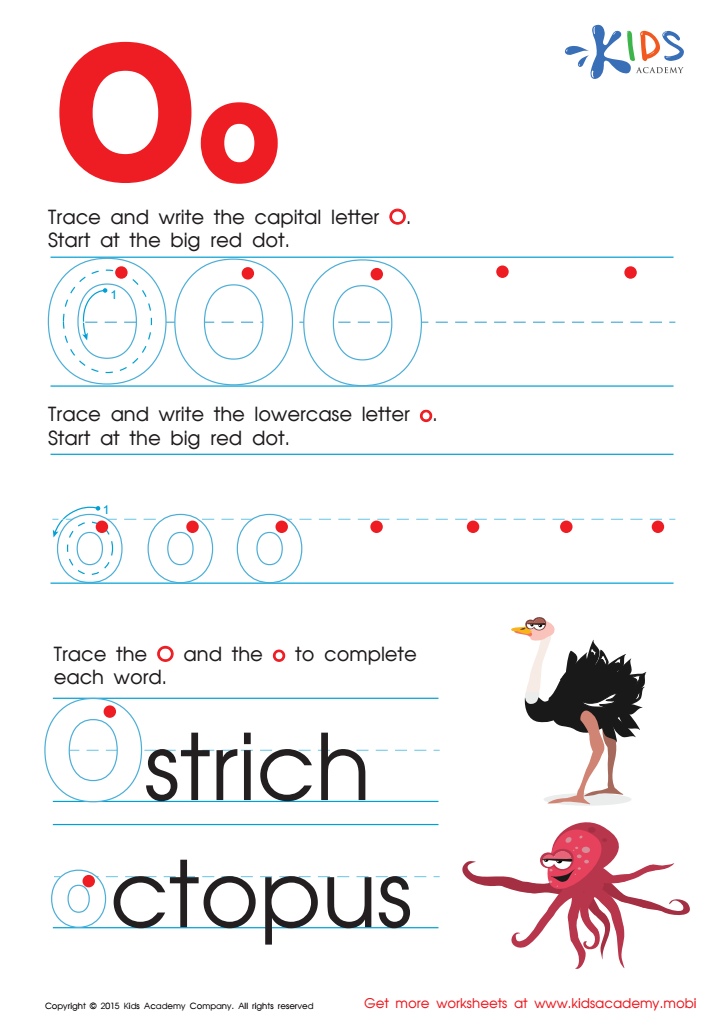
Letter O Tracing Page
Practice writing the letter "O" with our new worksheet. Trace and write the letter several times, starting at the red dot. First do the uppercase letter, then the lowercase. Use the pictures to complete the words "Ostrich" and "octopus". Kids Academy offers more fun alphabet worksheets.
Letter O Tracing Page
Worksheet
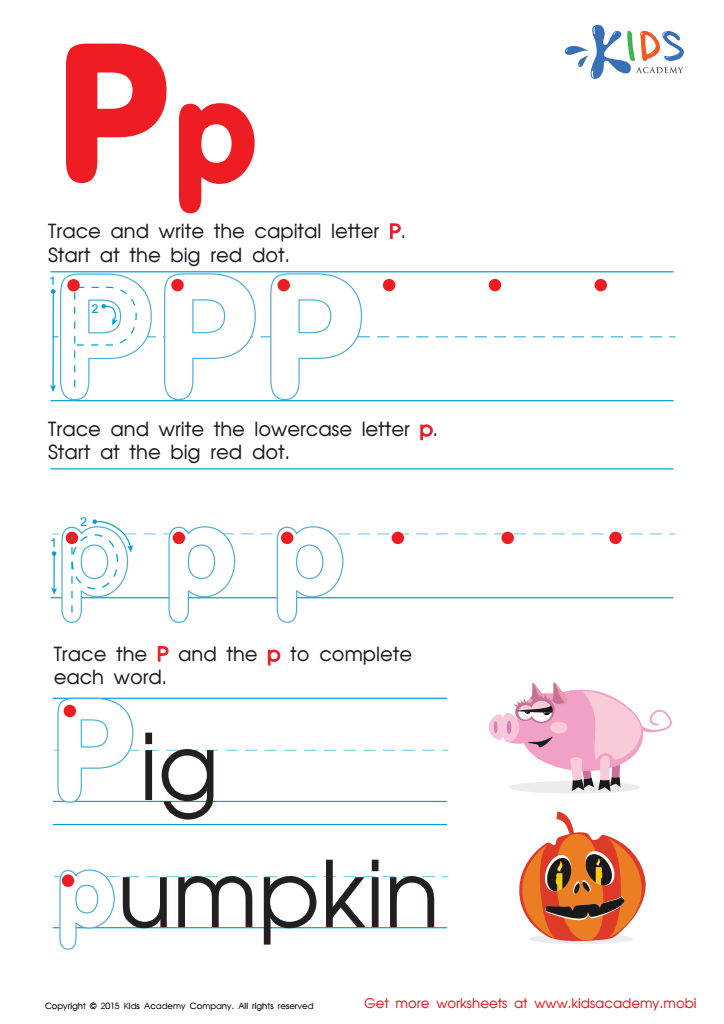
Letter P Tracing Page
Trace the lines from the red dot to learn to write "P"! Then practice this letter with the fun activities: complete the word "Pig" and "Pumpkin". Check out Kids Academy to get more free ABC worksheets.
Letter P Tracing Page
Worksheet
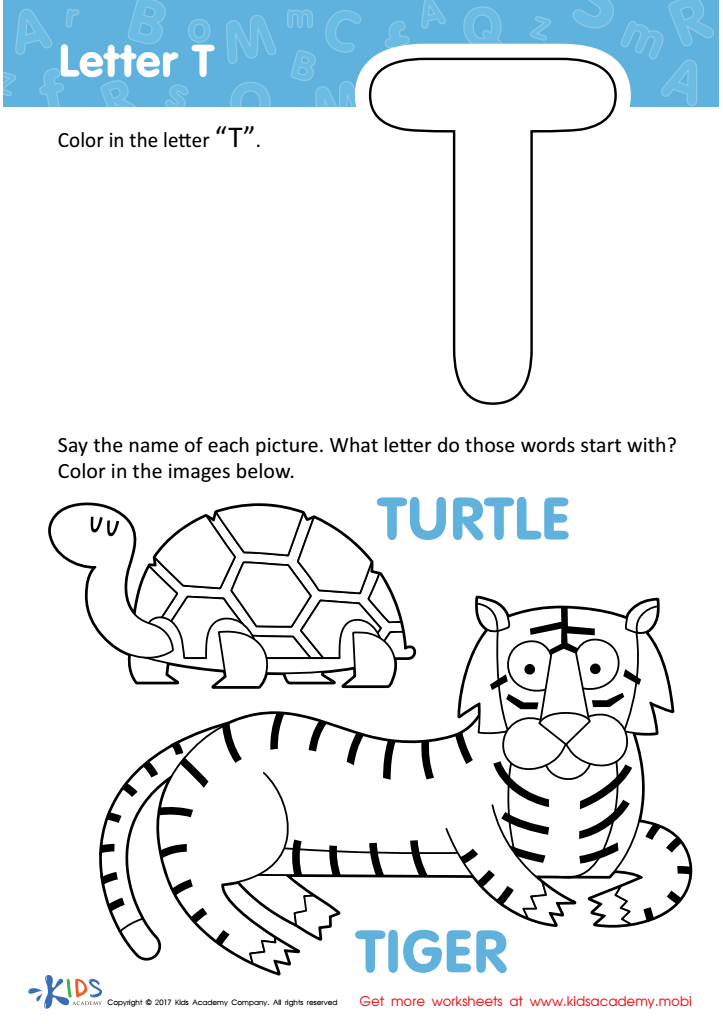
Letter T Coloring Sheet
Introduce your child to the letter "T" and its animals – turtles and tigers! With this coloring page, you can stimulate your child's imagination and creativity, while helping them recognize the letter "T". Have fun with your child and get coloring!
Download (PDF)
 Assign to My Students
Assign to My Students
Letter T Coloring Sheet
Worksheet
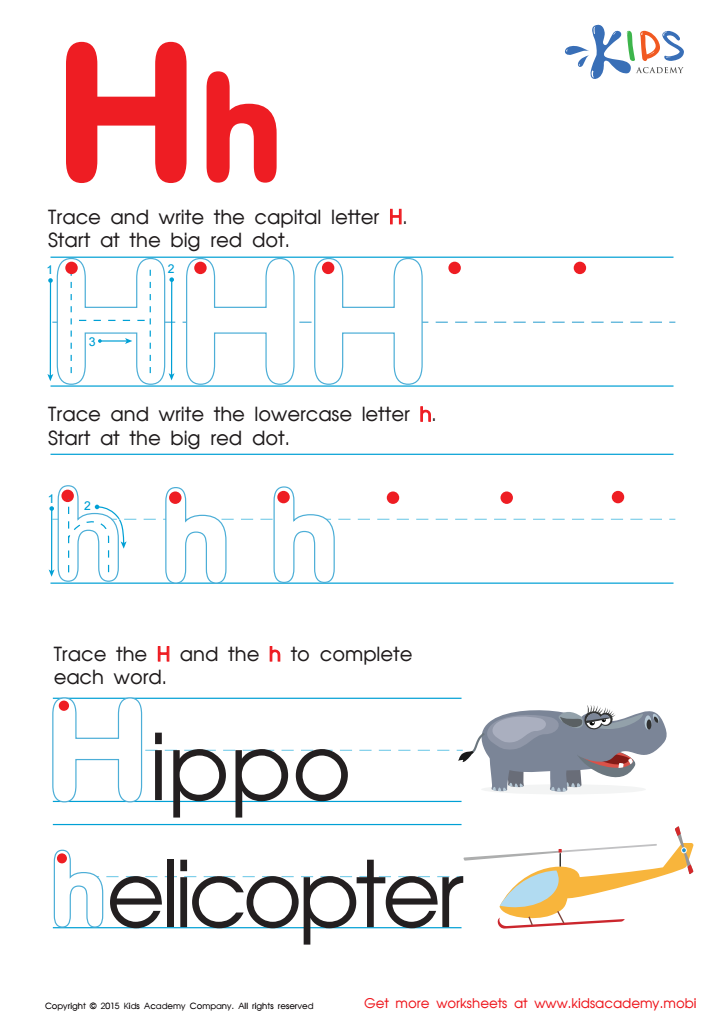
Letter H Tracing Page
Trace the letter "H", then practice writing its lowercase form. Finally, choose your favorite form of transport and ride away! Get our worksheets to make learning fun and easy.
Letter H Tracing Page
Worksheet
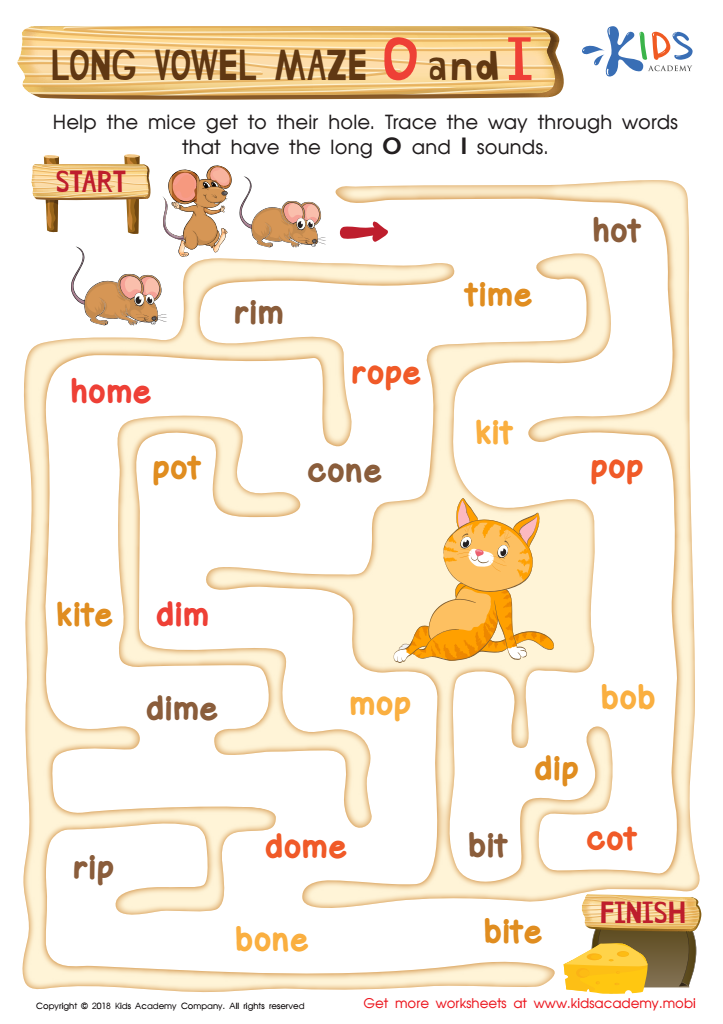
Long Vowel Maze /o/ and /i/ Worksheet
Help your new readers have fun and build their sight word vocabulary! Guide the mice to their prize cheese by having them trace the route on the worksheet, using words with the long o and long i sounds. But watch out for the kitty!
Long Vowel Maze /o/ and /i/ Worksheet
Worksheet
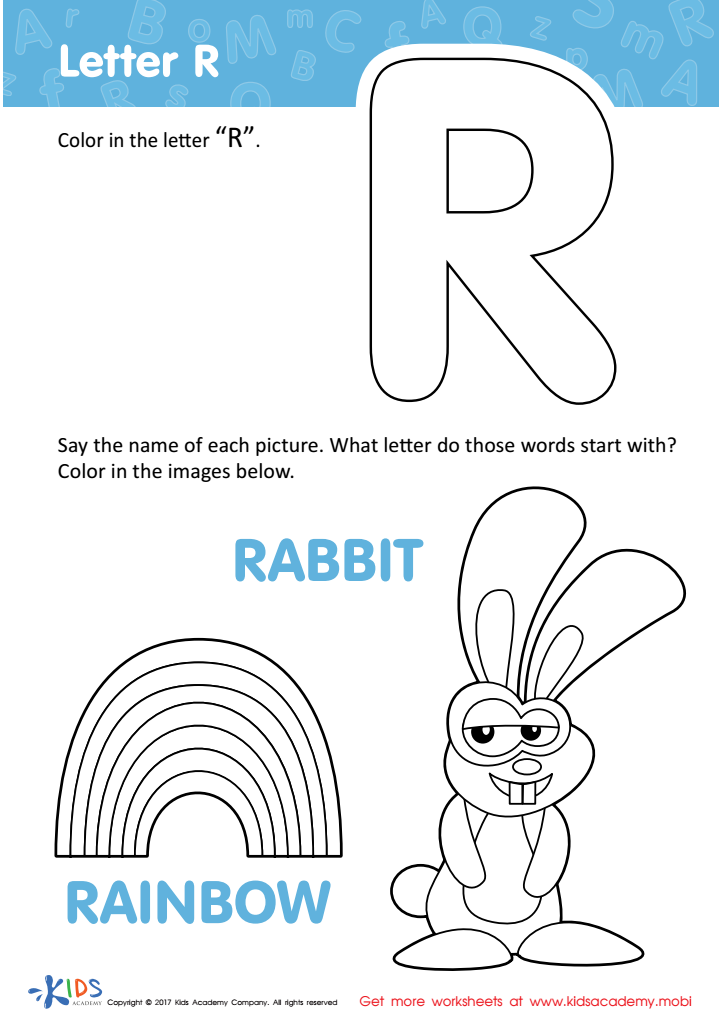
Letter R Coloring Sheet
Let your child explore the rainbow with this fun letter "R" coloring page! They can learn to recognize the letter and make connections to words, all while having fun! Make alphabet learning enjoyable with joyful coloring pages.
Download (PDF)
Assign to My Students
Assign to My Students
Letter R Coloring Sheet
Worksheet
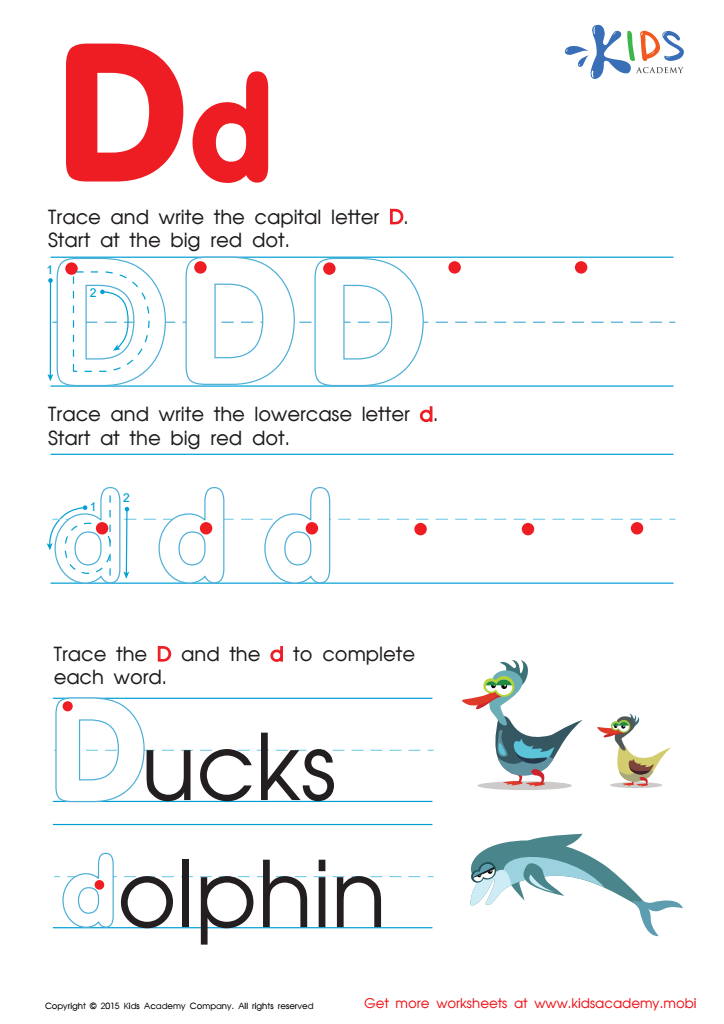
Letter D Tracing Page
Trace and write capital and lowercase letter "D" with our free printable alphabet worksheet! Be careful not to mix up "b" and "d" - just look at the ducks and write their first letter. The dolphin wants to join the fun too - do you like dolphins? Get more fun worksheets and activities at Kids Academy!
Letter D Tracing Page
Worksheet
Join Kids Academy for Free
Who is primarily going to use this learning content?






Hand-eye coordination is a crucial skill development area for children aged 3-8, particularly when it comes to learning the alphabet and other foundational literacy concepts. By facilitating activities that enhance hand-eye coordination, parents and teachers can significantly contribute to a child's overall cognitive and motor skill development.
As children practice recognizing and writing ABC letters, they refine their fine motor skills and strengthen neural connections that are essential for future learning. Activities like tracing letters, playing with letter blocks, or engaging in interactive games effectively improve this coordination.
Furthermore, strong hand-eye coordination helps boost a child's confidence and independence as they engage in various tasks, from writing to creative play. It prepares them for more complex skills as they progress in their education, including mathematics and other academic pursuits.
Additionally, fostering this skill provides an opportunity for parents and teachers to bond with children through engaging activities, promoting a love for learning from an early age. Overall, nurturing hand-eye coordination is important for physical development which supports academic success and cognitive growth, setting children on a positive educational path. Ensuring supportive and enlightening learning environments can significantly impact their development during these formative years.







