
Phonics skills improvement Phonics Worksheets for Ages 3-8
7 filtered results
Difficulty Level
Grade
Age
-
From - To
Subject
Activity
Standards
Unlock your child's reading potential with our engaging Phonics Worksheets designed for ages 3-8! These printable resources are crafted to enhance phonics skills through fun, interactive activities tailored to early learners. Our worksheets focus on key phonetic concepts, including letter recognition, sound blending, and word formation, promoting essential literacy development. With a variety of themes and challenges, children will build confidence as they improve their reading and writing abilities. Ideal for both home and classroom use, our phonics worksheets make learning enjoyable and effective. Boost your child's language skills and set the foundation for a lifelong love of reading today!
Favorites
With answer key
Interactive
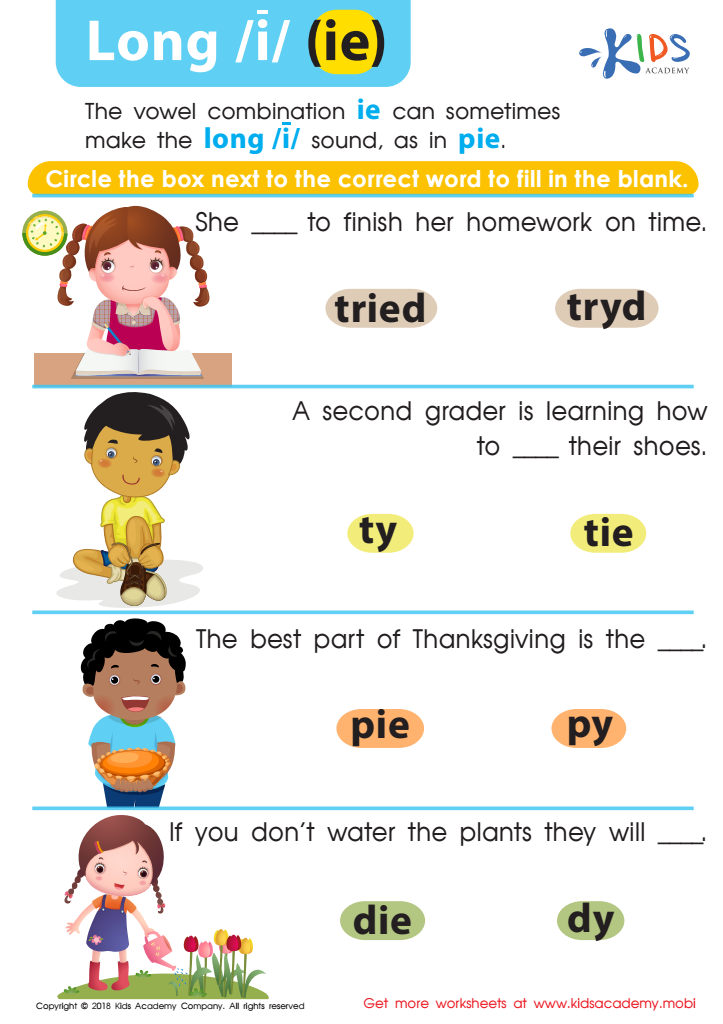
Reading: Long I and IE Worksheet
Have your child list words with the long /i/ sound (eg. 'pie'), and if needed, help them out with some examples. Read each word in the worksheet together and check their answer by having them circle the correct word.
Reading: Long I and IE Worksheet
Worksheet
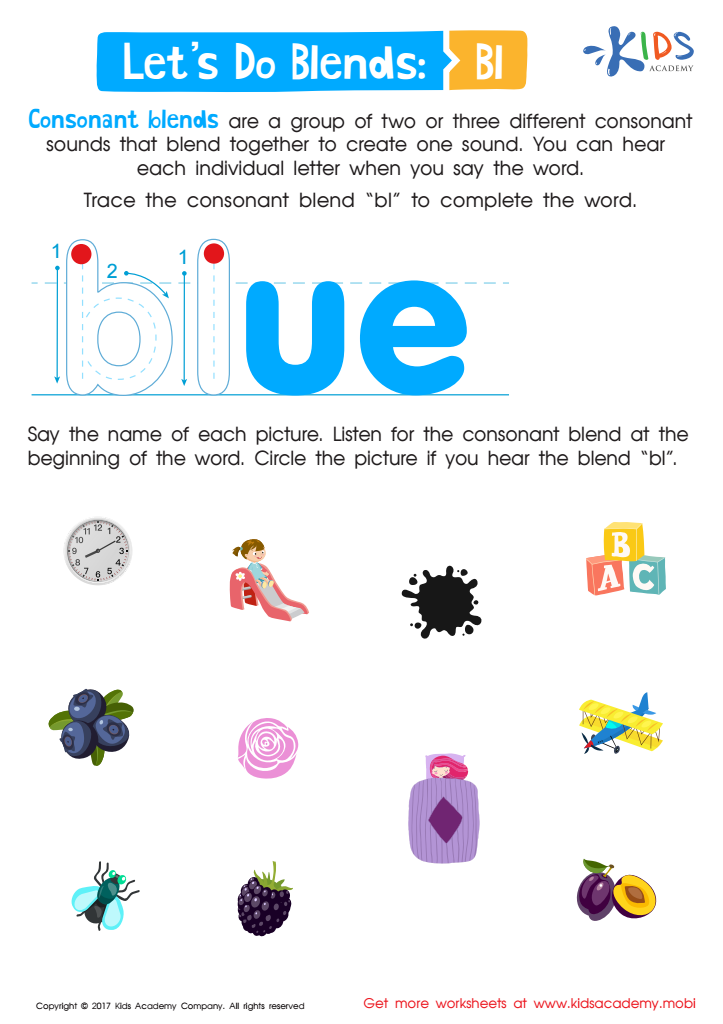
Beginning Blends: "Bl" Words Worksheet
Help your child master their phonics skills with this fun, focused consonant blend worksheet! They'll practice spelling, reading, and sounding out the words, which will help their speech and other skills. The worksheet focuses on "Bl" but extend your child's learning by finding other blends on the page. After completion, they'll be closer to phonics mastery!
Beginning Blends: "Bl" Words Worksheet
Worksheet
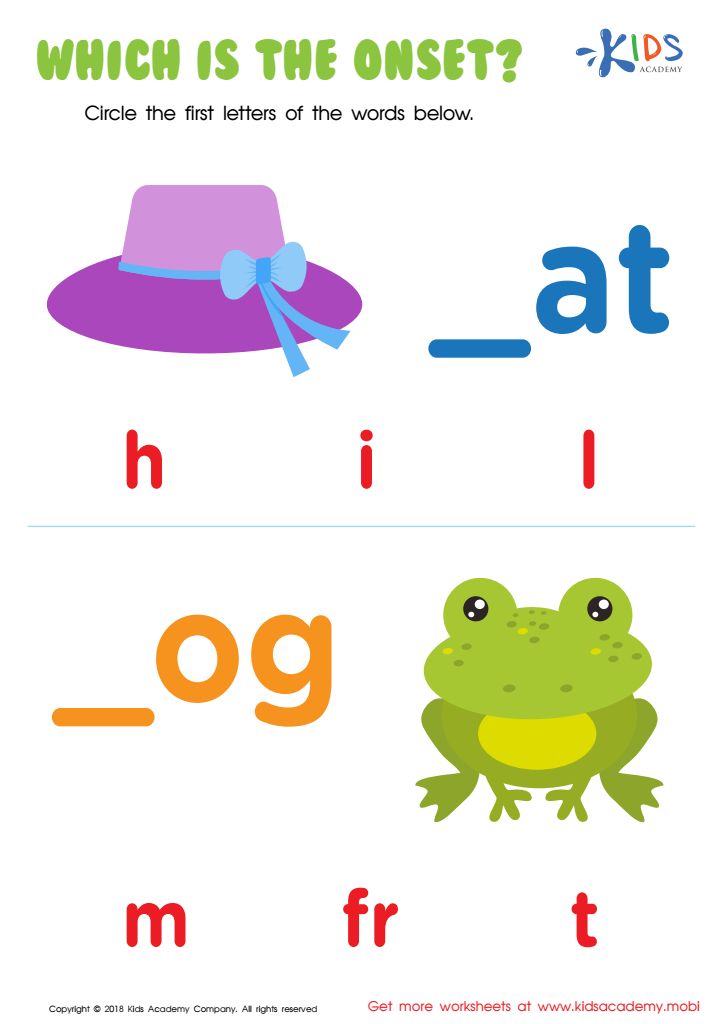
Which Is the Onset? Worksheet
Help your children learn to spell with this bright, fun worksheet. Struggling with spelling small words can make reading and writing sentences difficult. Encourage them to look at the pictures, say the names aloud and circle the correct first letter from the options. They will soon overcome any reluctance to spell.
Which Is the Onset? Worksheet
Worksheet
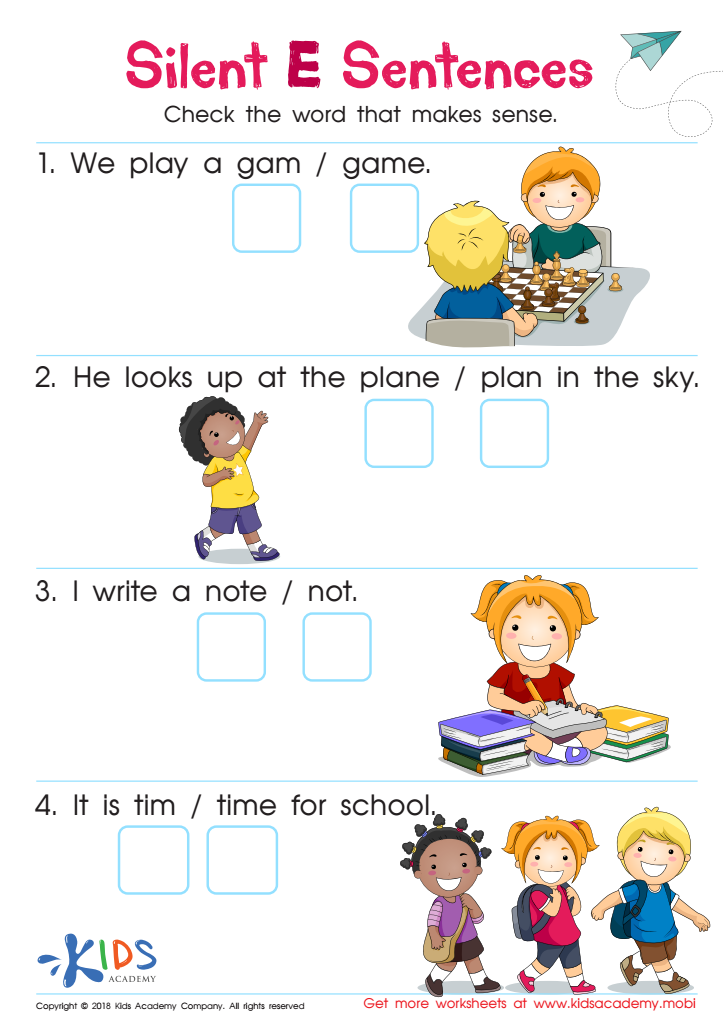
Silent E Sentences Worksheet
Young readers can find learning Silent E tricky, so this helpful worksheet can help! It teaches them to distinguish words that look the same but for the Silent E and choose the right word for sentence blanks. Kids can mark the correct answer and become familiar with closed syllables and words that require the E.
Silent E Sentences Worksheet
Worksheet

Long and Short U Worksheet
Revised: Spice up your lesson on long and short vowels with this fun printout! Kids read the words "tube" and "tub," then reinforce the sound by coloring in the words and pictures. It's a great way to make phonics class enjoyable!
Download (PDF)
 Assign to My Students
Assign to My Students
Long and Short U Worksheet
Worksheet
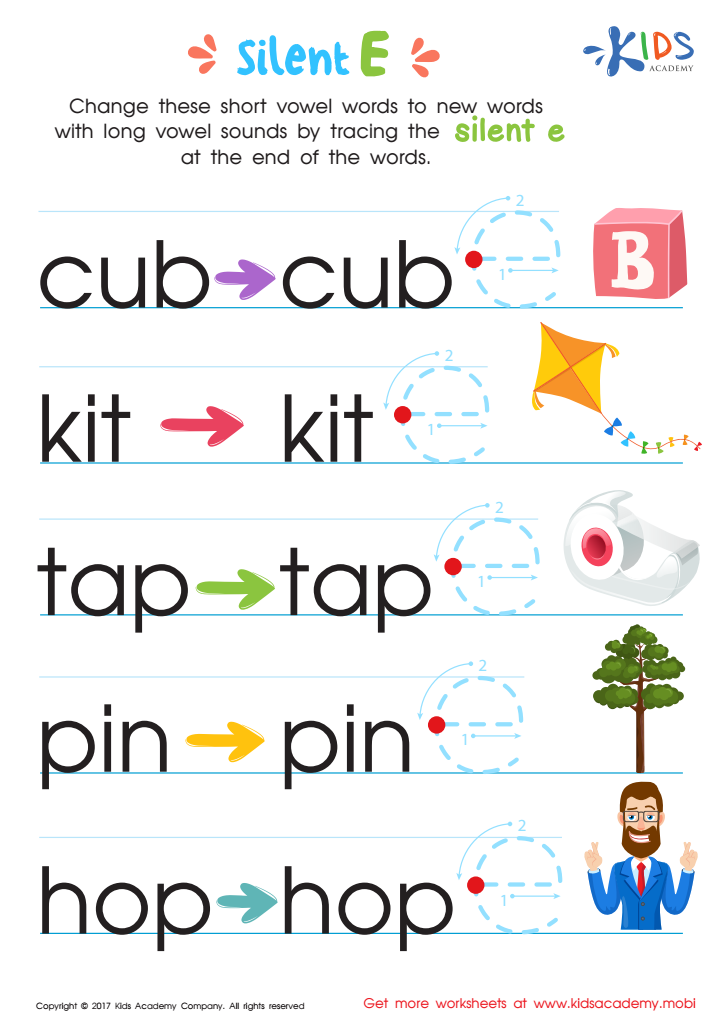
Silent E Words Worksheet
The letter e is amazing - it changes words without making a sound! Boost spelling and phonics with this Silent e worksheet from Kids Academy - fun and colorful!
Silent E Words Worksheet
Worksheet
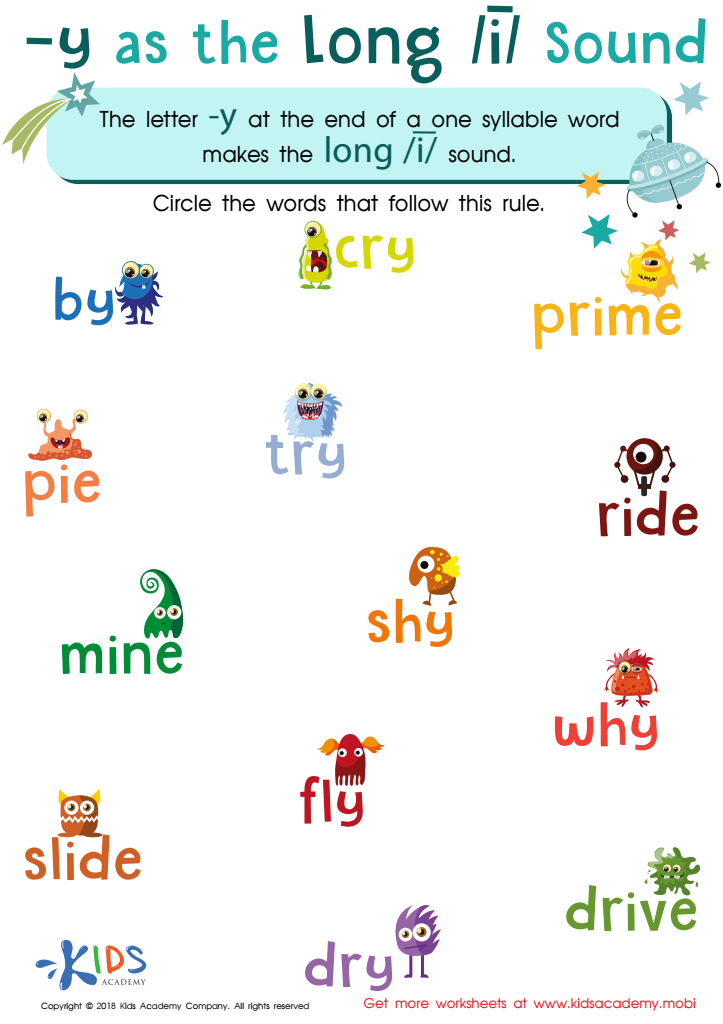
Reading: Y as Long I Worksheet
Students need practice and exposure to letters that make different sounds for decoding and reading success. This printable is a great resource for language arts classes: it explains that words ending with Y and having only one syllable make the long I sound. Students will circle all words with Y that have this sound.
Reading: Y as Long I Worksheet
Worksheet
Join Kids Academy for Free
Who is primarily going to use this learning content?








Phonics skills are foundational to a child's reading and writing development, particularly for those aged 3-8. At this crucial stage, children are beginning to understand the relationship between letters and sounds, often referred to as phonemic awareness. Improving phonics skills invites children to decode words, enhances their reading fluency, and fosters a love for literature. This early mastery not only supports academic success but also builds self-confidence as children learn to independently engage with texts.
Parents and teachers should care about phonics improvement because it set the groundwork for lifelong learning habits. Children strong in phonics are better equipped to navigate complex language structures in later years, reducing frustration and reluctance towards reading. Furthermore, children who struggle with phonics may experience reading difficulties, leading to gaps in knowledge that could impact their overall academic performance. Early intervention through engaging phonics activities helps bridge these gaps.
Support for phonics can also create a strong home-school connection, as parents can reinforce skills through simple reading games or activities. Ultimately, fostering phonics skills lays a solid foundation not only for literacy but for critical thinking and communication skills, essential for a child's future success.







