Upper & Lowercase Letters Worksheets for Ages 3-8 - Page 3
50 filtered results
-
From - To
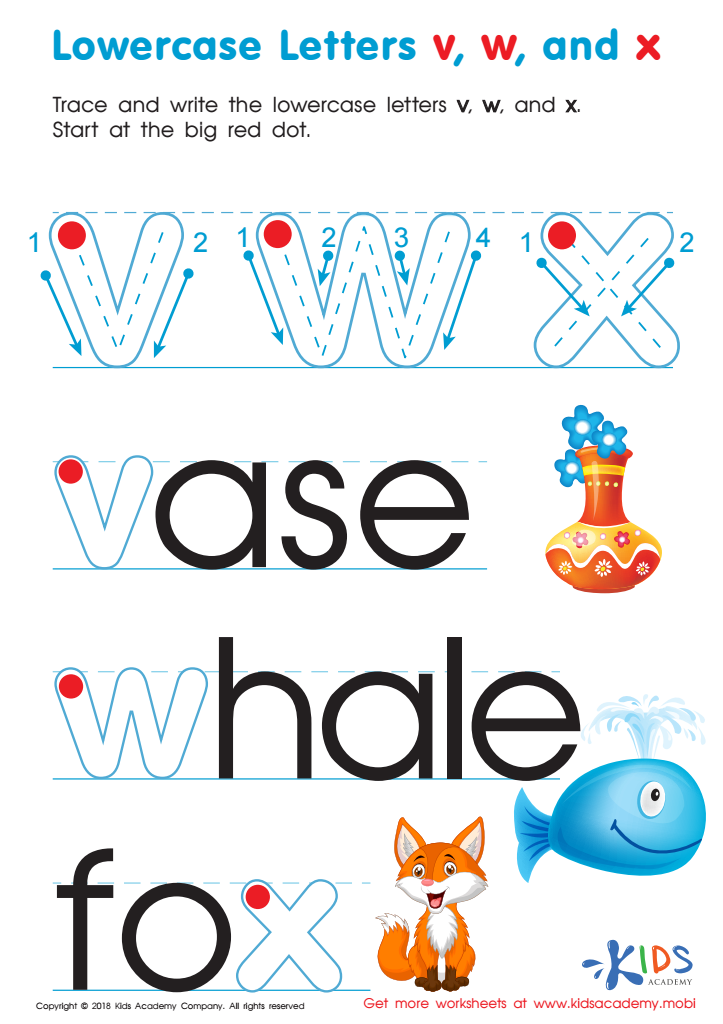
Lowercase Letters v w x Worksheet
 Assign to My Students


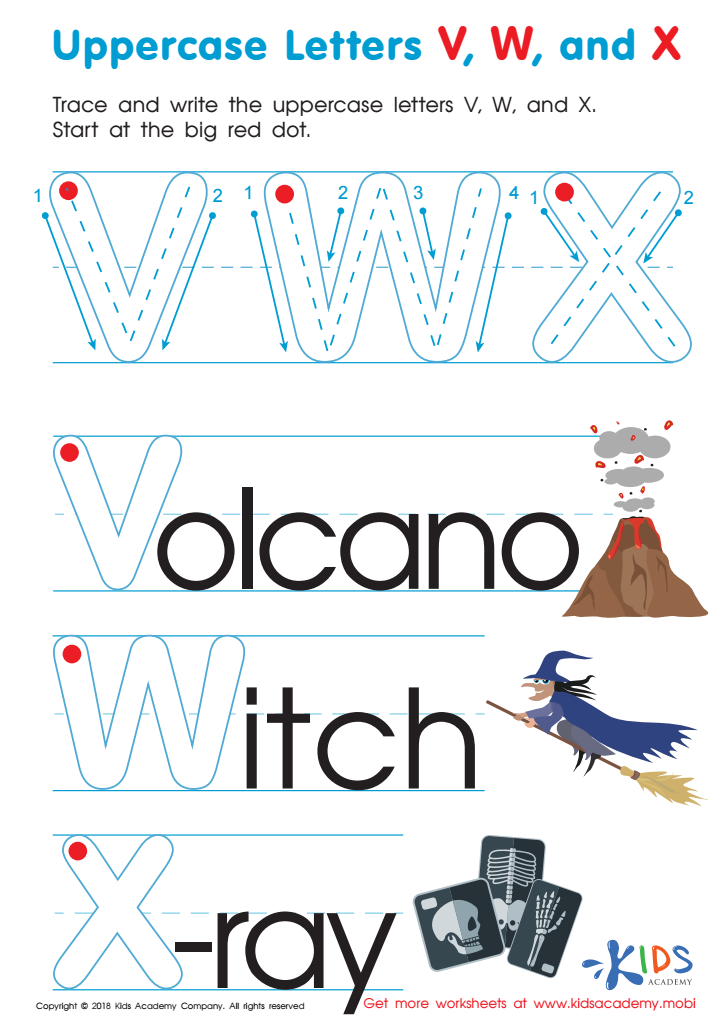
Uppercase Letters V, W, and X Worksheet






Understanding uppercase and lowercase letters forms the foundation of literacy, making it crucial for parents and teachers to prioritize this learning in children aged 3-8. During this critical developmental window, children are rapidly absorbing knowledge and skills. Familiarity with both uppercase and lowercase letters enhances their ability to recognize and differentiate written language, a key component in reading fluency.
For instance, while uppercase letters are often introduced first because of their simplicity and distinctiveness, lowercase letters appear more frequently in written texts. Mastering the difference between these forms enables children to read books, signage, and instructions more effectively. It also plays a role in writing; knowing when to use uppercase for the beginnings of sentences and proper nouns fosters proper grammar skills early on.
Furthermore, early literacy skills are closely linked to future academic success. By ensuring solid understanding and use of both uppercase and lowercase letters, parents and teachers set the stage for effective communication and learning. This nurturing not only develops reading and writing capabilities but also boosts self-esteem and enthusiasm for learning, fostering a positive attitude toward education that can last a lifetime.







