Feelings and Emotions Worksheets for Ages 3-8
4 filtered results
Difficulty Level
Grade
Age
-
From - To
Subject
Activity
Standards
Explore our "Feelings and Emotions Worksheets for Ages 3-8" designed to help young learners understand and express their emotions through engaging activities. Our printable resources include coloring pages, matching games, and emotion recognition exercises that make learning fun and interactive. These worksheets are perfect for home or classroom use, promoting emotional literacy and encouraging conversations about feelings. Ideal for educators and parents, our resources support social-emotional learning, fostering empathy and awareness in early childhood. Help your child navigate their emotional world with creativity and understanding by accessing our collection today! Great for enhancing critical skills in a supportive environment.
Favorites
With answer key
Interactive
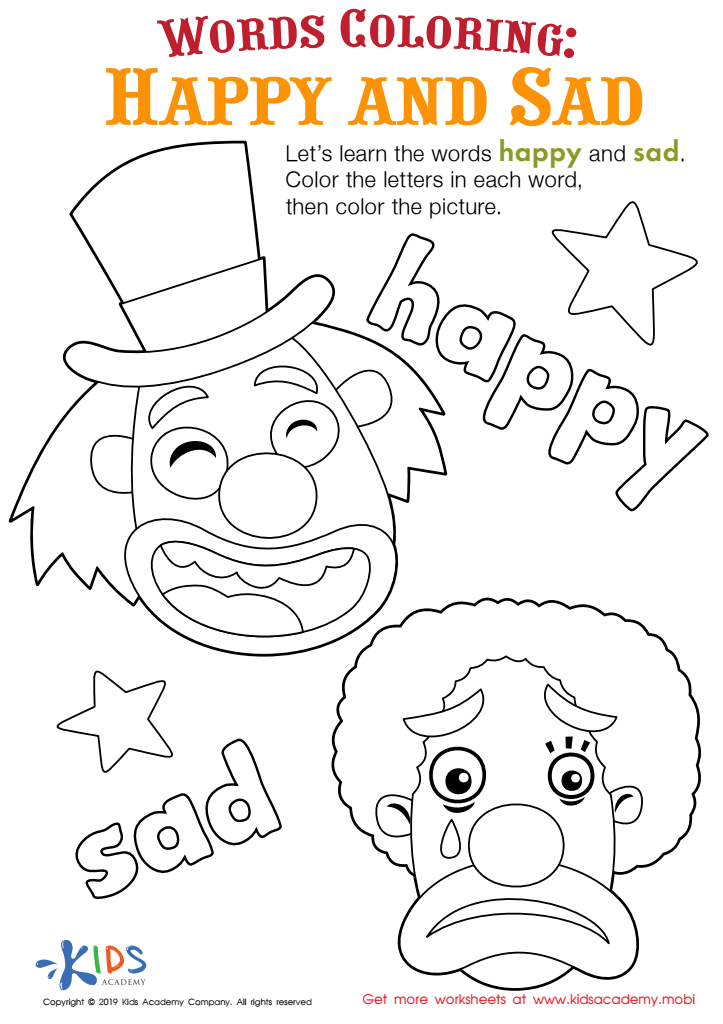
Happy and Sad Words Coloring Worksheet
Help students understand emotions by using this fun worksheet. It features smiling and sad clowns and the words 'happy' and 'sad'. Read the words with your students, then have them color the clowns and the emotion words. This PDF is an effective way to teach kids how to express how they feel.
Download (PDF)
 Assign to My Students
Assign to My Students
Happy and Sad Words Coloring Worksheet
Worksheet
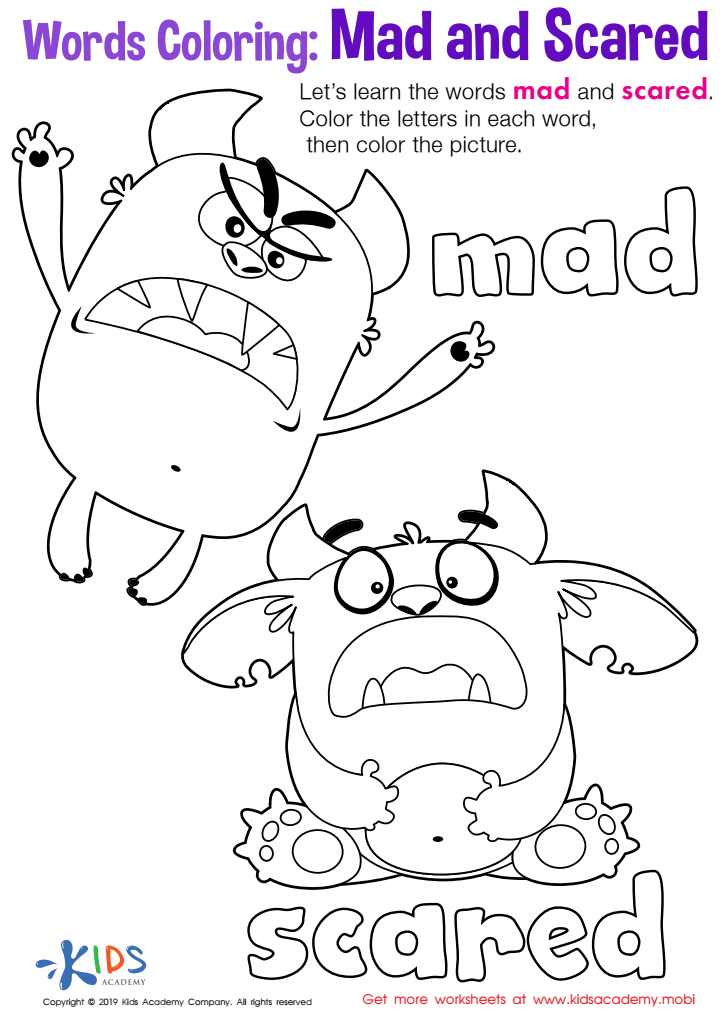
Mad and Scared Words Coloring Worksheet
This worksheet teaches "mad" and "scared" with fun monster pictures to color. Helping students learn by sight, it encourages sharing what makes them feel those strong emotions. Perfect for social studies, it expands student's vocabulary in an entertaining way.
Download (PDF)
Assign to My Students
Assign to My Students
Mad and Scared Words Coloring Worksheet
Worksheet
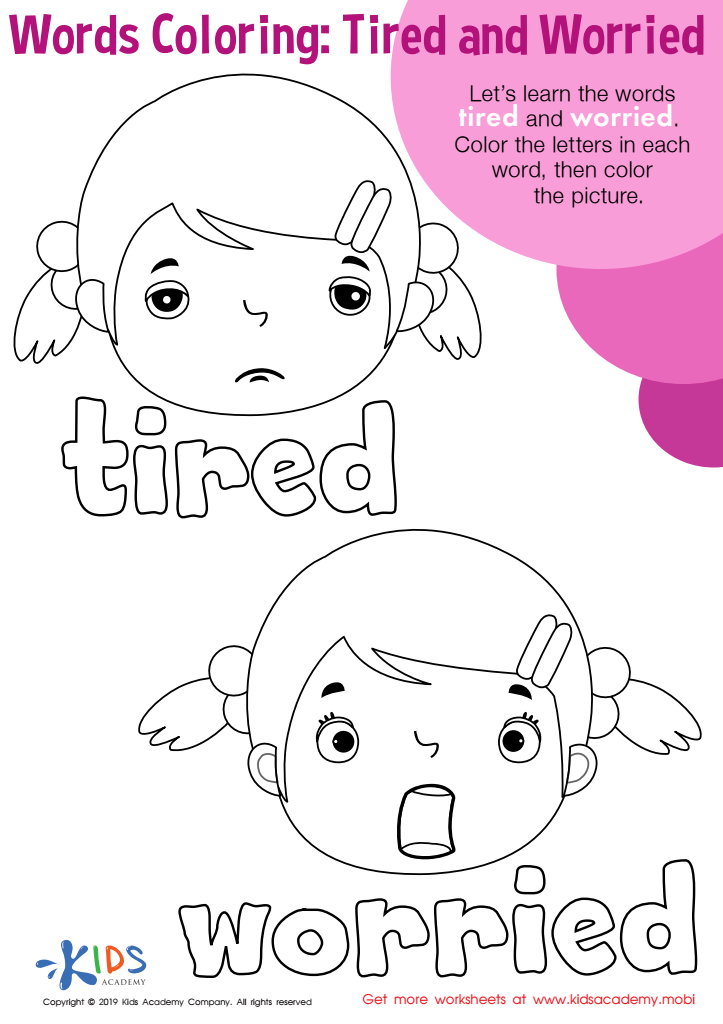
Tired and Worried Words Coloring Worksheet
Teach your students about "tired" and "worried" with this worksheet. Have them read and color the emotion words, then color the pictures of a tired girl and a worried girl. Discuss what makes them tired and worried. Expand their vocabulary with this fun coloring activity!
Download (PDF)
Assign to My Students
Assign to My Students
Tired and Worried Words Coloring Worksheet
Worksheet
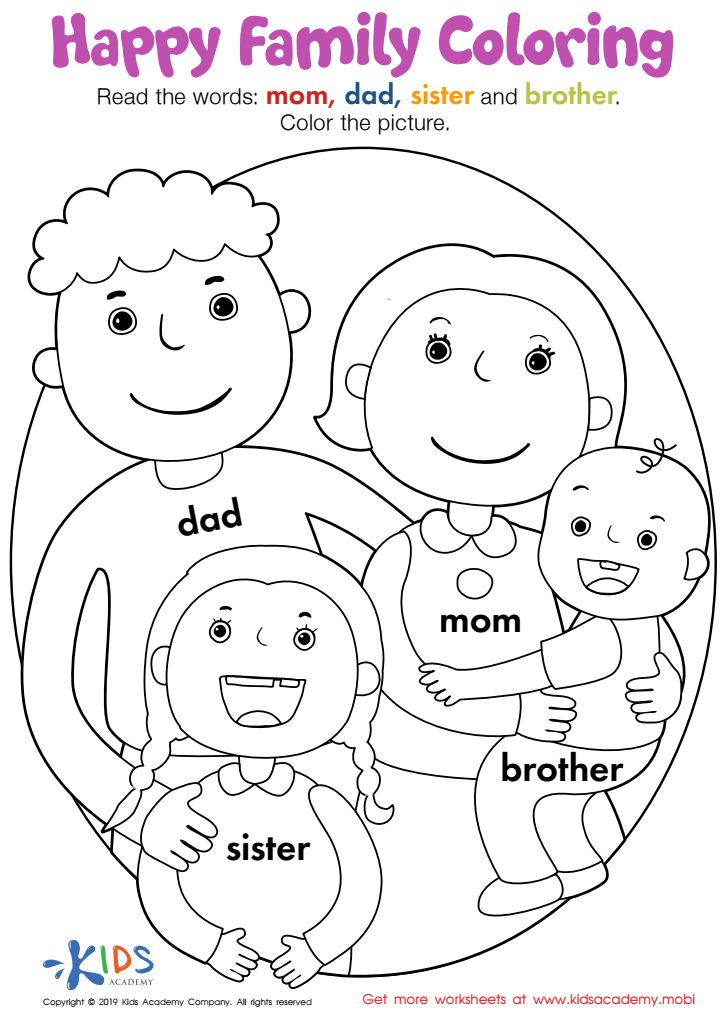
Happy Family Coloring Worksheet
Help your students gain confidence in family vocabulary with this worksheet. Labelled images of a family (dad, mom, sister, brother) are featured, along with an accompanying activity to colour in the picture. Your students will feel a sense of accomplishment after reading and completing the printable.
Download (PDF)
Assign to My Students
Assign to My Students
Happy Family Coloring Worksheet
Worksheet
Join Kids Academy for Free
Who is primarily going to use this learning content?




Parents and teachers should care about feelings and emotions for children aged 3-8 because this developmental stage is crucial for emotional intelligence and social skills. During these formative years, children start to understand and express their feelings, as well as recognize those of others. Nurturing emotional awareness allows children to develop empathy, which is essential for building healthy relationships and fostering cooperation with their peers.
When adults emphasize the importance of feelings, they create a safe environment where children can articulate their emotions. This skill is pivotal for emotional regulation; children who can express how they feel are better equipped to cope with challenges, resolve conflicts, and reduce anxiety.
Moreover, understanding emotions enhances a child's ability to communicate and collaborate effectively, skills invaluable in both academic and social contexts. Teachers and parents who model emotional expression and validate children's feelings contribute to their self-esteem and resilience.
Finally, by teaching children to identify and manage their emotions, adults pave the way for lifelong healthy mental habits, reducing the risk of emotional difficulties in later years. Ultimately, cultivating emotional intelligence during these early years lays the foundation for well-rounded, empathetic individuals who can thrive in their relationships and communities.