Basic arithmetic skills Worksheets for Ages 3-8 - Page 2
30 filtered results
-
From - To
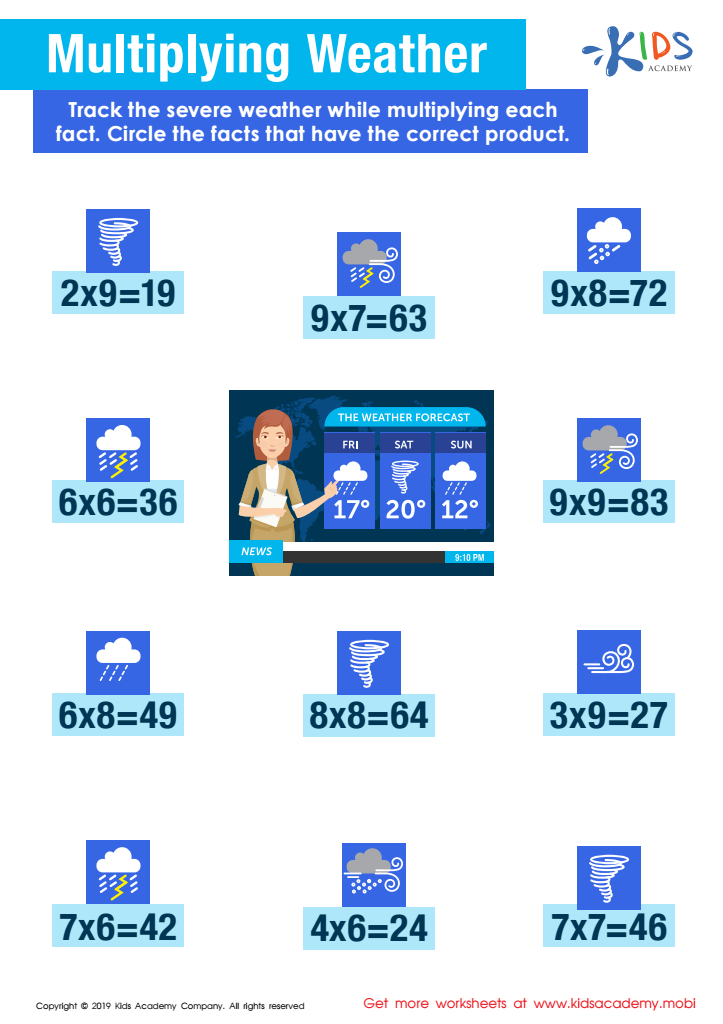
Multiplying Weather Worksheet
 Assign to My Students
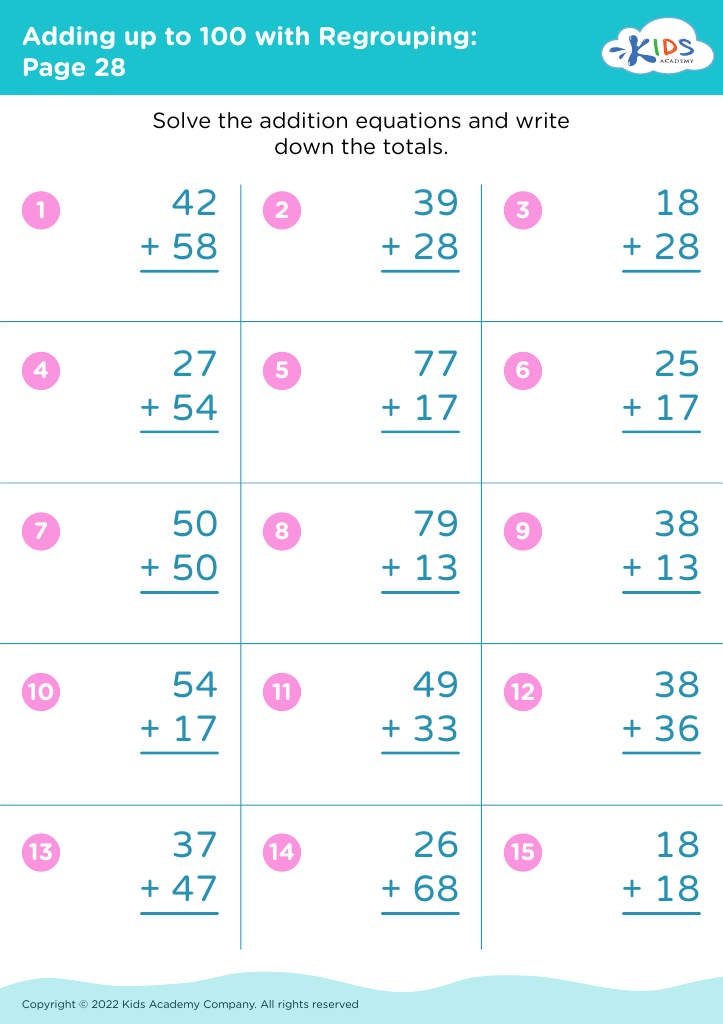
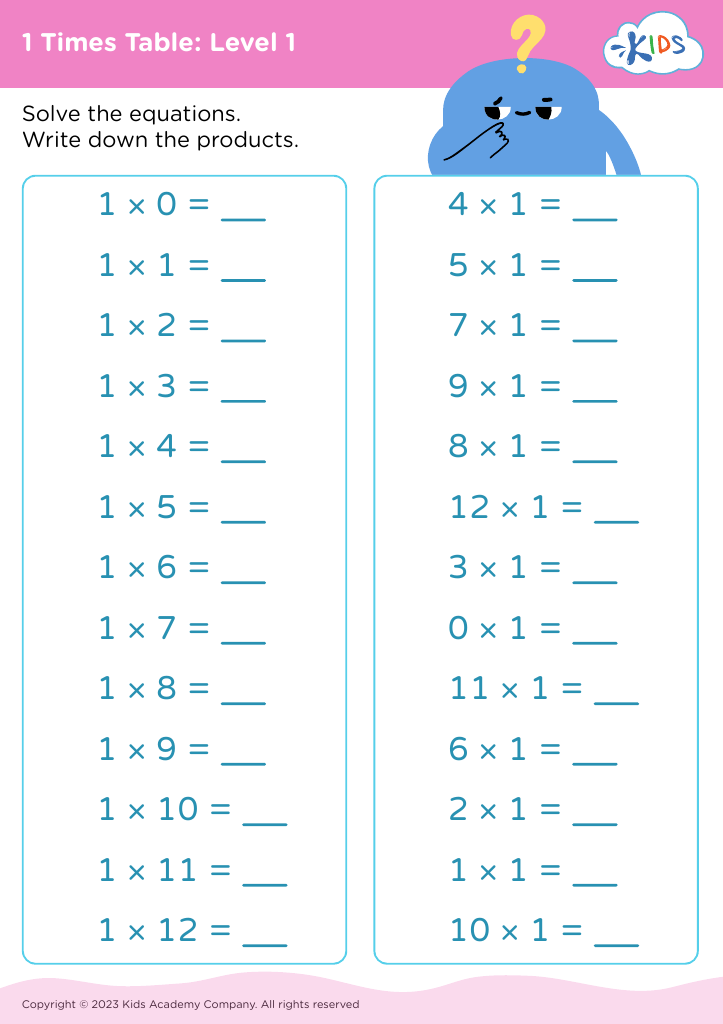







Basic arithmetic skills are crucial for children aged 3-8 as they form the foundation for future mathematical understanding and problem-solving abilities. During this developmental stage, children's brains are particularly receptive to learning, making it an ideal time to introduce concepts such as addition, subtraction, and even early multiplication. Mastery of these skills not only enhances cognitive development but also boosts self-confidence and fosters a positive attitude toward learning.
Understanding basic arithmetic helps children recognize patterns and develop critical thinking skills. These skills are not only essential for higher-level math, but they also apply to everyday situations, from sharing snacks to counting toys. Furthermore, a solid grasp of arithmetic is vital for success in academic subjects beyond math, as analytical skills cultivated through these practices can enhance reading comprehension and science learning.
Parents and teachers play an integral role in nurturing these skills. Engaging children in fun, interactive, and hands-on activities—like games, songs, and practical exercises—can make learning enjoyable and effective. By prioritizing basic arithmetic, caregivers encourage lifelong learning habits and prepare children for academic challenges ahead, ensuring a strong foundation in their educational journey.








