Cognitive skills enhancement Worksheets for Ages 3-8
3 filtered results
-
From - To
Enhance your child's cognitive skills with our engaging worksheets for ages 3-8! Our collection offers fun and effective activities designed to stimulate critical thinking, memory, problem-solving, and reasoning abilities. Each worksheet is carefully crafted to align with developmental milestones, making learning enjoyable and effective. From puzzles and matching games to memory challenges, our resources cater to diverse learning styles and interests. These worksheets not only nurture cognitive growth but also foster creativity and confidence. Perfect for home or classroom use, our cognitive skills enhancement worksheets are a valuable tool for parents and educators alike. Unlock your child's potential today!
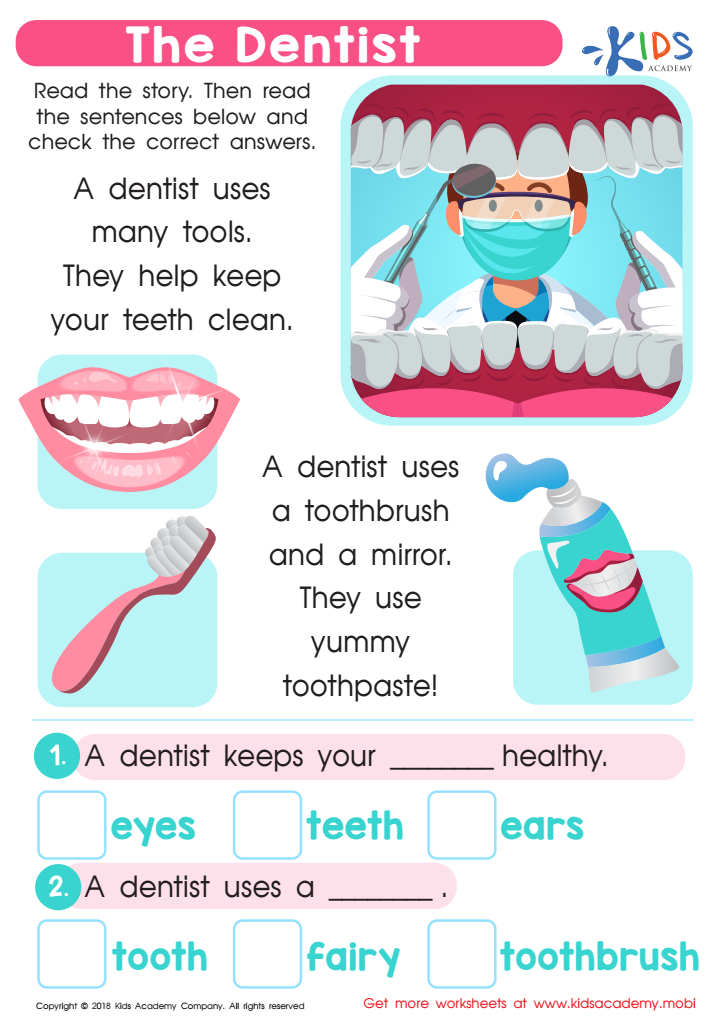
The Dentist Worksheet
 Assign to My Students
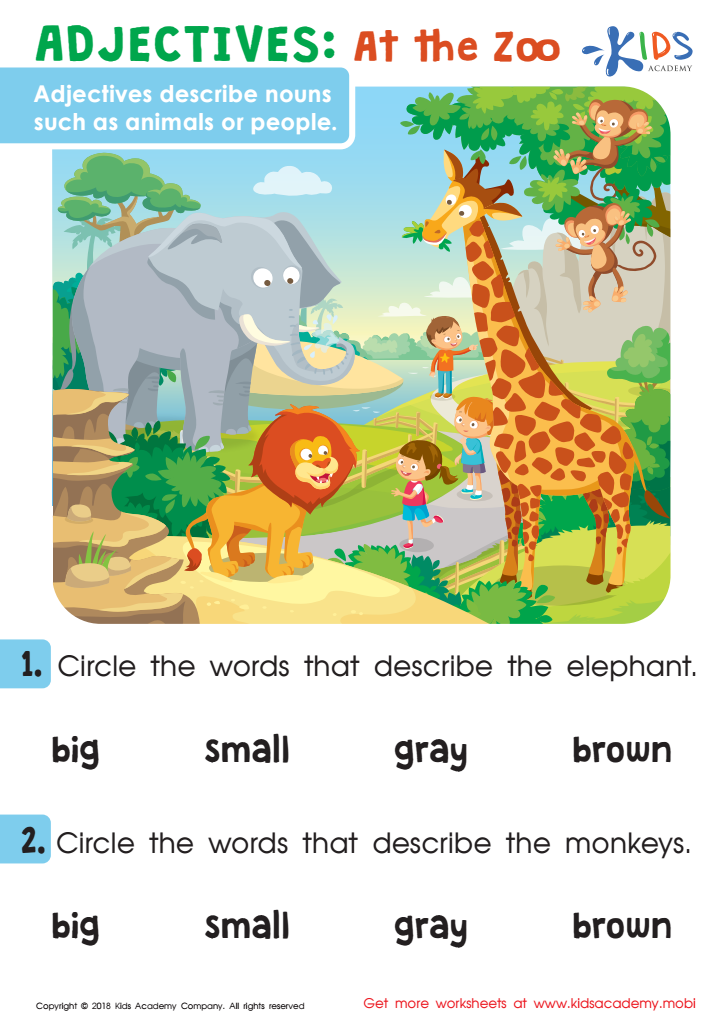
Adjectives: At The Zoo Worksheet
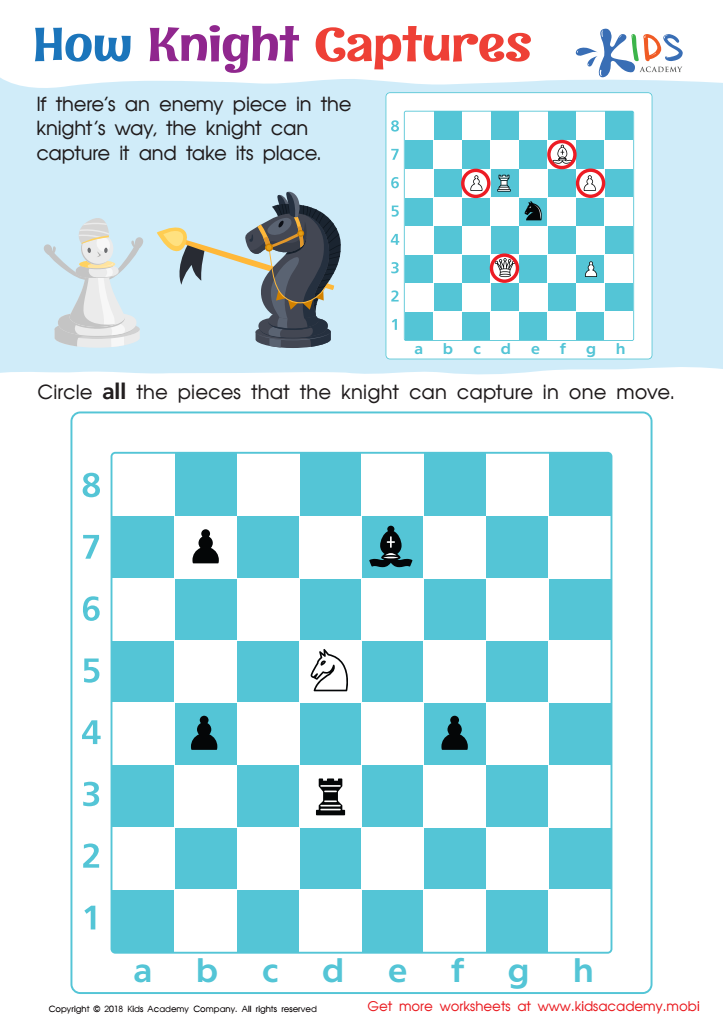
How Knight Captures Worksheet







Cognitive skills enhancement for children aged 3-8 is crucial for their overall development and future success. During these early years, children's brains are incredibly receptive and undergo significant growth. Enhancing cognitive skills such as critical thinking, problem-solving, memory, and attention lays the foundation for academic learning and social interactions.
Parents and teachers should be invested in developing these skills as they directly influence a child's ability to grasp complex concepts later in life. Engaging activities that promote cognitive skills, such as puzzles, games, and storytelling, stimulate brain development and encourage curiosity. These skills are not only essential for academic success but also for everyday decision-making and emotional regulation.
Moreover, children with well-developed cognitive skills are often more equipped to face academic challenges and socialize effectively, leading to increased self-confidence and a positive attitude toward learning. The impact of these early interventions can result in long-term benefits, enhancing a child's virtually all facets of life. Thus, prioritizing cognitive skills enhancement during these formative years aligns with nurturing well-rounded individuals who can think critically and adapt successfully to the complexities of the world around them. Enabling young learners to reach their potential is a collective responsibility for both parents and educators.








