Color recognition Worksheets for Ages 3-8 - Page 6
124 filtered results
-
From - To
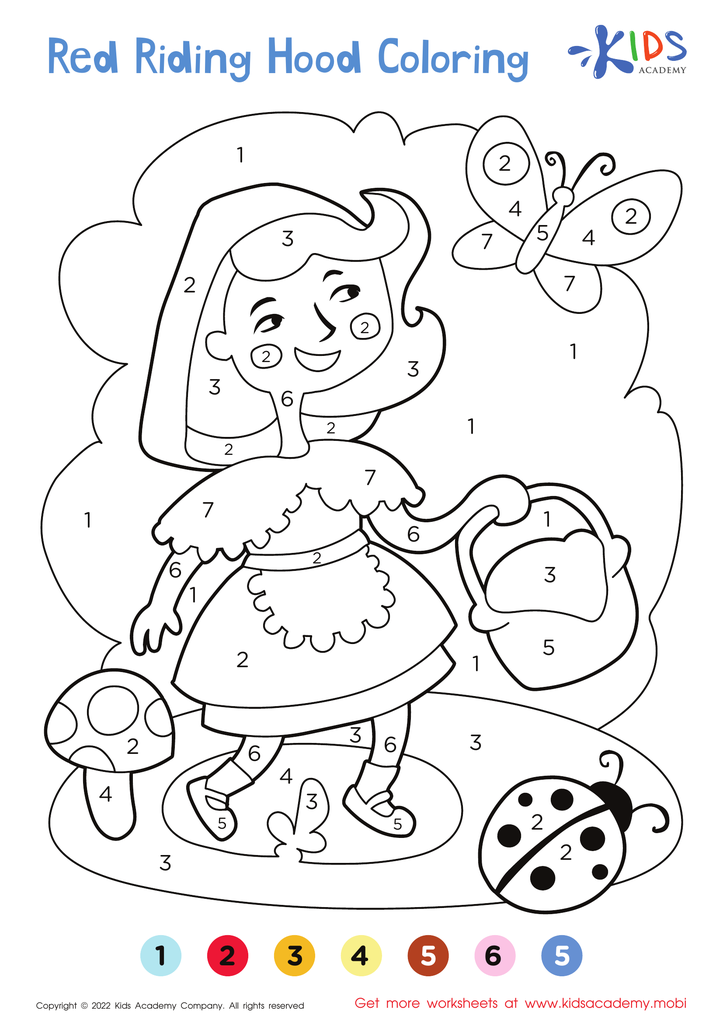
Little Red Riding Hood – Coloring by Numbers








Color recognition is a fundamental skill for children aged 3-8, playing a crucial role in their cognitive development and early learning. Parents and teachers should prioritize this skill for several reasons.
Firstly, color recognition enhances a child's ability to categorize and make distinctions, fostering their analytical thinking skills. Identifying colors helps in developing their vocabulary and linguistic abilities as they learn to describe their surroundings.
Secondly, mastering color recognition is linked to better performance in academic areas, notably math and art. Understanding colors aids in counting objects, sorting, and pattern recognition, crucial components of early mathematics. Additionally, art activities foster creativity and self-expression, as children explore and mix colors.
Moreover, color recognition supports social interactions. Engaging children in color-related games or activities can promote cooperation and communication among peers. This is pivotal for building social skills, as children learn to share, take turns, and express preferences.
Lastly, understanding colors can boost a child’s self-confidence. When they successfully identify and use colors in their environment, it reinforces their sense of autonomy and competence. By focusing on color recognition, parents and teachers are laying the foundation for well-rounded development, essential for lifelong learning.








