Comparing lengths Worksheets for Ages 3-8
18 filtered results
-
From - To
Explore our Comparing Lengths Worksheets, perfect for ages 3-8, designed to make learning fun and interactive. These engaging, printable worksheets help children develop critical mathematical skills through visual and hands-on activities. From comparing the length of fun objects to ordering items, your child will build a strong foundation in measurement concepts. Our worksheets cater to young learners, supporting early childhood education with colorful illustrations and varied exercises. Ideal for both classroom use and at-home practice, our Comparing Lengths Worksheets provide an excellent resource for parents and teachers aiming to enhance boys' and girls' learning experience. Try them today!
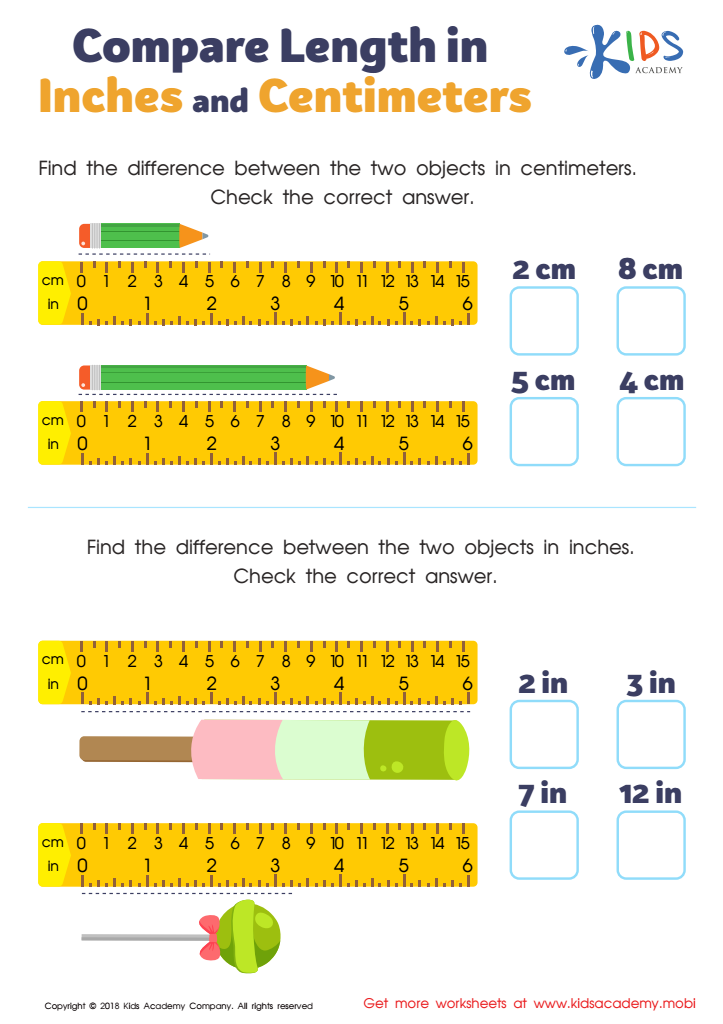
Compare Length in Inches and Centimeters Worksheet
 Assign to My Students
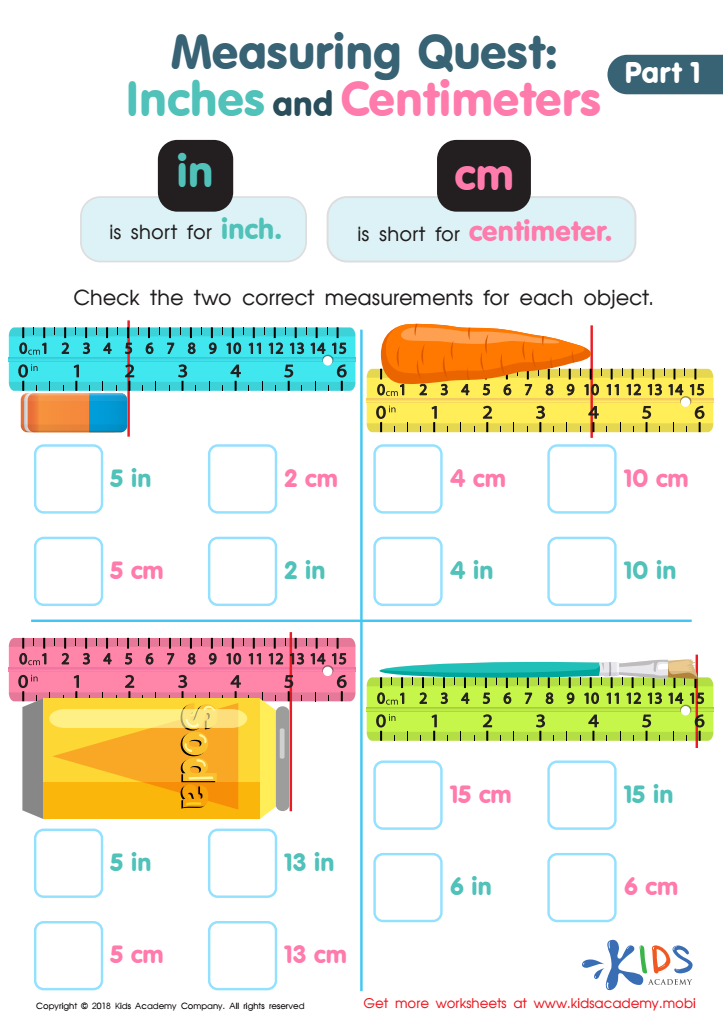
Measuring Quest: Inches and Centimeters Worksheet
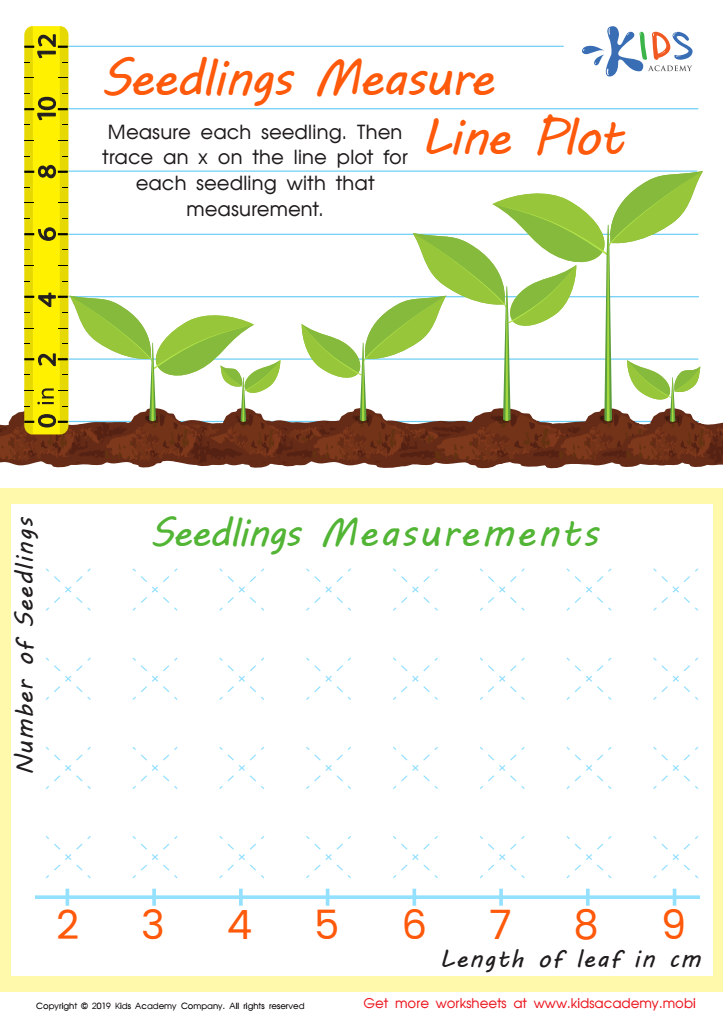
Seedling Measure Line Plot Worksheet
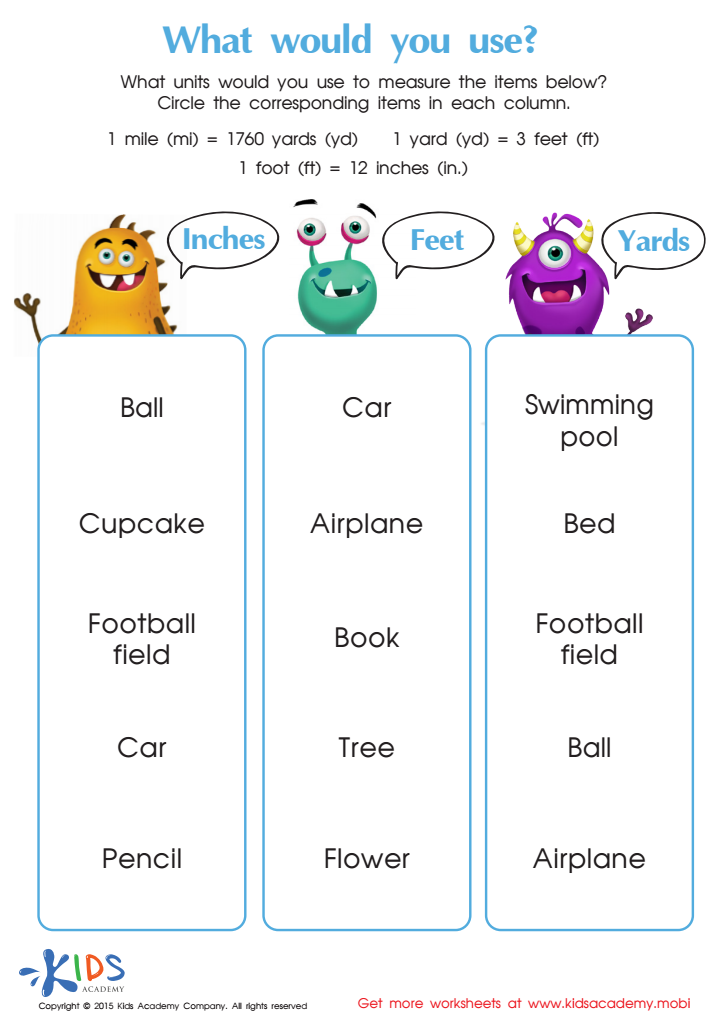
Learning about measuring objects in inches, feet and yards Worksheet
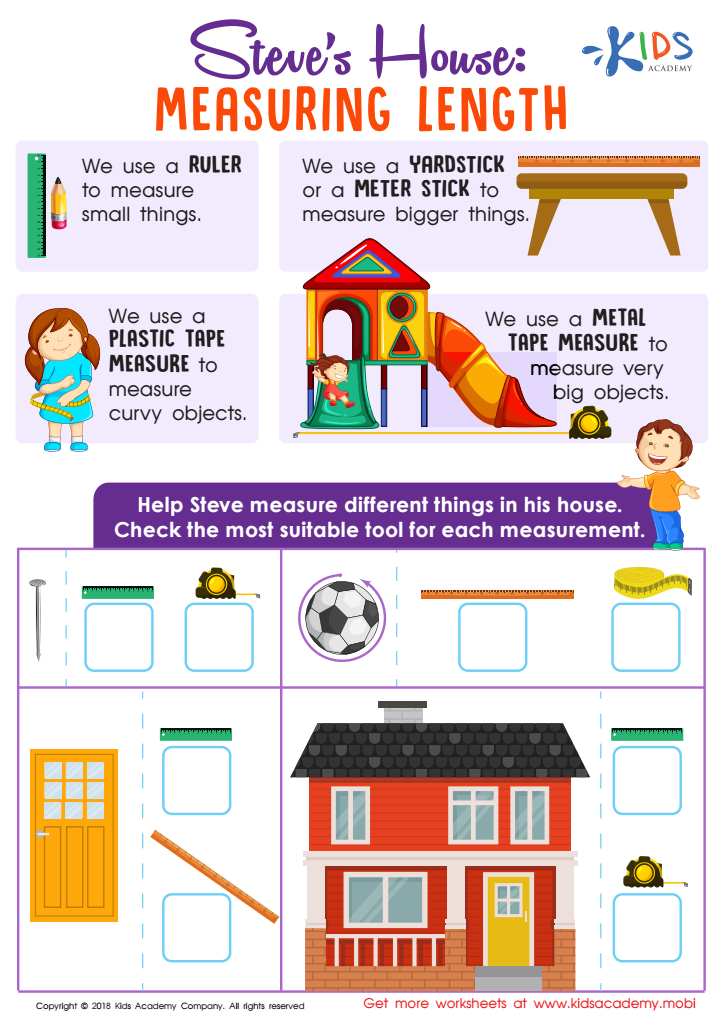
Steve's House: Measuring Length Worksheet
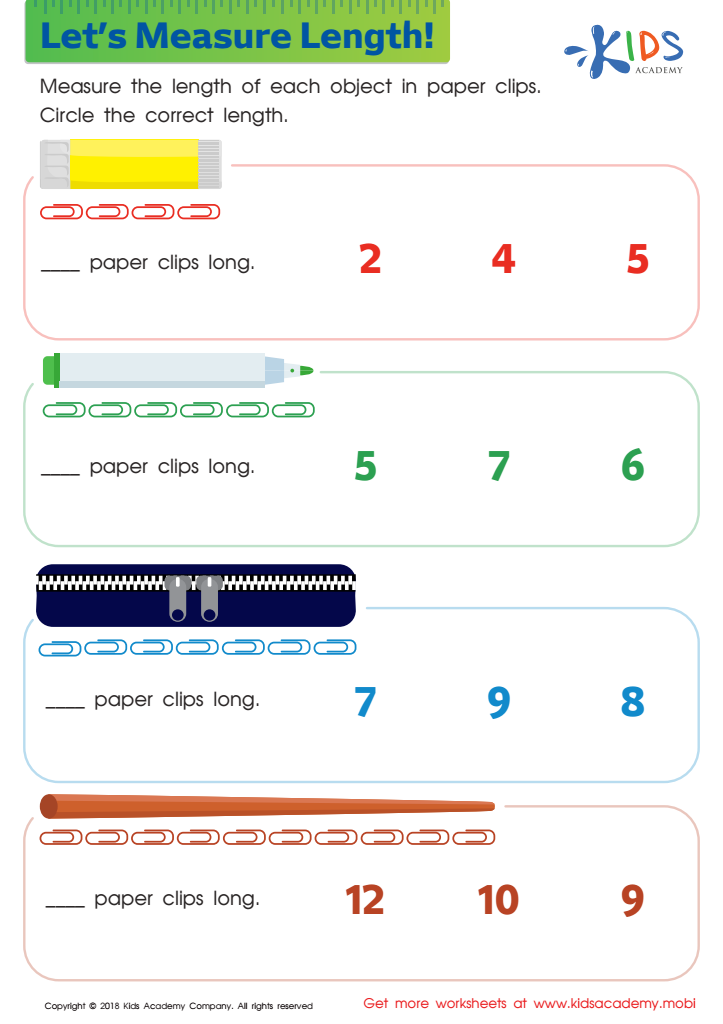
Lets Measure Length Worksheet
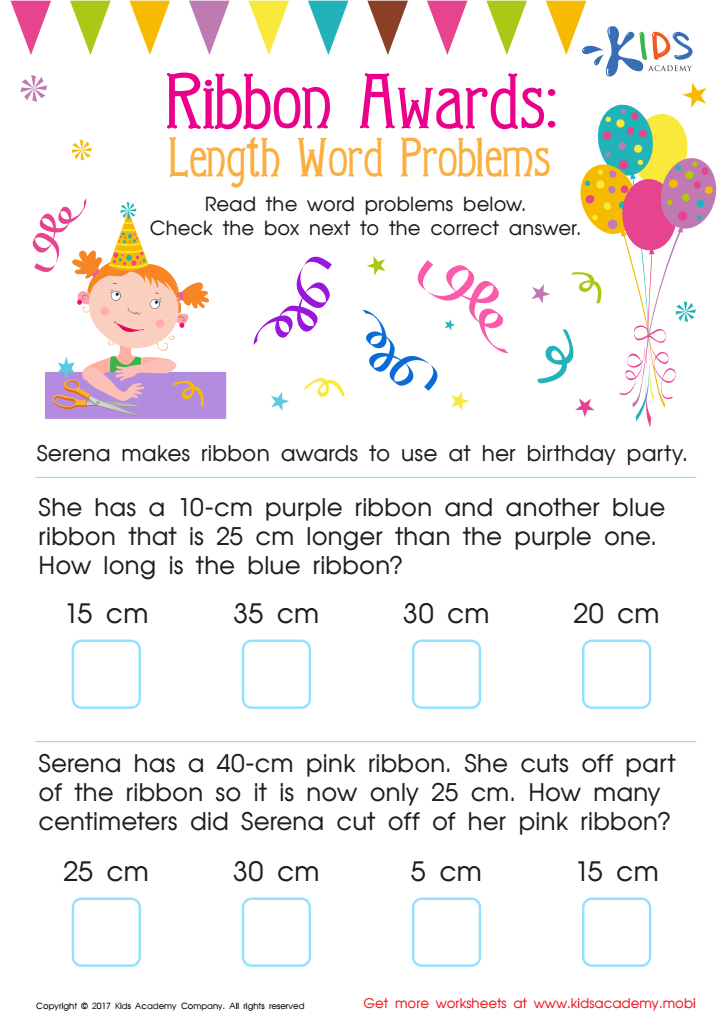
Length Word Problems Worksheet
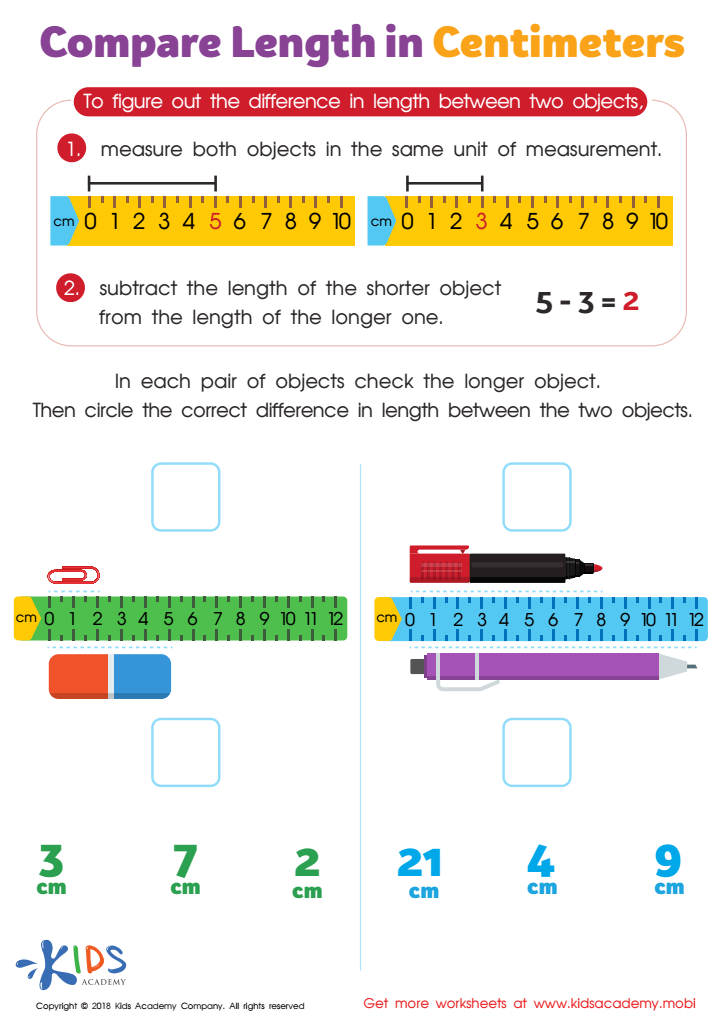
Compare Length in Centimeters Worksheet
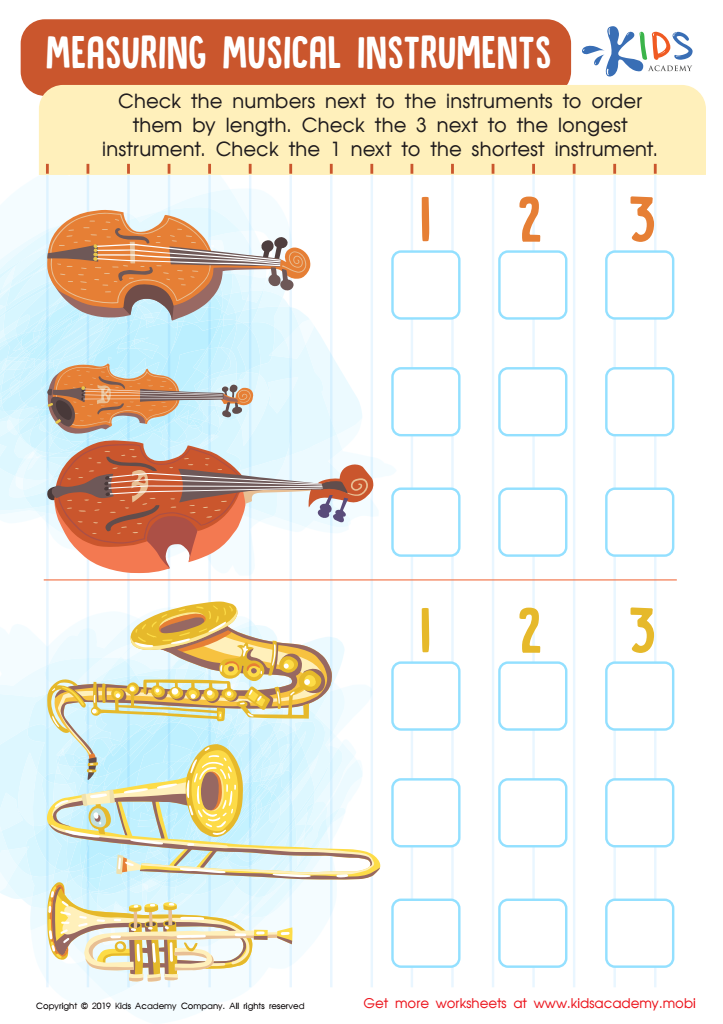
Measuring Musical Instruments Worksheet
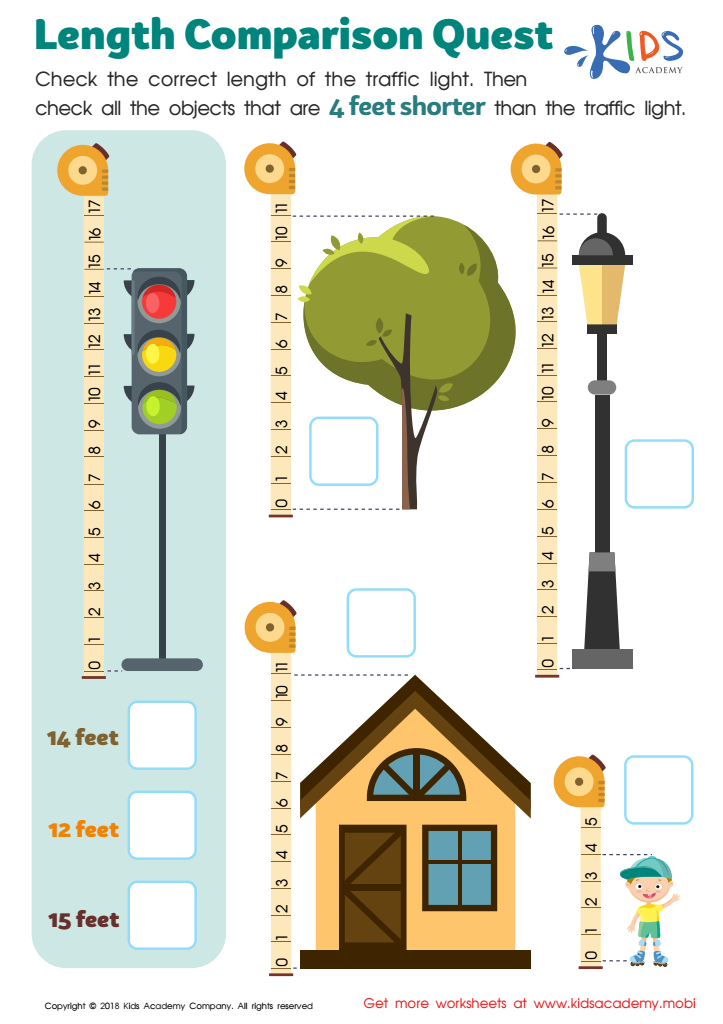
Length Comparison Quest Worksheet
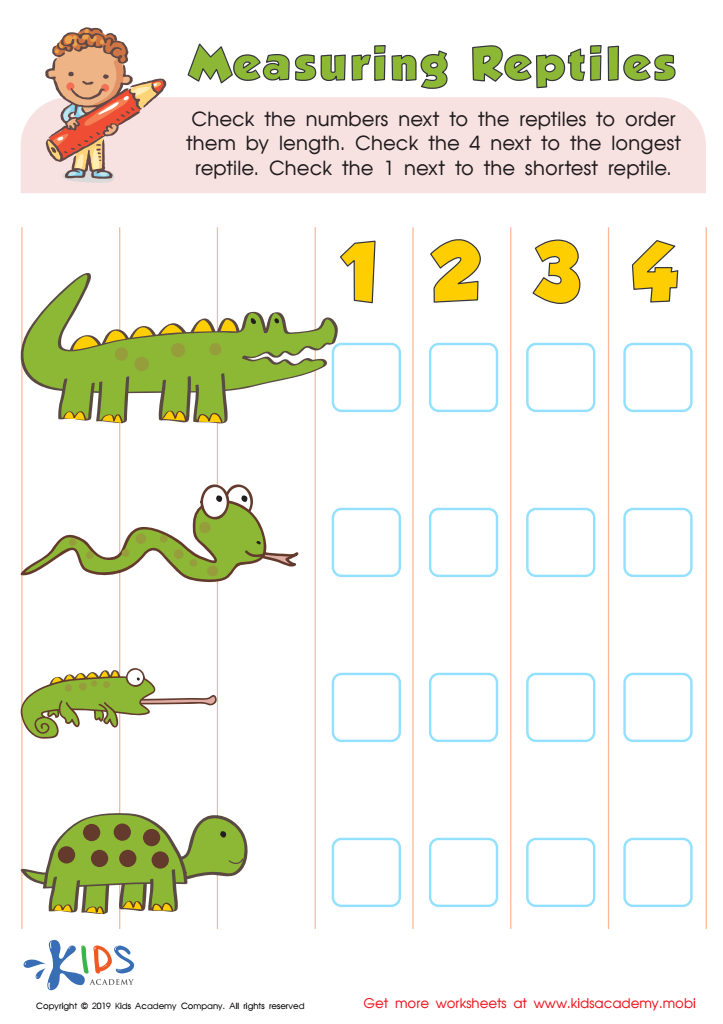
Measuring Reptiles Worksheet
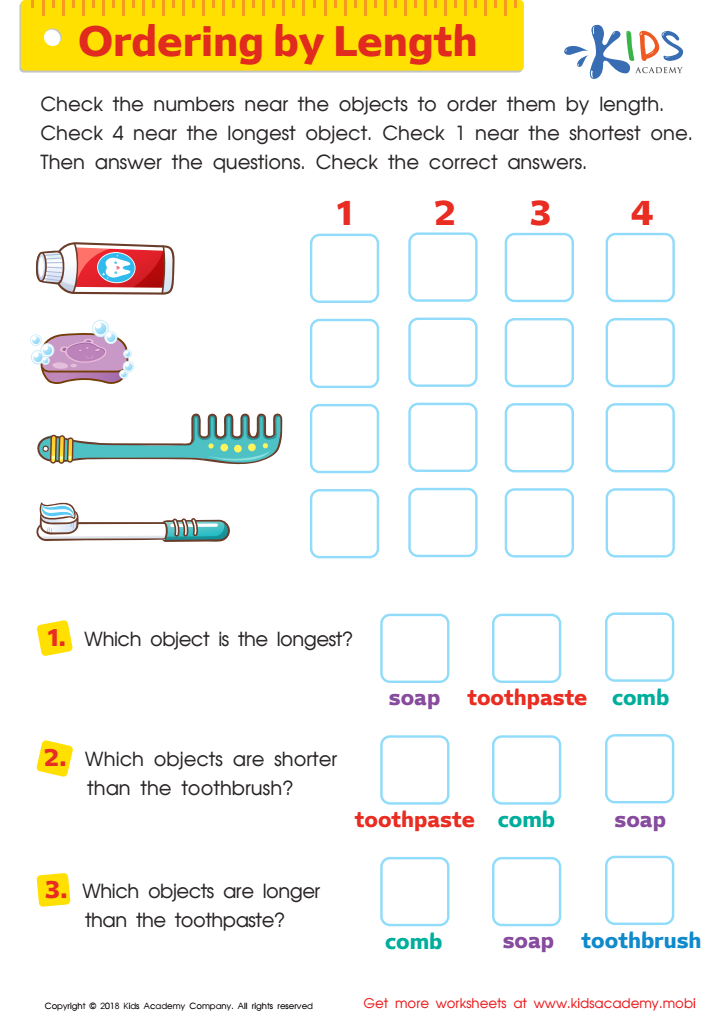
Ordering by Length Worksheet
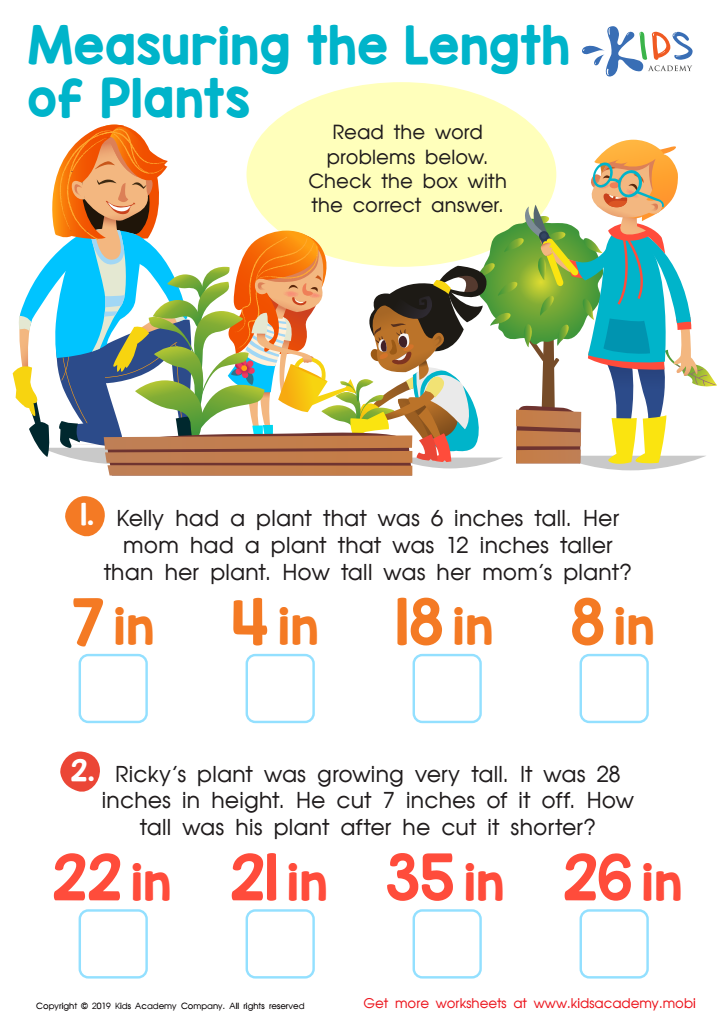
Measuring the Length of Plants Worksheet
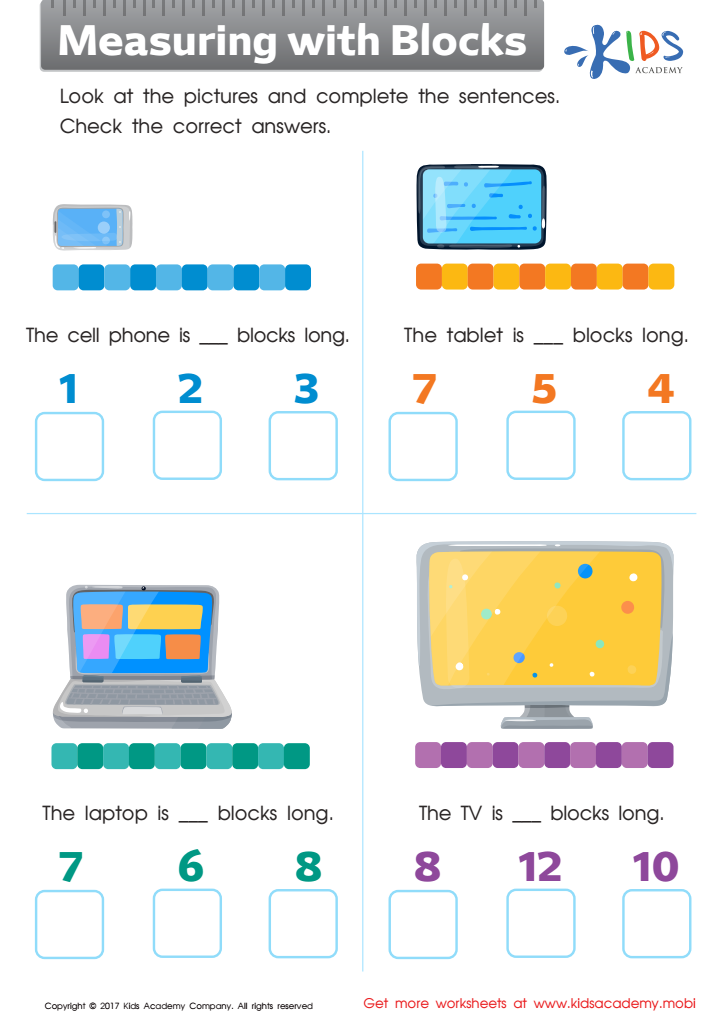
Measuring with Blocks Worksheet
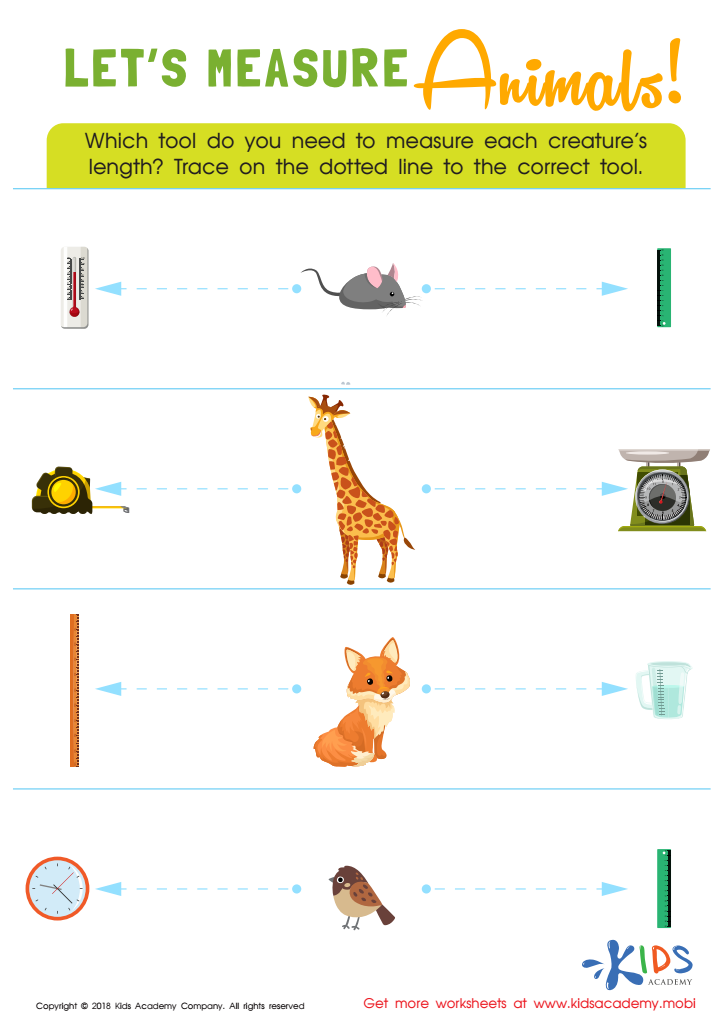
Let's Measure Animals! Worksheet
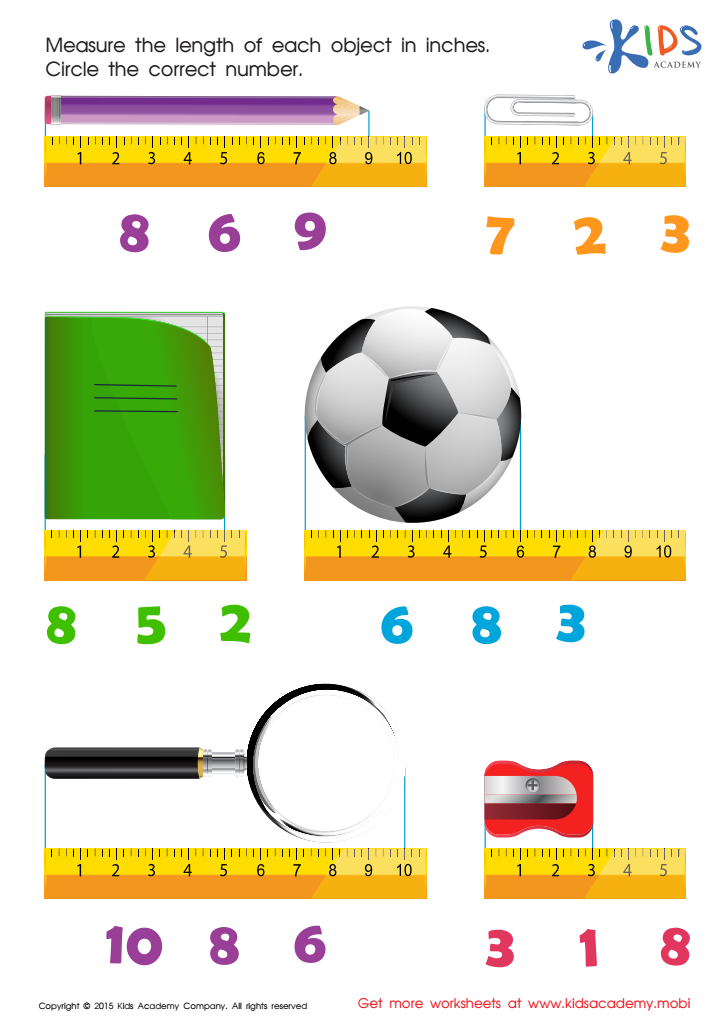
Learning measuring objects in inches Worksheet
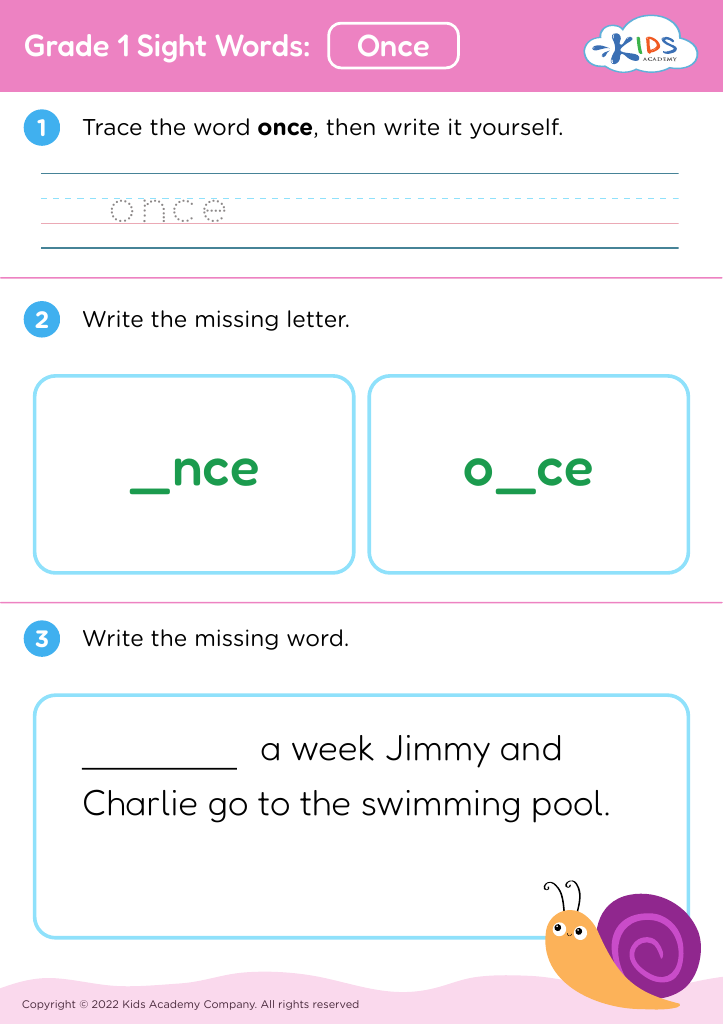



.jpg)



Understanding the concepts of length and the ability to compare it is fundamental for young children's cognitive and spatial development. For ages 3-8, comparing lengths helps children develop critical thinking and problem-solving skills early on. It provides a concrete way to explain abstract concepts, establishing a robust groundwork for later mathematical learning, including measurement, geometry, and algebra.
Practicing length comparison also encourages observation and vocabulary enrichment. Children learn to use comparison terms like "longer," "shorter," "taller," or "equally long," enhancing their language abilities and communication skills. These terms are essential for kids to articulate their thoughts and understand instructions both in academic settings and in everyday situations.
Moreover, length comparison can be easily woven into fun, interactive activities such as measuring objects in the classroom or evaluating distances on the playground. These engaging experiences promote a positive attitude towards learning math and boost confidence in using these skills. For teachers and parents, understanding and supporting this aspect of development ensure that children are acquiring necessary foundational skills, making future learning more cohesive and less daunting. Overall, attentiveness to length comparison nurtures intuitive and analytical expertise essential for later academic success and everyday problem-solving.








