Develop problem-solving abilities Worksheets for Ages 3-8
6 filtered results
-
From - To
Our "Develop Problem-Solving Abilities Worksheets for Ages 3-8" are designed to enhance critical thinking and creativity in young learners. Tailored for children aged 3-8, these engaging worksheets offer a variety of fun, interactive activities that help cultivate essential problem-solving skills. Through puzzles, games, and challenges, kids explore different strategies for overcoming obstacles and finding solutions. These worksheets support early cognitive development, bolster confidence, and foster a love for learning. Perfect for both classroom settings and at-home practice, our problem-solving worksheets motivate children to think independently, stay curious, and develop a resilient mindset from an early age.
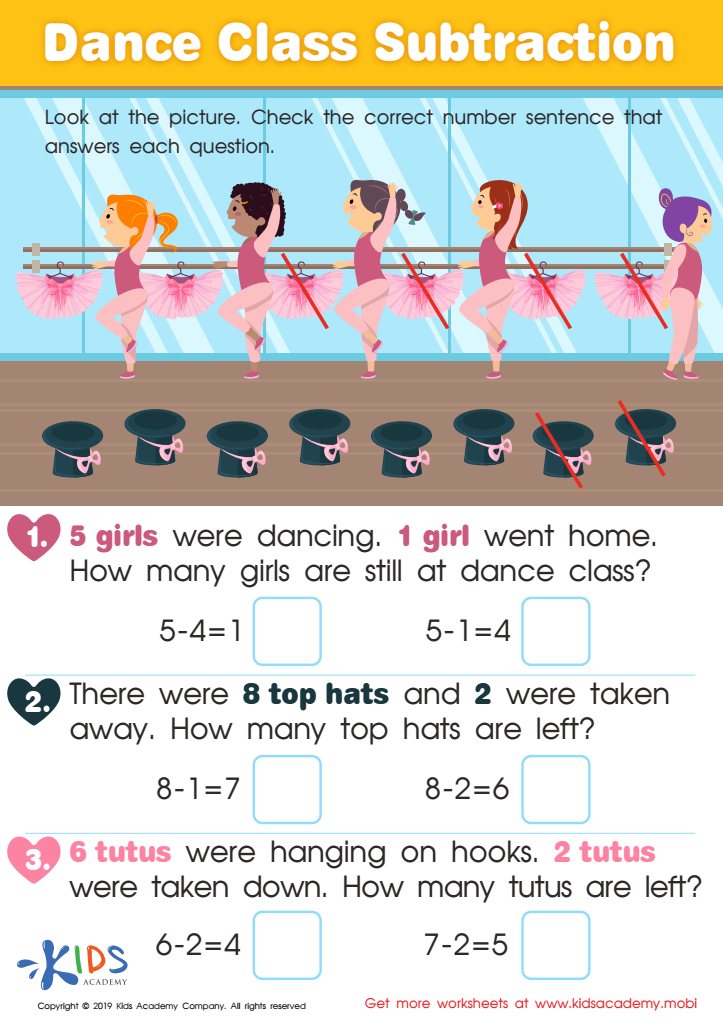
Dance Class Subtraction Worksheet
 Assign to My Students
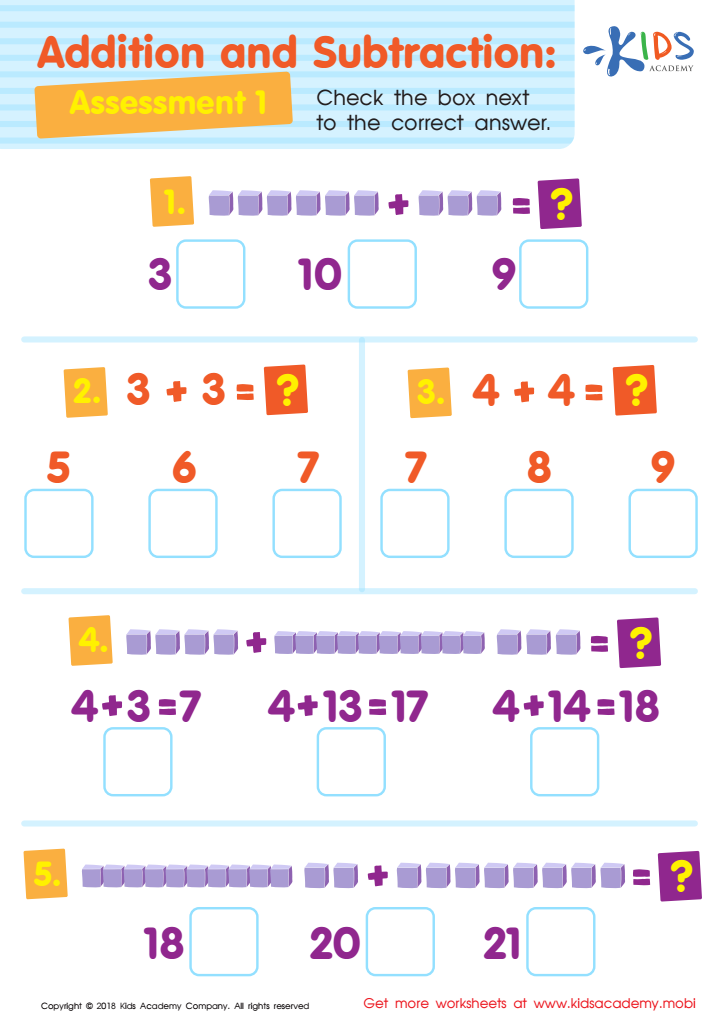
Addition and Subtraction Assessment 1 Worksheet
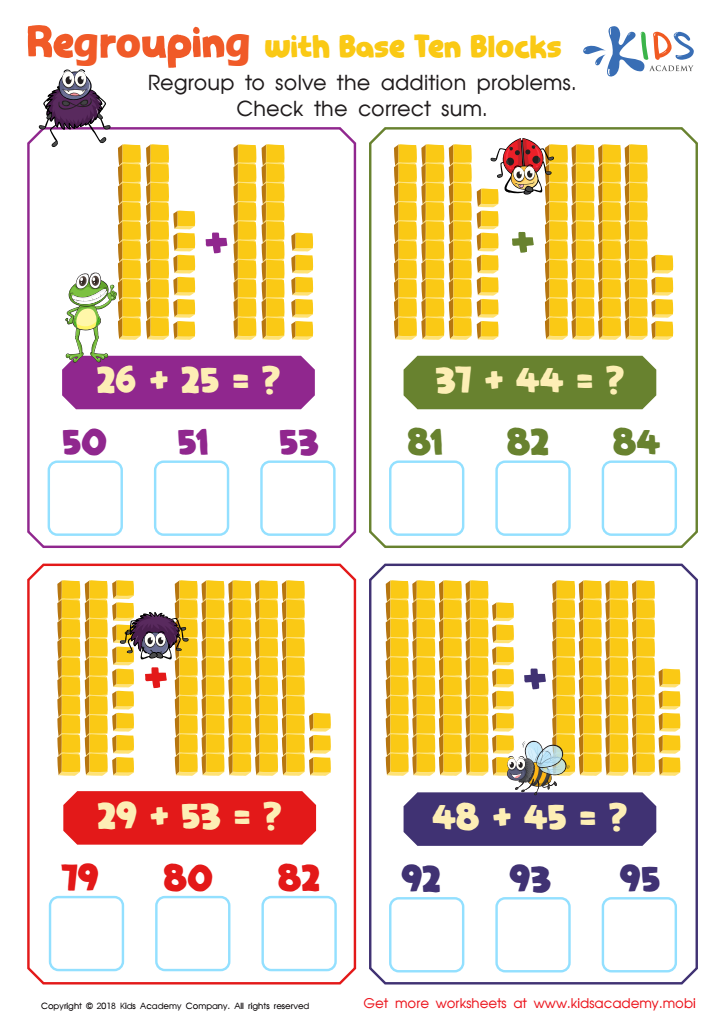
Regrouping With Base Ten Blocks Worksheet
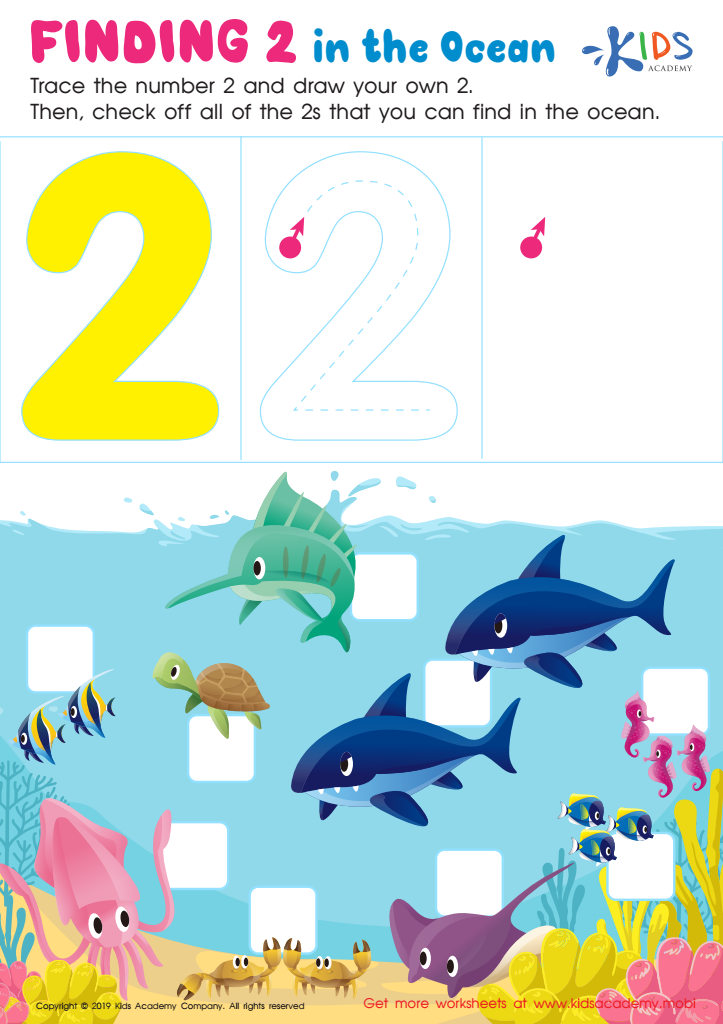
Finding 2: In the Ocean Worksheet








Developing problem-solving abilities in children aged 3-8 is crucial for numerous reasons. At these early stages, cognitive development is rapid, and nurturing problem-solving skills can significantly influence their future academic and social success. These abilities help children understand and navigate complexities in everyday situations, enhancing their adaptability and resilience.
Firstly, problem-solving promotes critical thinking and logical reasoning, essential foundations for learning across all subjects, including math and science. By tackling age-appropriate challenges, children learn to analyze situations, identify solutions, and foresee consequences, which are critical skills for academic excellence.
Socially, problem-solving skills enable children to handle interpersonal conflicts constructively. They learn to communicate their thoughts, empathize with others, and develop negotiation skills. This fosters better relationships and reduces behavioral issues, creating a more harmonious learning environment.
Additionally, building these skills early on boosts self-esteem and confidence. As children successfully solve problems, they develop a sense of mastery and independence. This self-assuredness encourages them to take on new challenges, promoting a lifelong love of learning.
Ultimately, by focusing on problem-solving abilities in early childhood, parents and teachers lay down a critical foundation for well-rounded development. This investment not only prepares children for academic achievements but also equips them with essential life skills.








