
Identifying differences Worksheets for Ages 3-8
3 filtered results
Difficulty Level
Grade
Age
-
From - To
Subject
Activity
Standards
Discover our engaging "Identifying Differences Worksheets" designed for children ages 3-8! These worksheets encourage critical thinking and observation skills as young learners compare images, spotting subtle variations that challenge their attention to detail. Featuring vibrant illustrations and age-appropriate content, these worksheets promote cognitive development while keeping learning fun and interactive. Perfect for parents and educators, our printable resources can easily enhance classroom activities or at-home learning. Foster a love for learning and boost your child's analytical abilities with these exciting activities. Explore our collection today and watch your little ones develop essential skills while having a blast!
Favorites
With answer key
Interactive
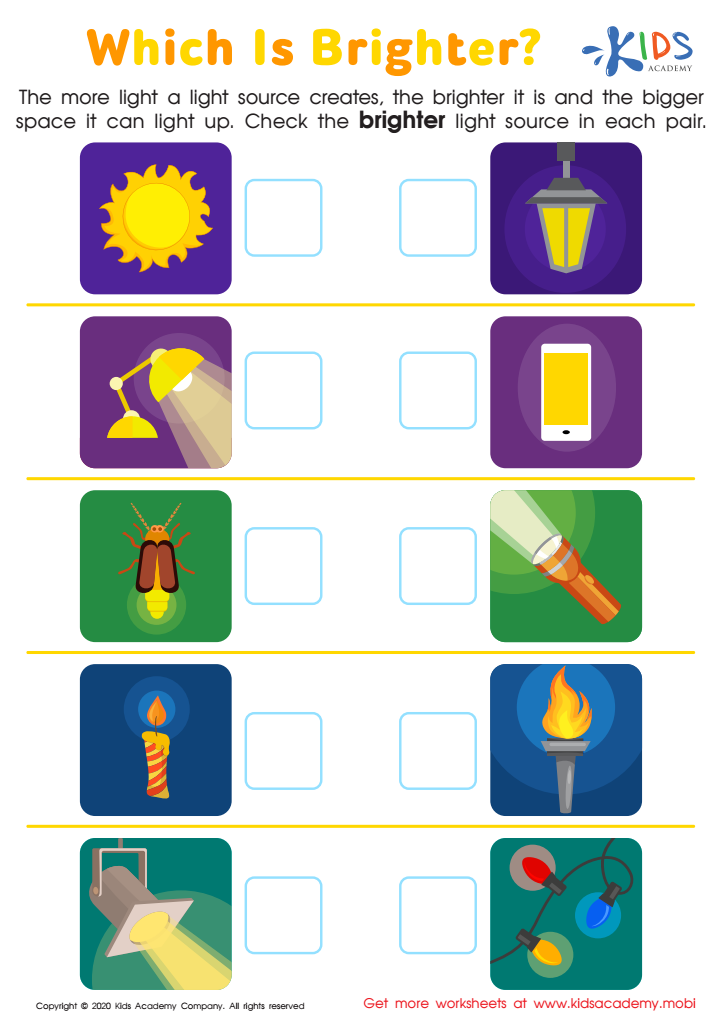
Which Is Brighter? Worksheet
Before the exercise, ask students to recall sources of light. Use this worksheet to explain that the brighter the light source, the more space it can light up. Identify the different light sources in the pictures, then check the brighter light source in each pair. The biggest natural source of light is the sun.
 Assign to My Students
Which Is Brighter? Worksheet
Worksheet
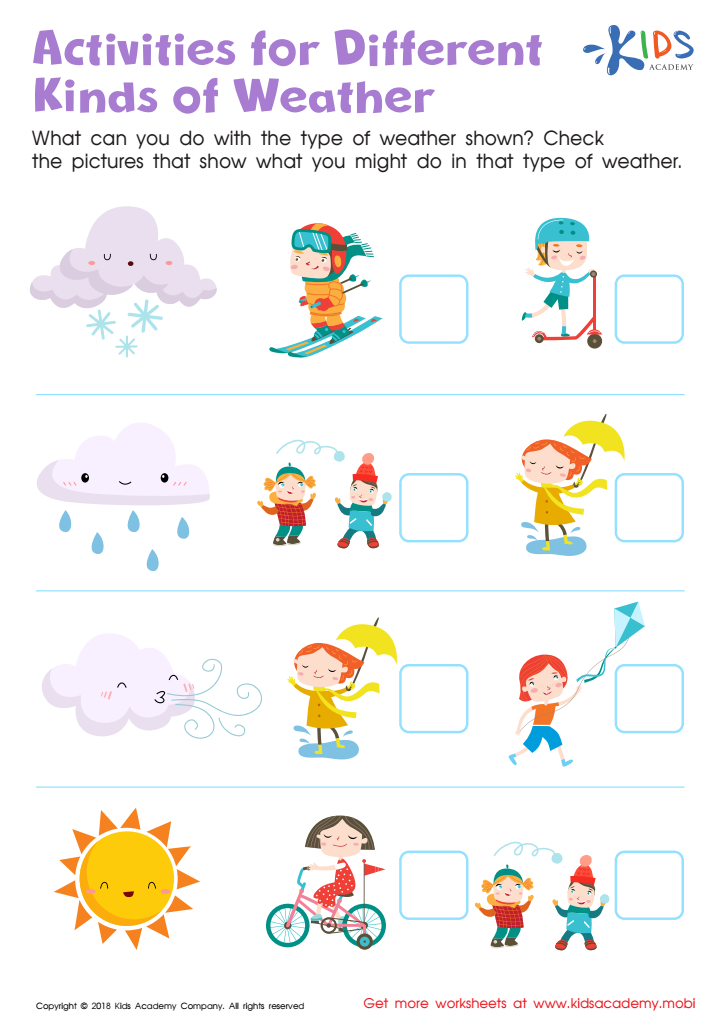
Activities for Different Kinds of Weather Worksheet
Help your child explore the changing seasons with this interactive worksheet. Ask them to name the different seasons and activities associated with each type of weather. Show the pictures and explain what they can do in that kind of weather. Have them check off the activities to help them learn and enjoy the changing seasons.
Activities for Different Kinds of Weather Worksheet
Worksheet
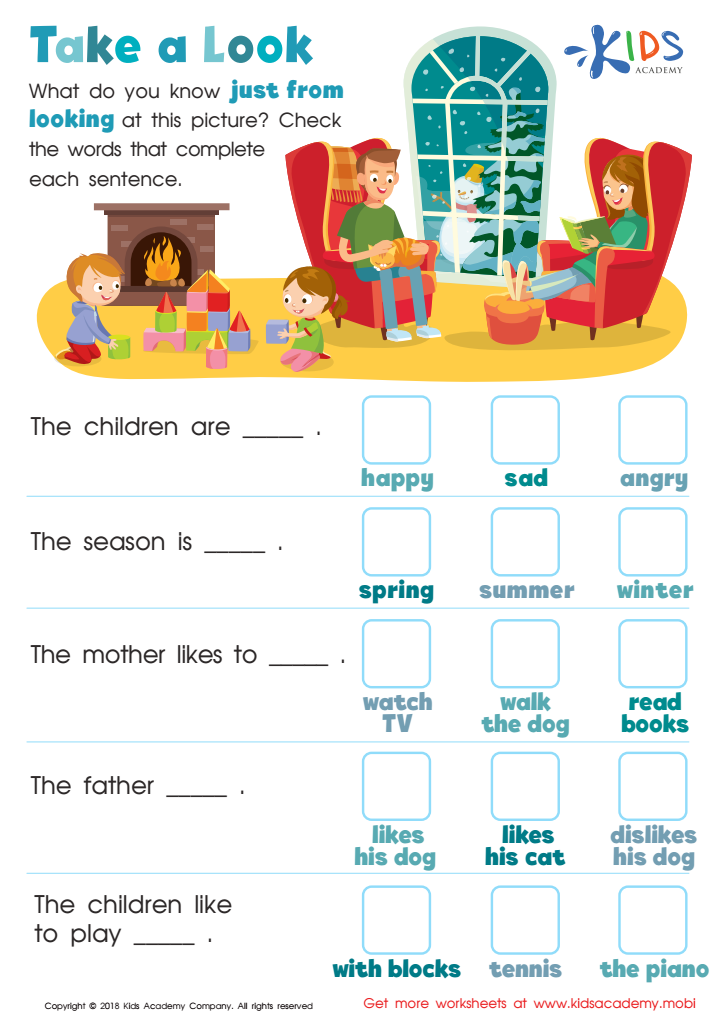
Take a Look - Part 1 Worksheet
Young learners gain understanding when using picture clues when reading. Looking at illustrations can help students learn the meaning of key vocabulary when reading fiction or informational text. Ask your students to look at the worksheet and observe what they can learn from the picture. It's a great comprehension strategy for early readers.
Take a Look - Part 1 Worksheet
Worksheet
Join Kids Academy for Free
Who is primarily going to use this learning content?






.jpg)
Identifying differences in children aged 3-8 is crucial for both parents and teachers as it lays the foundation for healthy development and learning. At this stage, children exhibit a wide range of abilities and personalities, and recognizing these differences can help adults tailor their approaches to meet individual needs effectively.
Acknowledging variations in learning styles, interests, and developmental milestones allows parents and teachers to provide appropriate support, encouragement, and challenges that stimulate a child's growth. For instance, some children may excel in verbal expression while others show strength in visual or kinesthetic tasks. By identifying these preferences, caregivers can differentiate instruction, leading to better engagement and comprehension.
Moreover, recognizing differences fosters an inclusive environment where every child feels valued and understood. It can mitigate feelings of inadequacy or frustration in children who may otherwise struggle to keep pace with their peers. Awareness of differences also aids in early detection of developmental delays or special needs, allowing for timely intervention and support.
In essence, caring about the identification of differences not only enhances academic achievement but also nurtures emotional and social well-being, ultimately helping children to thrive in their formative years.








