Mental math improvement Worksheets for Ages 3-8
8 filtered results
-
From - To
Enhance your child's mental math skills with our engaging worksheets designed for ages 3-8! Our collection of fun and interactive exercises helps children develop their foundational math abilities through problem-solving and critical thinking. Each worksheet focuses on essential concepts, such as number recognition, simple addition and subtraction, and pattern recognition, making learning both enjoyable and effective. Perfect for home practice or classroom use, these worksheets will empower young learners to gain confidence in their math skills. Explore our Mental Math Improvement Worksheets today and watch your child's mathematical abilities soar while having fun along the way!
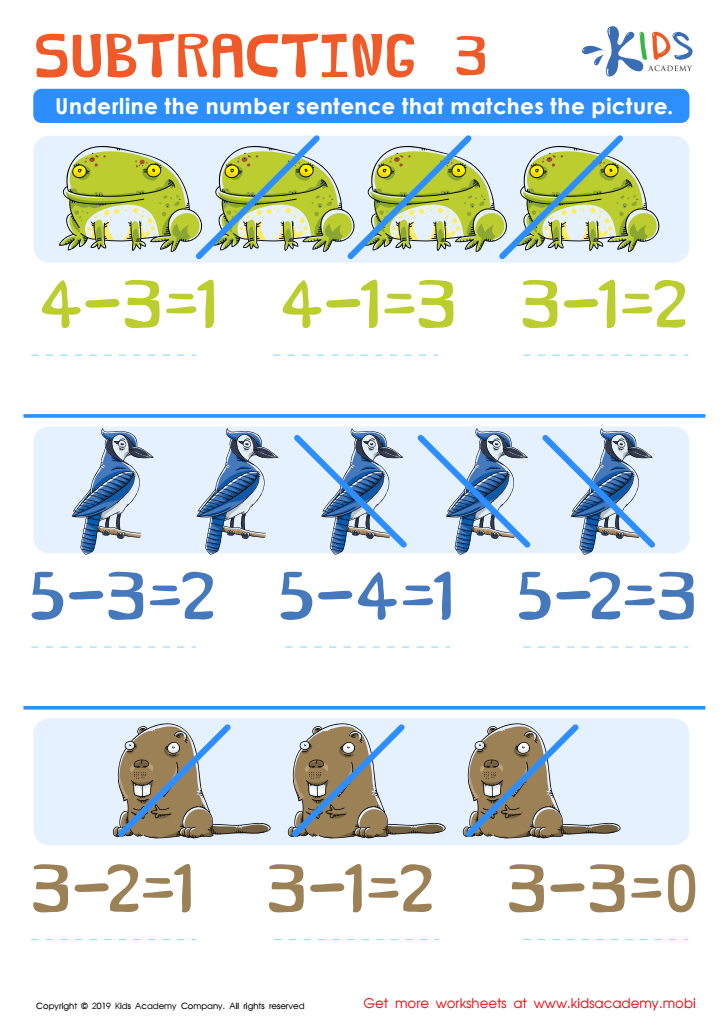
Subtracting 3 Worksheet
 Assign to My Students
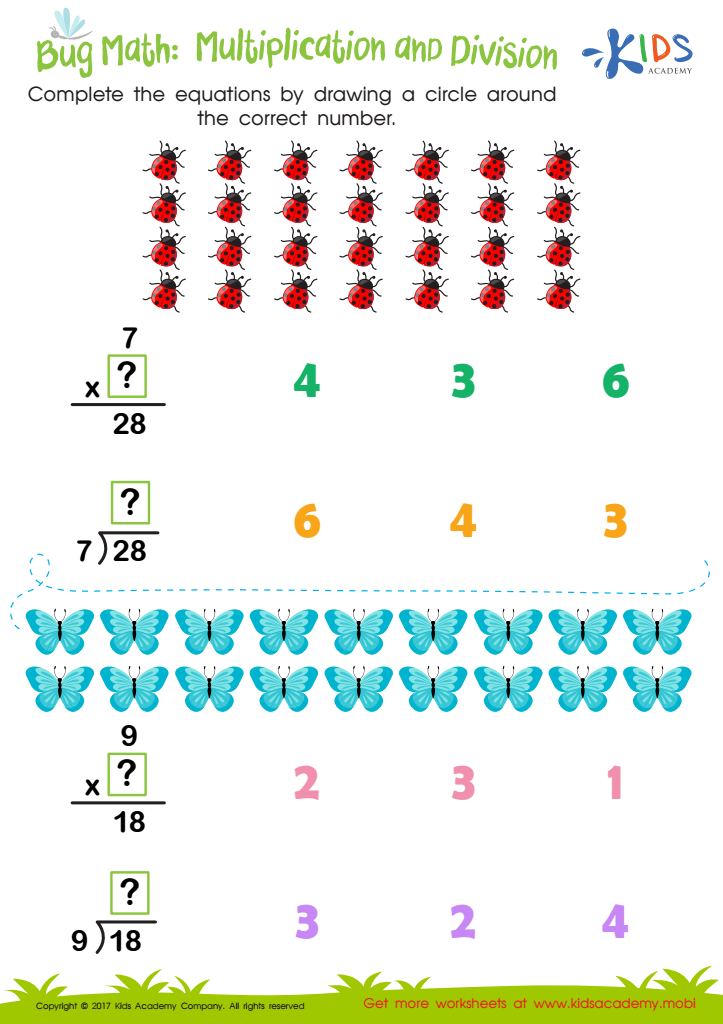
Multiplication and Division Worksheet
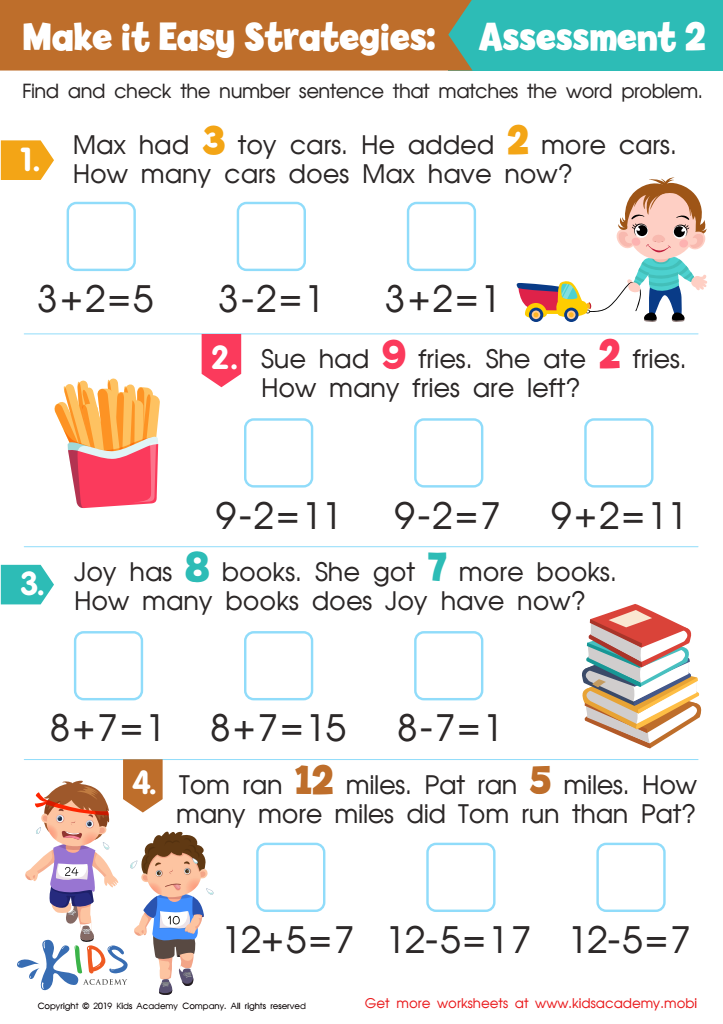
Make it Easy Strategies: Assessment 2 Worksheet
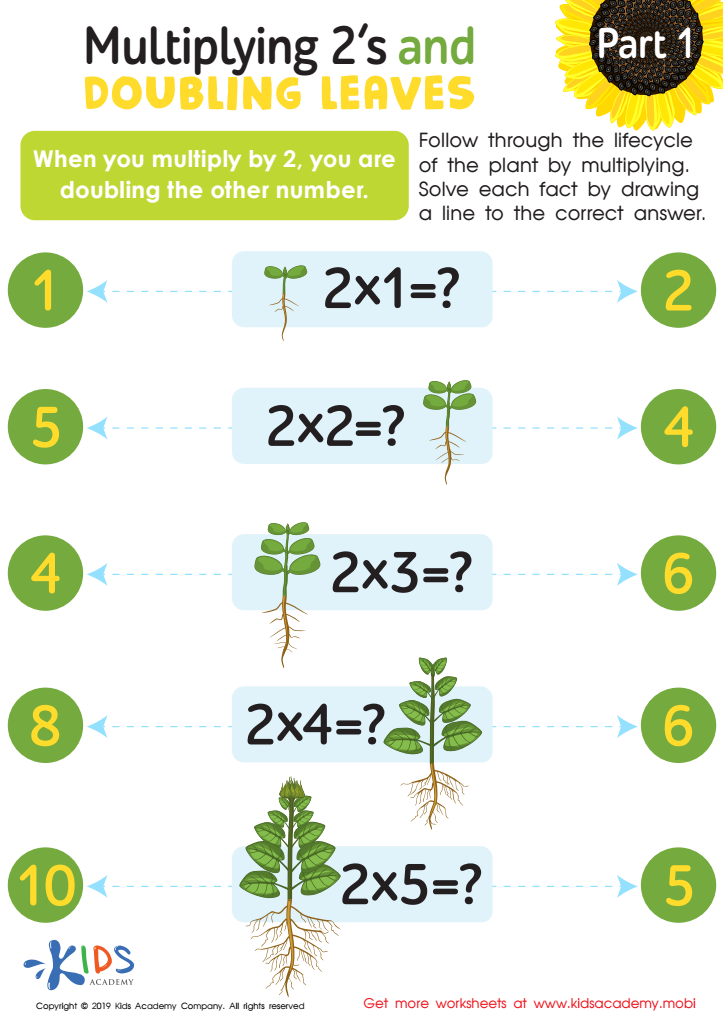
Multiplying 2’s and Doubling Leaves Part 1 Worksheet
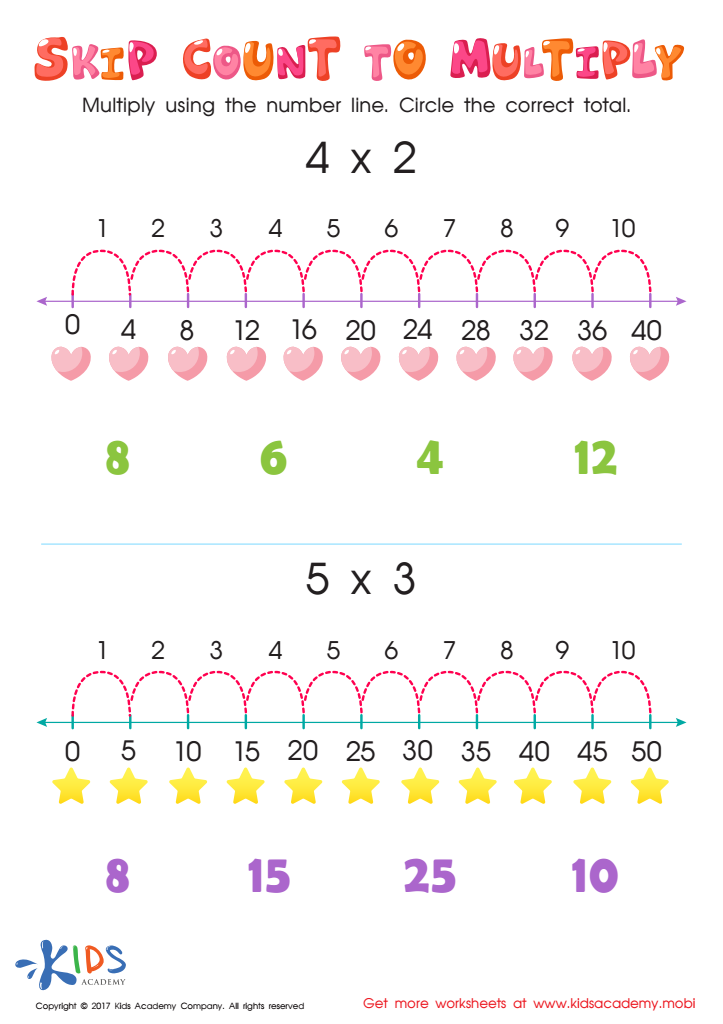
Skip Count Multiplication Worksheet
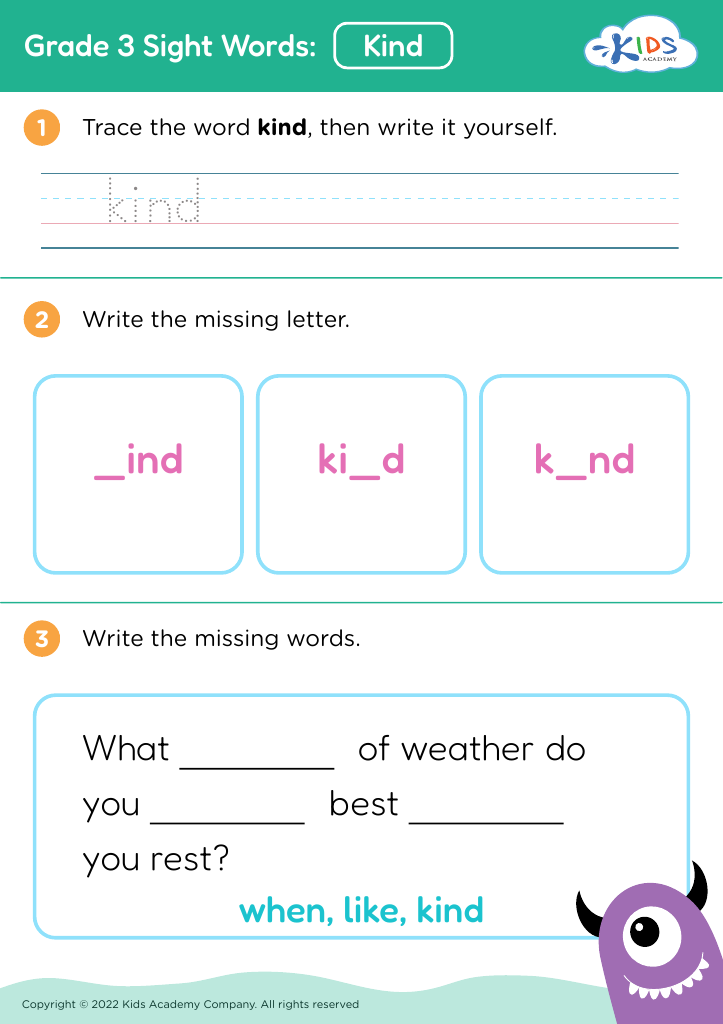
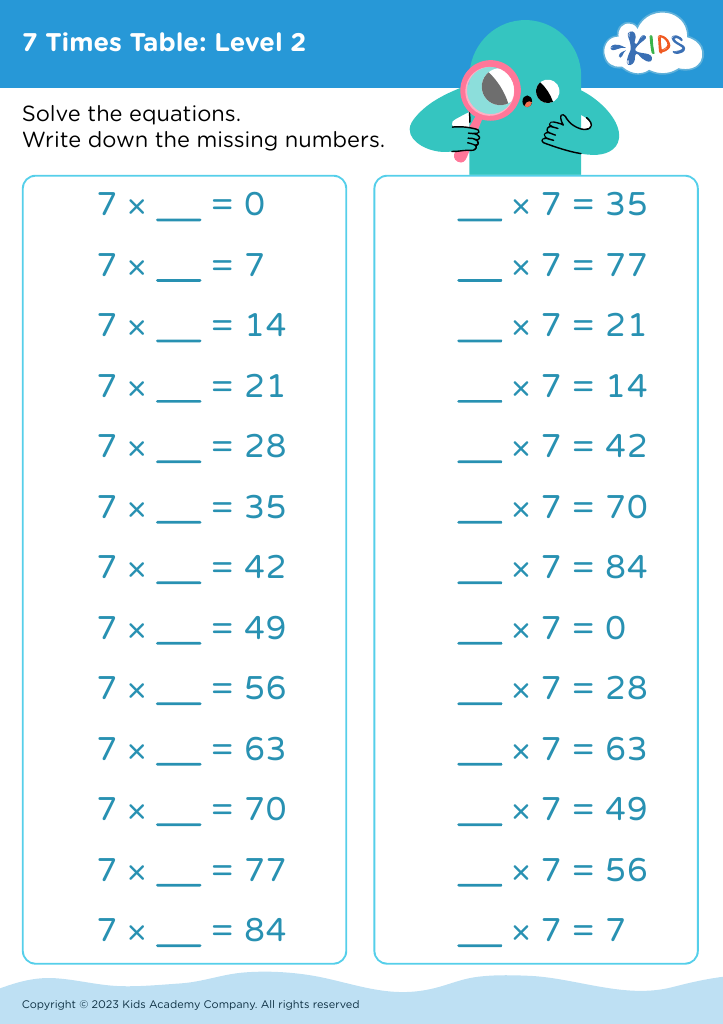
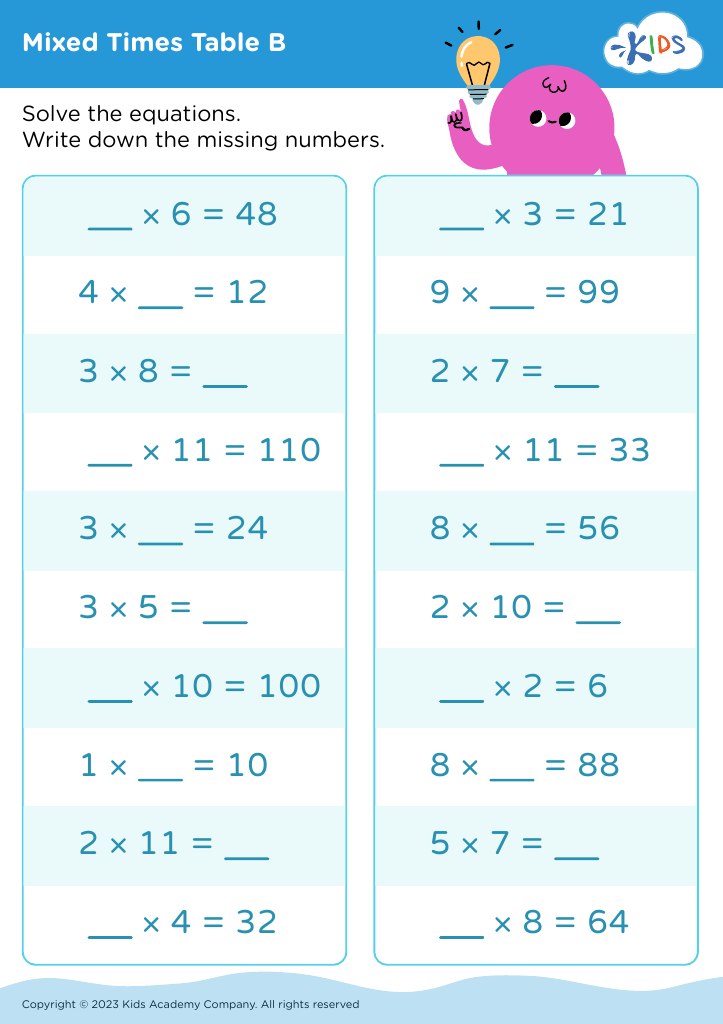






.jpg)
Mental math improvement is crucial for children aged 3-8 as it lays the foundation for their mathematical understanding and cognitive development. At this stage, children's brains are exceptionally adaptable, making it an optimal time to cultivate strong numeracy skills. By encouraging mental math, parents and teachers instill confidence in problem-solving abilities, promoting a deeper comprehension of number concepts.
Additionally, mental math equips children to perform calculations quickly and efficiently, fostering analytical thinking. When kids practice mental math strategies, they learn to recognize patterns and relationships among numbers, enhancing their overall mathematical fluency. This proficiency not only supports their performance in later academic pursuits but also equips them with essential life skills, such as budgeting or time management.
Moreover, mental math encourages independence in learning and stimulates engagement through fun games and activities. Establishing a positive attitude towards math early on can help reduce math anxiety in later years.
Finally, recognizing the importance of mental math sends a strong message about the value of mathematics in everyday life. By valuing and nurturing mental math skills, parents and teachers can guide children towards a successful and confident approach to their mathematical journey.








