
Number sequence recognition Worksheets for Ages 3-8
3 filtered results
Difficulty Level
Grade
Age
-
From - To
Subject
Activity
Standards
Help your child master number sequence recognition with our engaging worksheets designed for ages 3-8! These worksheets provide a fun and interactive way for young learners to develop essential math skills. Kids will enjoy tracing, filling in missing numbers, and connecting patterns as they embark on an exciting journey through numbers. Our resources cater to various skill levels, ensuring each child can progress at their own pace. Perfect for parents and educators alike, these printable worksheets make learning mathematics enjoyable and effective. Enhance your child's number recognition abilities while building a strong foundation for future math success! Explore our collection today!
Favorites
With answer key
Interactive
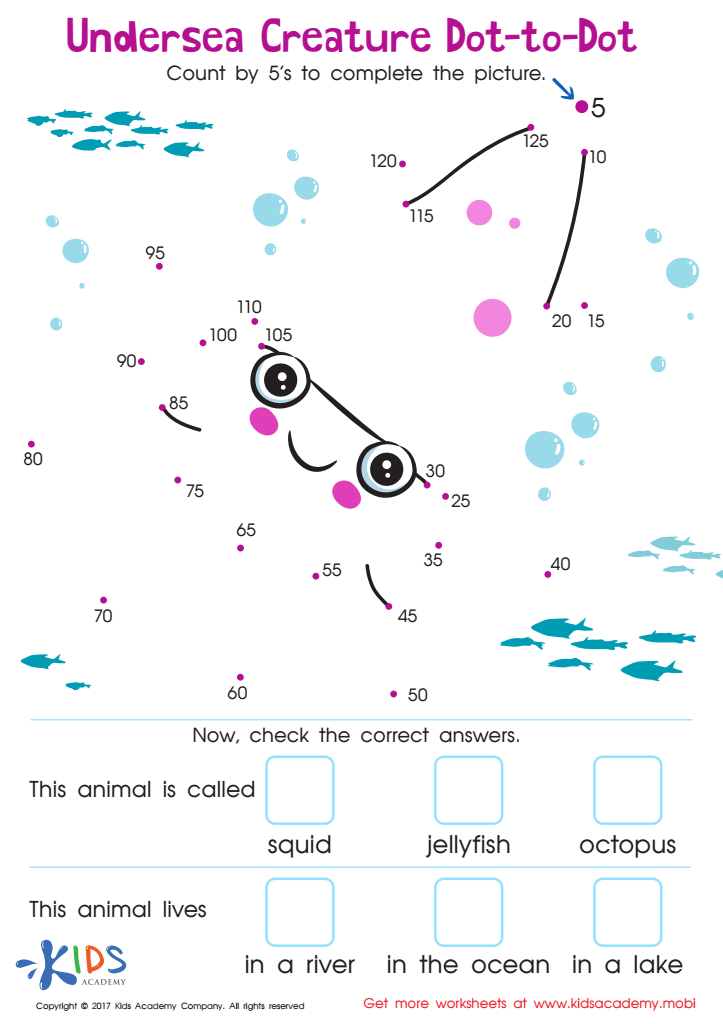
Undersea: Dot To Dot Worksheet
This dot-to-dot worksheet is a great way to teach kids about the undersea world while having fun. Kids will love connecting the dots and counting in 5s. Then they can check their answers.
 Assign to My Students
Undersea: Dot To Dot Worksheet
Worksheet
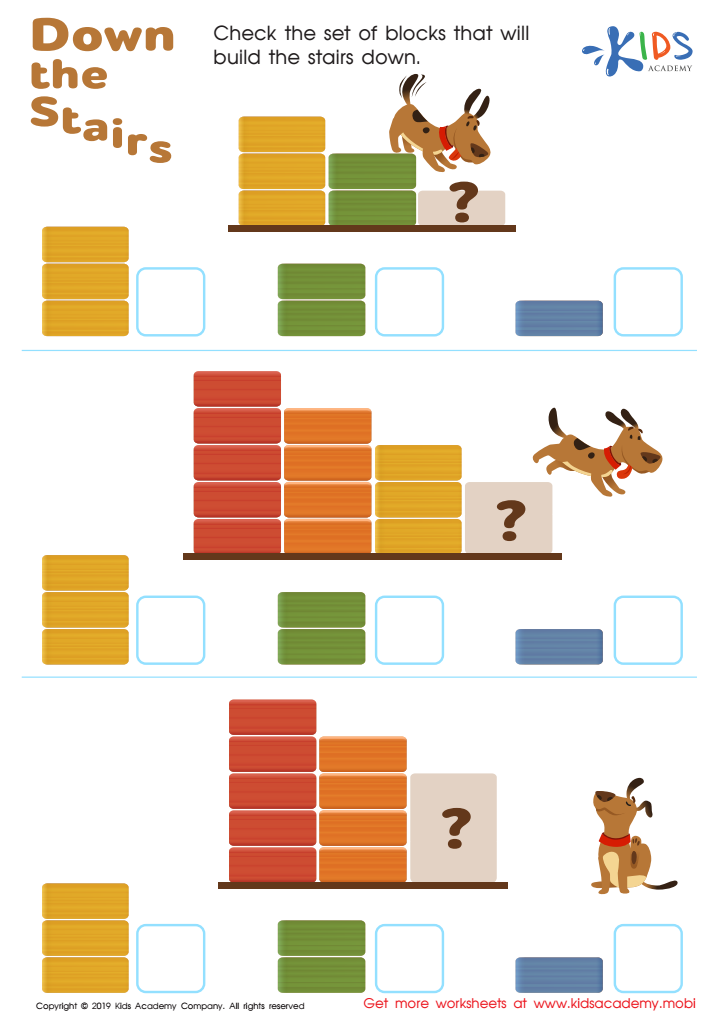
Down the Stairs Worksheet
Let your kids' imaginations run wild with this worksheet featuring a cute and friendly dog! Ask them to point out the dog in the printout, then help count the blocks in each set. Aim to stack them in descending order and build stairs for the pup to get down. Count each block and check the set - it's that easy!
Down the Stairs Worksheet
Worksheet
Join Kids Academy for Free
Who is primarily going to use this learning content?








Number sequence recognition is an essential foundational skill for children aged 3-8, as it lays the groundwork for their mathematical understanding and cognitive development. Recognizing number sequences helps children grasp the concept of order and quantity, crucial for early arithmetic skills. For instance, when children can identify and understand counting patterns, they become more adept at basic addition and subtraction as they progress in their education.
Parents and teachers should prioritize this skill because early mastery of number sequences fosters confidence in math, encouraging positive attitudes toward the subject. This early engagement can prevent math anxiety later in life. Furthermore, number sequence recognition enhances critical thinking and problem-solving skills, integral in other areas of learning.
Incorporating fun activities like number games, songs, and visual aids can make the learning process enjoyable. As children learn to recognize patterns and sequences, they also improve their memory and attention span. By focusing on this vital area, parents and teachers can equip children with the necessary tools for academic success and lifelong learning, ensuring they develop strong numeracy skills that will benefit them as they advance in their education. Therefore, supporting number sequence recognition is key to cultivating well-rounded, capable learners.








