Phonics recognition Worksheets for Ages 3-8 - Page 2
25 filtered results
-
From - To
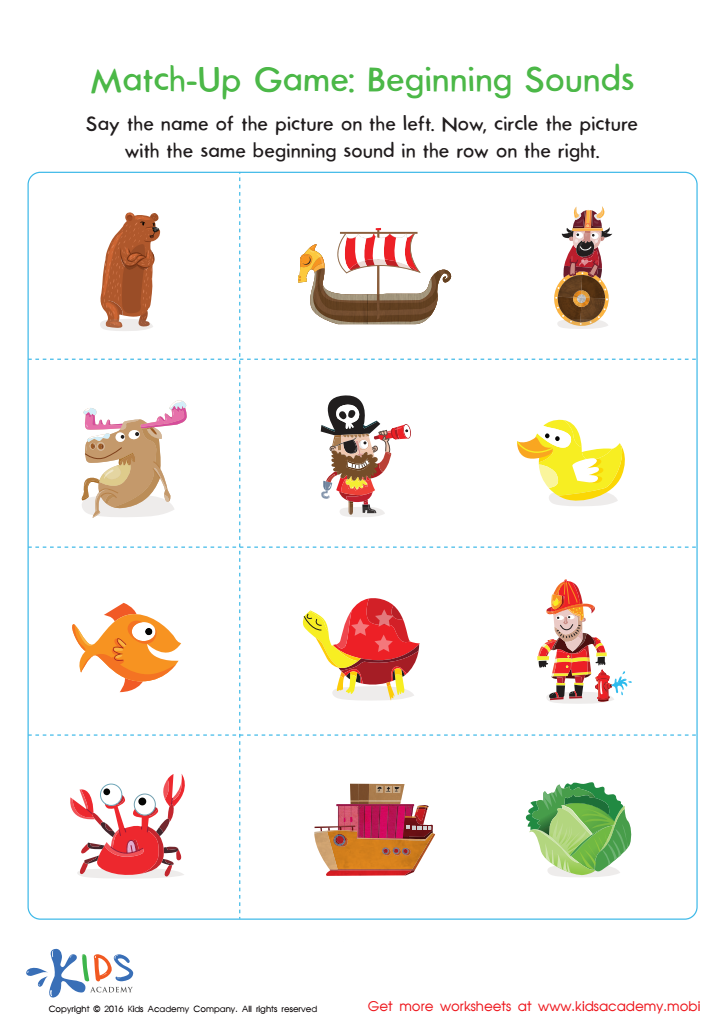
Match–Up Game: Beginning Sounds Worksheet
 Assign to My Students








Phonics recognition is crucial for children aged 3-8 as it lays the foundation for their reading and writing skills. At this formative age, children begin to connect sounds with letters, enabling them to decode and understand written words. This skill not only boosts literacy but also enhances overall cognitive development, fostering critical thinking and comprehension abilities.
Research indicates that a solid grasp of phonics is linked to sustained reading success. When parents and teachers prioritize phonics instruction, they help children build confidence in their abilities, reducing fears around reading. As children learn to sound out words, they become more fluent readers, resulting in a lifelong love for books and learning.
Moreover, phonics recognition supports broader academic achievement. Successful readers perform better across subjects, as the ability to process written information is essential in all areas of study. Additionally, strong early phonics skills can help mitigate future difficulties in reading, reducing the likelihood of falling behind in later grades.
In essence, focusing on phonics recognition is not just about teaching kids to read; it’s about empowering them with the skills they need to thrive academically and socially. Parents and teachers play a pivotal role in fostering these essential skills during these critical years.








