
Promotes problem-solving Worksheets for Ages 3-8
3 filtered results
Difficulty Level
Grade
Age
-
From - To
Subject
Activity
Standards
Enhance your child's critical thinking and creativity with our "Promotes Problem-Solving Worksheets for Ages 3-8." Designed to challenge and engage young minds, these worksheets cover a range of tasks that help develop crucial problem-solving skills. Activities include puzzles, logic games, and situational challenges tailored to suit different age groups and abilities. By encouraging independent and critical thinking, our worksheets help children build a solid foundation for lifelong learning. Available for hassle-free download and print, they make the perfect educational tool for parents, teachers, and caregivers aiming to foster a love for problem-solving in early childhood.
Favorites
With answer key
Interactive
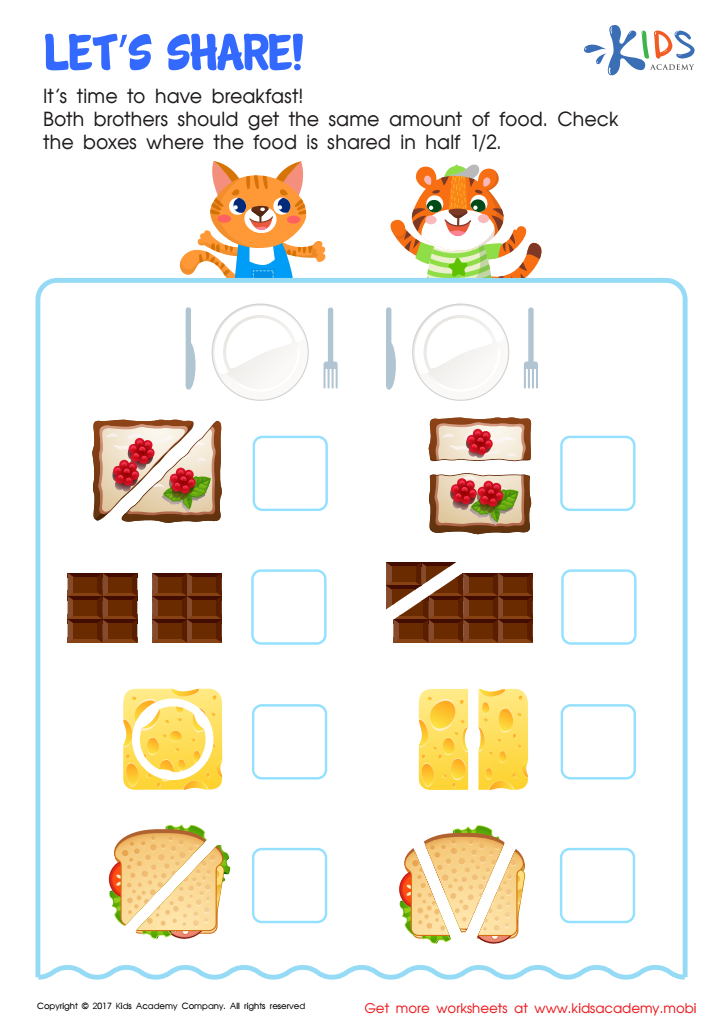
Let's Share Worksheet
It's time to test if your lessons on sharing paid off! With this worksheet, your child can have breakfast and make sure both brothers get equal amounts of food. Have them look at the food images and check the boxes where food is divided equally.
 Assign to My Students
Let's Share Worksheet
Worksheet
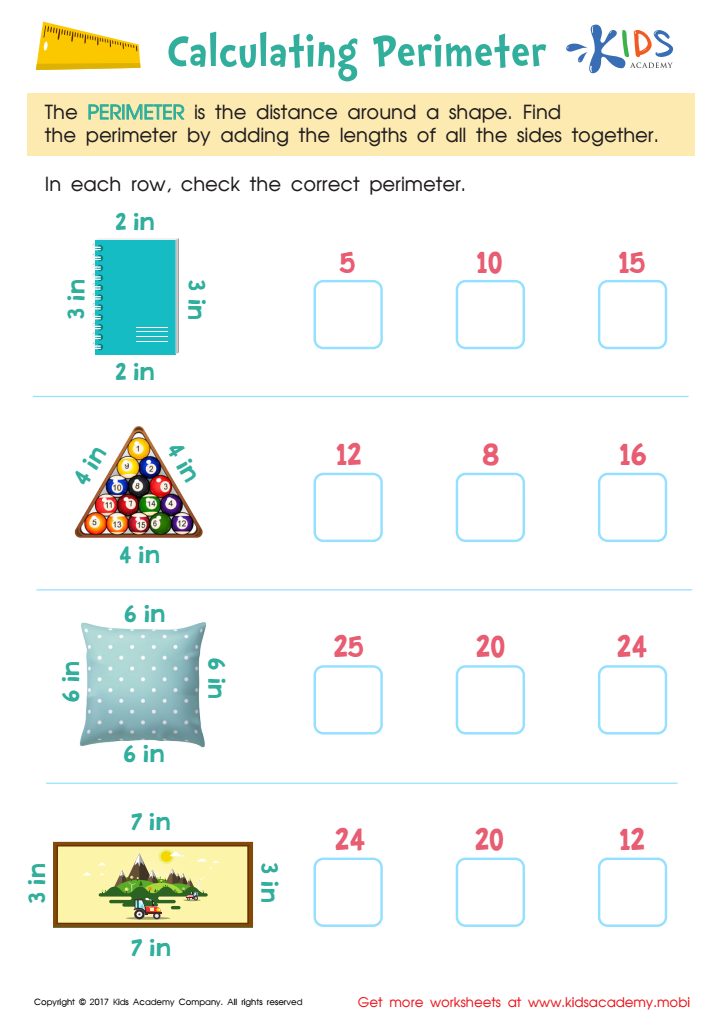
Calculating Perimeter Worksheet
Check out this worksheet to help kids calculate perimeter! Kids can use it to practice important math skills such as geometry. With everyday objects pictured, they'll find the perimeter and master this useful skill.
Calculating Perimeter Worksheet
Worksheet
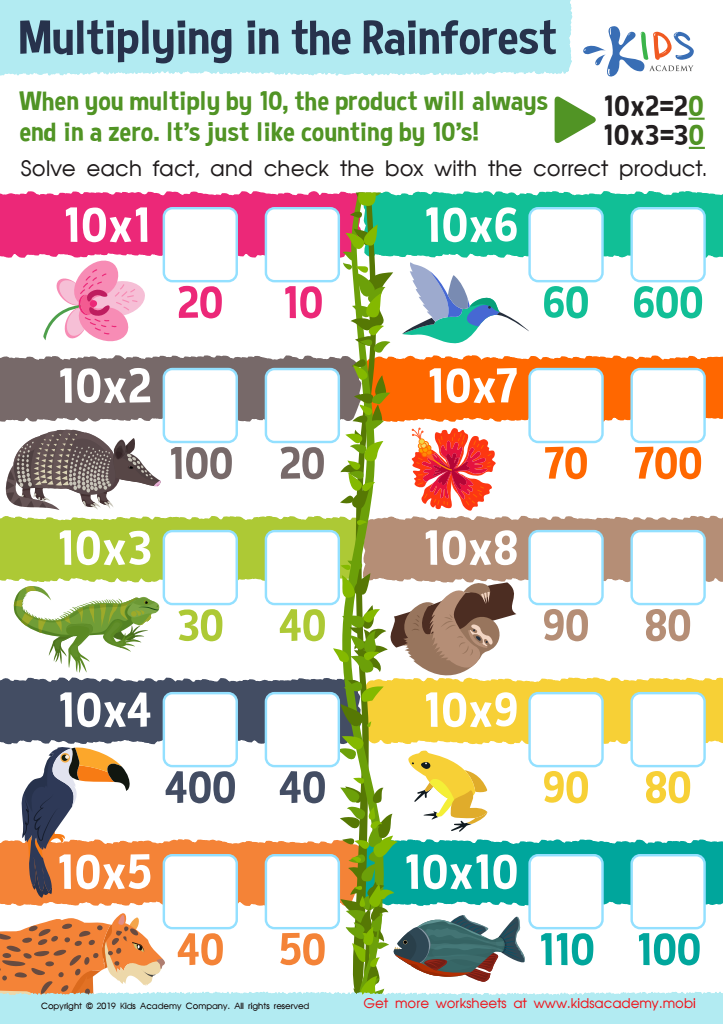
Multiplying in the Rainforest Worksheet
Teaching your child multiplication can be tricky. Help them out with some easy tips! Teach them that when multiplying by 10, the answer always ends in 0. Just like counting by 10's. Show them examples and encourage them to solve the facts, checking their answer with the correct product.
Multiplying in the Rainforest Worksheet
Worksheet
Join Kids Academy for Free
Who is primarily going to use this learning content?








Promoting problem-solving skills in children aged 3-8 is crucial for their overall development and future success. During these formative years, children's brains are highly receptive and adaptable—they learn best through exploration and hands-on experiences. Problem-solving skills allow children to navigate challenges and think critically about their surroundings.
For parents and teachers, cultivating these skills can significantly impact a child's academic performance and social interactions. It fosters a sense of independence and confidence, empowering children to face new situations without fear. Problem-solving encourages curiosity and persistence, qualities that are essential for lifelong learning.
Moreover, early problem-solving activities help develop foundational skills in subjects like math, science, and literacy. They enhance cognitive abilities by teaching children how to analyze, strategize, and make decisions. This, in turn, promotes resilience as children learn to cope with mistakes and view them as opportunities for growth.
In the social context, problem-solving abilities improve communication and teamwork. Children who can find solutions to disputes and navigate social scenarios are better equipped to build strong, positive relationships with peers.
Ultimately, fostering problem-solving skills in young children sets the stage for them to become capable, resourceful, and well-adjusted adults. Parents and teachers play a pivotal role in this developmental process, making it a vital aspect of early childhood education.








