Recognizing equal parts Worksheets for Ages 3-8
3 filtered results
-
From - To
Welcome to our "Recognizing Equal Parts Worksheets" designed for children ages 3-8! These engaging and interactive worksheets help young learners develop a solid understanding of fractions through the concept of equal parts. Featuring vibrant illustrations and kid-friendly activities, our worksheets make learning math enjoyable. Children will explore dividing shapes and objects into equal sections, enhancing their problem-solving skills and promoting critical thinking. Ideal for both home and classroom settings, these resources aim to foster a love for math while building foundational skills. Start your child’s journey to mastering fractions today with our carefully crafted worksheets!
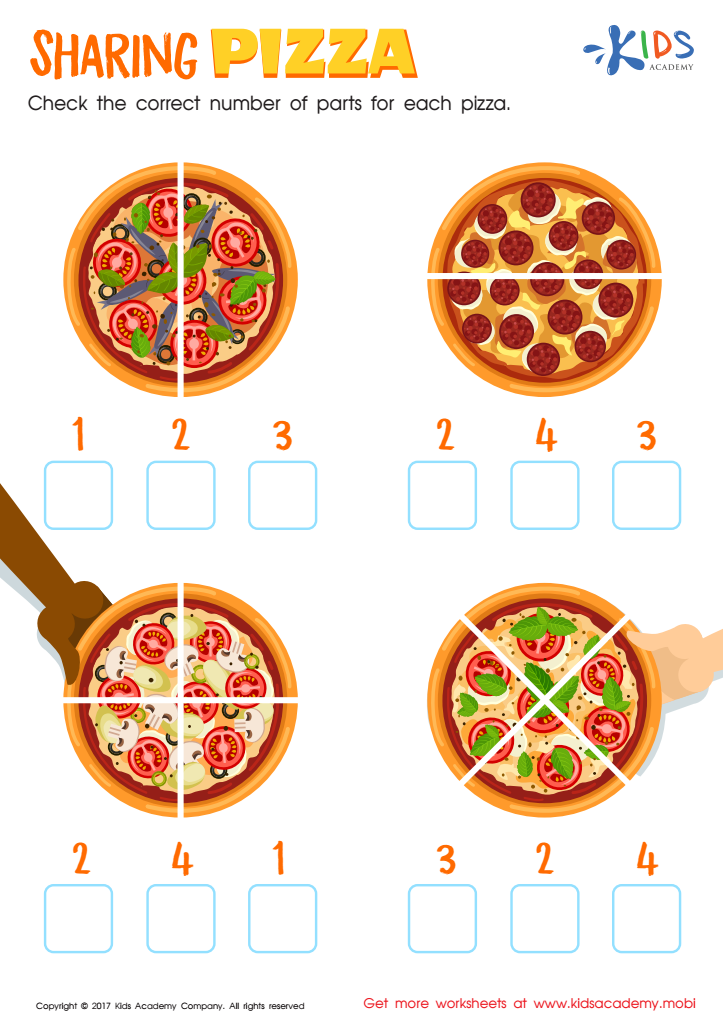
Sharing Pizza Worksheet
 Assign to My Students
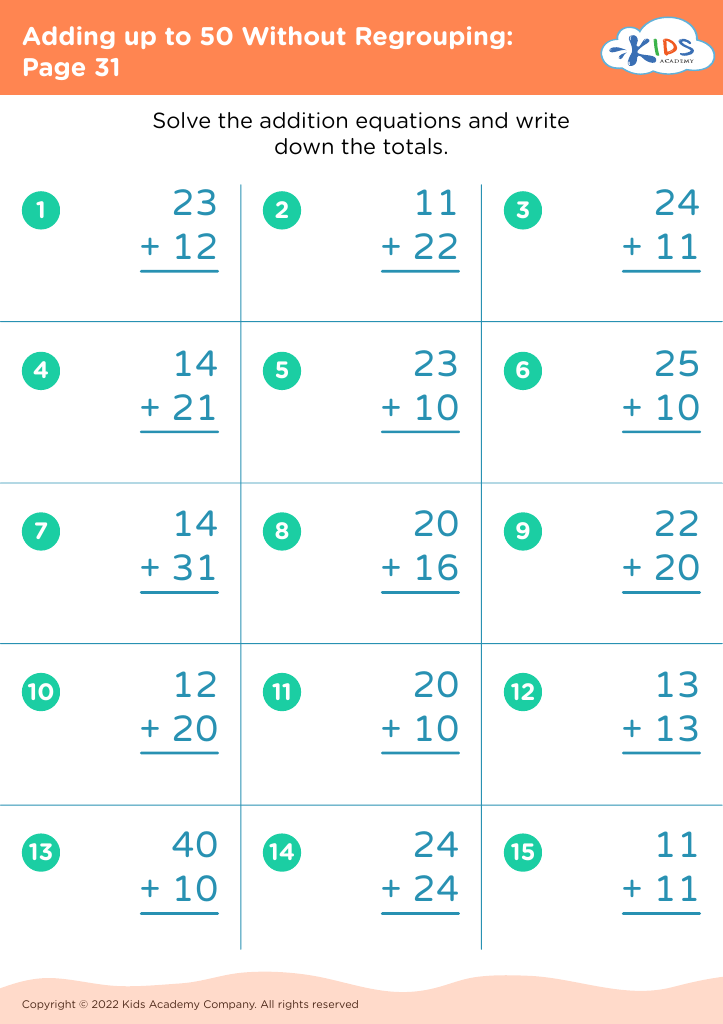
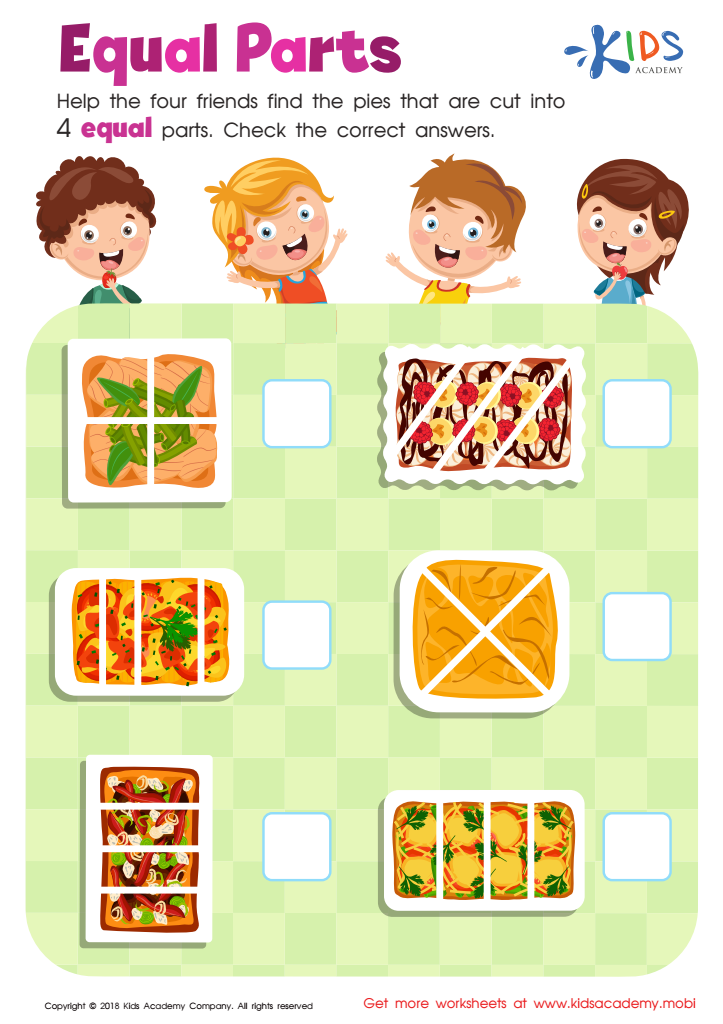
Equal Parts: Food Worksheet






Recognizing equal parts is a fundamental mathematical concept that lays the groundwork for more advanced learning as children progress. For children aged 3 to 8, understanding the idea of equal parts fosters essential skills such as problem-solving, critical thinking, and spatial awareness. When parents and teachers prioritize this concept, they provide children with valuable tools for understanding math in everyday life, from sharing food to dividing objects.
Additionally, grasping equal parts within various contexts—such as shapes, fractions, or sharing—is crucial for developing a sense of fairness and cooperation among peers. It enhances social-emotional skills by encouraging teamwork, negotiation, and compromise during collaborative activities. Engaging with equal parts also ignites curiosity, prompting children to explore and discover relationships between different objects and quantities.
Furthermore, recognizing equal parts is a stepping stone to future math concepts like fractions, ratios, and proportions. Establishing a solid foundation early on empowers children to feel confident in their mathematical abilities, fostering a lifelong love for learning. By focusing on equal parts, parents and teachers not only cultivate essential academic skills, but also contribute to holistic development, setting children up for success in their future educational journeys and in real-world scenarios.








