Spatial understanding Worksheets for Ages 3-8
5 filtered results
-
From - To
Explore our engaging Spatial Understanding Worksheets designed for children aged 3-8! These worksheets are tailored to enhance young learners' ability to understand and navigate space and relationships between objects. Activities include identifying shapes, solving mazes, and recognizing spatial directions, promoting critical thinking and problem-solving skills. Perfect for parents and educators, our printable resources aim to build a strong foundation in spatial awareness through fun and interactive exercises. Help your child develop essential skills that benefit their overall learning and cognitive development. Visit us today to discover a variety of worksheets that make learning spatial concepts enjoyable and effective!
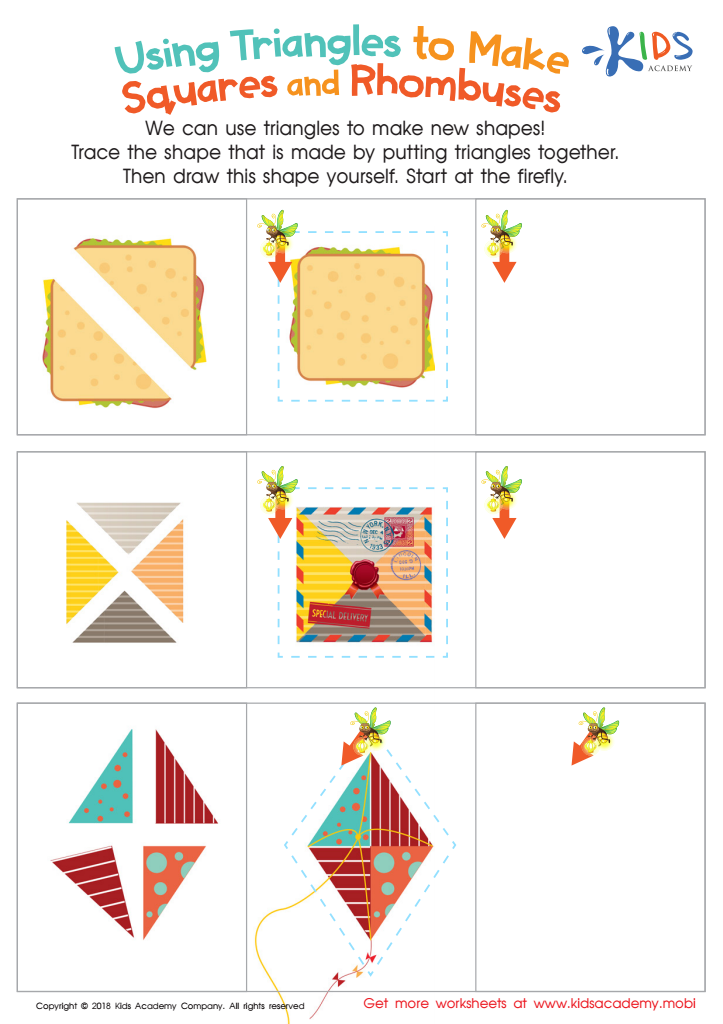
Using Triangles to Make Squares and Rhombuses Worksheet
 Assign to My Students
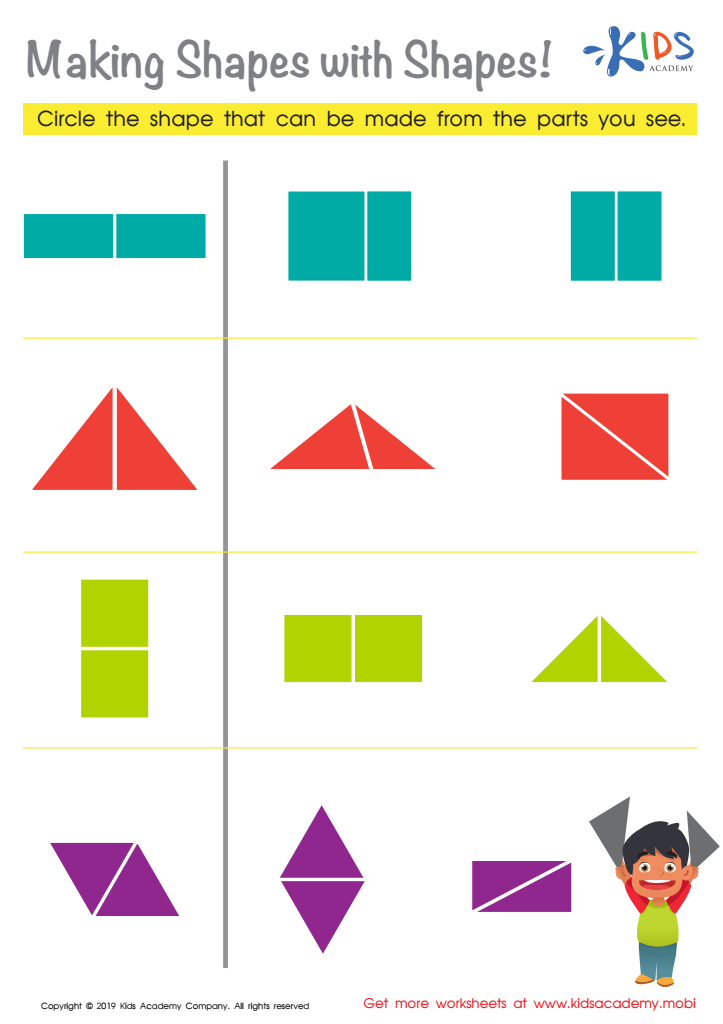
Making Shapes with Shapes Worksheet
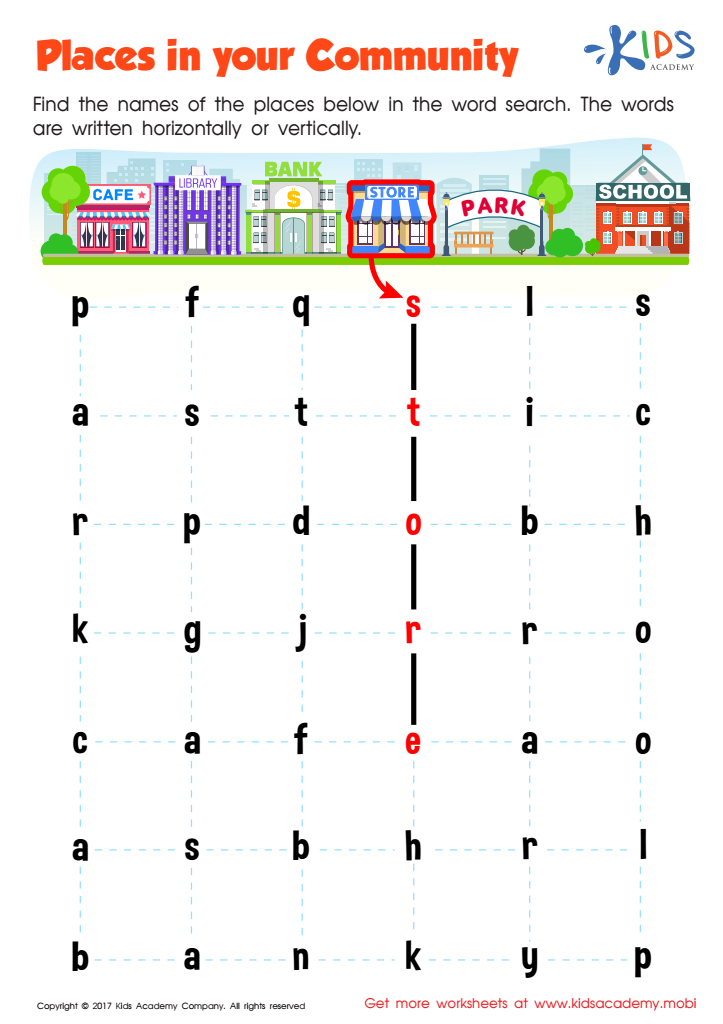
Places in Your Community Worksheet
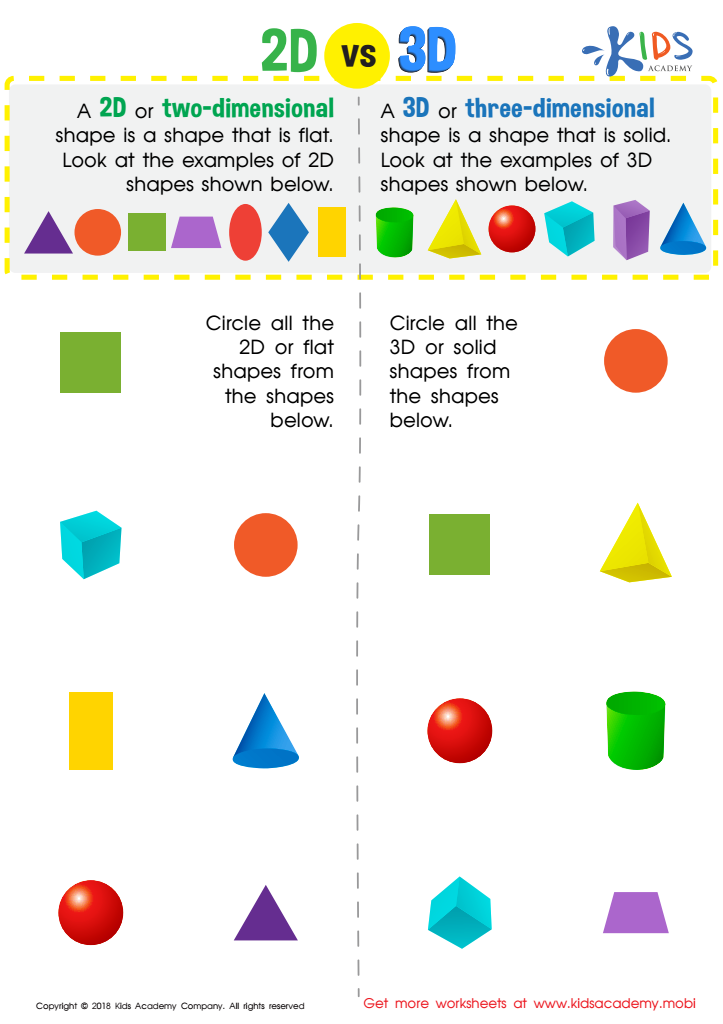
2D vs 3D Shapes Worksheet




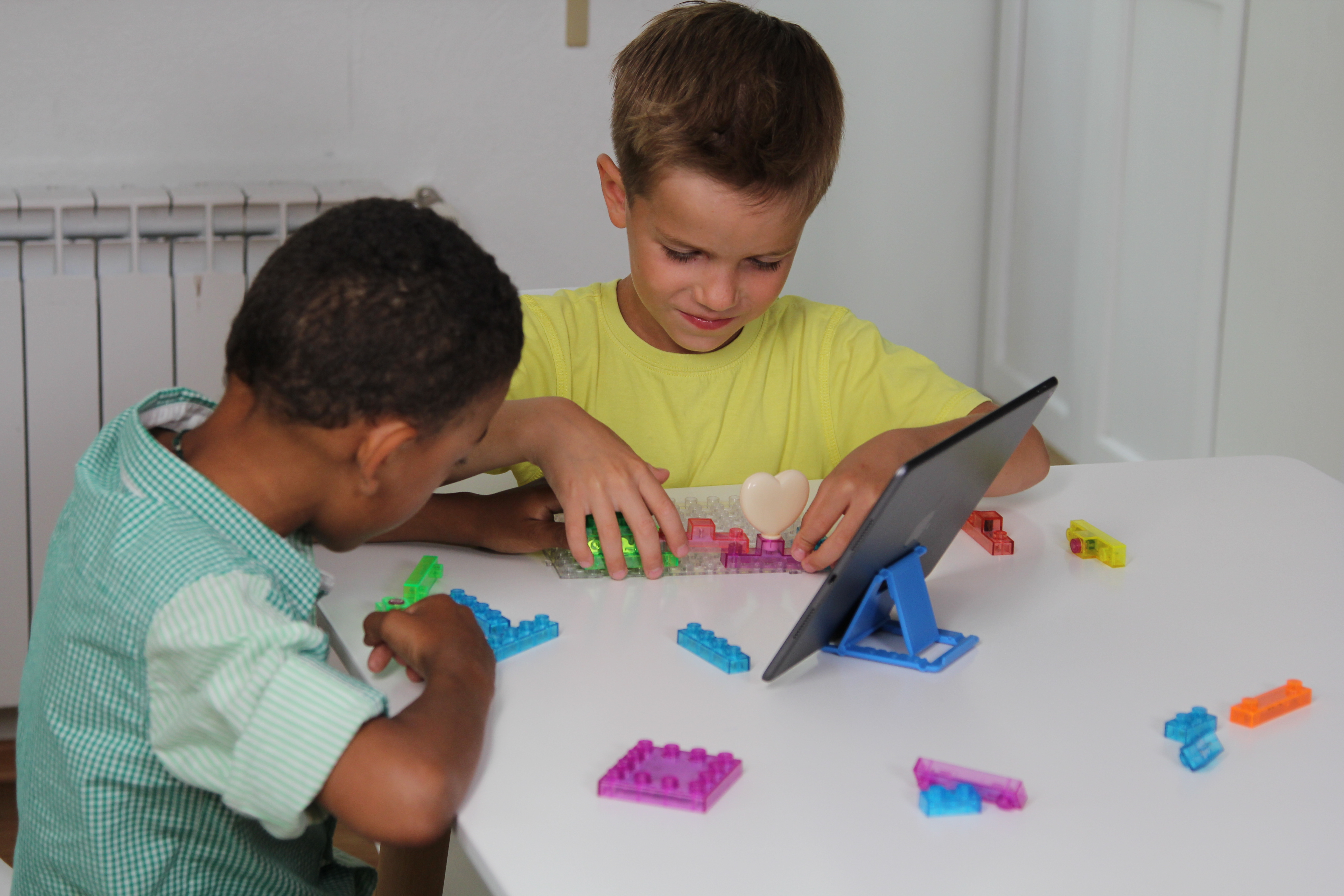


Spatial understanding is crucial for children aged 3-8 as it lays the foundation for various cognitive and academic skills. At this early stage of development, children begin to make sense of the world around them by recognizing shapes, spaces, and relationships between objects. This understanding is directly linked to literacy and numeracy skills; for instance, children with strong spatial reasoning often excel in math, as they can visualize geometrical concepts and comprehend measurements.
Moreover, improved spatial skills help in problem-solving and critical thinking. When children engage in activities like building with blocks or puzzles, they learn to navigate and manipulate their environment, enhancing their ability to think logically and scientifically. Additionally, these skills support emotional and social development; children with good spatial awareness can better navigate social situations, which may involve understanding body language and physical distance in interactions with others.
Parents and teachers should prioritize spatial learning in their curriculum and play activities. Incorporating games that involve positioning, symmetry, and shapes fosters a child's ingenuity, creativity, and adaptability. Ultimately, nurturing spatial understanding equips children with the skills essential for lifelong learning and problem-solving in an increasingly complex world.








