Understand number relationships Worksheets for Ages 3-8
5 filtered results
-
From - To
Explore our engaging "Understand Number Relationships Worksheets" designed specifically for children ages 3-8. These worksheets foster essential mathematical skills, helping young learners grasp concepts like greater than, less than, and equal to through fun and interactive activities. Aligned with early learning standards, each worksheet encourages critical thinking and challenges students to identify number patterns and relationships. With colorful visuals and age-appropriate exercises, your child will develop numeracy skills in a stress-free and enjoyable environment. Perfect for homeschooling or classroom use, these resources promote confidence in math and prepare kids for future learning. Discover the joy of numbers today!
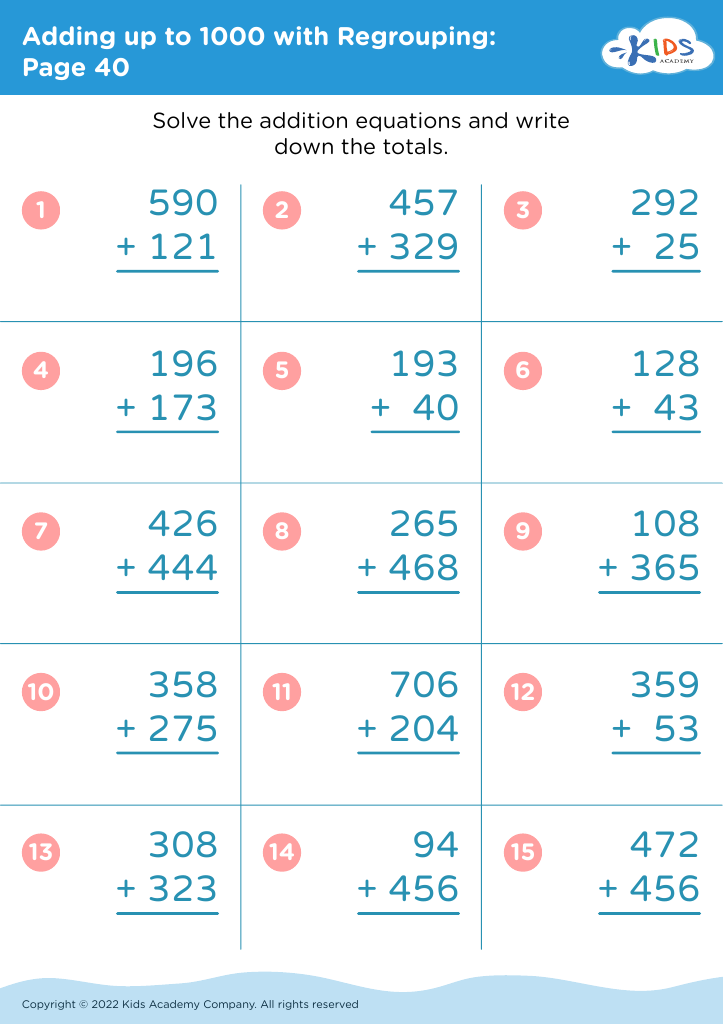
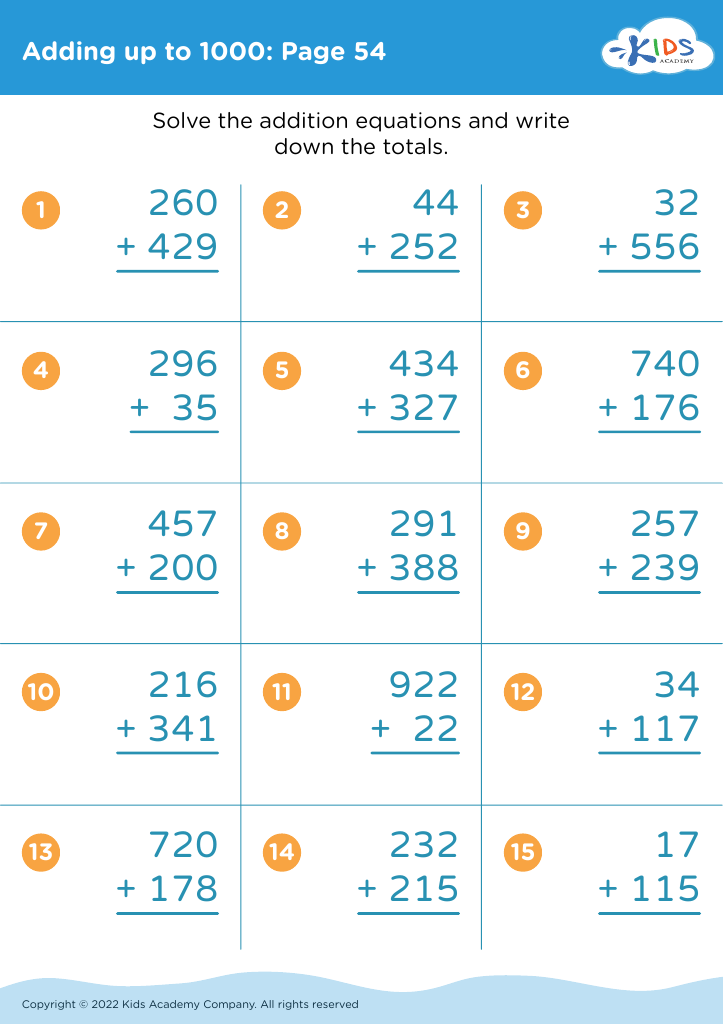
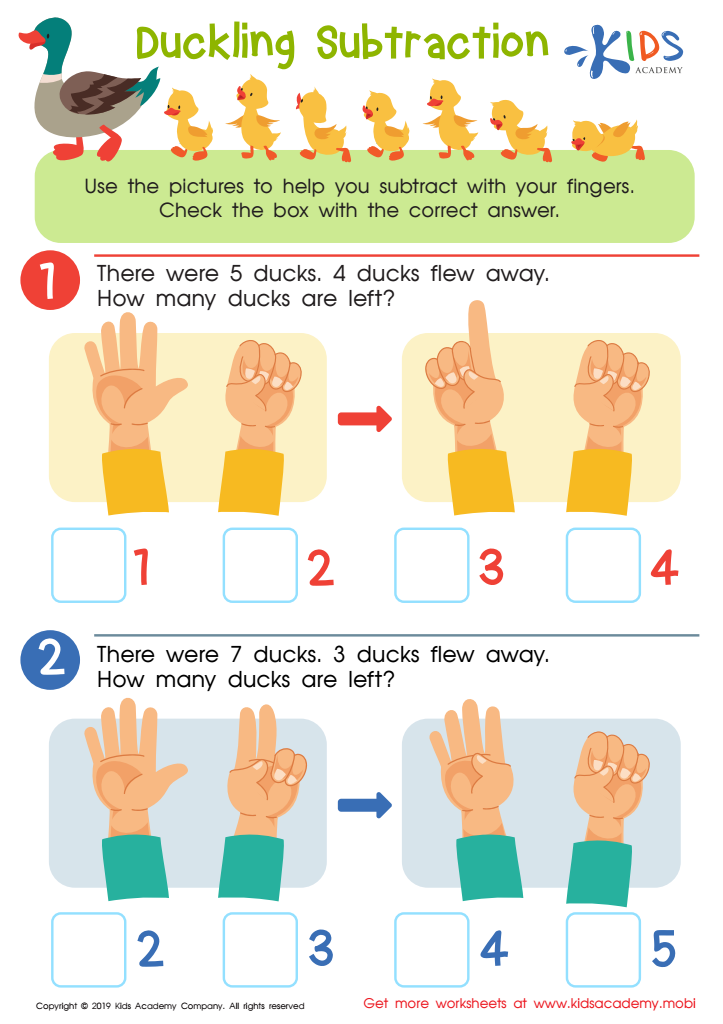
Duckling Subtraction Worksheet
 Assign to My Students





.jpg)
Understanding number relationships is crucial for children aged 3-8 as it lays the foundation for their mathematical development. During these formative years, children begin to grasp basic concepts of quantity, comparison, and order, which are essential for proficiency in mathematics. When parents and teachers emphasize number relationships, they encourage children to explore how numbers interact, fostering critical thinking and problem-solving skills.
Early mastery of number relationships helps children make connections between numbers, enabling them to develop more complex math skills as they progress in their education. For instance, recognizing that 5 is greater than 3 and understanding relationships such as addition and subtraction enhances children's ability to tackle more advanced concepts like multiplication and division later on.
Moreover, a strong grasp of number relationships supports overall cognitive development and boosts children's confidence in their ability to solve problems. In a world increasingly driven by data and numbers, equipping young learners with these fundamental skills prepares them for future success, both academically and in everyday life.
Thus, parental and teacher involvement in cultivating an understanding of number relationships is essential for nurturing a generation of confident, competent learners capable of navigating an increasingly numerical world.








