Understanding biodiversity Worksheets for Ages 3-8
4 filtered results
-
From - To
Explore the wonders of nature with our "Understanding Biodiversity Worksheets" designed specifically for children aged 3-8! These engaging worksheets introduce young learners to the importance of biodiversity through fun activities that promote critical thinking and creativity. From identifying plants and animals to understanding ecosystems, our resources encourage children to appreciate the intricate web of life around them. Each worksheet is crafted to enhance learning through colorful illustrations and interactive tasks, making education enjoyable and accessible. With a focus on both individual study and group activities, these resources are perfect for home or classroom use. Start your child's journey into the natural world today!
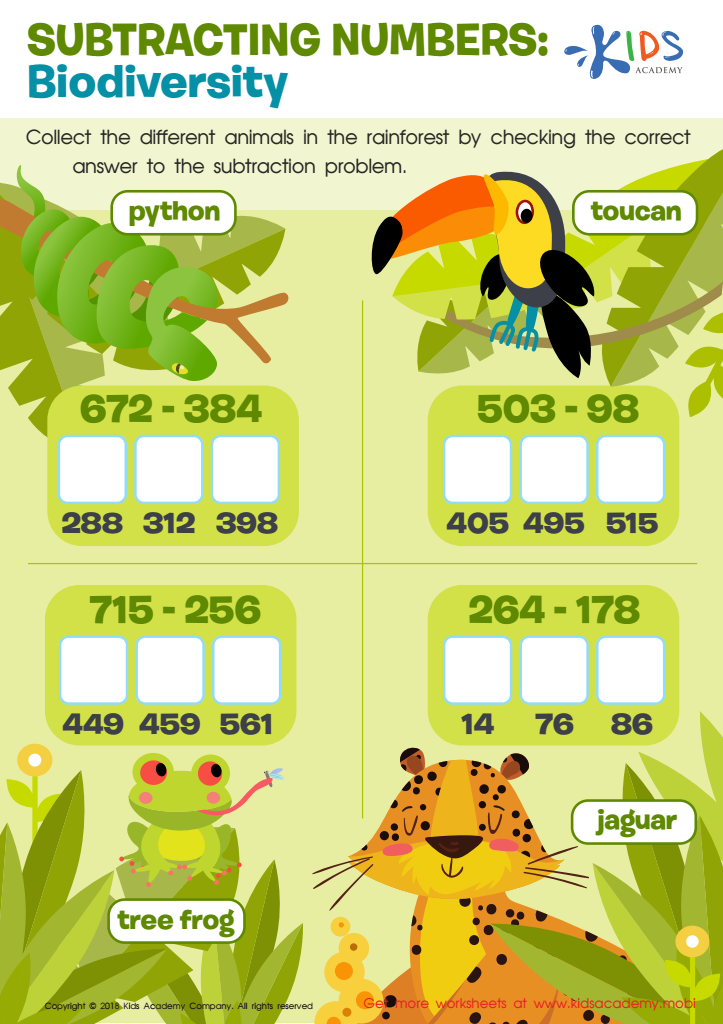
Subtracting Numbers: Biodiversity Worksheet
 Assign to My Students
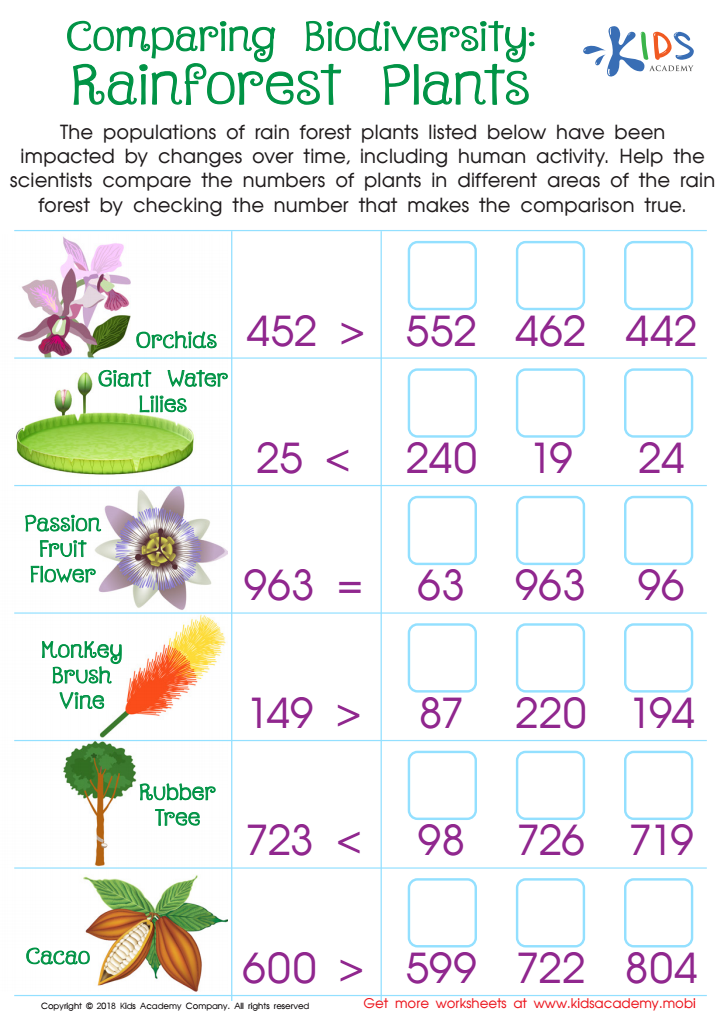
Comparing Biodiversity: Rainforest Plants Worksheet
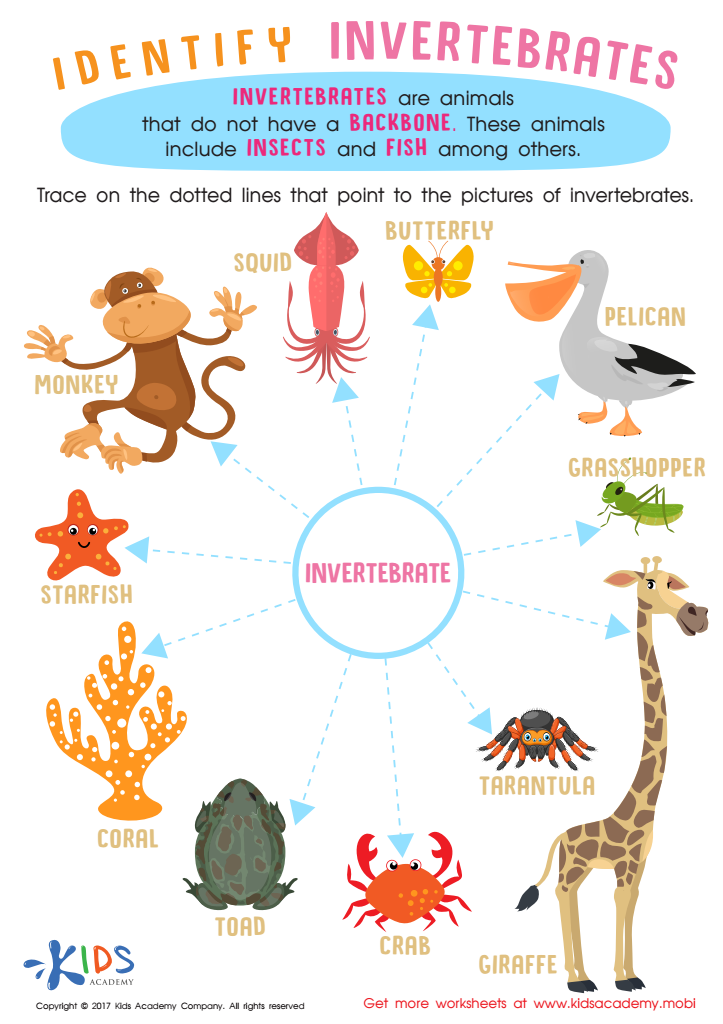
Invertebrates Worksheet for Grade 3
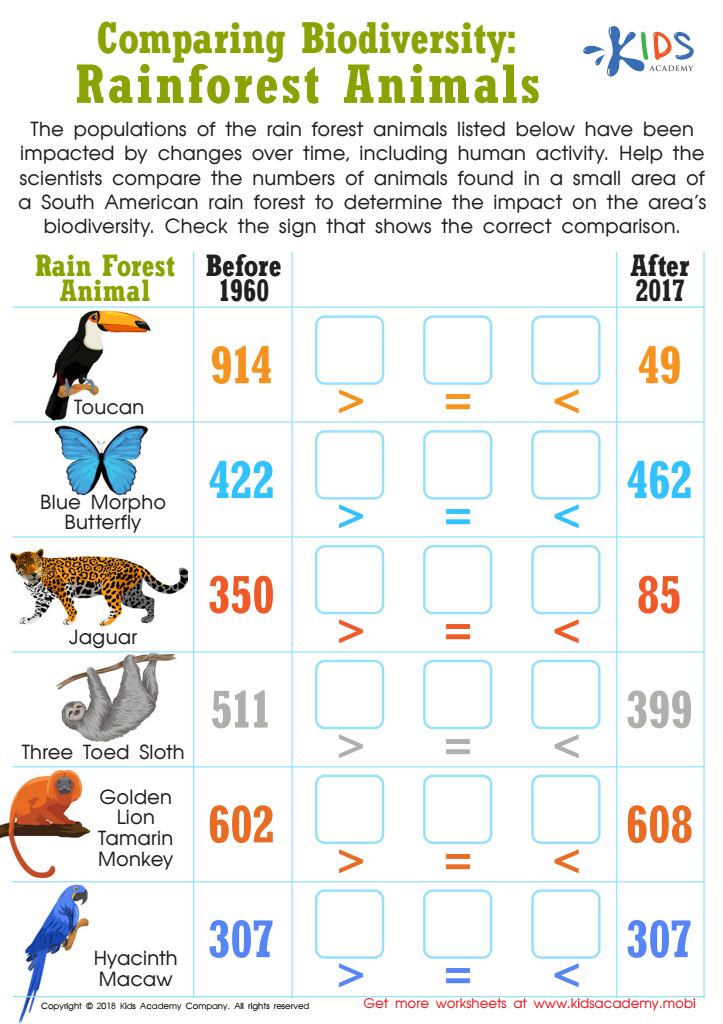
Comparing Biodiversity: Rainforest Animals Worksheet




Understanding biodiversity is vital for parents and teachers of children aged 3-8 because it lays the foundation for a deep appreciation of the natural world. At this developmental stage, children are naturally curious and eager to explore their environment. By introducing them to the variety of life—from plants and animals to ecosystems—educators and caregivers can nurture their inherent wonder and promote critical thinking skills.
Teaching young children about biodiversity fosters a sense of responsibility towards nature. When children recognize the interconnections among living things, they become more aware of the importance of conservation, sustainability, and the impact of human actions on the environment. This foundational knowledge can inspire eco-friendly habits early on, helping to raise environmentally-conscious individuals.
Additionally, engaging with biodiversity can enhance literacy, science skills, and social-emotional development. Interactive activities, such as exploring local habitats or categorizing different species, helps develop observational and classification skills. It can also raise empathy as children learn to value all forms of life. Overall, fostering a love and understanding of biodiversity equips children with the mindset to be future stewards of the planet, while enriching their educational experience and personal growth.








