Understanding pollination Worksheets for Ages 3-8
4 filtered results
-
From - To
Explore our engaging "Understanding Pollination Worksheets for Ages 3-8," designed to introduce young learners to the fascinating world of pollination. These educational resources provide a fun, interactive way for children to learn about how nature works, highlighting the important role of bees, flowers, and other pollinators. Through colorful illustrations and age-appropriate activities, kids will develop a deeper understanding of plant life cycles and the environment. Ideal for both classroom use and homeschooling, our worksheets are crafted to foster curiosity and support early science education, ensuring a strong foundation for future learning.
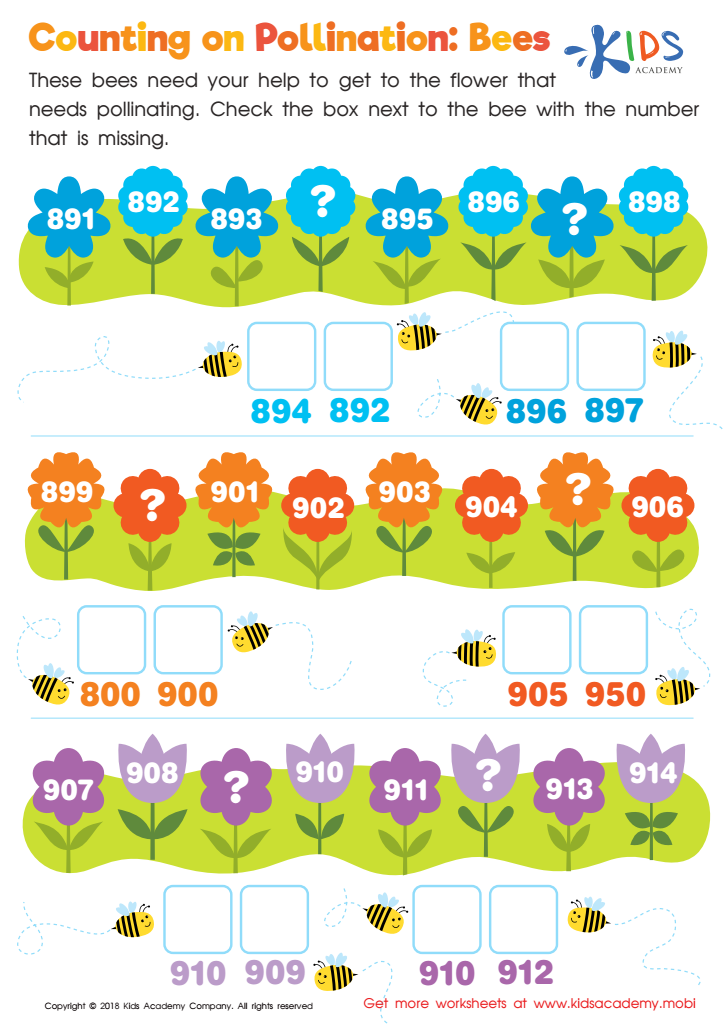
Counting on Pollination: Bees Worksheet
 Assign to My Students
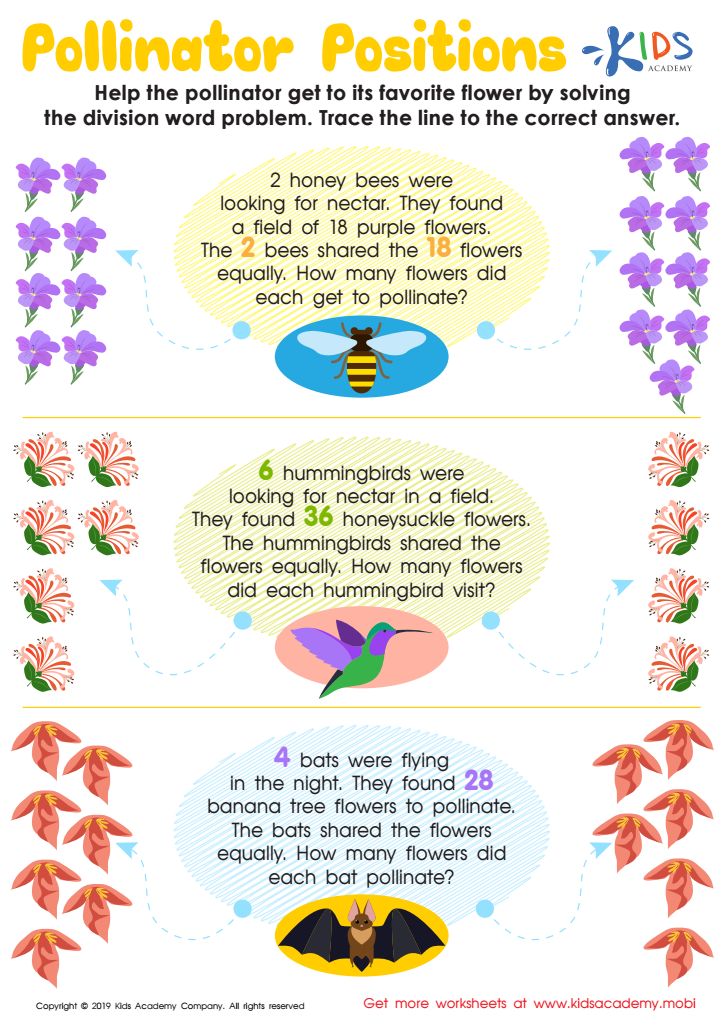
Pollinator Positions Worksheet
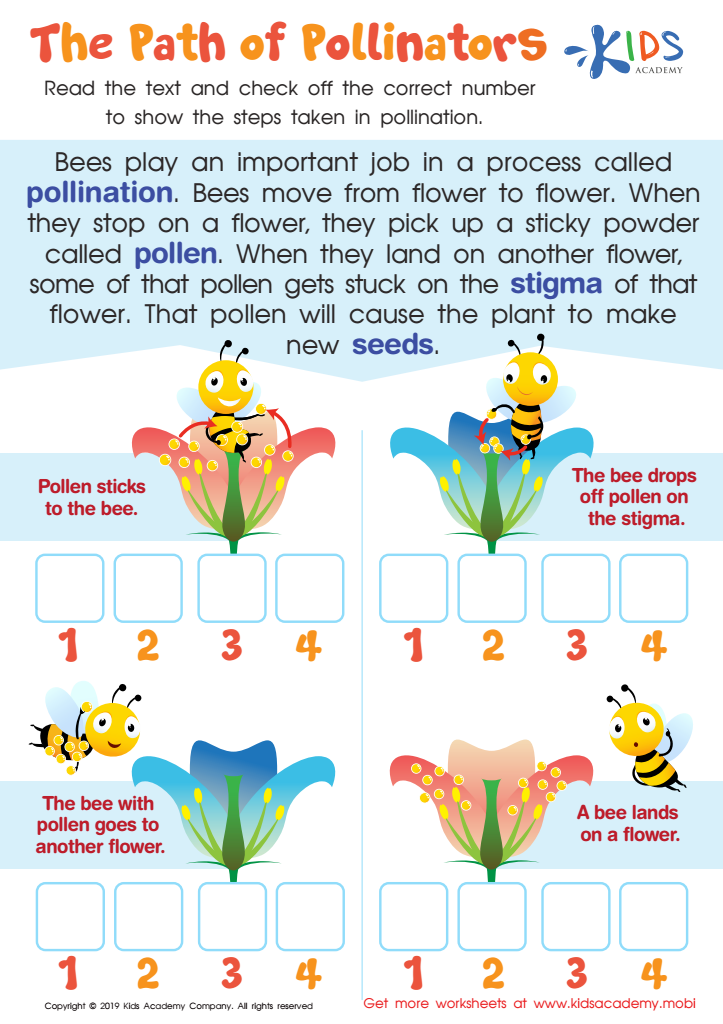
The Path of Pollinators Worksheet
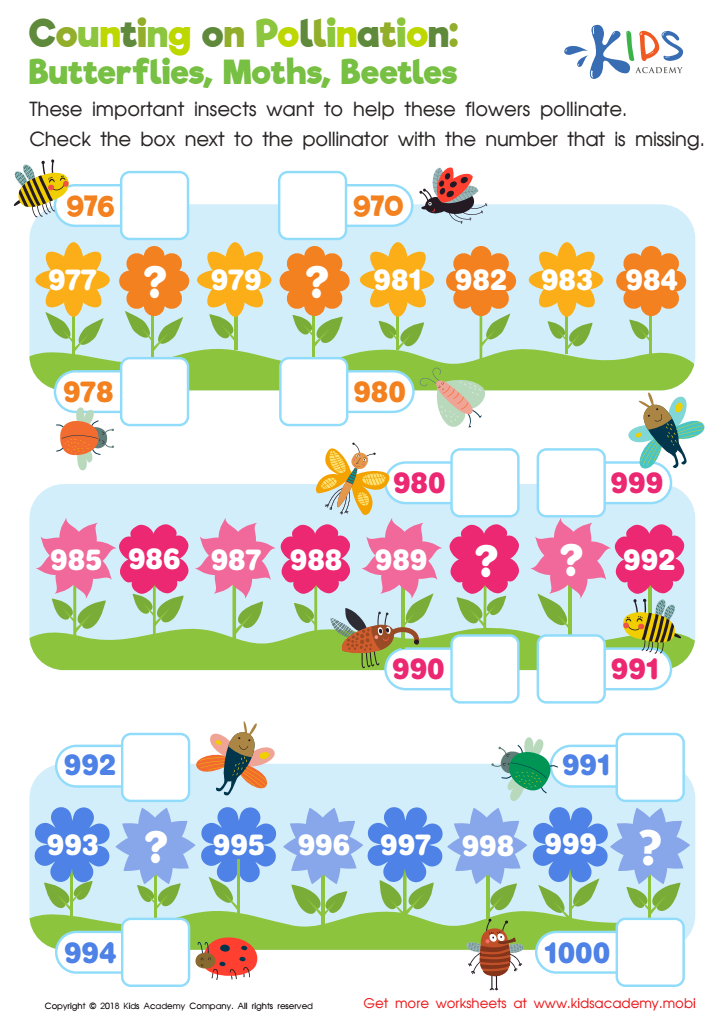
Counting on Pollination: Butterflies, Moths, Beetles Worksheet






Understanding pollination is essential for children aged 3-8 because it establishes a foundation for comprehending the natural world and environmental stewardship. Pollination is the process by which plants reproduce, and it is integral to the production of fruits, vegetables, and seeds that sustain countless forms of life, including humans. Teaching young children about pollination helps them appreciate the interconnectedness of ecosystems and the role that insects like bees, butterflies, and birds play in plant reproduction.
Early education in pollination fosters curiosity and a sense of wonder about nature, encouraging children to spend time outdoors observing and interacting with their environment. This hands-on learning can improve cognitive development, enhance concentration, and build critical thinking skills. Introducing concepts like pollination can also spark interest in science and ecology, laying groundwork for future learning and potential career interests.
Moreover, understanding pollination emphasizes the importance of protecting pollinators and their habitats. Children taught to care about pollinators are more likely to grow up as responsible, environmentally-conscious adults. Parents and teachers who prioritize this topic help cultivate a generation that values and actively contributes to biodiversity conservation, ensuring the health and sustainability of our planet.








