Understanding syllables Worksheets for Ages 3-8
8 filtered results
-
From - To
Unlock the key to reading success with our "Understanding Syllables Worksheets" designed specifically for children ages 3-8! These engaging worksheets provide a fun and interactive way for young learners to grasp the concept of syllables, essential for developing their reading and language skills. Through colorful activities, children will identify, sort, and breakdown syllables in words, fostering phonemic awareness and phonics skills. Perfect for preschool, kindergarten, and early grade school students, our resources are aligned with early literacy standards. Equip your little ones with the tools they need for reading fluency—explore our syllable worksheets today and watch their confidence soar!
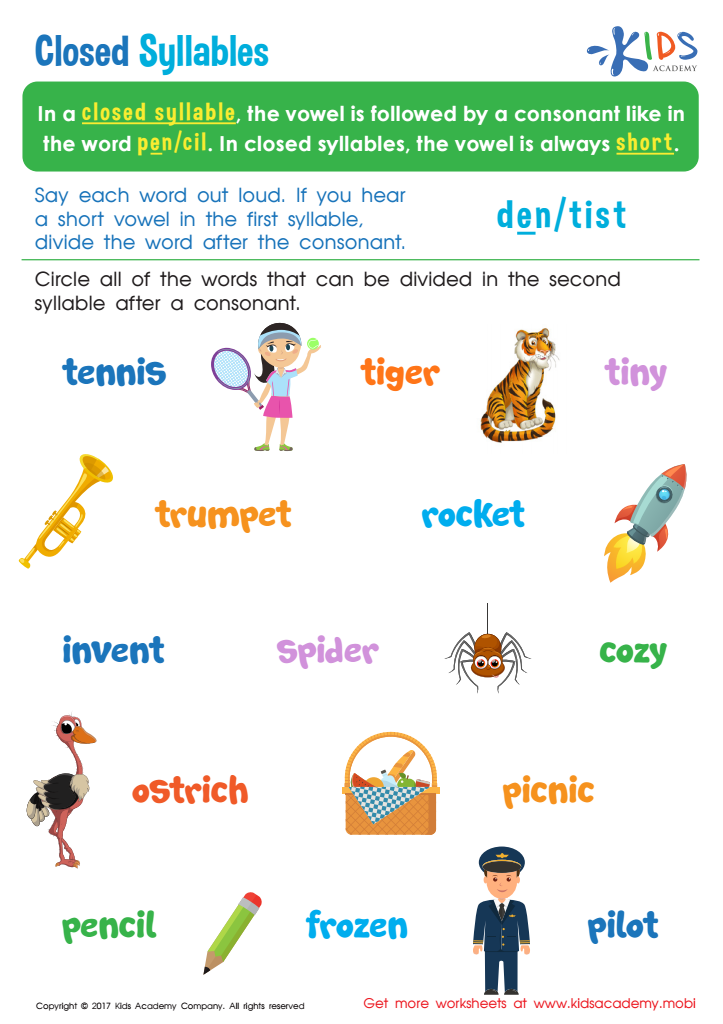
Closed Syllable Spelling Worksheet
 Assign to My Students
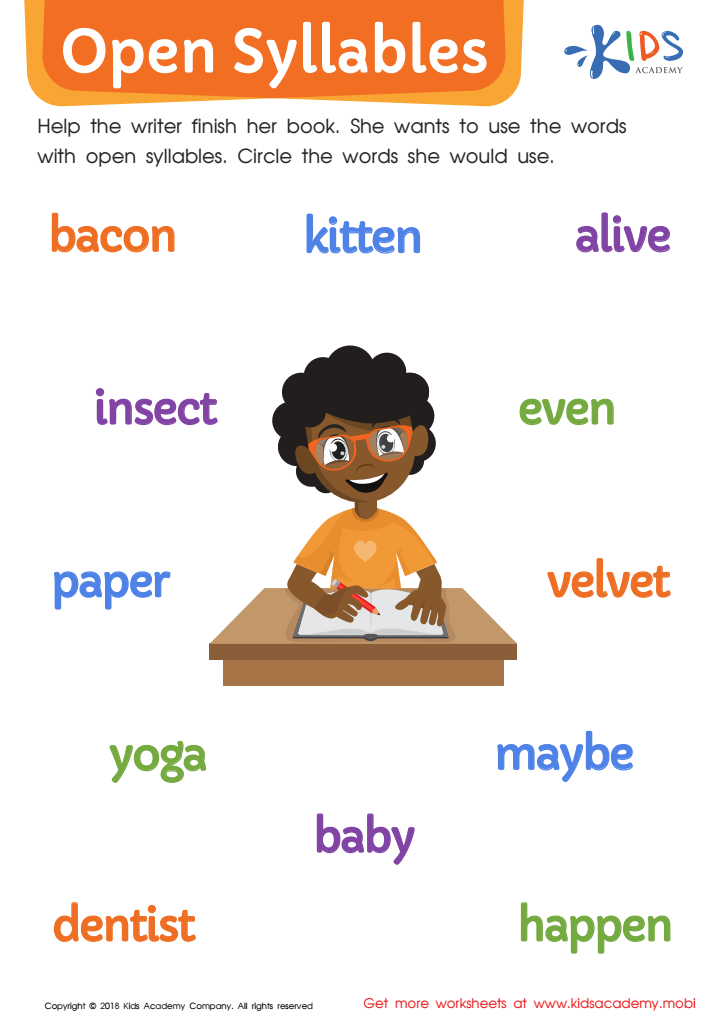
Open Syllables Worksheet
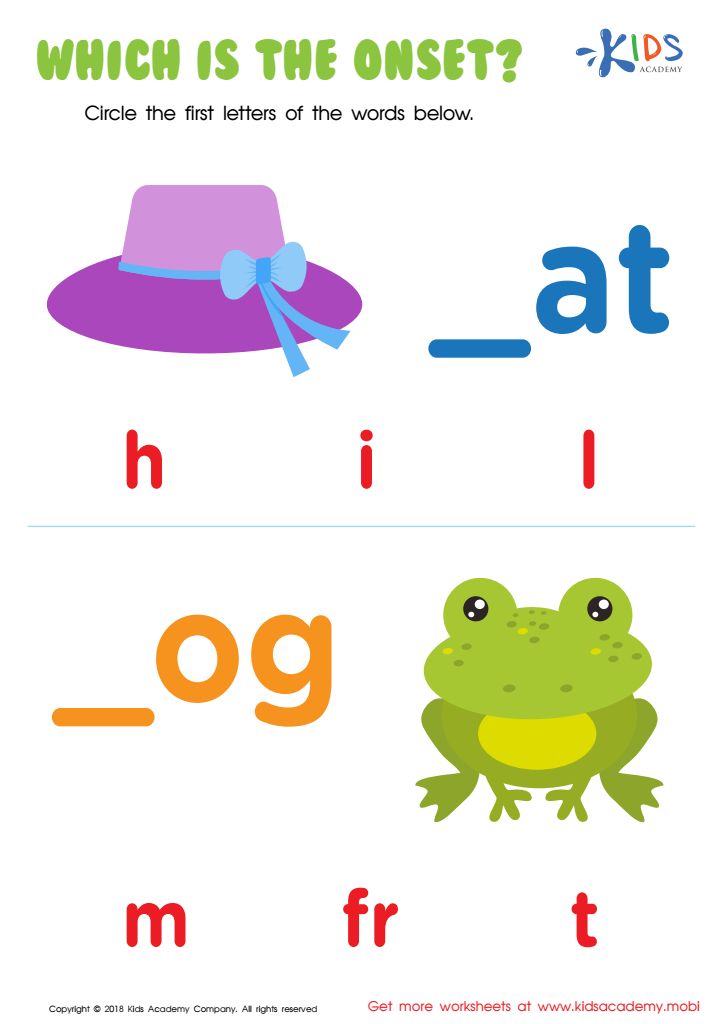
Which Is the Onset? Worksheet
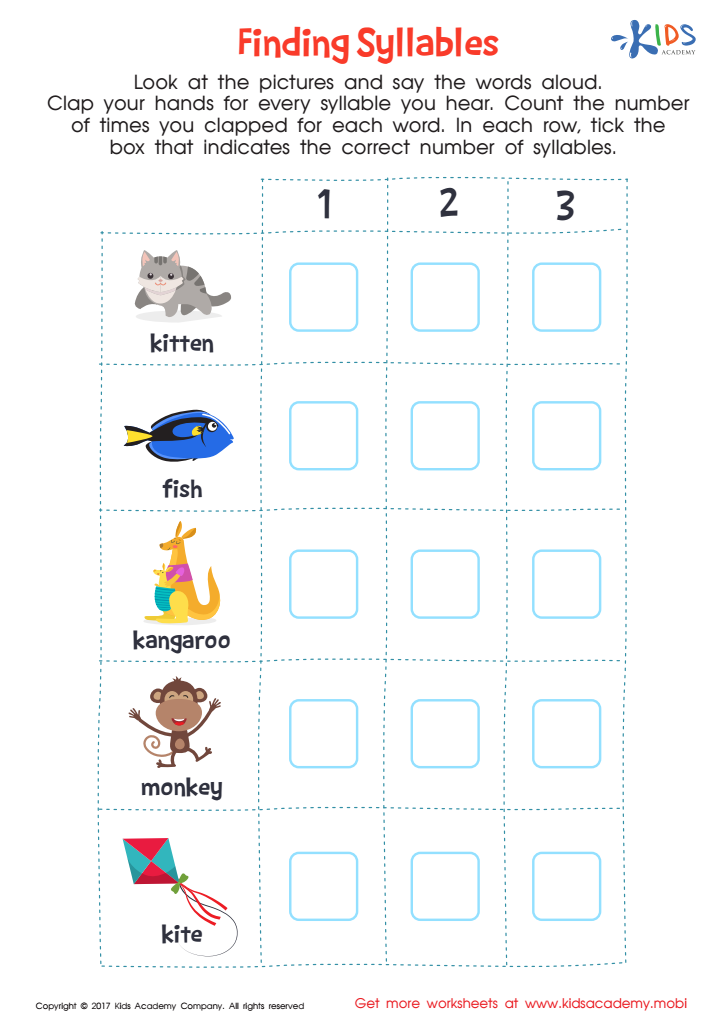
Finding Syllables Word Structure Worksheet
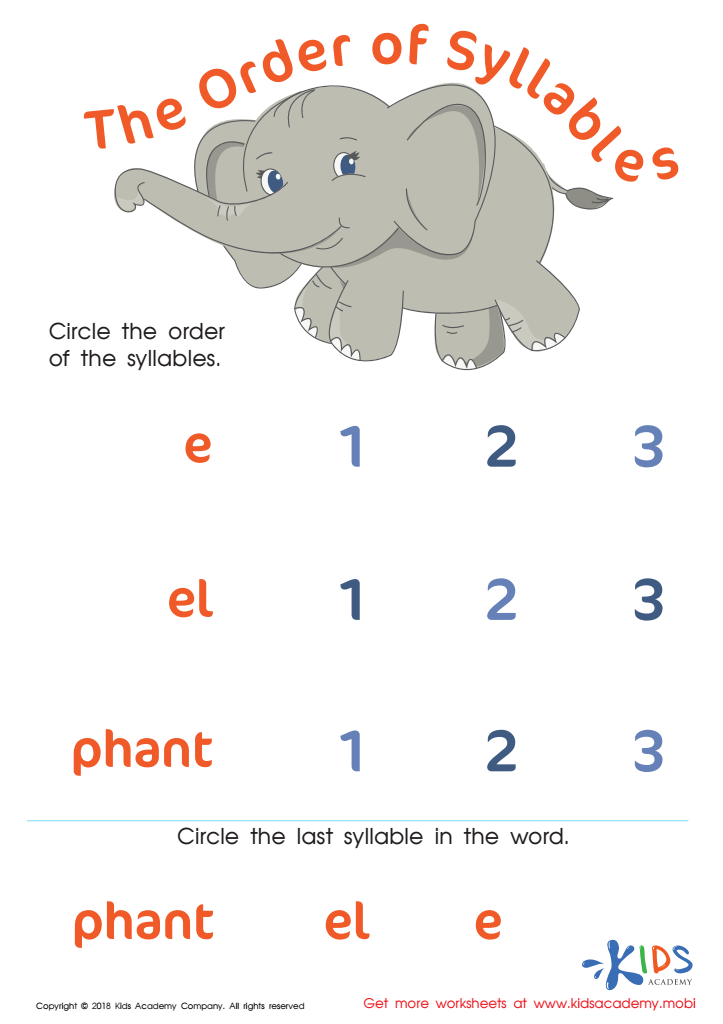
The Order of Syllables Worksheet
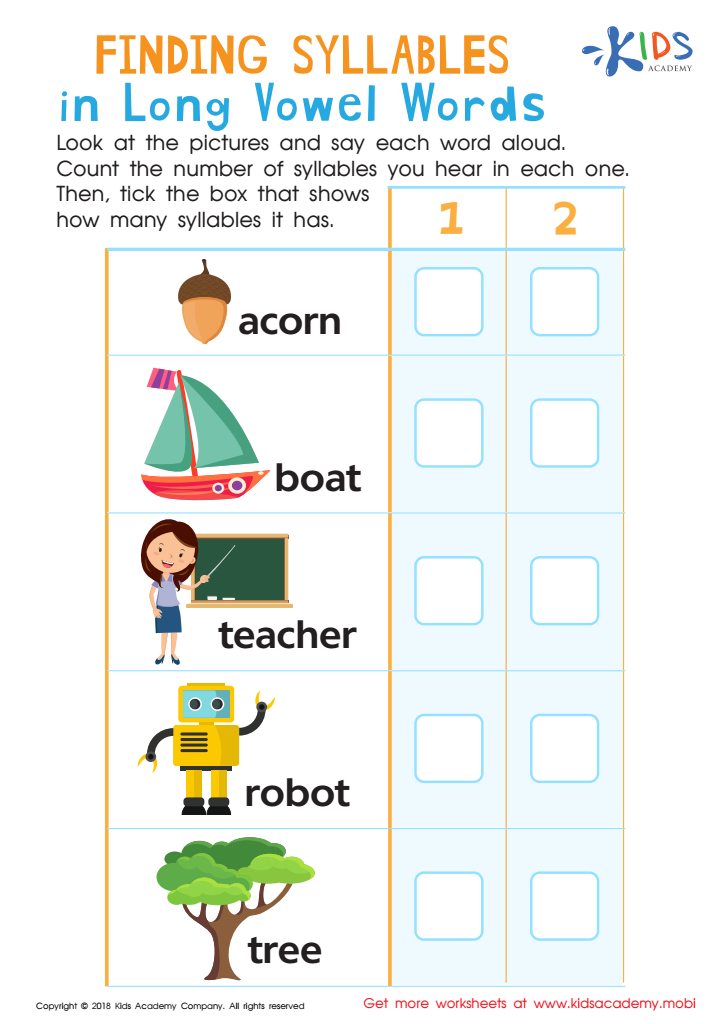
Finding Syllables in Long Vowel Words Worksheet
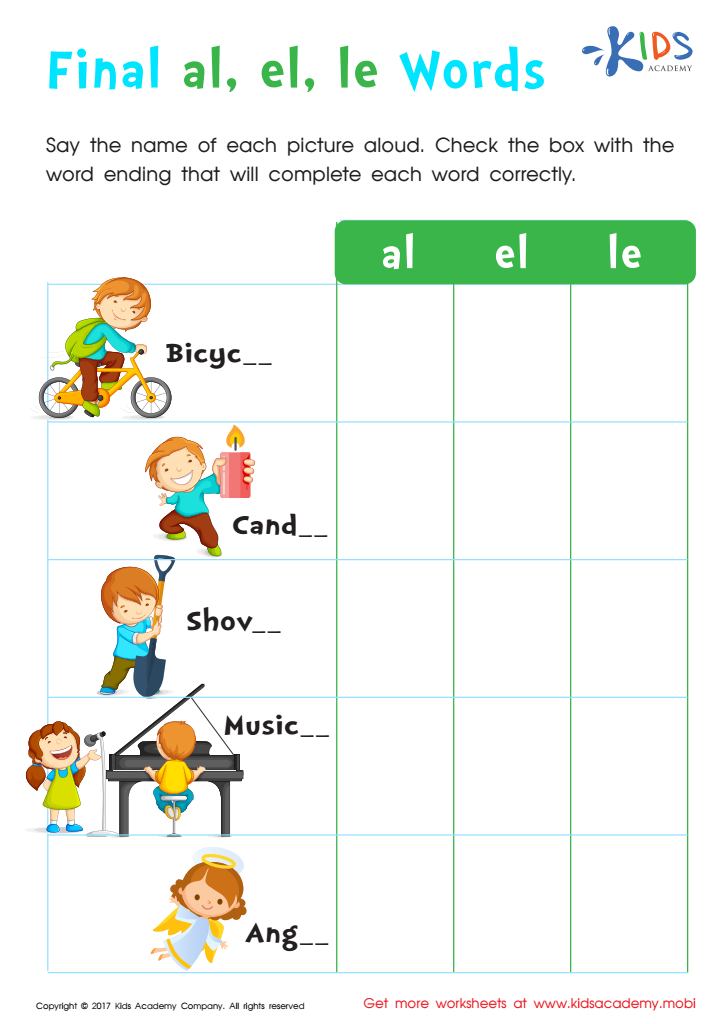
Spelling Words Ending with –le, –el and –al Worksheet
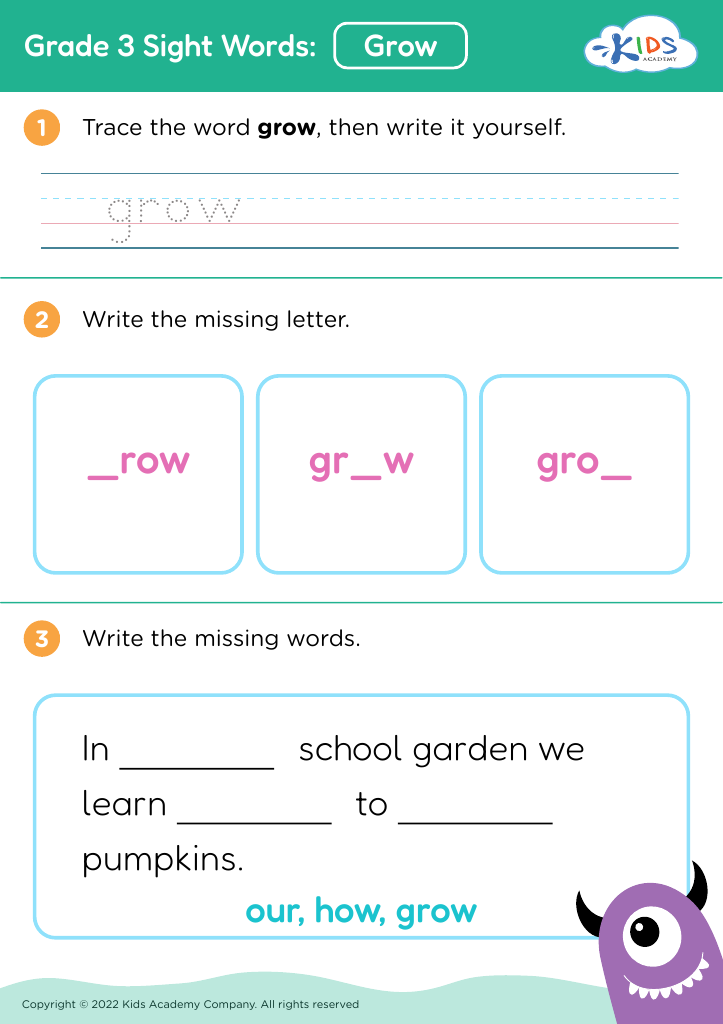


.jpg)




Understanding syllables is crucial for children aged 3-8 as it lays a strong foundation for language development, reading, and writing skills. Syllables are the building blocks of words, and recognizing them helps children learn how to decode and pronounce new words more easily. Grasping syllable structure enhances phonemic awareness, which is vital for mastering reading and spelling.
For parents and teachers, fostering syllable awareness can make learning more engaging and enjoyable. Activities like clapping out syllables in names or familiar words make the process fun and interactive. This playful approach encourages a love for language and promotes communication skills.
Additionally, a solid understanding of syllables can boost children's confidence in literacy tasks. As preschoolers and early grade students encounter more complex vocabulary, their ability to dissect words into syllables allows them to tackle challenging texts with ease. It also aids in their overall academic success as they advance in school.
Moreover, learning about syllables offers cognitive benefits, developing critical thinking skills as children learn to categorize and break apart language. Ultimately, by focusing on syllable understanding, parents and teachers empower children with essential tools for language, literacy, and lifelong learning.








