Visual discrimination Worksheets for Ages 3-8 - Page 2
28 filtered results
-
From - To
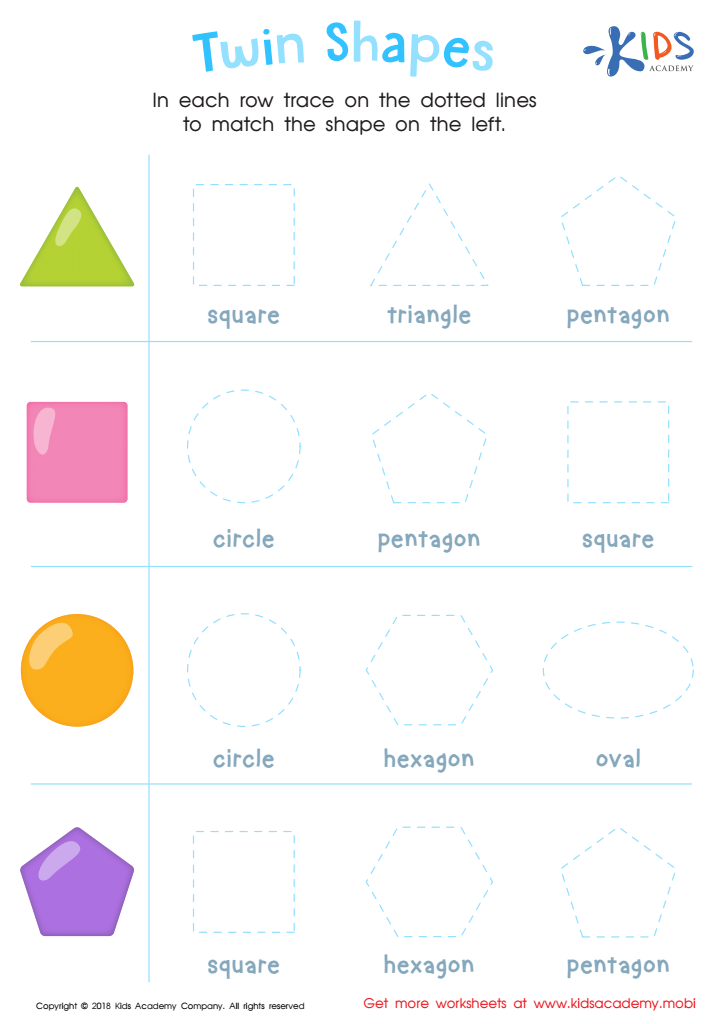
Twin Shapes Dot-to-Dot Worksheet
 Assign to My Students
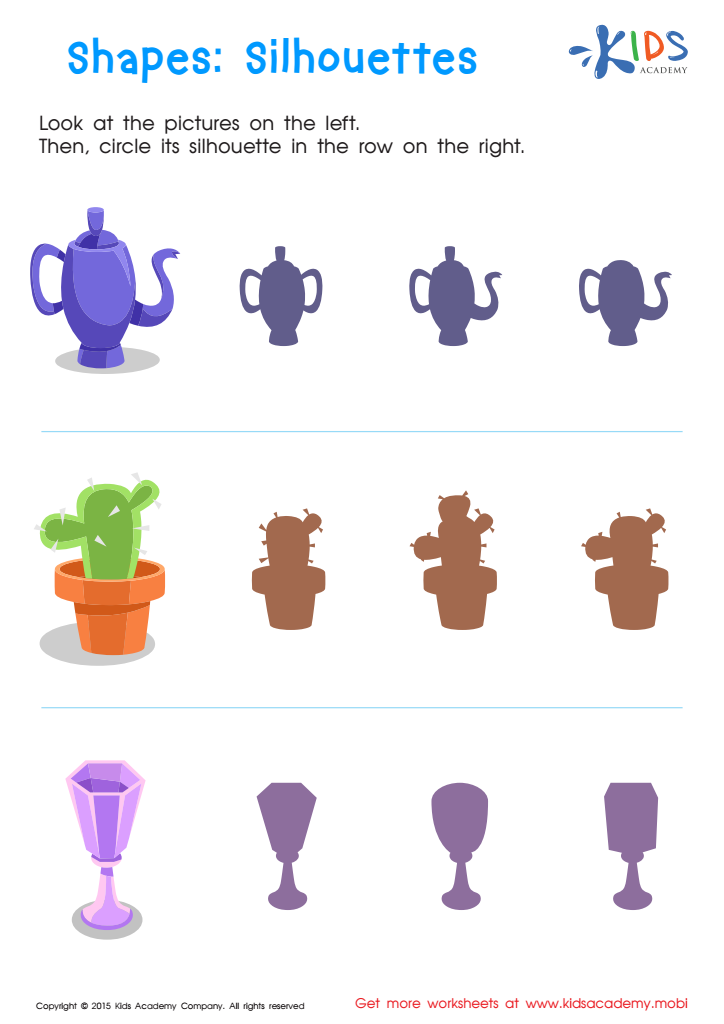
Silhouettes – Shapes Worksheet
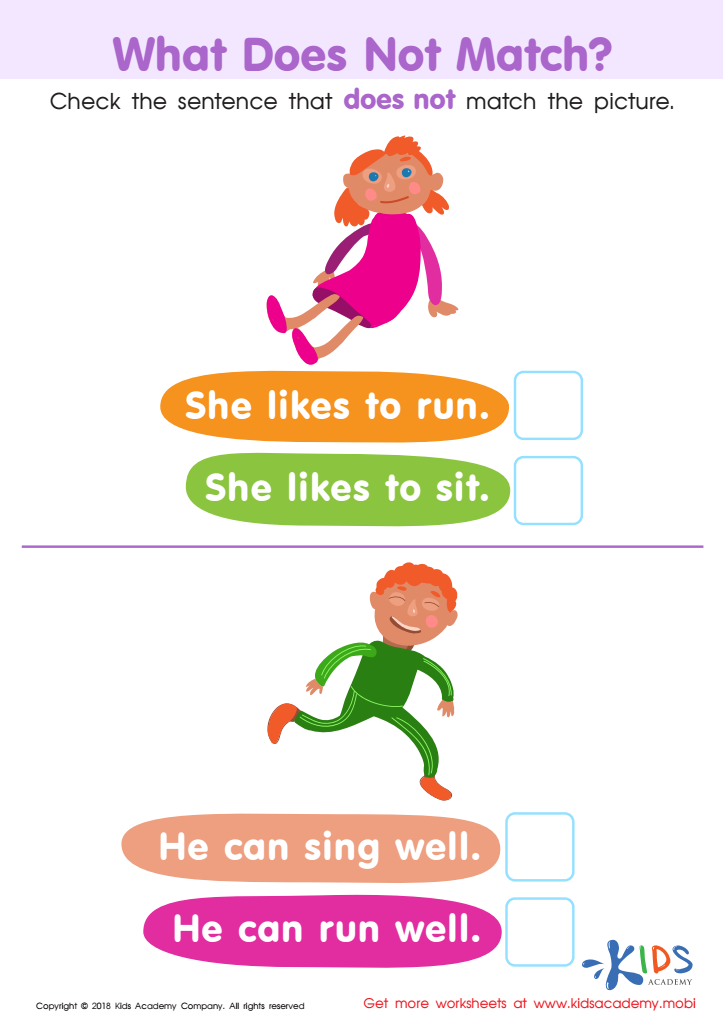
What Does Not Match? Worksheet


.jpg)




Visual discrimination is a critical skill for young children ages 3-8, fundamentally influencing their cognitive and academic development. This skill involves the ability to notice and distinguish differences and similarities in shapes, patterns, and objects. For parents and teachers, nurturing visual discrimination is crucial because it lays the groundwork for essential early learning tasks.
Firstly, visual discrimination directly impacts literacy. Recognizing letters and differentiating between similar-looking ones, such as ‘b’ and ‘d’ or ‘p’ and ‘q,’ is foundational to reading and writing proficiency. A child who struggles with this can face difficulties in more advanced literacy skills later on.
Secondly, this skill plays a significant role in mathematics. Differentiating between numbers, understanding geometric shapes, and interpreting graphs and charts require strong visual discrimination. Introducing young children to activities that bolster this skill can enhance their mathematical abilities.
Additionally, visual discrimination is vital for daily life tasks and social interaction. Understanding visual cues, such as facial expressions or traffic signs, helps children navigate their environment safely and effectively. In group activities or classroom settings, it aids in following instructions and participating fully.
Prioritizing visual discrimination through engaging activities like puzzles, matching games, and drawing not only supports academic success but also instills confidence and independence in young learners. Parents and teachers should thus view it as an integral aspect of early childhood education.








