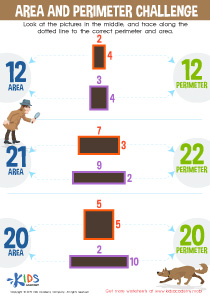
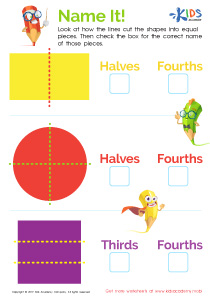
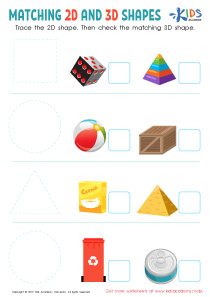
Visual discrimination 2D Shapes Worksheets for Ages 3-8
5 filtered results
-
From - To
Unlock children's potential with our "Visual Discrimination 2D Shapes Worksheets" tailored for ages 3-8. These expertly designed activities provide an engaging way for young learners to identify, compare, and differentiate between shapes such as circles, squares, and triangles. The worksheets support critical learning skills, fostering cognitive development and visual discrimination. Crafted to captivate your child's interest, they serve as a foundational step in early math education. Start your child's learning journey today with these fun, educational printables that make mastering 2D shapes an exciting adventure! Fill learning gaps and watch your little ones excel!
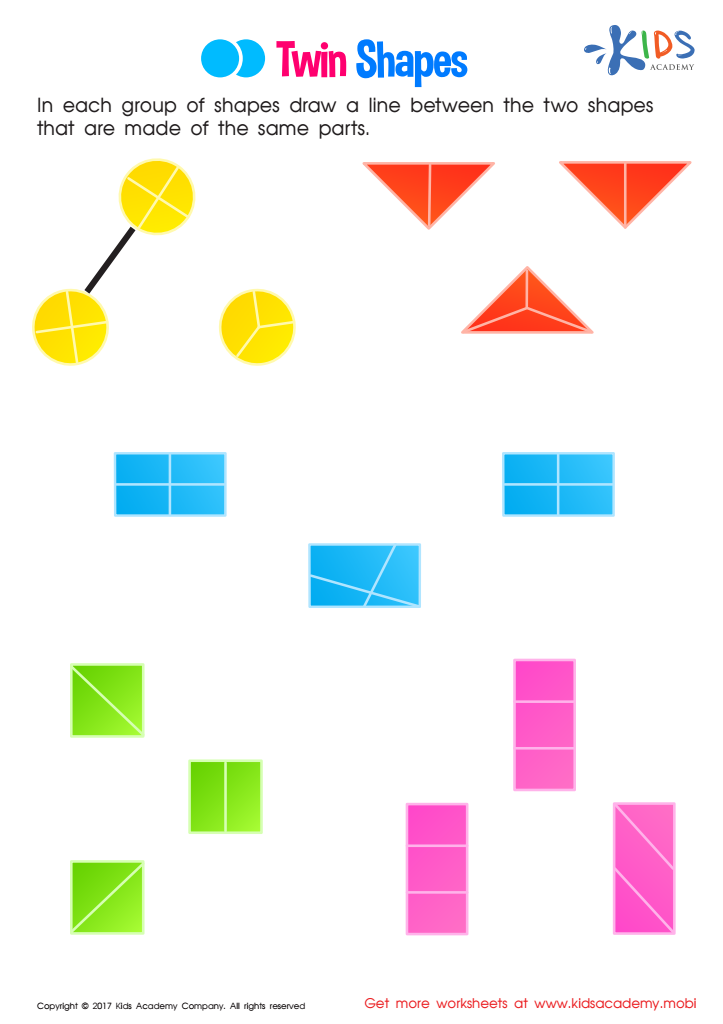
Twin Shapes Worksheet
 Assign to My Students




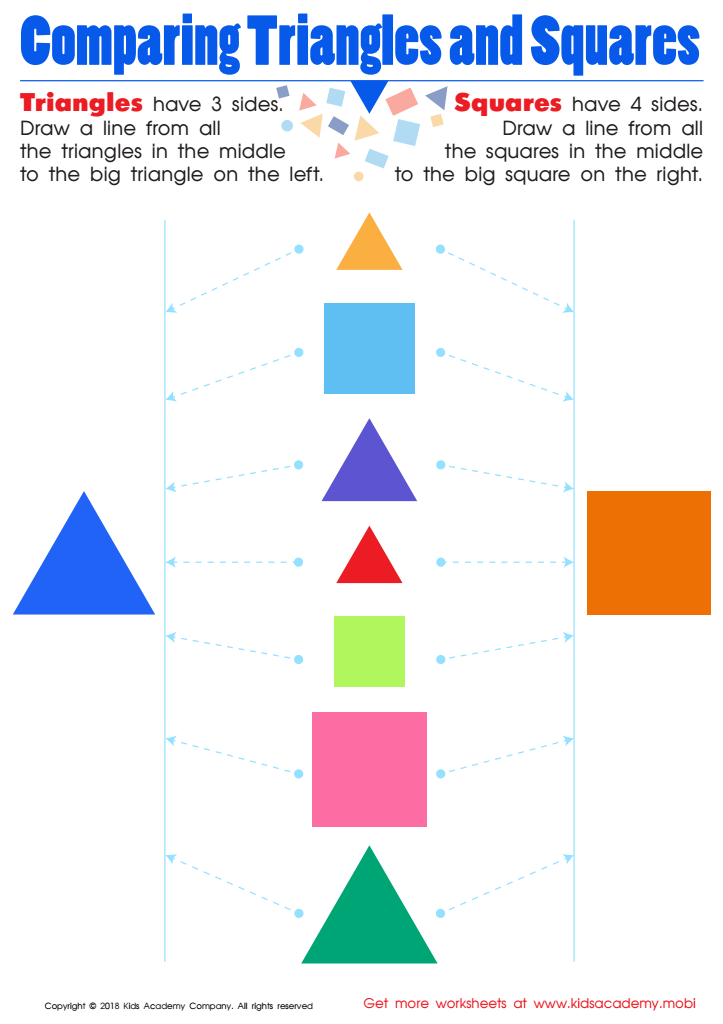
Comparing Triangles Squares Worksheet
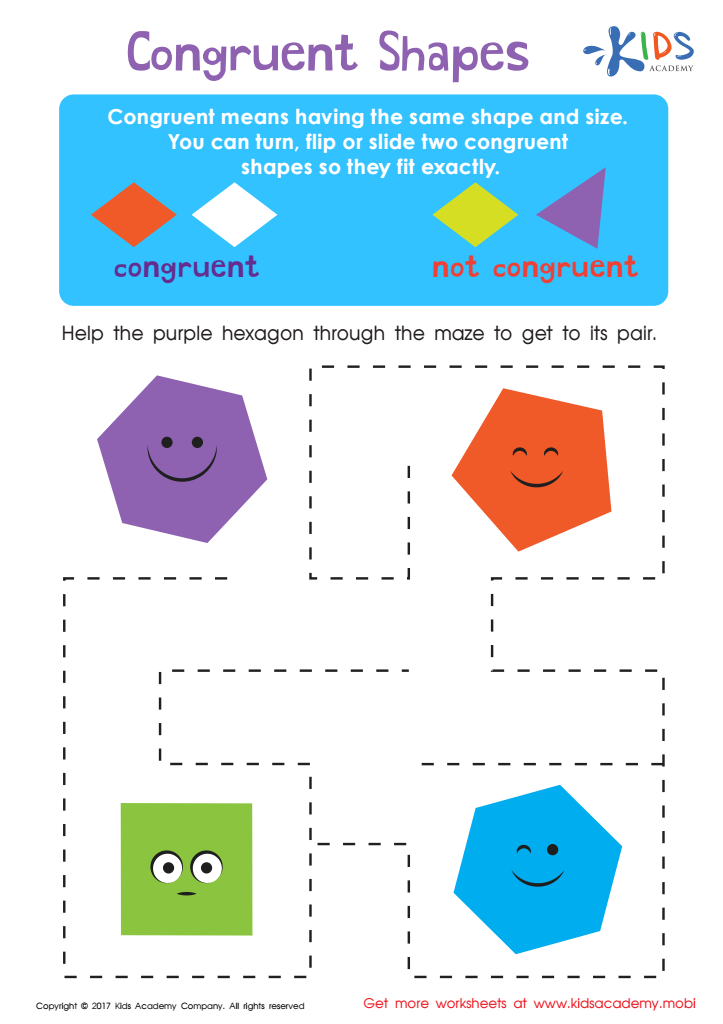
Congruent Shapes Worksheet
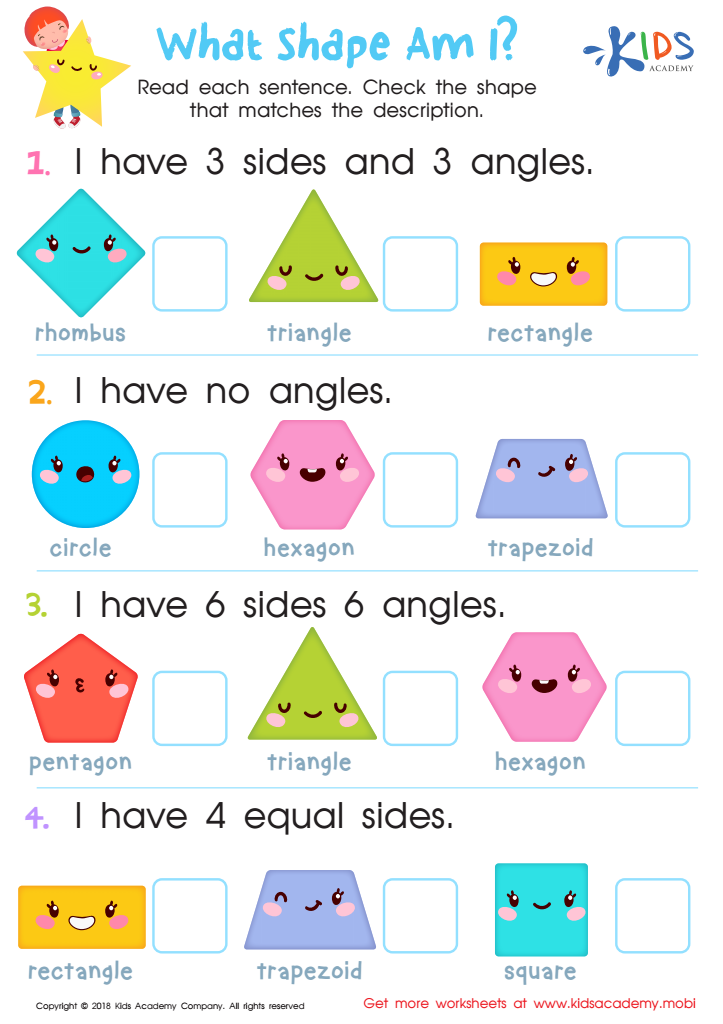
What Shape Am I? Worksheet
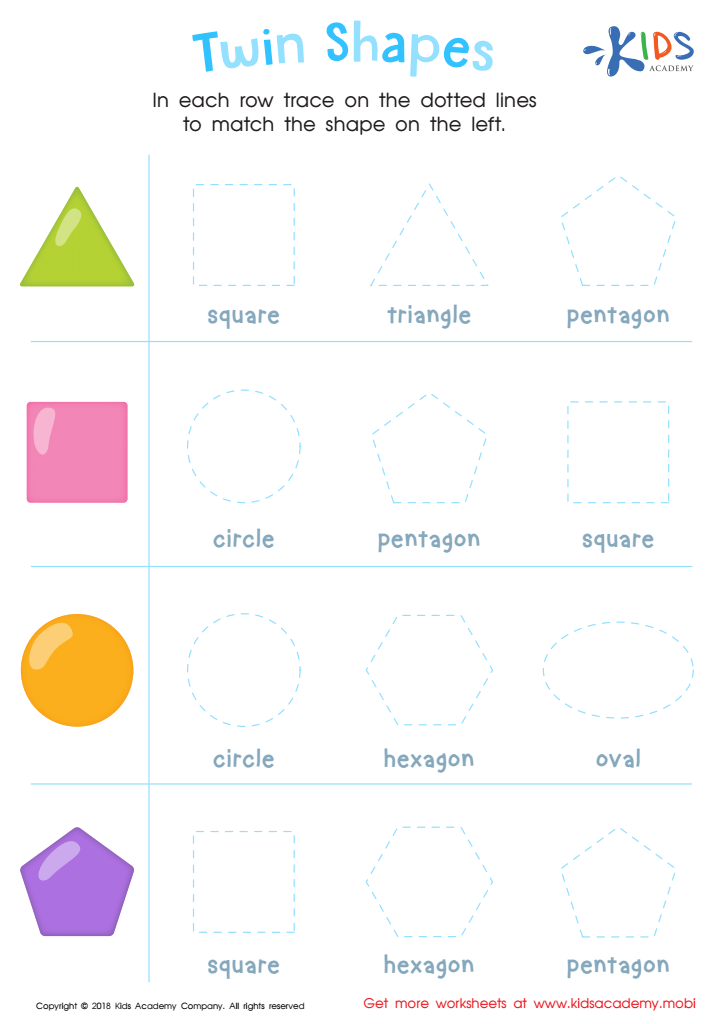
Twin Shapes Dot-to-Dot Worksheet








Parents and teachers should care about visual discrimination of 2D shapes for children aged 3-8 because it forms the foundation for essential cognitive and academic skills. Visual discrimination allows children to recognize differences and similarities among shapes, which is pivotal in developing early math and reading abilities. Understanding 2D shapes helps children with categorizing and organizing information, an important skill in logical reasoning and problem-solving.
Early shape recognition also facilitates spatial awareness, which is crucial for understanding the world around them. This awareness is necessary for tasks such as reading maps, understanding graphs, and recognizing patterns. Additionally, the ability to discern shapes translates into better hand-eye coordination, which is important for writing and general motor skills.
Moreover, engaging with shape discrimination activities can boost a child's confidence and interest in learning, providing a strong educational foundation during these formative years. Teachers can integrate shape activities into various subjects, making learning multidimensional and interactive. When parents engage in shape-related activities at home, it reinforces learning and provides a productive way to bond with their children. Thus, visual discrimination of 2D shapes promotes a well-rounded developmental trajectory that is both academically and personally enriching for young children.