Visual Perception Skills 2D Shapes Worksheets for Ages 3-8
3 filtered results
Difficulty Level
Grade
Age
-
From - To
Subject
Activity
Standards
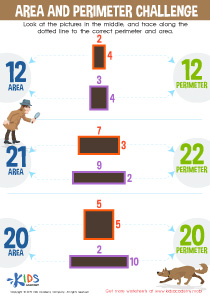
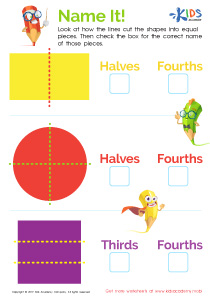
Enhance your child's visual perception skills with our engaging 2D Shapes Worksheets, designed for ages 3-8! These worksheets provide fun and interactive activities to help young learners identify, differentiate, and manipulate various two-dimensional shapes. By completing these exercises, children will improve their cognitive skills, attention to detail, and shape recognition. Tailored for early learners, our resources offer a mix of individual and group activities that make learning enjoyable. Foster your child's love for shapes while building essential foundational skills through colorful illustrations and age-appropriate challenges. Explore our collection today and see your child flourish in their mathematical journey!
Favorites
With answer key
Interactive
Shapes of All Sizes Worksheet
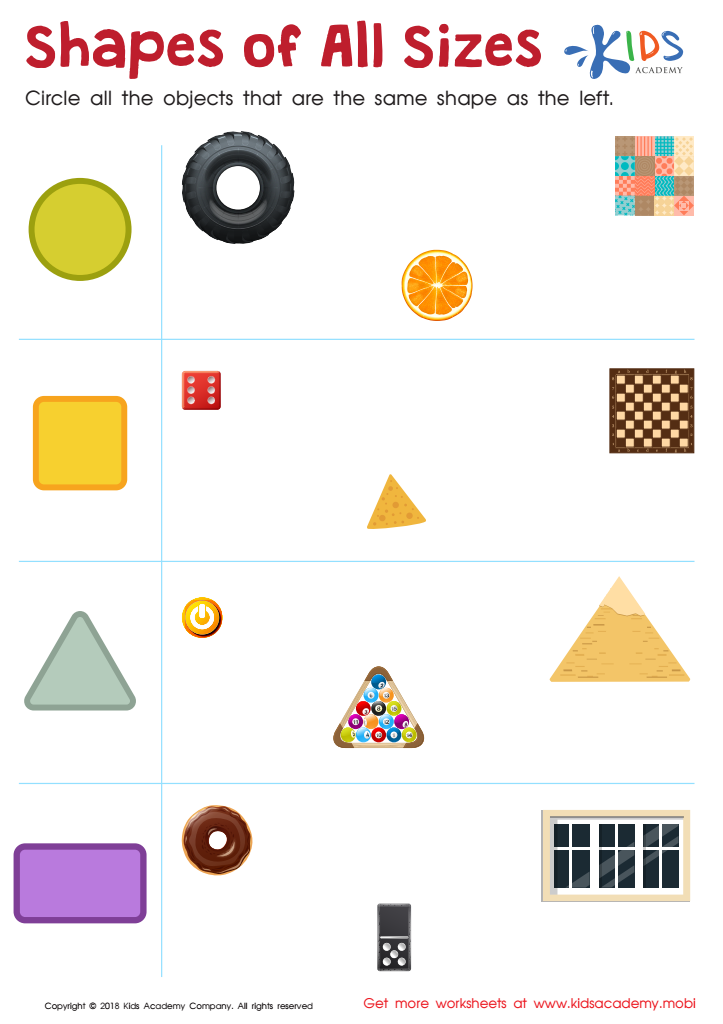
Students will have fun comparing basic shapes to familiar objects with this worksheet. It's an excellent way to help them recognize similarities in geometric shapes, building strong foundations for understanding congruence and similarity.
 Assign to My Students
Shapes of All Sizes Worksheet
Worksheet











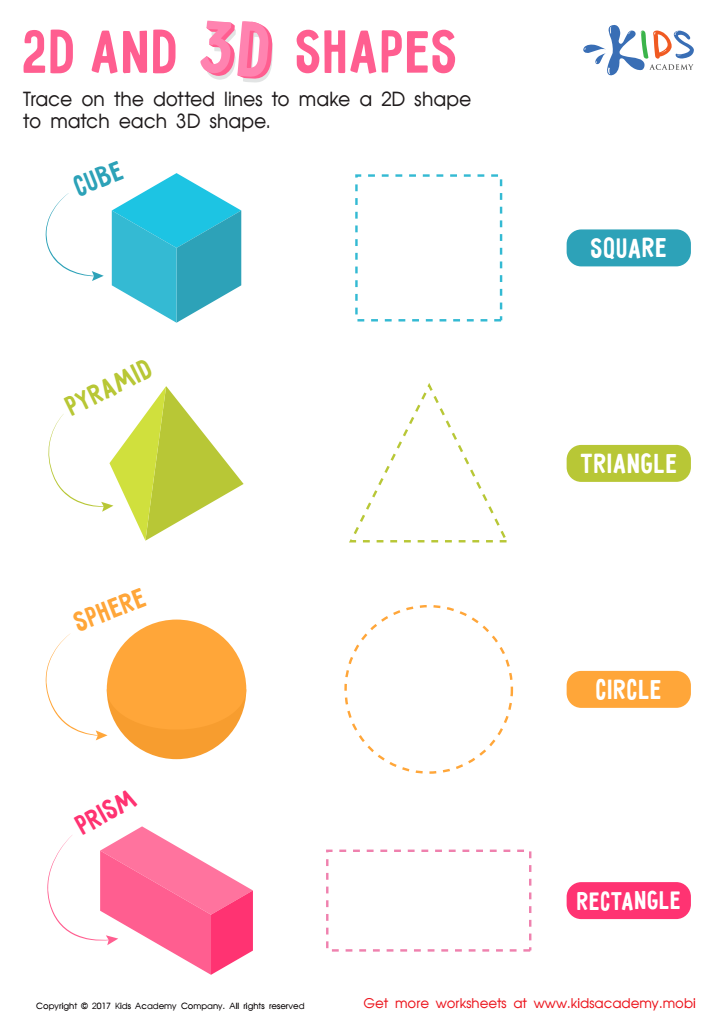
2D and 3D Shapes Worksheet
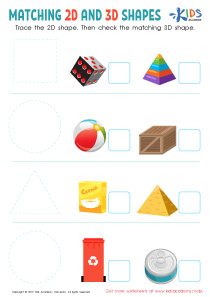
Introduce your child to 3D and 2D with this traceable worksheet. With dotted lines, help them trace and make a 2D shape for each 3D shape: square, triangle, rectangle, and circle. Show them there's more than one way to draw! You may have taken them to a 3D movie, or they've seen some fantastic 3D art. Now they can wonder no more.
2D and 3D Shapes Worksheet
Worksheet
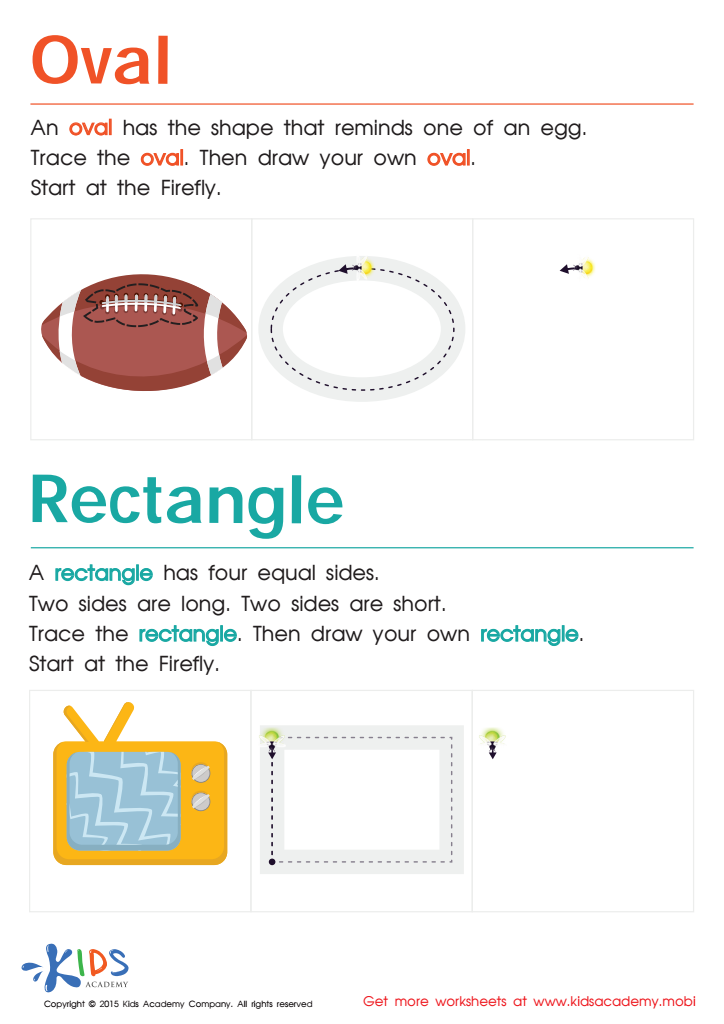
Easy Drawing of Ovals And Rectangles Worksheet
Kids Academy offers free geometry worksheets to make learning more fun and interesting. Trace an oval, rectangle, and many other shapes!
Easy Drawing of Ovals And Rectangles Worksheet
Worksheet
Join Kids Academy for Free
Who is primarily going to use this learning content?








Visual perception skills, particularly concerning 2D shapes, are foundational for young children's cognitive and academic development. For children aged 3-8, mastering these skills is essential for various reasons. First, recognition and understanding of 2D shapes foster spatial awareness, which is critical in geometry and other STEM-related areas. This foundational knowledge helps children understand their environment, enabling them to recognize shapes in everyday objects, enhancing their ability to categorize and solve problems.
Moreover, strong visual perception skills improve fine motor coordination, as children often engage in activities like drawing or constructing shapes with blocks. These activities not only boost creativity but also lay the groundwork for essential reading and writing skills. For instance, recognizing differences and similarities among shapes can improve letter recognition and processing speed.
Parents and teachers should prioritize the development of visual perception skills through engaging activities, playful exercises, and structured learning opportunities. Supporting these skills promotes cognitive growth, boosts self-confidence, and encourages analytical thinking. Ultimately, enhancing visual perception in early childhood can lead to better academic performance, preparing children for lifelong learning and success in various domains.