Adding at the Zoo Worksheets for Ages 3-8 - Page 4
77 filtered results
-
From - To
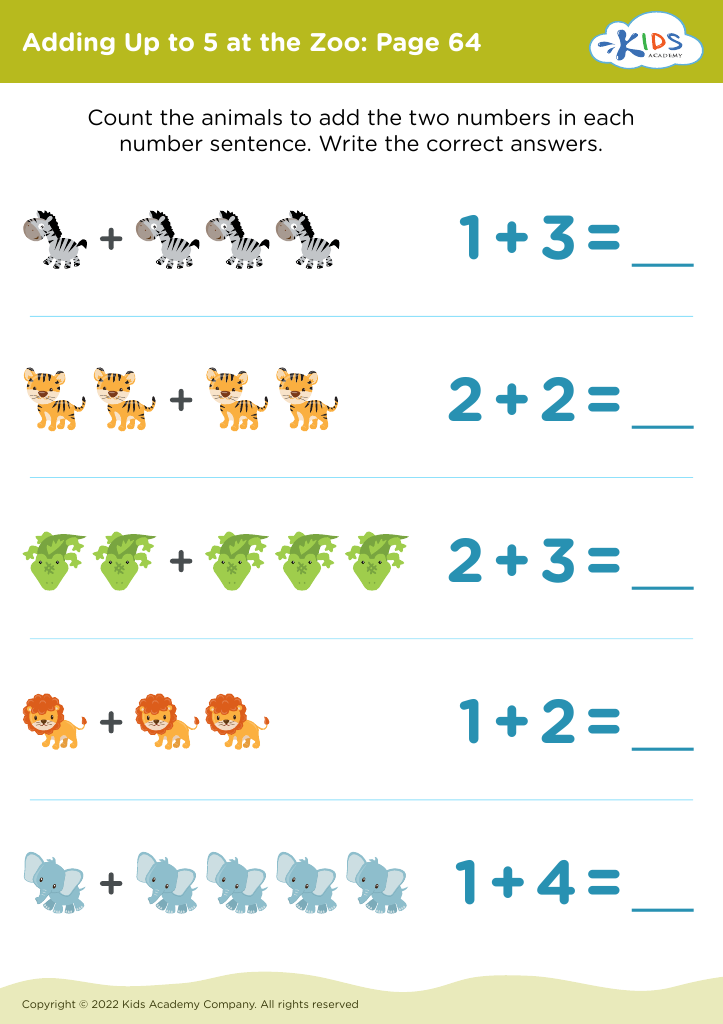
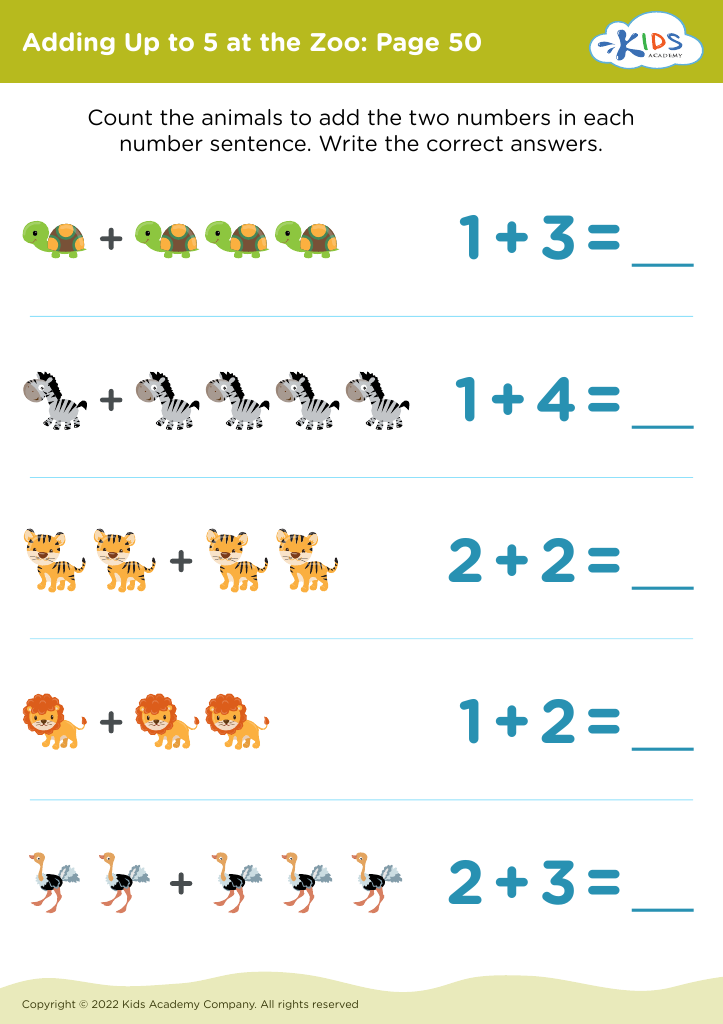
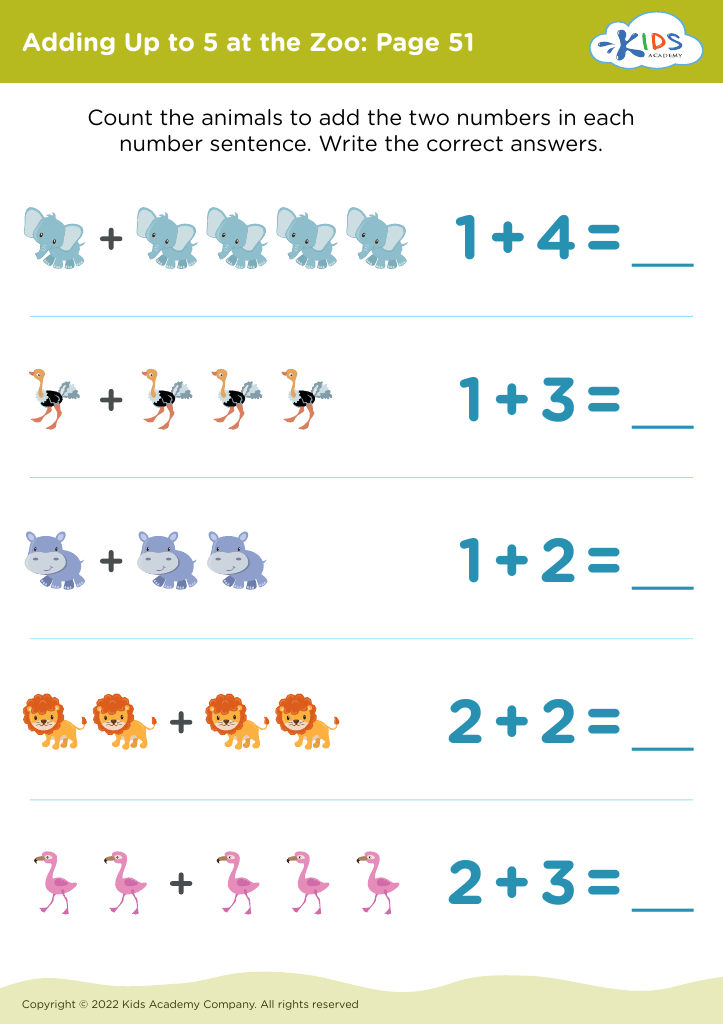
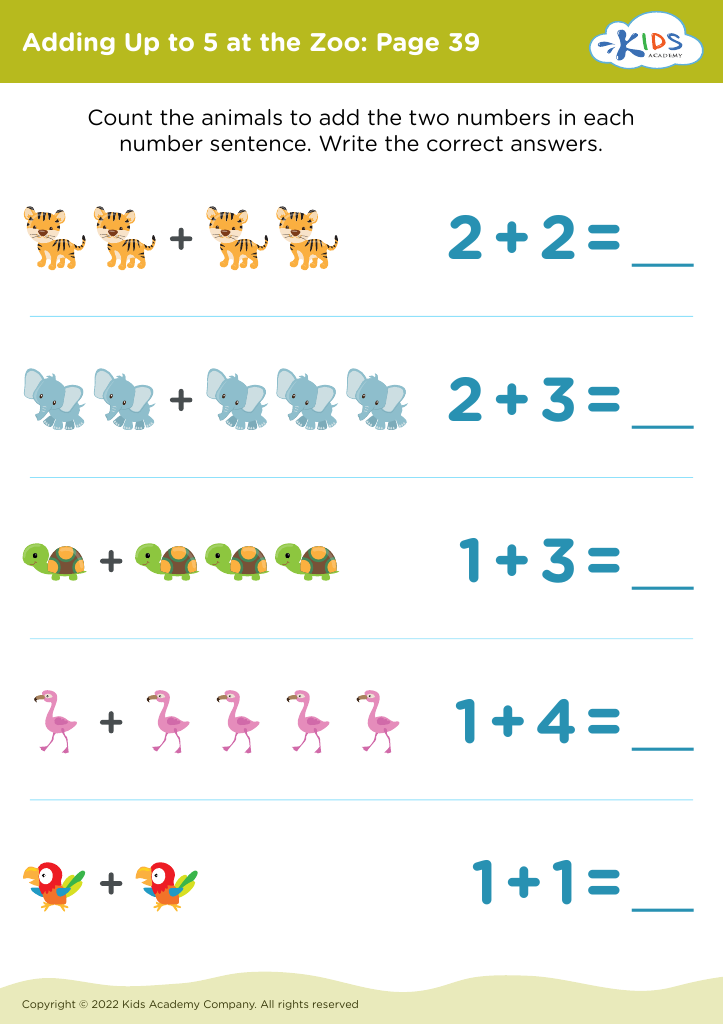
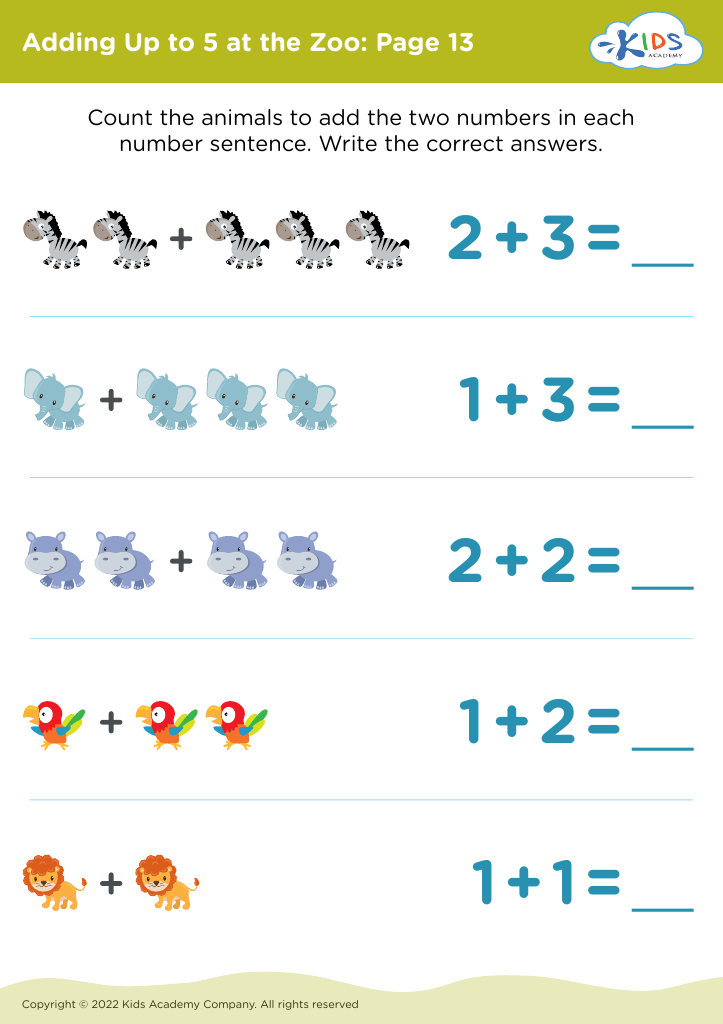



Adding at the Zoo is a valuable educational resource for children ages 3-8, combining math skills with engaging themes related to animals and nature. Parents and teachers should care about this resource for several reasons.
Firstly, it supports early math development in a fun and interactive way. During the ages of 3-8, children are naturally curious and often engage in playful learning. Adding at the Zoo incorporates playful elements such as animals, counting, and storytelling, which makes the learning process enjoyable and relatable for young learners.
Secondly, it promotes critical thinking and problem-solving skills. Using real-life contexts like a zoo encourages children to understand the concept of addition beyond rote memorization and apply their knowledge in everyday situations. This helps build a strong foundation for future mathematical concepts.
Moreover, it fosters a love for learning and nature, nurturing curiosity about wildlife. Connecting math to themes like animals instills a broader perspective and comprehension of the world around them.
Lastly, such educational materials encourage collaboration and interaction among peers or family members, reinforcing social skills and communication. Thus, Adding at the Zoo acts as an essential tool in shaping well-rounded, engaged, and confident young learners.