Filters

19 filtered results

Clear all filters
Favorites
With answer key
Interactive

19 filtered results

Difficulty Level

Grade


Boost your child's counting and math skills with our "Adding Up to 100 Worksheets" designed for ages 3-8! These engaging, free printables from Kids Academy provide young learners with fun and educational activities to improve their ability to add numbers up to 100. Featuring colorful illustrations and age-appropriate challenges, our worksheets help children develop critical thinking, problem-solving, and numeracy skills. Whether they are just beginning to understand basic arithmetic or ready to tackle more complex problems, our resources support their journey towards math proficiency. Start building a strong foundation today by downloading our specially crafted worksheets!
Check out this FREE Trial Lesson on Adding up to 100 for age 3-8!

Short and Long Vowel Sort

Favorites
With answer key
Interactive
  • 3-8
  • Improve counting skills
  • Adding up to 100
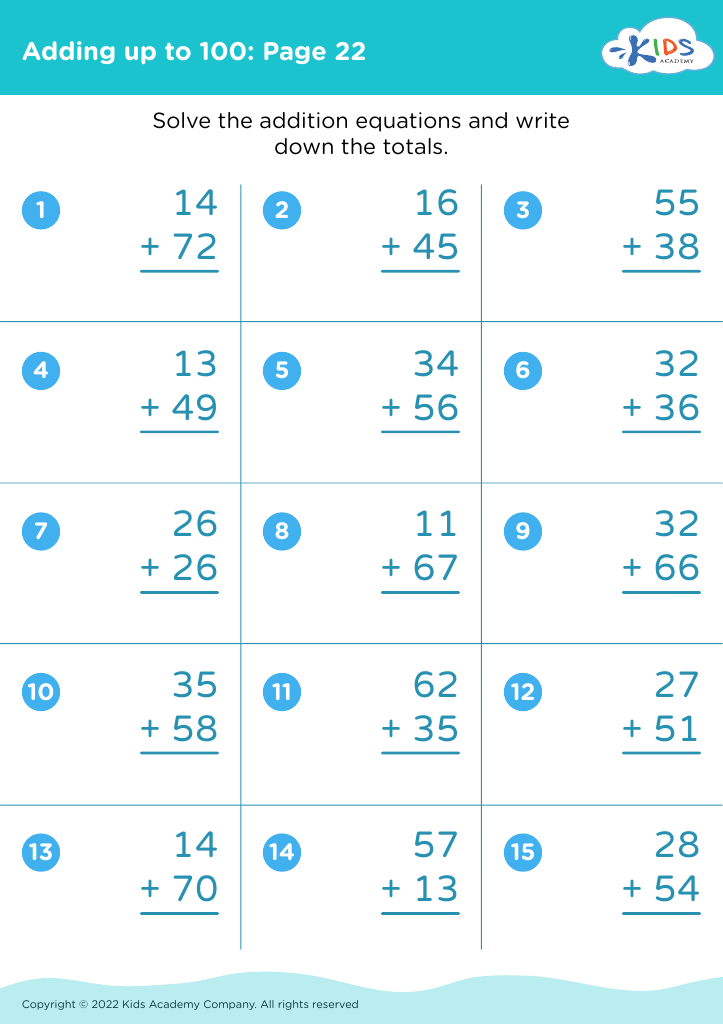
Adding up to 100: Page 22

Adding up to 100: Page 22

Adding up to 100: Page 22
Worksheet
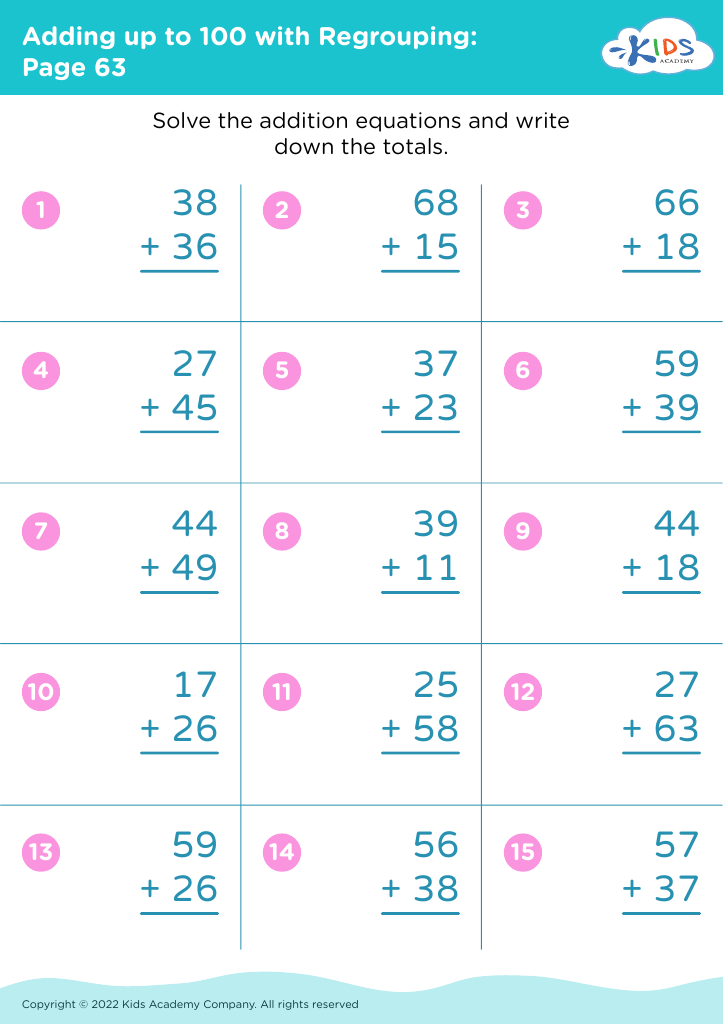
Adding up to 100 with Regrouping: Page 63
Worksheet
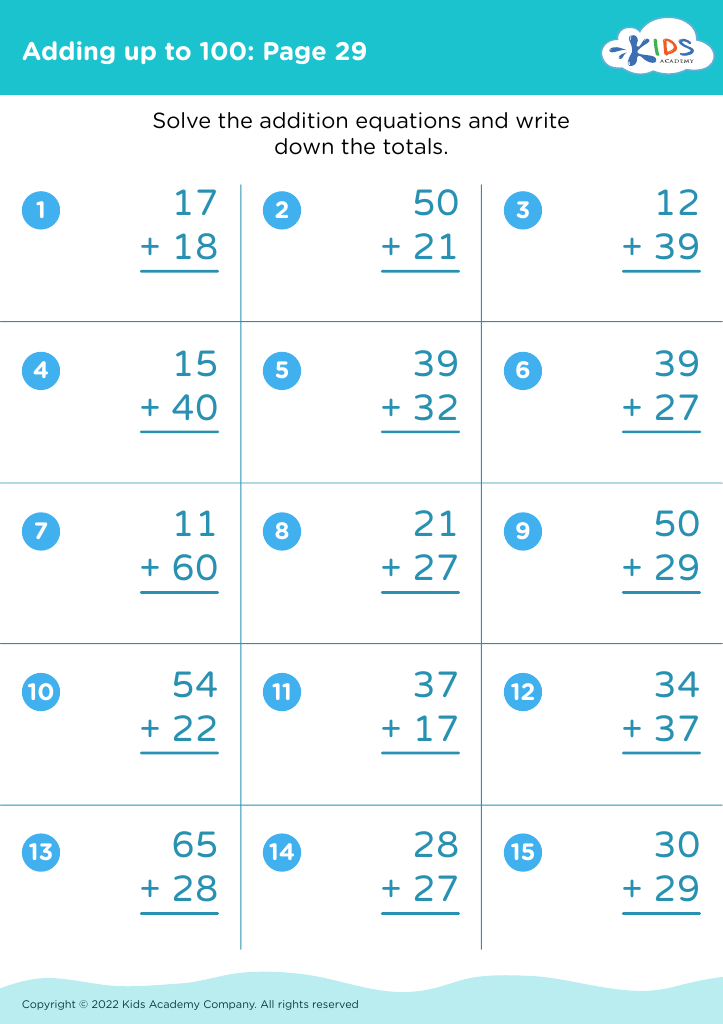
Adding up to 100: Page 29

Adding up to 100: Page 29

Adding up to 100: Page 29
Worksheet
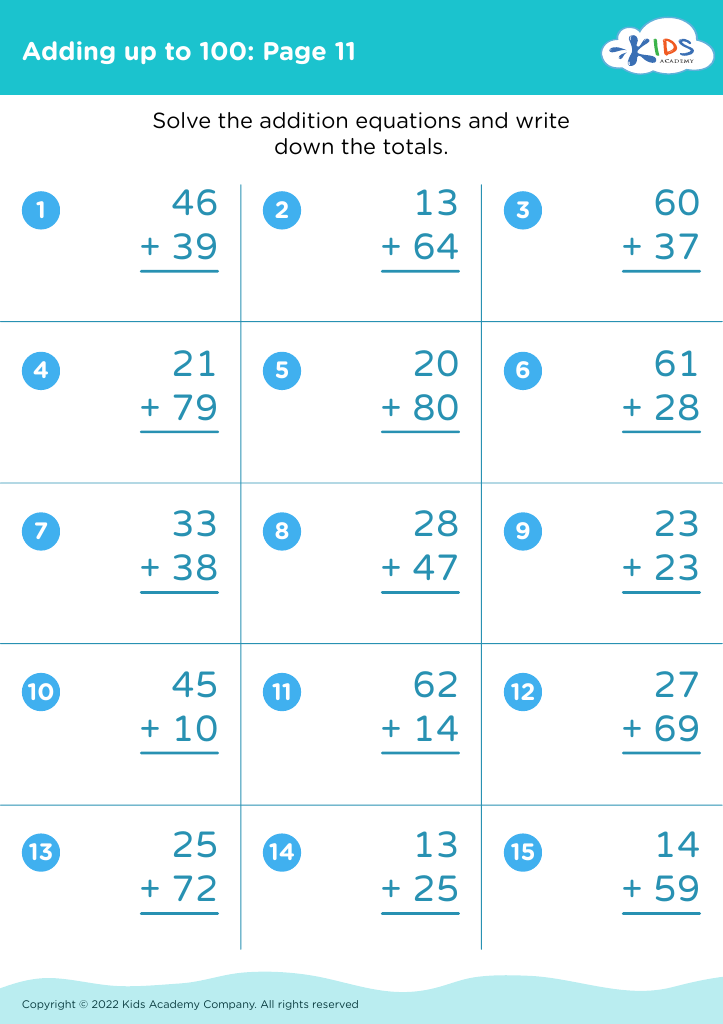
Adding up to 100: Page 11

Adding up to 100: Page 11

Adding up to 100: Page 11
Worksheet
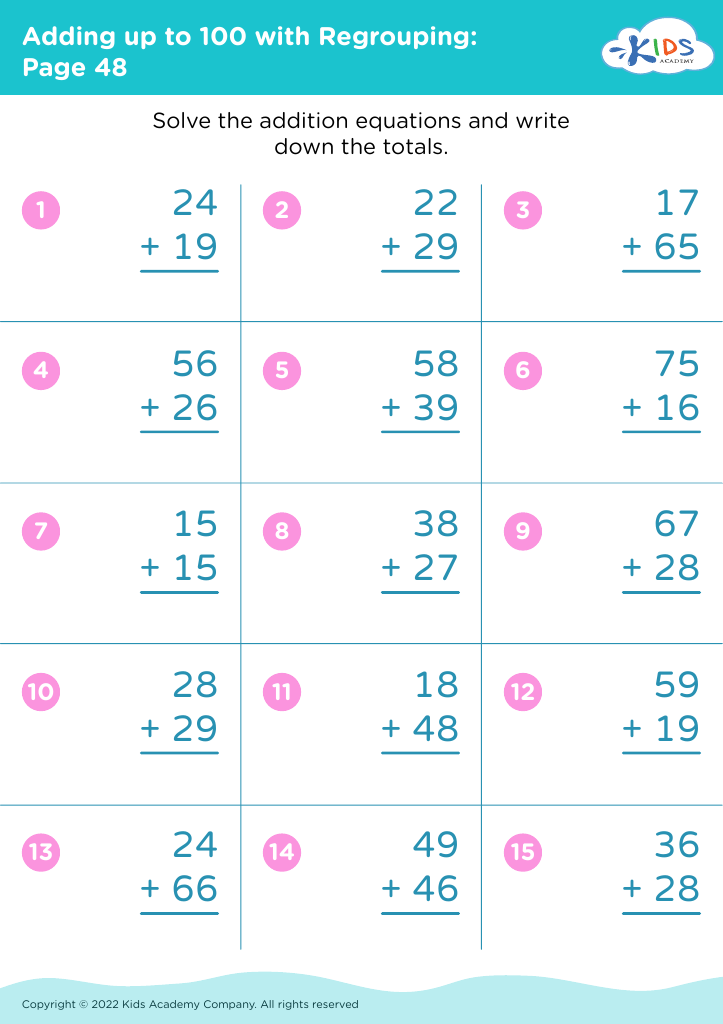
Adding up to 100 with Regrouping: Page 48
Worksheet
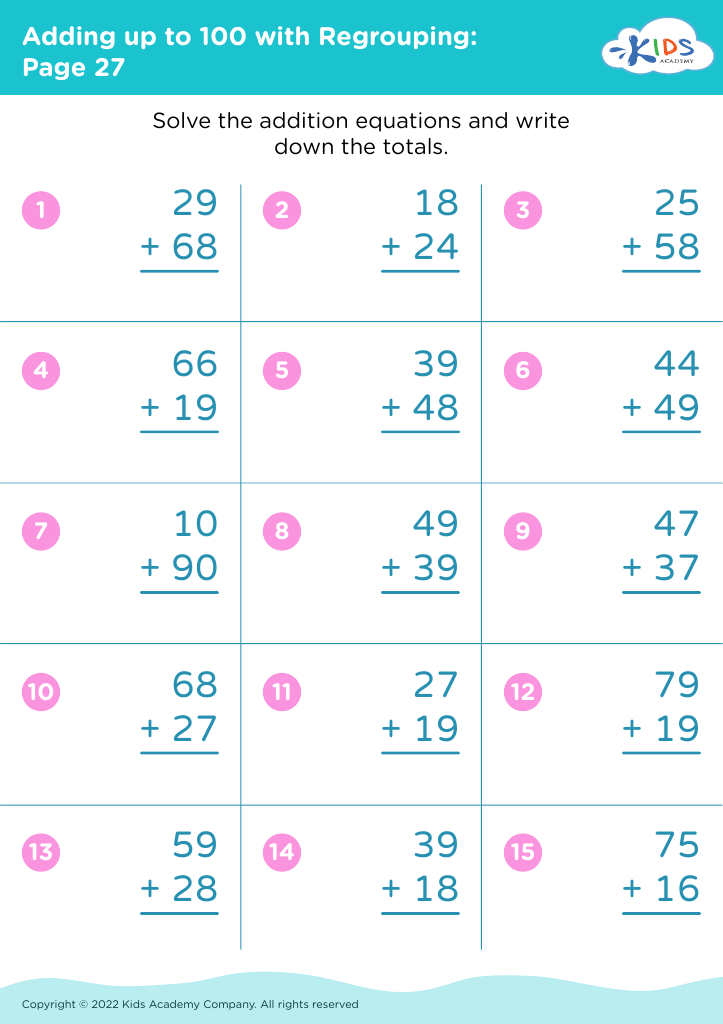
Adding up to 100 with Regrouping: Page 27
Worksheet
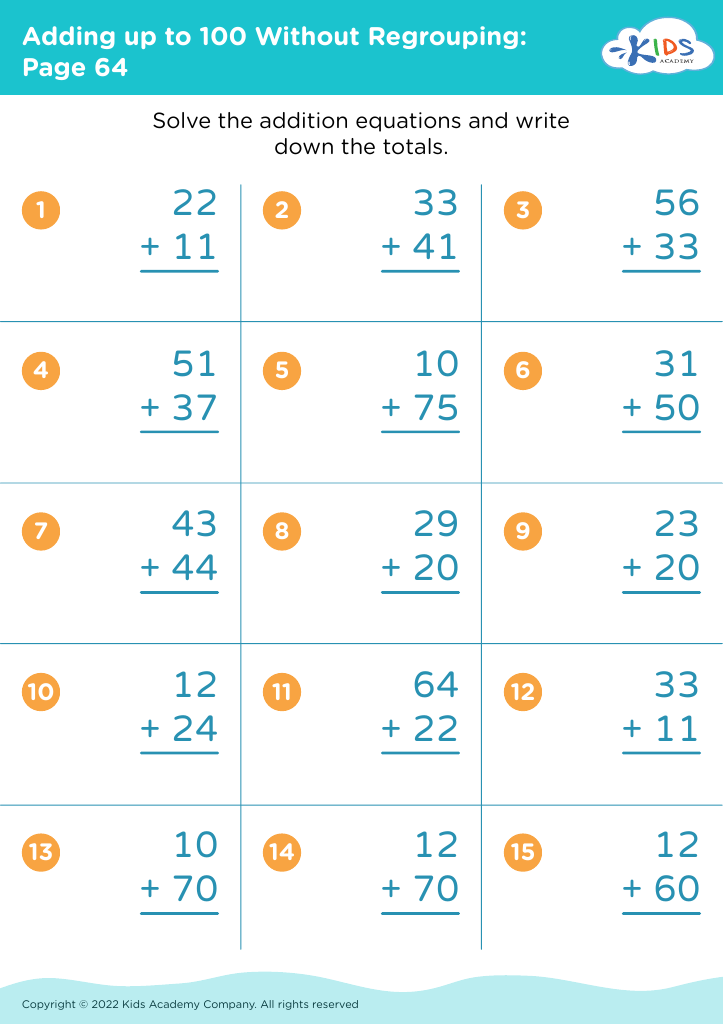
Adding up to 100 Without Regrouping: Page 64
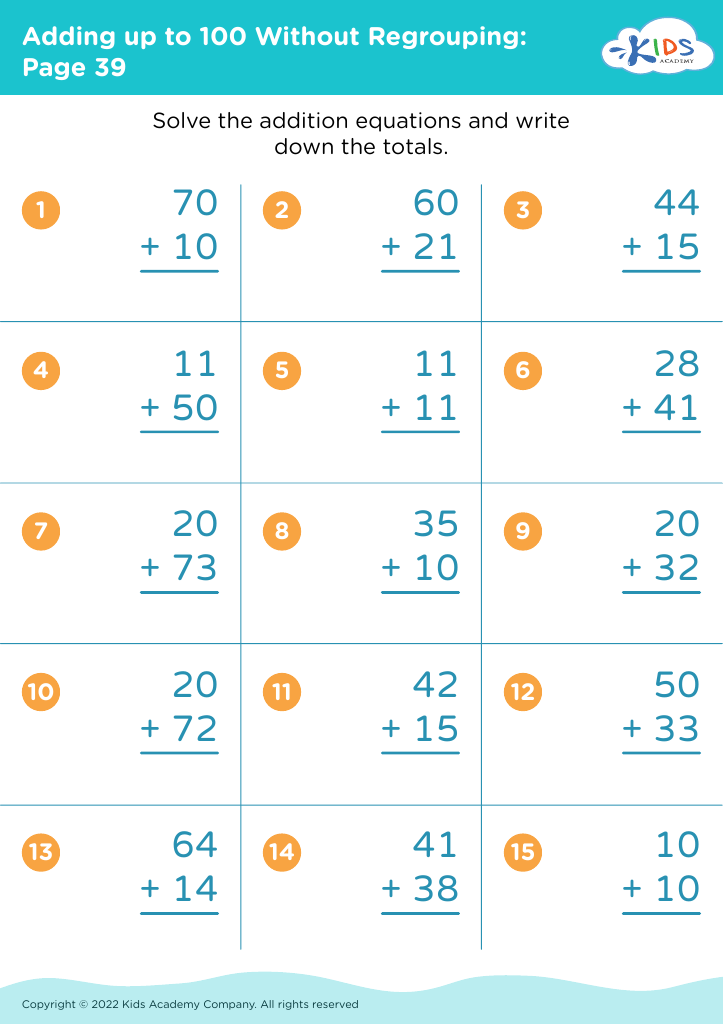
Worksheet
Adding up to 100 Without Regrouping: Page 39
Worksheet
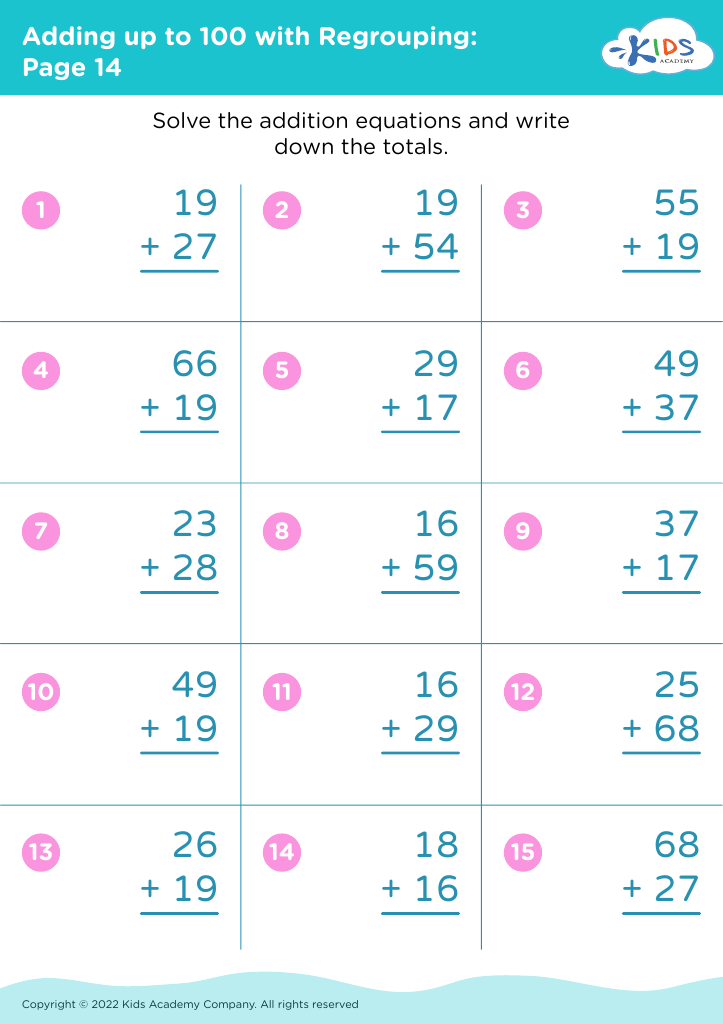
Adding up to 100 with Regrouping: Page 14
Worksheet
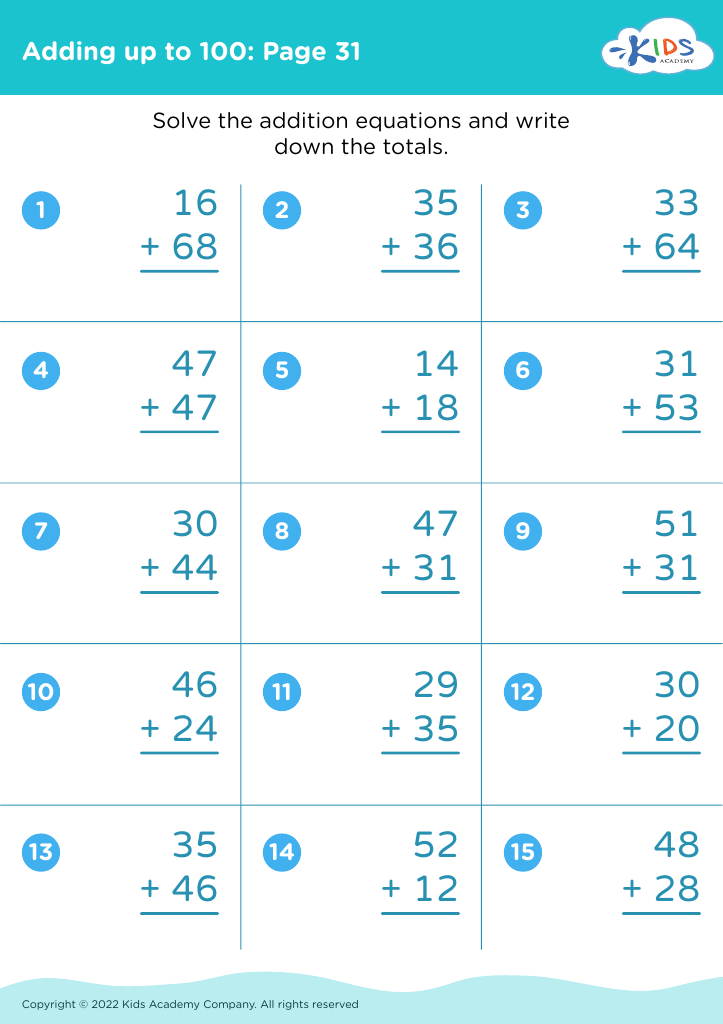
Adding up to 100: Page 31

Adding up to 100: Page 31

Adding up to 100: Page 31
Worksheet
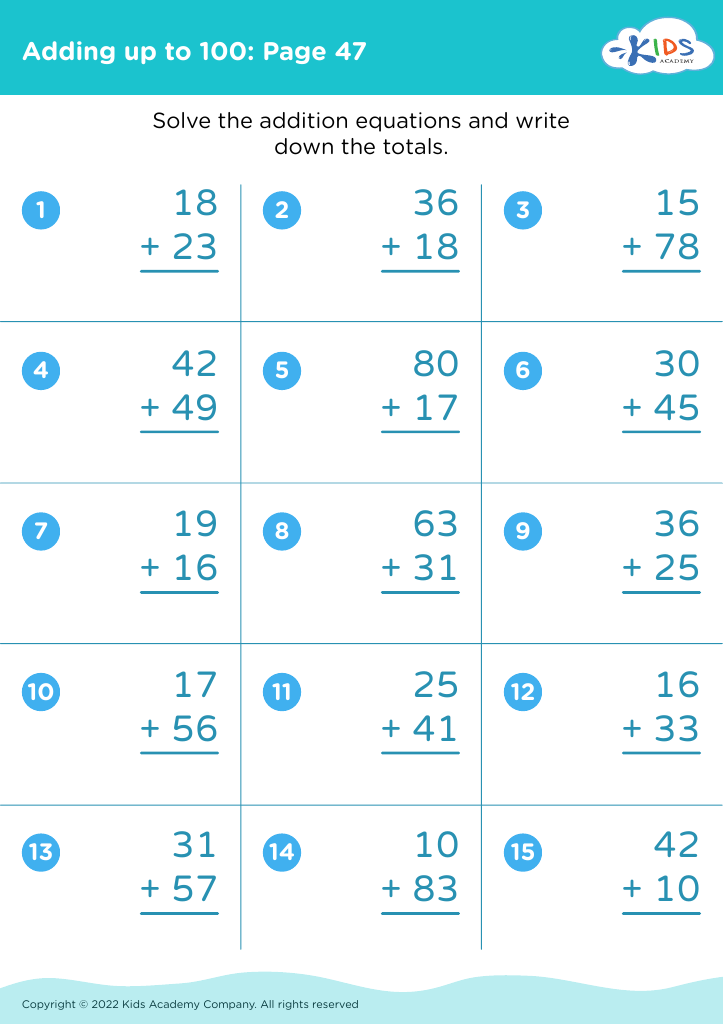
Adding up to 100: Page 47

Adding up to 100: Page 47

Adding up to 100: Page 47
Worksheet
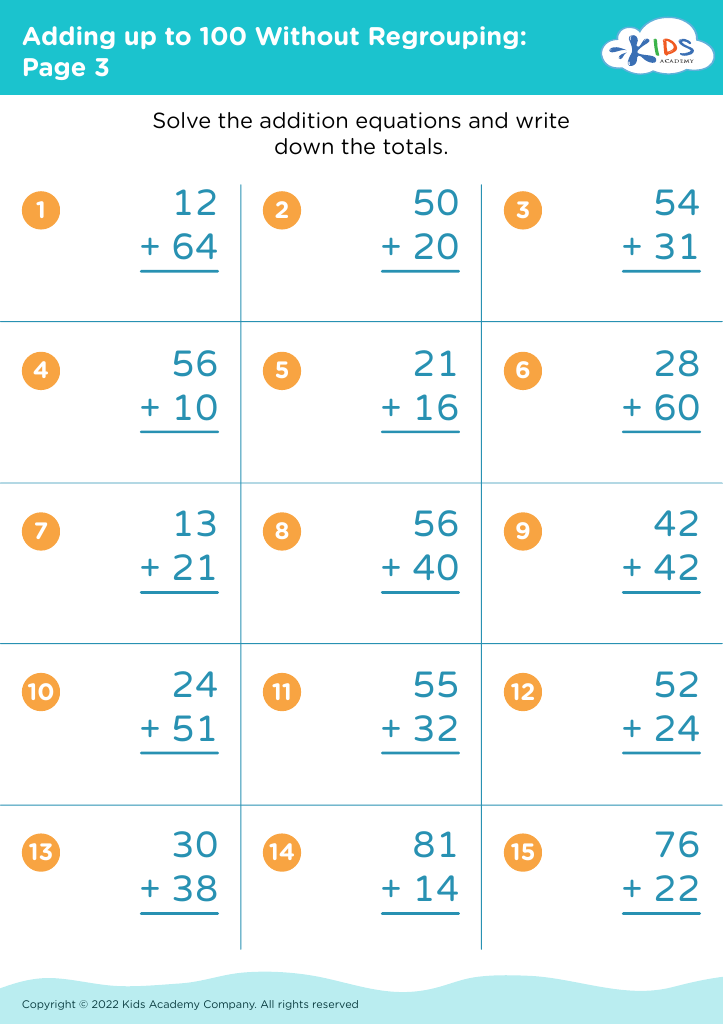
Adding up to 100 Without Regrouping: Page 3
Worksheet
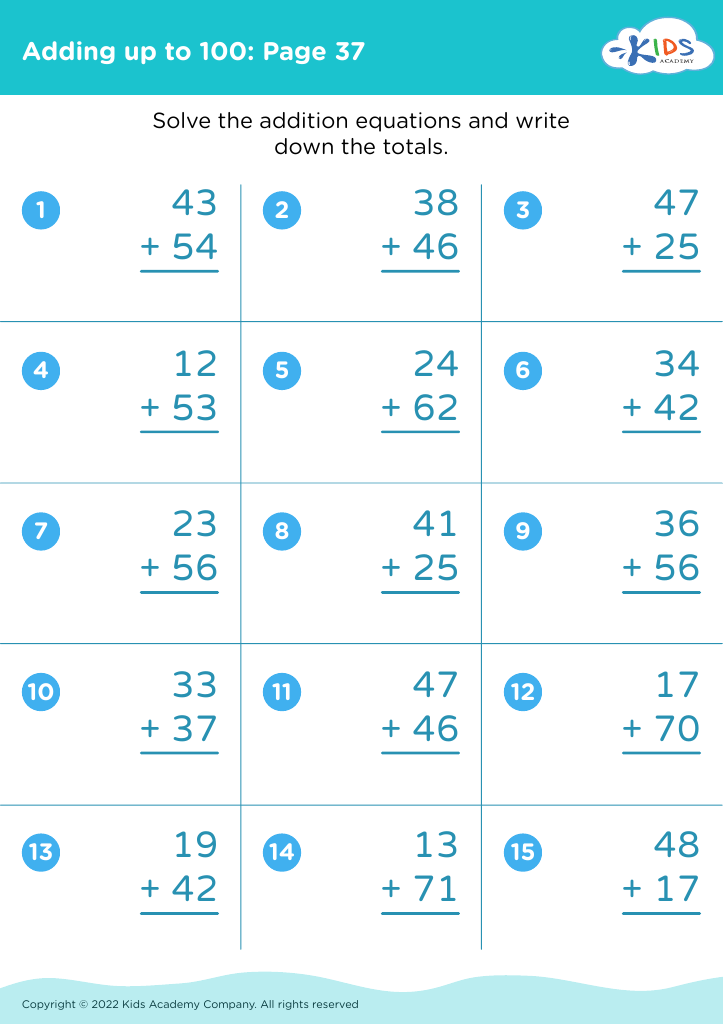
Adding up to 100: Page 37

Adding up to 100: Page 37

Adding up to 100: Page 37
Worksheet
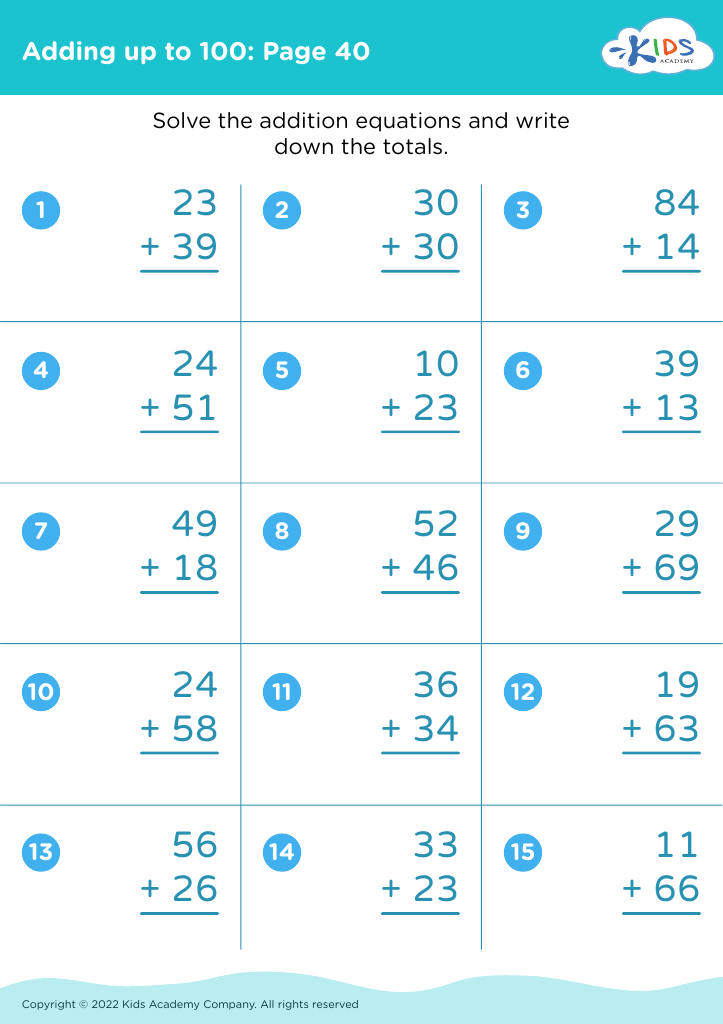
Adding up to 100: Page 40

Adding up to 100: Page 40

Adding up to 100: Page 40
Worksheet
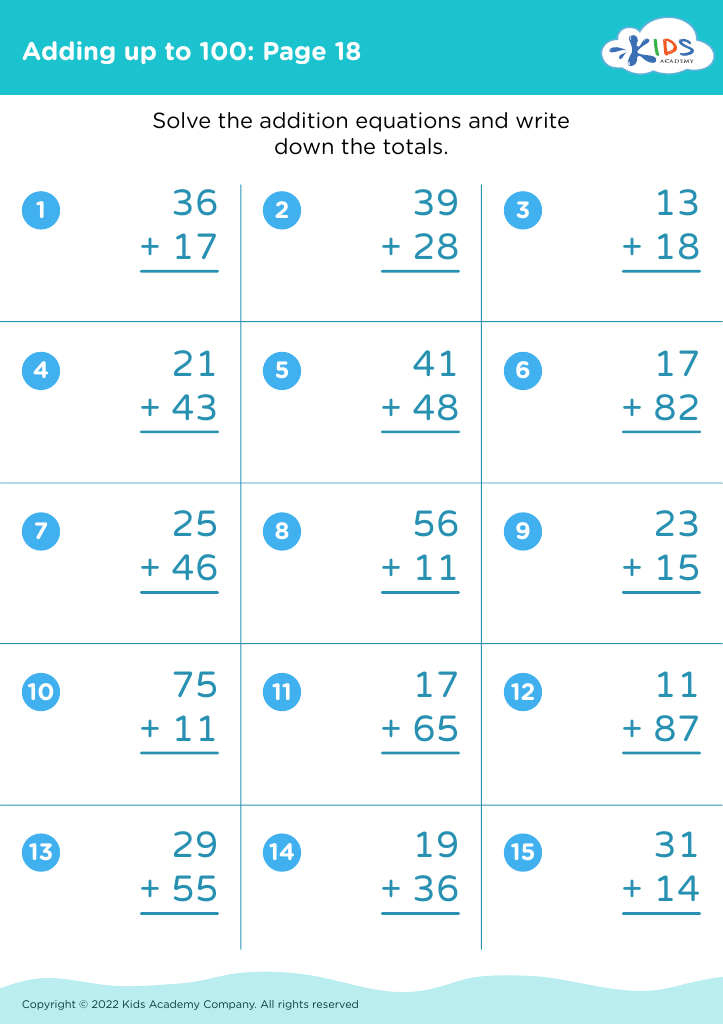
Adding up to 100: Page 18

Adding up to 100: Page 18

Adding up to 100: Page 18
Worksheet
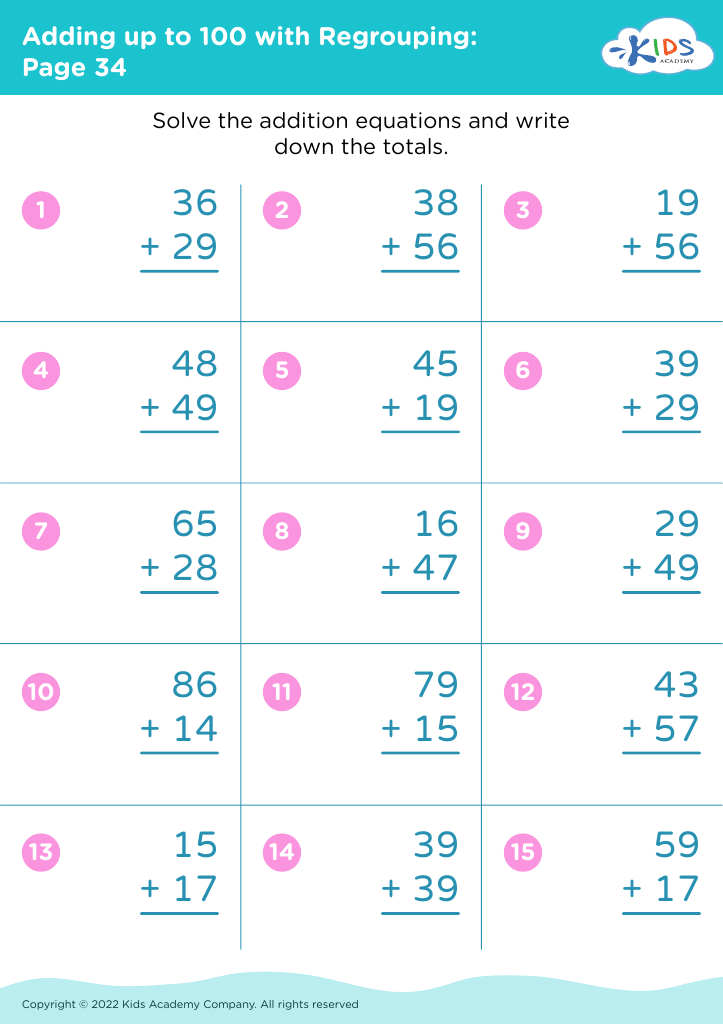
Adding up to 100 with Regrouping: Page 34
Worksheet
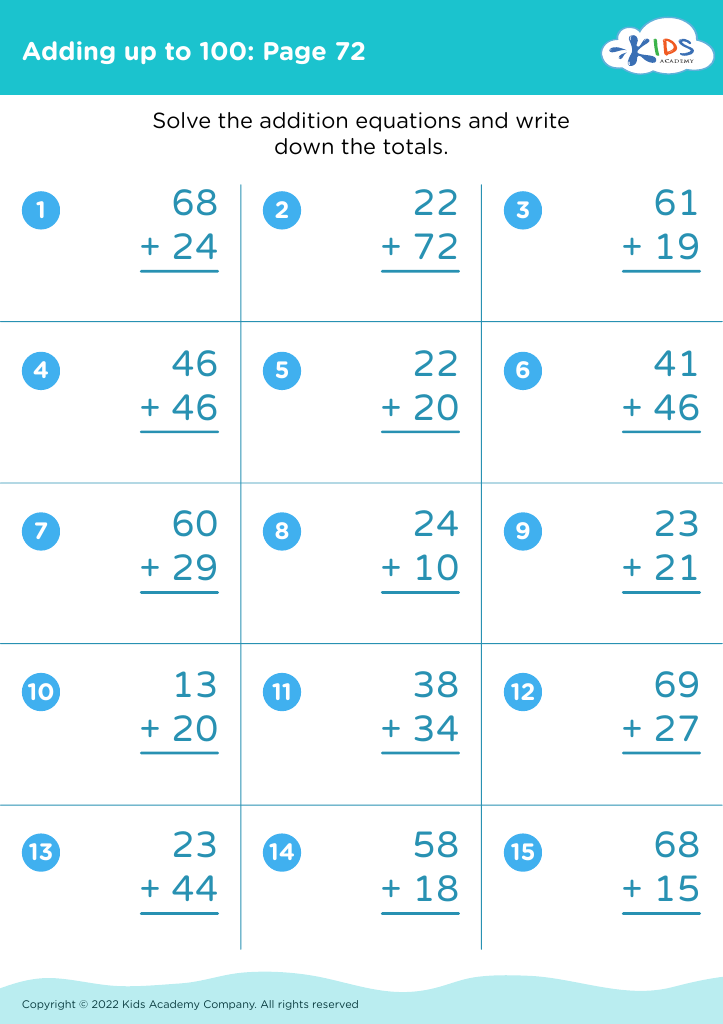
Adding up to 100: Page 72

Adding up to 100: Page 72

Adding up to 100: Page 72
Worksheet
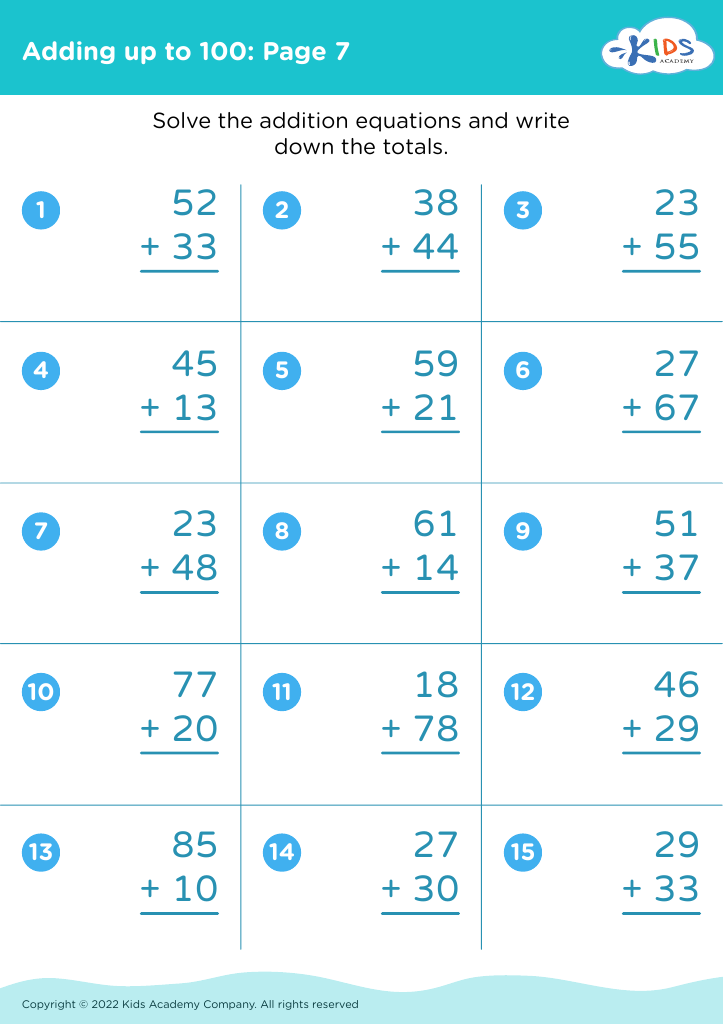
Adding up to 100: Page 7

Adding up to 100: Page 7

Adding up to 100: Page 7
Worksheet
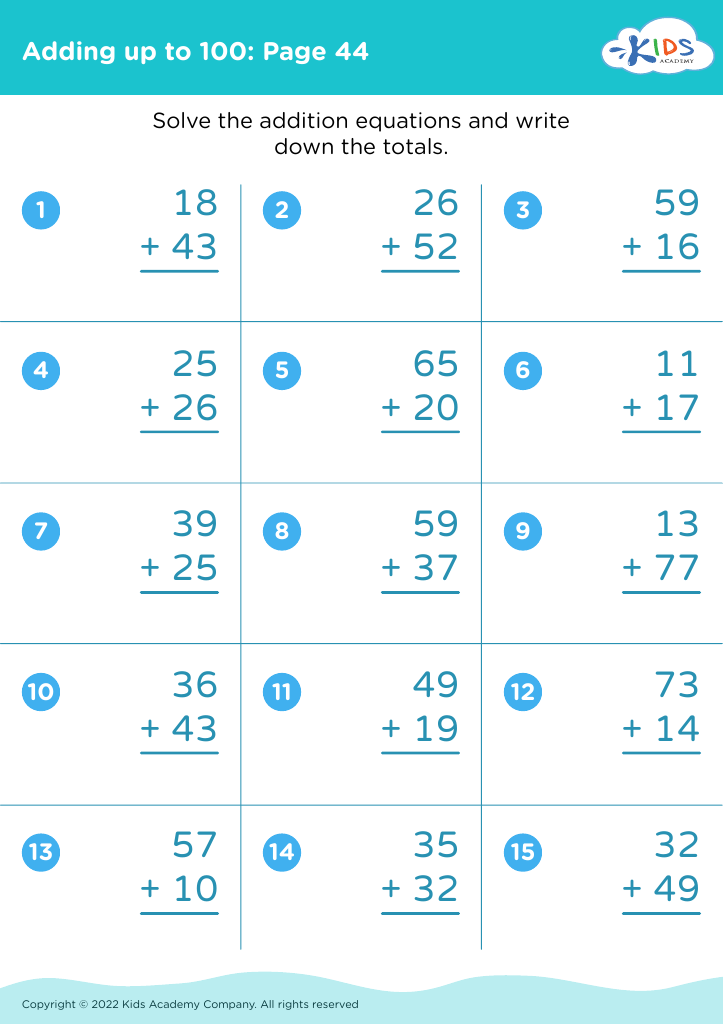
Adding up to 100: Page 44

Adding up to 100: Page 44

Adding up to 100: Page 44
Worksheet


Improving counting skills and the ability to add up to 100 during ages 3-8 is pivotal for children's early mathematical development. This foundational skill lays the groundwork for more complex math concepts they will encounter in later school years. By mastering counting and simple addition, children develop number sense, which is their understanding of numbers and their relationships. This is crucial for problem-solving and logical thinking, which are valuable in both academic and everyday contexts.

At this age, children's brains are remarkably receptive to learning and development. Improving their counting and addition skills strengthens their memory and helps them grasp the concept of quantity, order, and the basic operations of math. It also promotes confidence when handling math tasks, reducing anxiety or aversion when more challenging concepts are introduced in the future.

Furthermore, early exposure to these skills supports cognitive development across other areas, including reading and comprehension since math involves following sequences and recognizing patterns. For teachers and parents, making counting up to 100 engaging through games, songs, and practical activities can nurture a love for learning and set a positive tone for their ongoing educational journey.

By investing in these critical early skills, parents and teachers help ensure children build a robust and confident mathematical foundation, fostering an enduring curiosity and enthusiasm for the subject.