Recognizing shapes Adding up to 100 Worksheets for Ages 3-8
8 filtered results
-
From - To
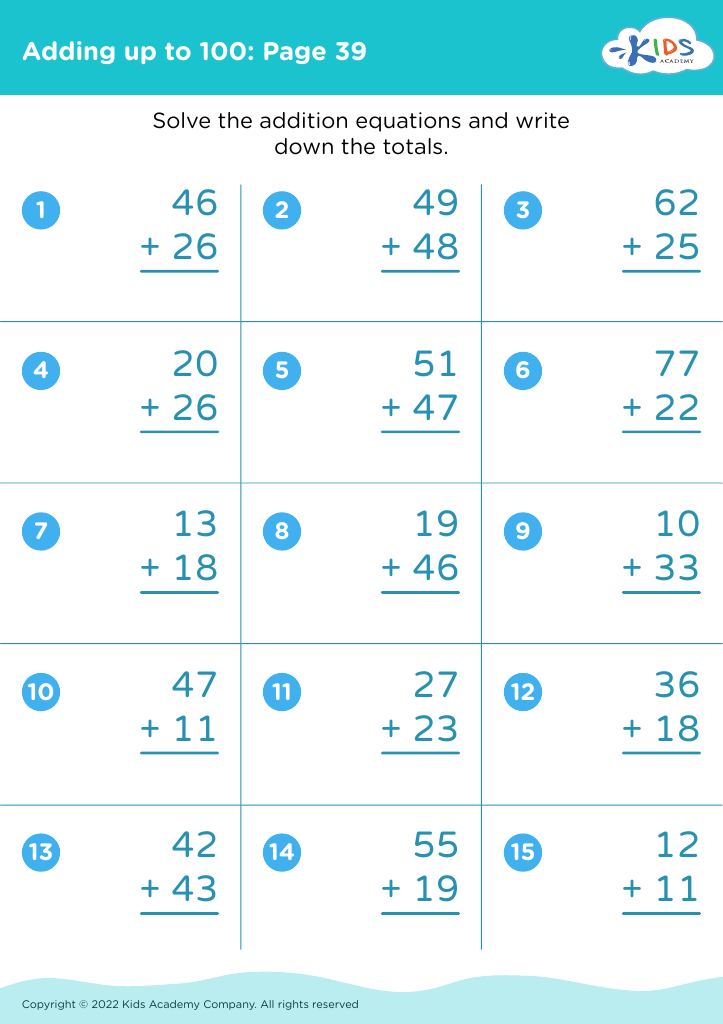
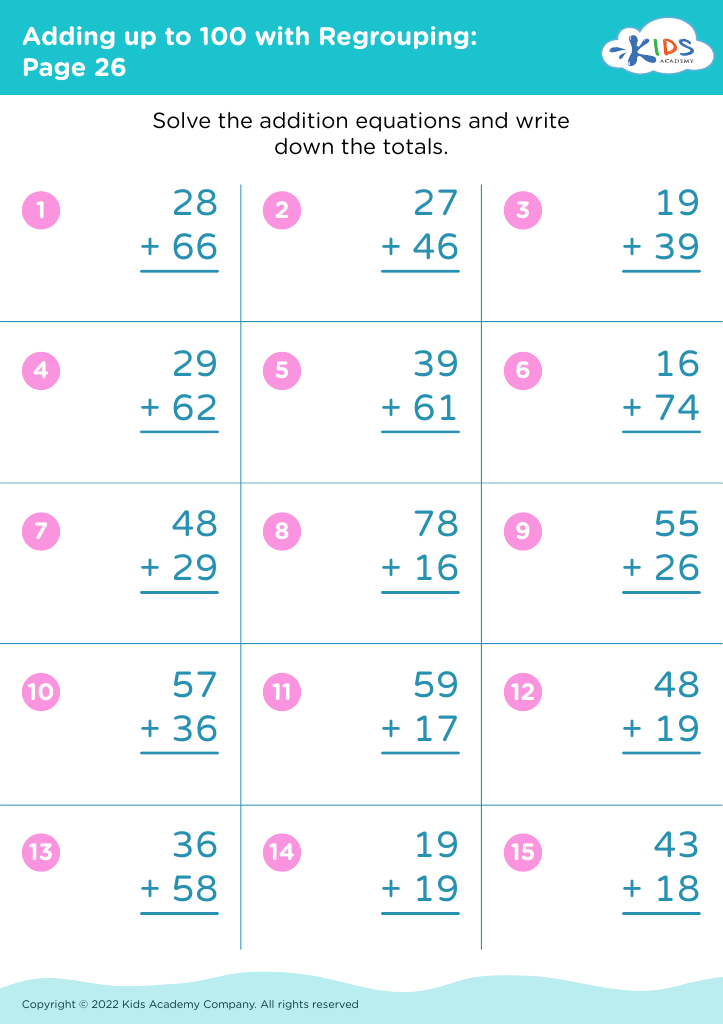
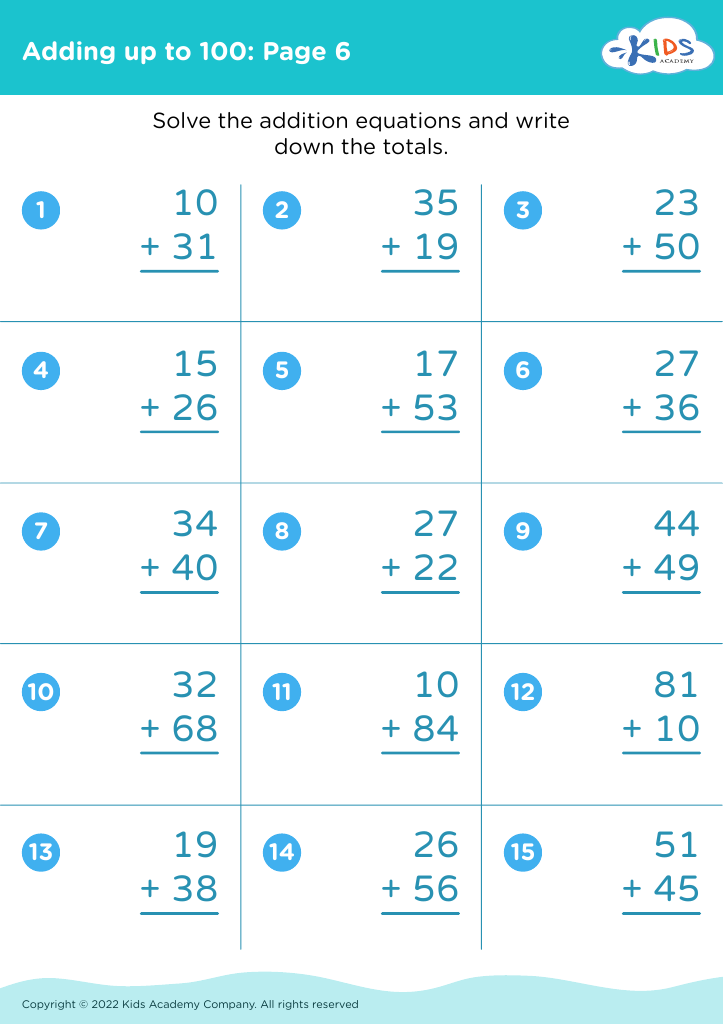
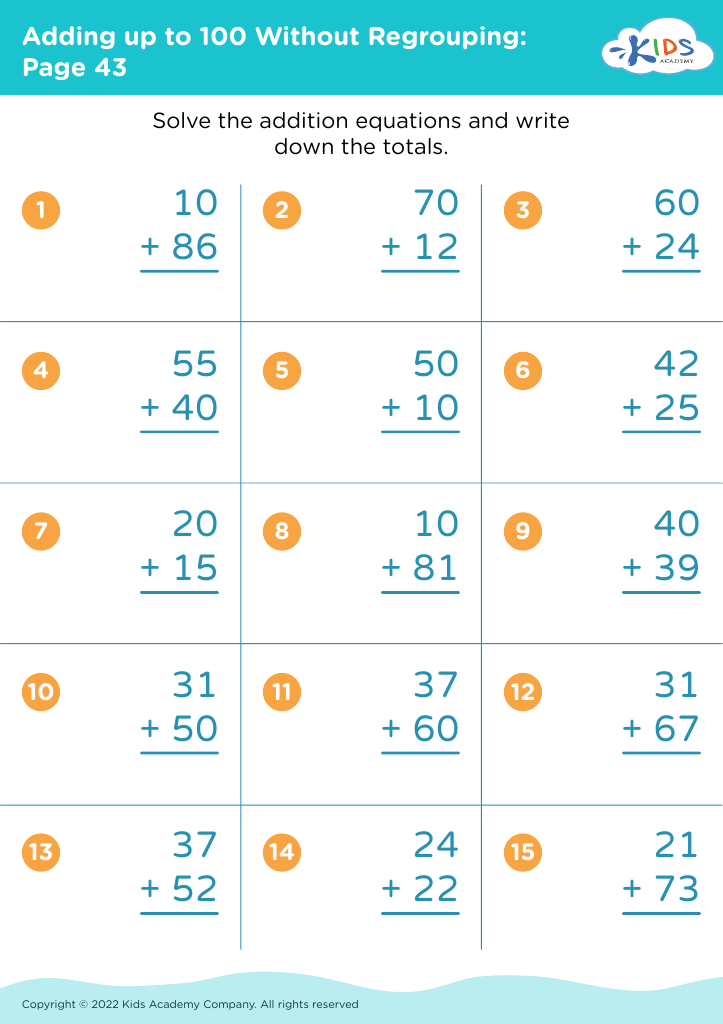
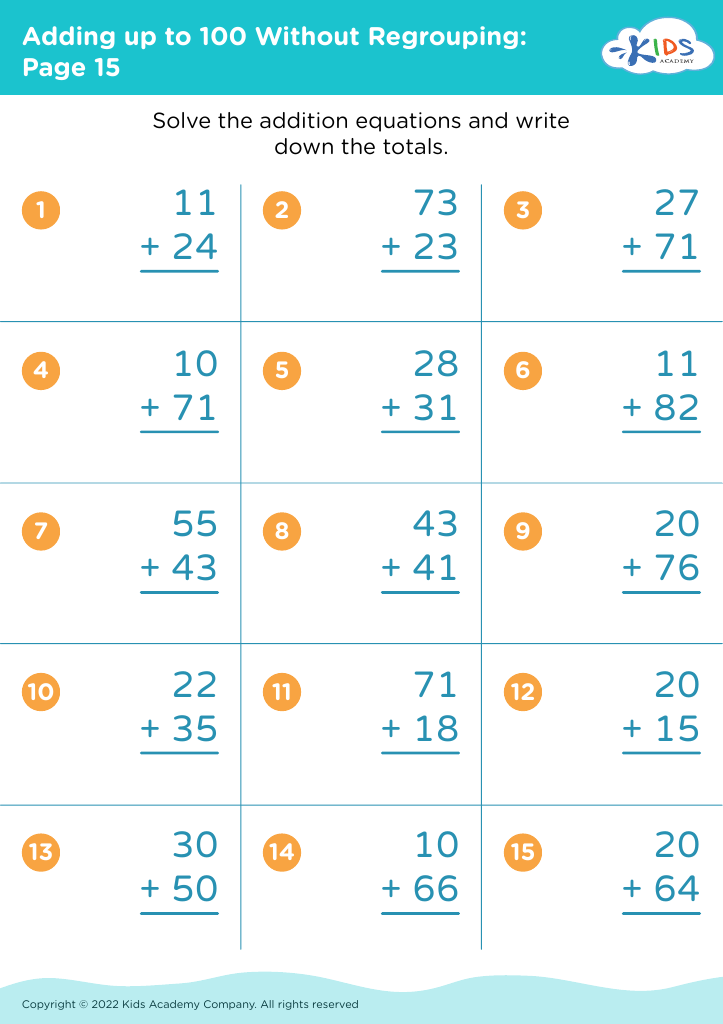
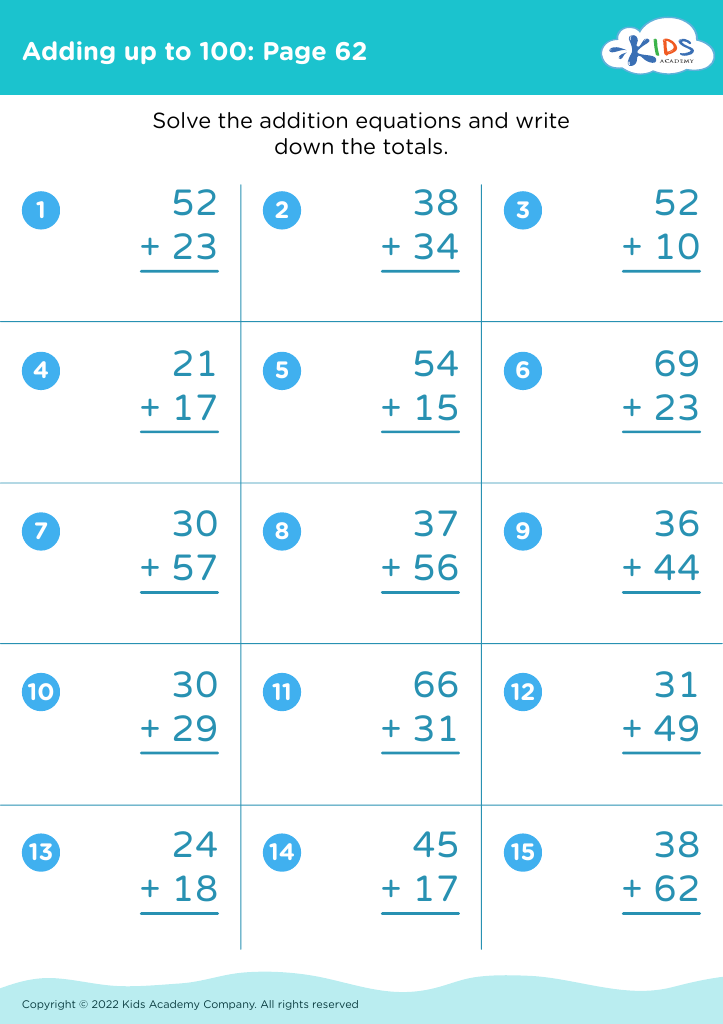
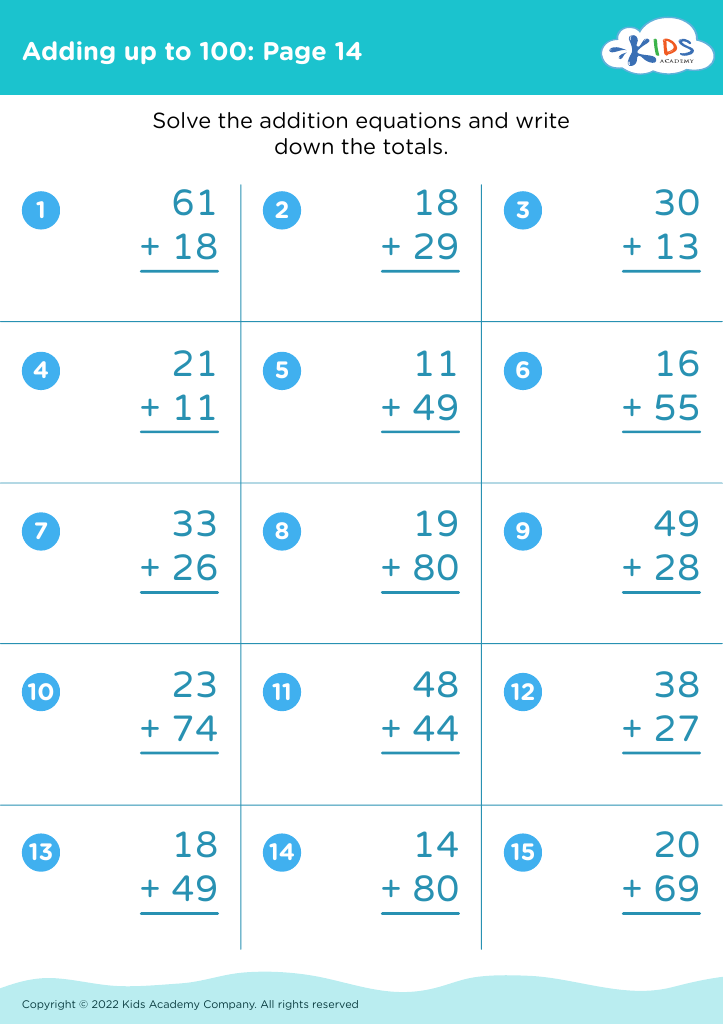
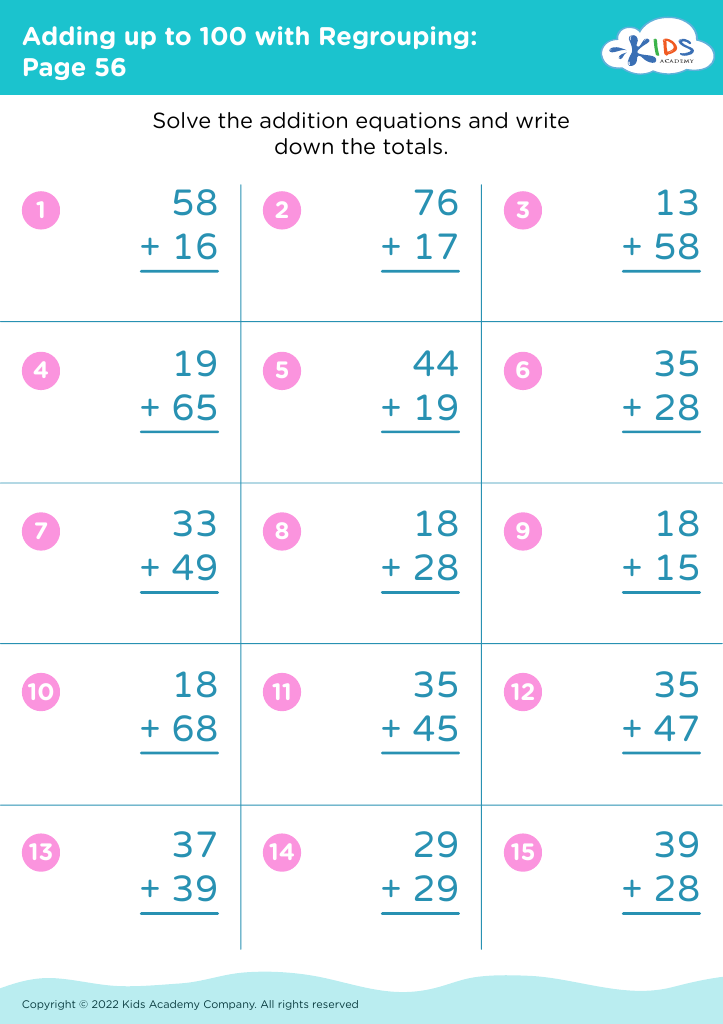
Discover our engaging "Recognizing Shapes Adding up to 100 Worksheets" designed for children ages 3-8. These interactive printables combine shape recognition and basic arithmetic to make learning fun and effective. Each worksheet features vibrant illustrations to help kids easily identify and differentiate between various shapes while practicing addition up to 100. Perfect for early learners, these activities boost visual-spatial skills, number sense, and counting abilities. Ideal for both classroom and home use, our worksheets provide a solid foundation in math through play-based learning. Download today for endless educational fun and progress!





%20(1).jpg)

Recognizing shapes and adding up to 100 are fundamental mathematical skills that parents or teachers should cultivate in children aged 3-8. Shape recognition is crucial as it serves as the foundation for geometry and spatial awareness. By identifying different shapes, children improve their visual perception and cognitive abilities, which aid in understanding more complex concepts later, such as symmetry and geometry in higher education.
Adding up to 100, on the other hand, introduces young learners to basic arithmetic, a cornerstone of all mathematical learning. This skill not only supports the development of problem-solving abilities and logical thinking but also fosters confidence as children realize they can solve numerical challenges. Furthermore, these early arithmetic skills are crucial for everyday tasks, ranging from telling time to managing money.
Ignoring the importance of these foundational skills may lead to learning gaps, making it harder for children to grasp more advanced concepts as they grow. Therefore, by nurturing these abilities early on, parents and teachers cultivate a positive and proficient mathematical mindset. Such early investment not only enhances academic performance but also ensures that children acquire essential life skills, setting them up for future success in both education and daily activities.








