Adding up to 50 Worksheets for Ages 3-8 - Page 10
219 filtered results
-
From - To
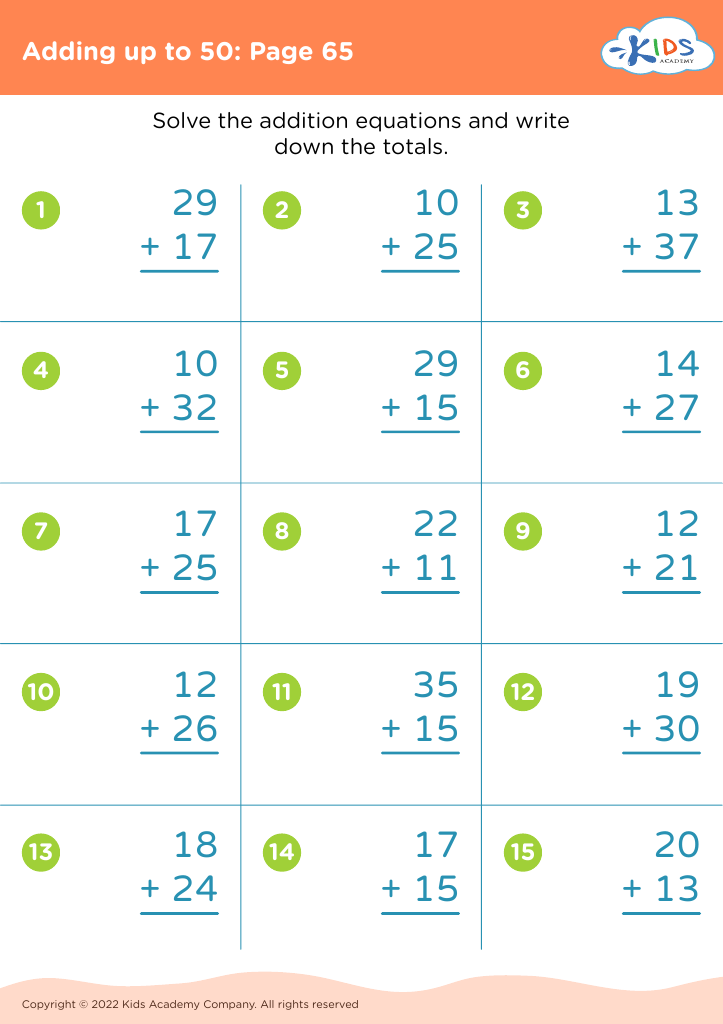
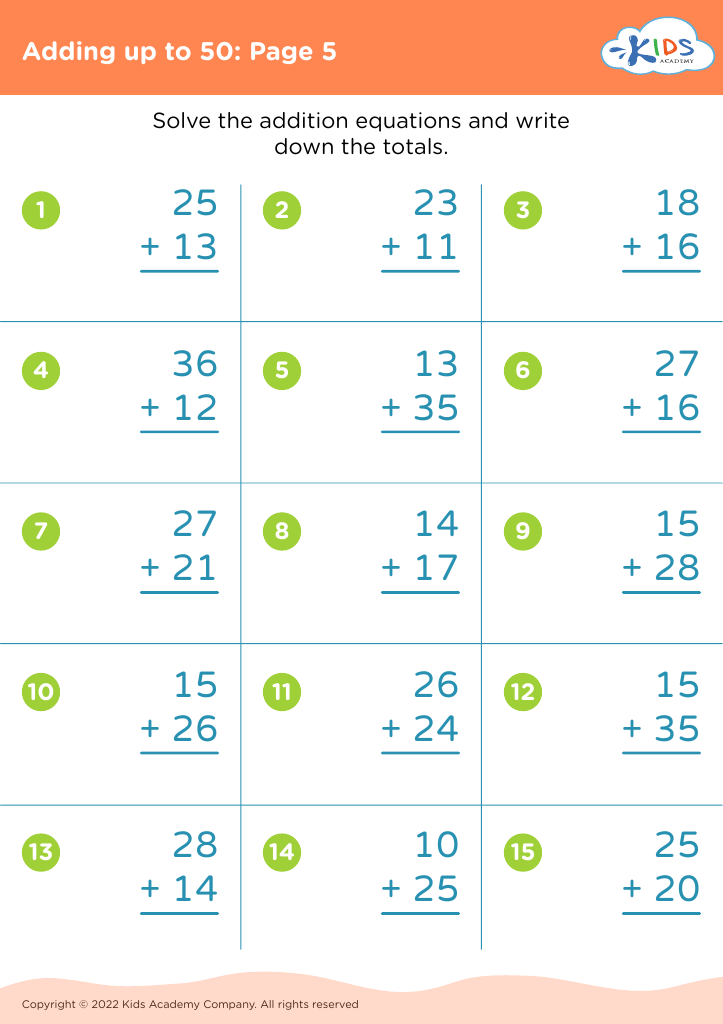
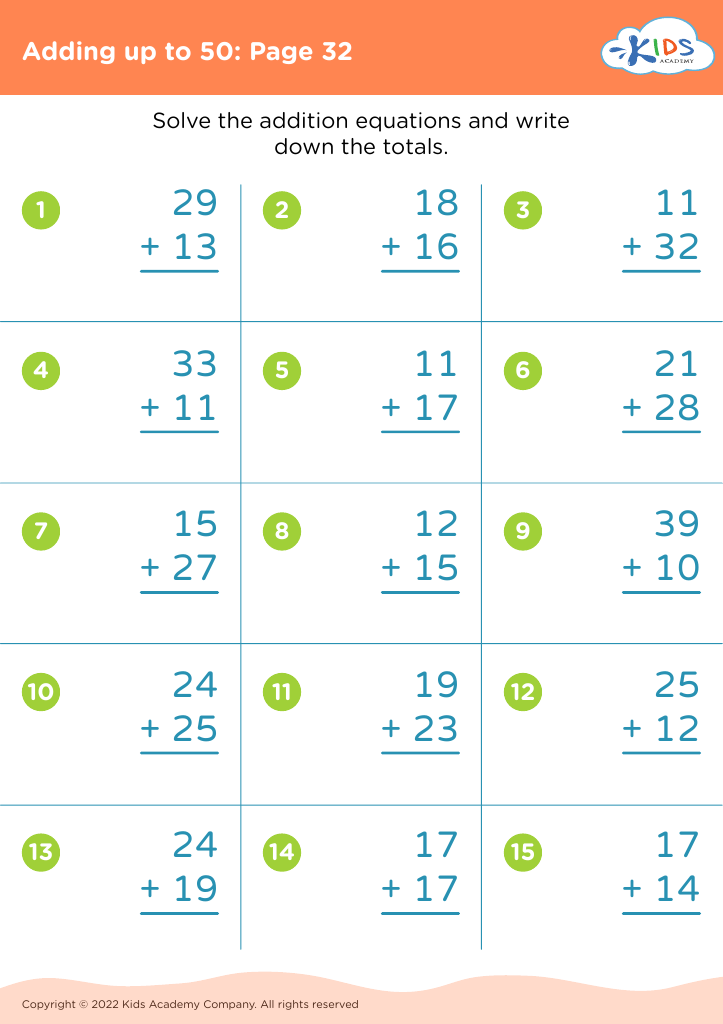




Parents and teachers should prioritize early math skills, such as "Adding up to 50," for children aged 3-8 because this foundational knowledge is crucial for future academic success. Early childhood is a pivotal time for cognitive development, and mastering basic arithmetic lays the groundwork for more complex mathematical concepts. Engaging with activities that involve adding numbers helps children develop problem-solving skills, critical thinking, and the ability to work with abstract concepts.
Moreover, learning to add up to 50 promotes number sense, which includes understanding the relationships between numbers and their values. This skill supports not just mathematical learning but enhances overall cognitive development, allowing children to make connections across different subjects.
Additionally, early math skills are linked to better performance in school later on. Children who are confident in their abilities to add and manipulate numbers tend to have increased self-esteem and a positive attitude toward learning. Therefore, focusing on addition and other foundational math skills in early childhood enriches a child's educational journey, preparing them for the increasingly complex challenges they will face in school and in everyday life. Engaging with math at this age can make learning enjoyable, fostering a lasting love for education.








