Enhance problem-solving Addition & Subtraction Worksheets for Ages 3-8
3 filtered results
-
From - To
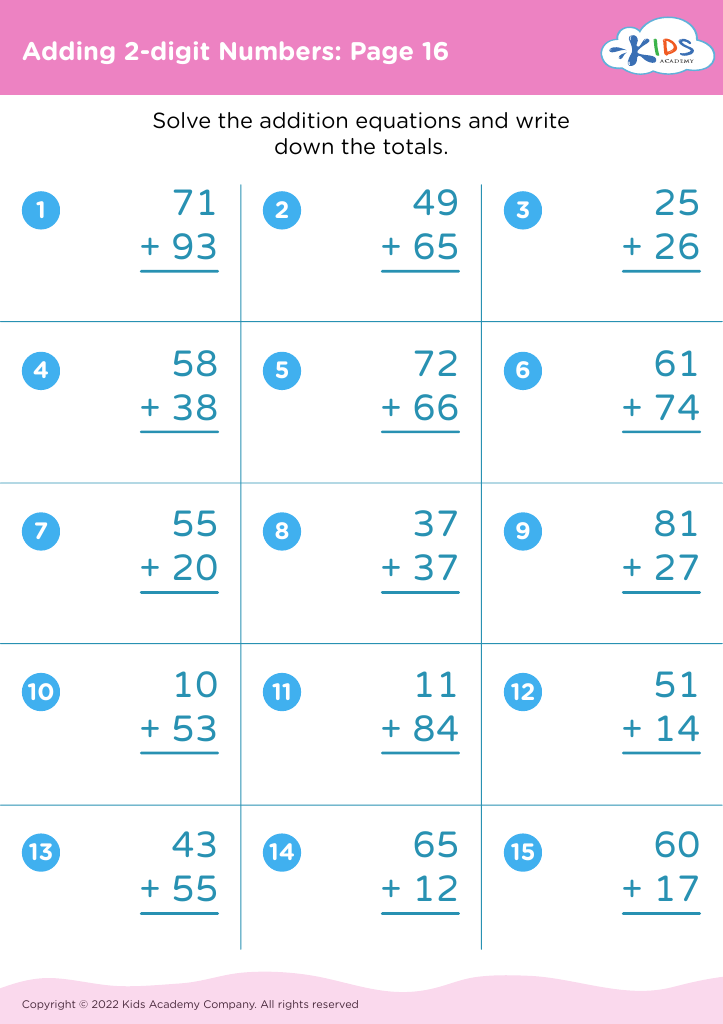
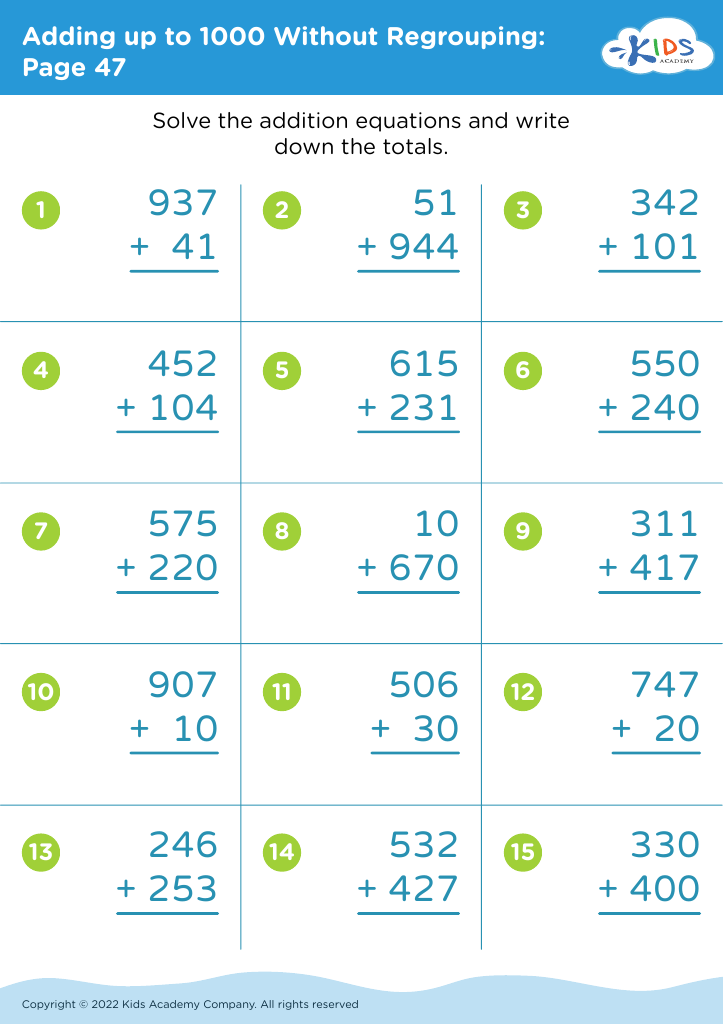
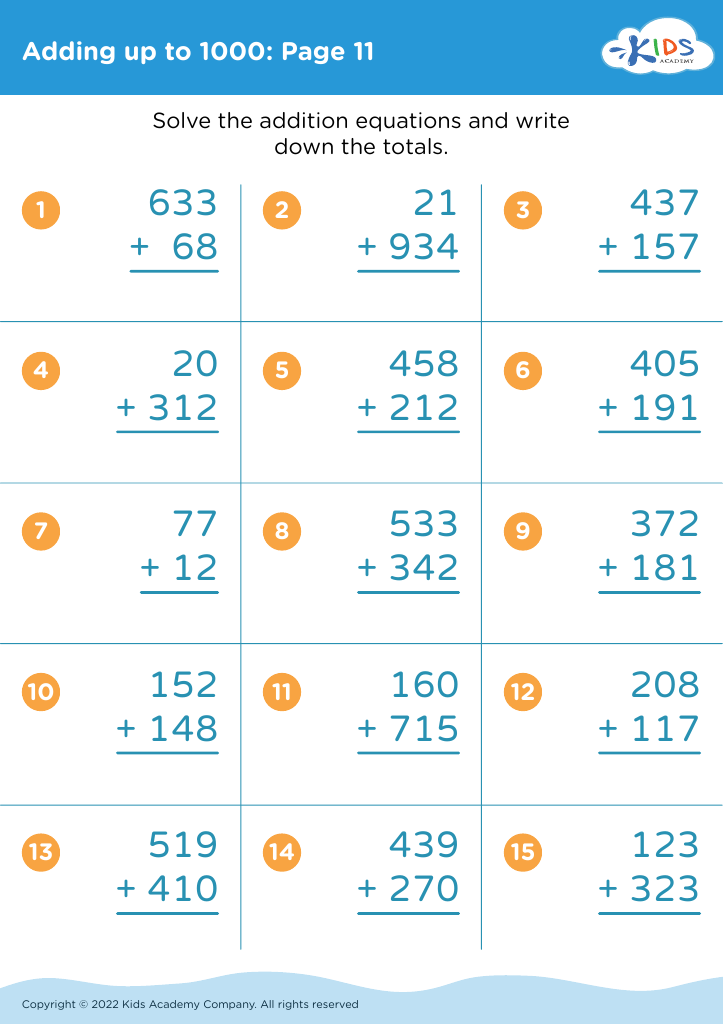
Discover our engaging "Enhance Problem-Solving Addition & Subtraction Worksheets" designed for children aged 3-8. These interactive worksheets aim to bolster mathematical skills while fostering critical thinking through fun and challenging exercises. Each worksheet encourages youngsters to apply their addition and subtraction knowledge to real-world scenarios, promoting active problem-solving strategies. Tailored for early learners, our resources are visually appealing and easy to understand, making math enjoyable for kids. Whether in the classroom or at home, these worksheets are perfect for developing essential math prowess and boosting confidence. Unlock your child's potential and inspire a love for learning through dynamic math practice today!








Enhancing problem-solving skills in addition and subtraction for children aged 3-8 is crucial for several reasons. Firstly, these fundamental math concepts form the backbone of all future mathematical learning. Mastery at an early age builds confidence and fosters a positive attitude toward mathematics, encouraging children to engage more with numbers and develop further skills.
Additionally, problem-solving nurtures critical thinking and analytical skills. Children learn to approach challenges methodically, breaking them down into manageable parts—an ability that extends beyond math and into everyday life situations. It cultivates resilience, as children learn that making mistakes is a natural part of the learning process.
Furthermore, engaging with addition and subtraction enhances cognitive development. It challenges children to think creatively, using various strategies to reach a solution, promoting mental flexibility. This can bolster their overall academic performance and improve their performance in subjects that require similar skills.
Lastly, a solid foundation in problem-solving with basic operations encourages enjoyment of math, setting the stage for lifelong interest and success. Teachers and parents should partner in providing diverse, meaningful learning opportunities in early math to shape confident, capable problem solvers for the future.








