
Enhancing concentration Addition & Subtraction Worksheets for Ages 3-8
13 filtered results
Difficulty Level
Grade
Age
-
From - To
Subject
Activity
Standards
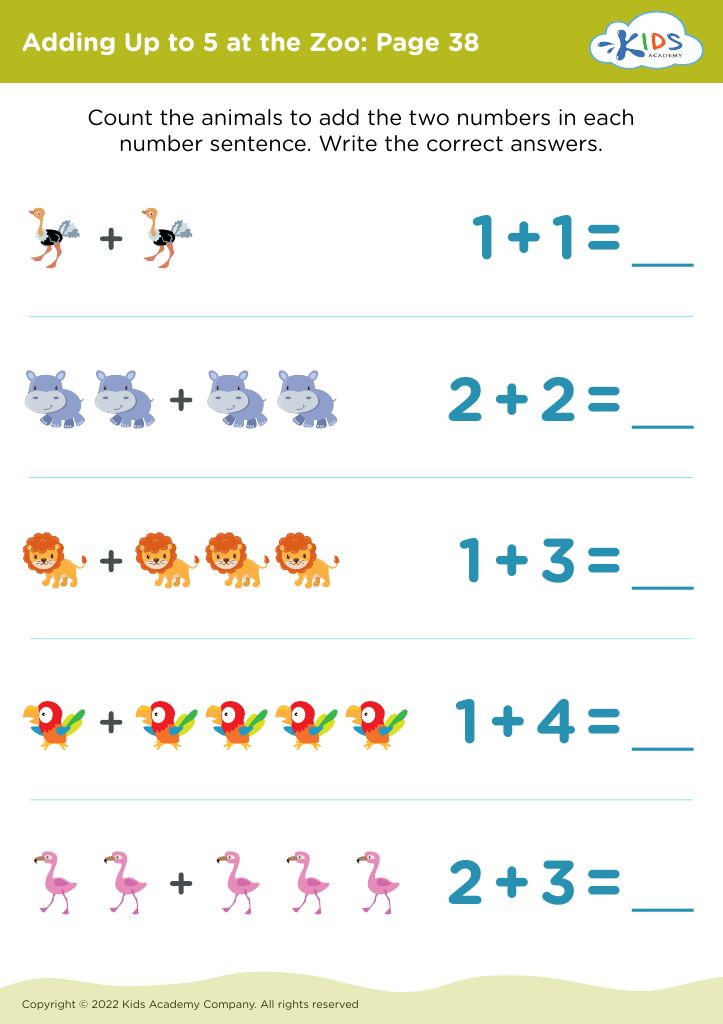
Discover our "Enhancing Concentration Addition & Subtraction Worksheets" designed specifically for kids ages 3-8! These engaging worksheets provide a fun and interactive way for children to build essential math skills while improving their concentration. Through colorful illustrations and varied exercises, young learners can practice addition and subtraction, all while boosting focus and attention. Our thoughtfully crafted activities not only reinforce math concepts but also encourage critical thinking and problem-solving abilities. Perfect for home or classroom use, these worksheets make math learning enjoyable and effective. Empower your child's academic journey today with our captivating resources tailored for their age and developmental level!
Favorites
With answer key
Interactive
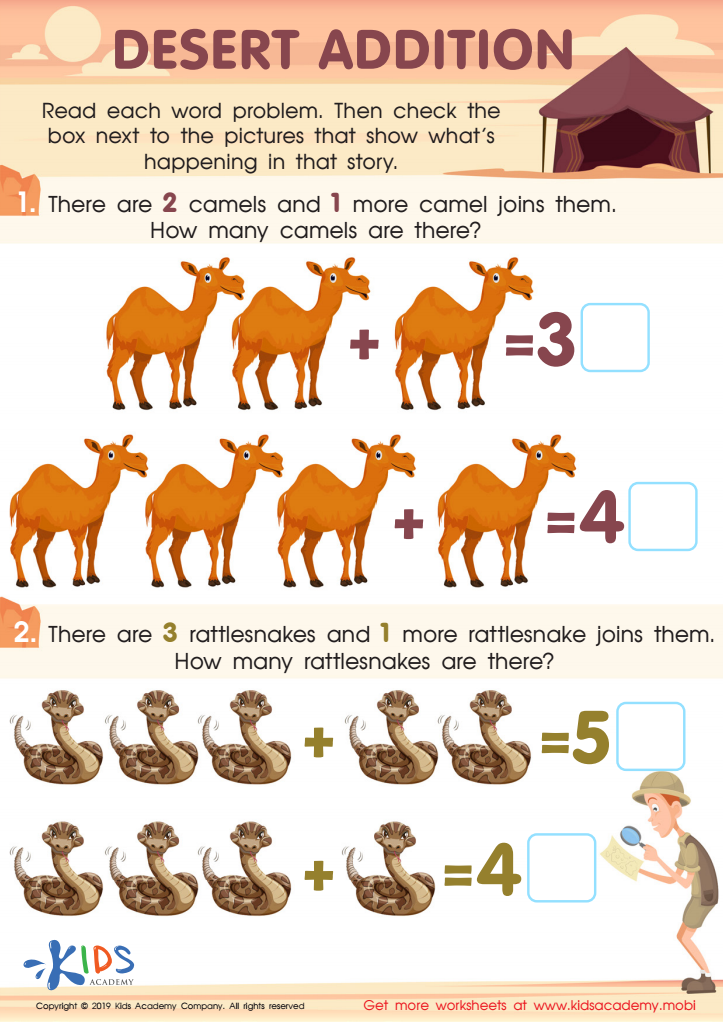
Desert Addition Worksheet
In the desert, scorching heat and little water mean animals must adapt to survive. Show kids pictures of these animals and teach their names. Then, read the word problems in the worksheet, and have them check the box next to the pictures that portray each story. 80 words
 Assign to My Students
Desert Addition Worksheet
Worksheet
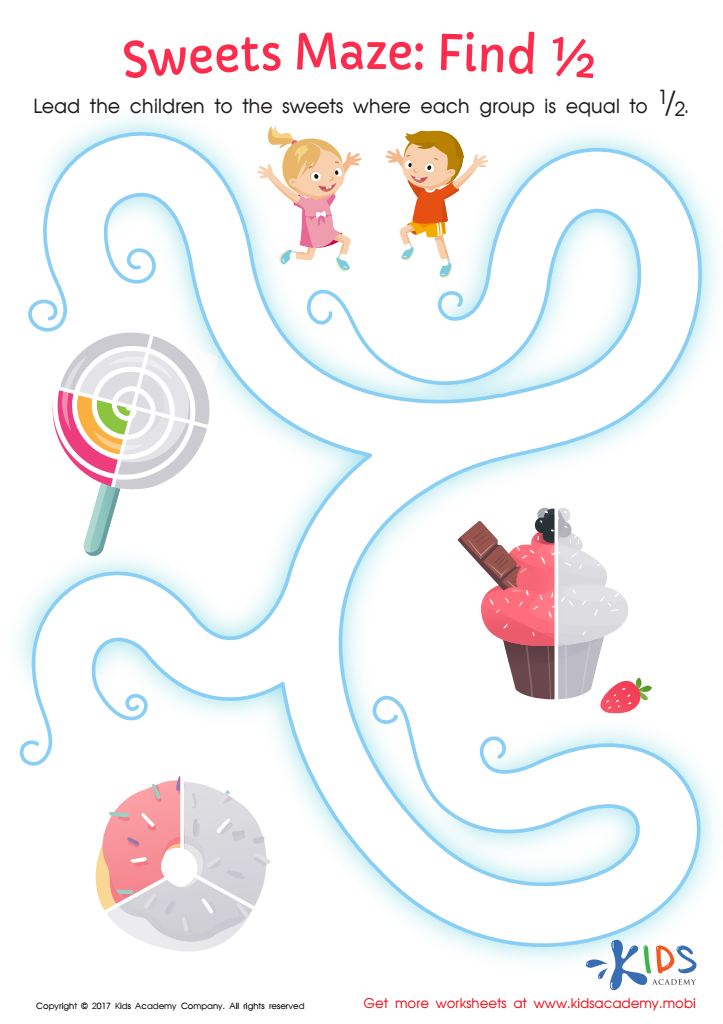
Fractions: Sweets Maze Worksheet
Kids will enjoy mastering parts of a whole with this tantalizing maze featuring tasty treats. Visuals help them understand fractions and the fun theme will motivate them to learn! Get started now to help your child find and identify ½!
Fractions: Sweets Maze Worksheet
Worksheet
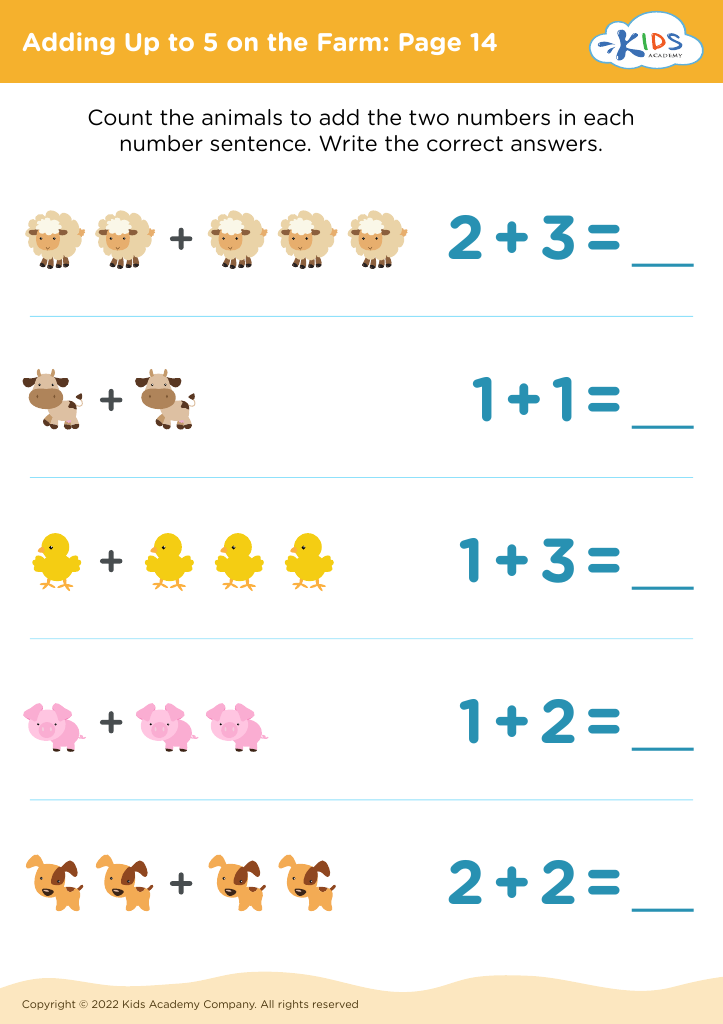
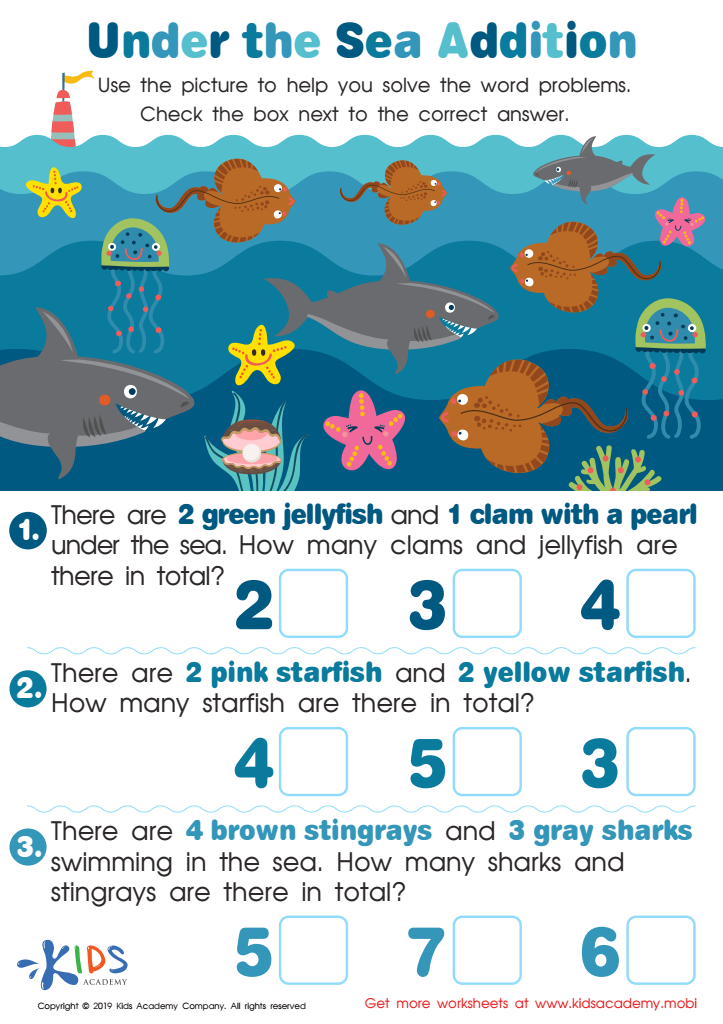
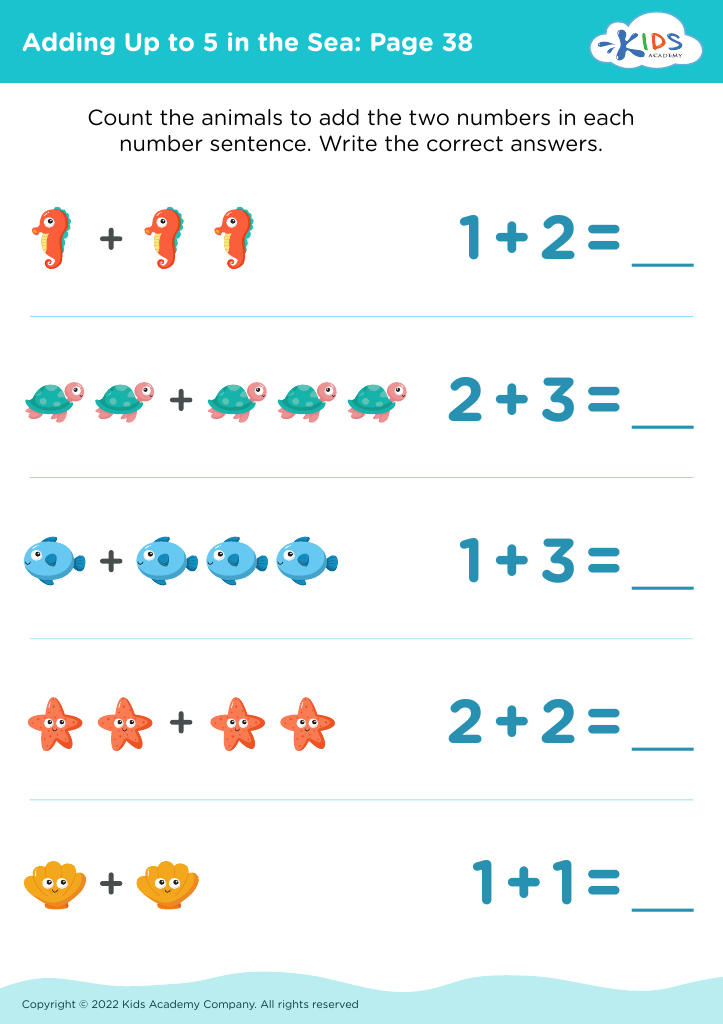
Under the Sea Addition Worksheet
Ask your kids to identify undersea animals in a picture, then solve the word problems at the bottom with it! If they're into the nature channel or marine life, they'll love this worksheet. Check the box next to the correct answer for each one. 80 words
Under the Sea Addition Worksheet
Worksheet
Join Kids Academy for Free
Who is primarily going to use this learning content?








Enhancing concentration in young children, particularly in areas like addition and subtraction, is critical for several reasons. First, foundational math skills formed between ages 3-8 set the groundwork for future academic success. By focusing on addition and subtraction during these formative years, parents and teachers can help foster a deep understanding of mathematical concepts, which will benefit children in more complex subjects as they progress through school.
Moreover, enhancing concentration during math activities can teach children important skills such as attention span, focus, and perseverance. These skills are essential not just for mathematics but for all areas of learning and life. By engaging children with creative and interactive methods, like games and hands-on activities, adults can make learning enjoyable and productive, helping children to develop a positive attitude toward academic challenges.
Furthermore, fostering concentration in arithmetic can promote cognitive development, self-regulation, and problem-solving skills. These skills are increasingly interconnected in today’s educational landscape. Ultimately, when parents and teachers prioritize concentration in early math education, they equip children with the essential tools to navigate challenges, explore complex ideas, and develop a lifelong love for learning. Therefore, investing time and resources in this area is both beneficial and essential.








