Fine Motor Skills (coloring) Addition & Subtraction Worksheets for Ages 3-8
6 filtered results
-
From - To
Enhance your child’s learning with our Fine Motor Skills Coloring Addition & Subtraction Worksheets for ages 3-8! Our printable worksheets combine the fun of coloring with fundamental math practice, helping children to develop both fine motor skills and mathematical proficiency. Each engaging activity sheet is designed to stimulate young minds, improve hand-eye coordination, and foster a love for math. Perfect for both classroom and home, these worksheets offer a delightful way to strengthen early math concepts while keeping your little ones entertained. Jumpstart your child's educational journey with our interactive and enjoyable learning tools.
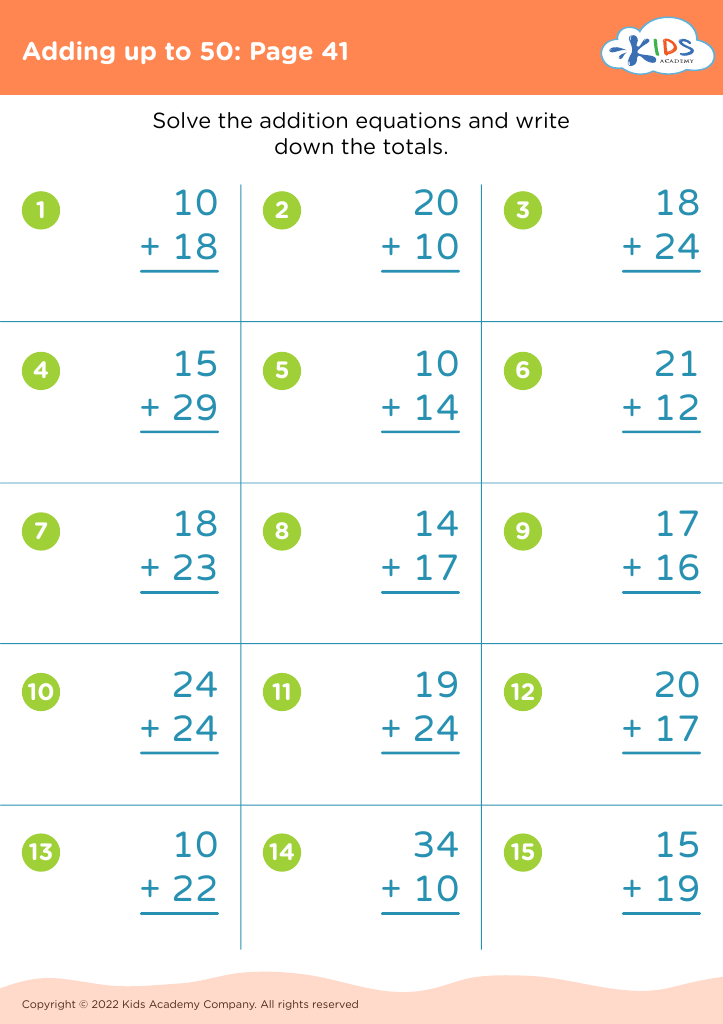
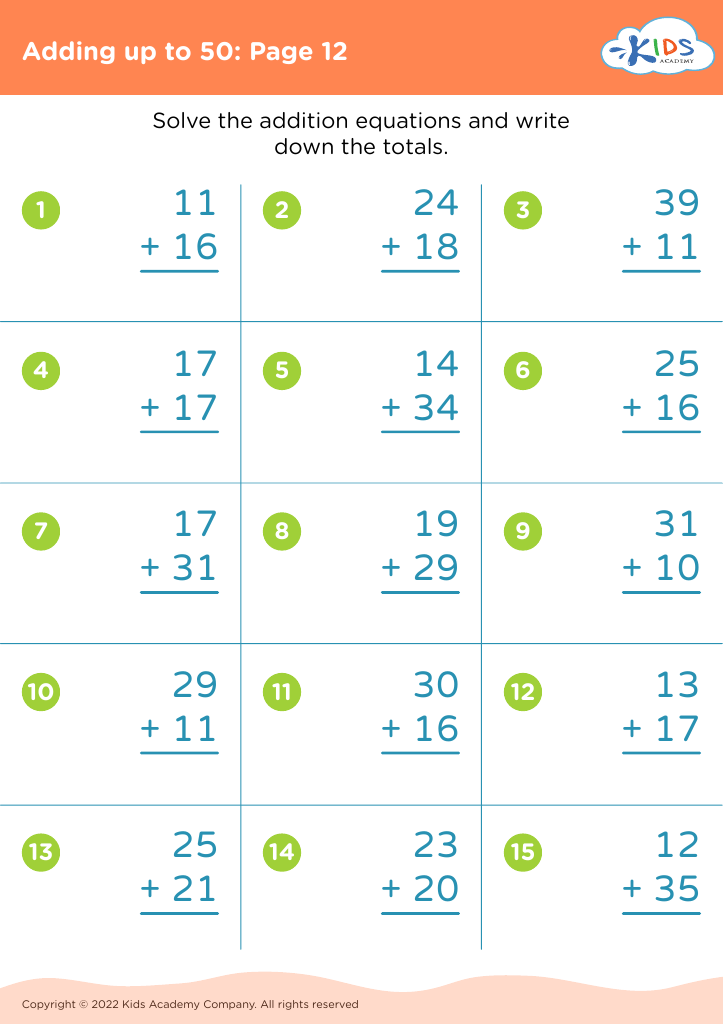
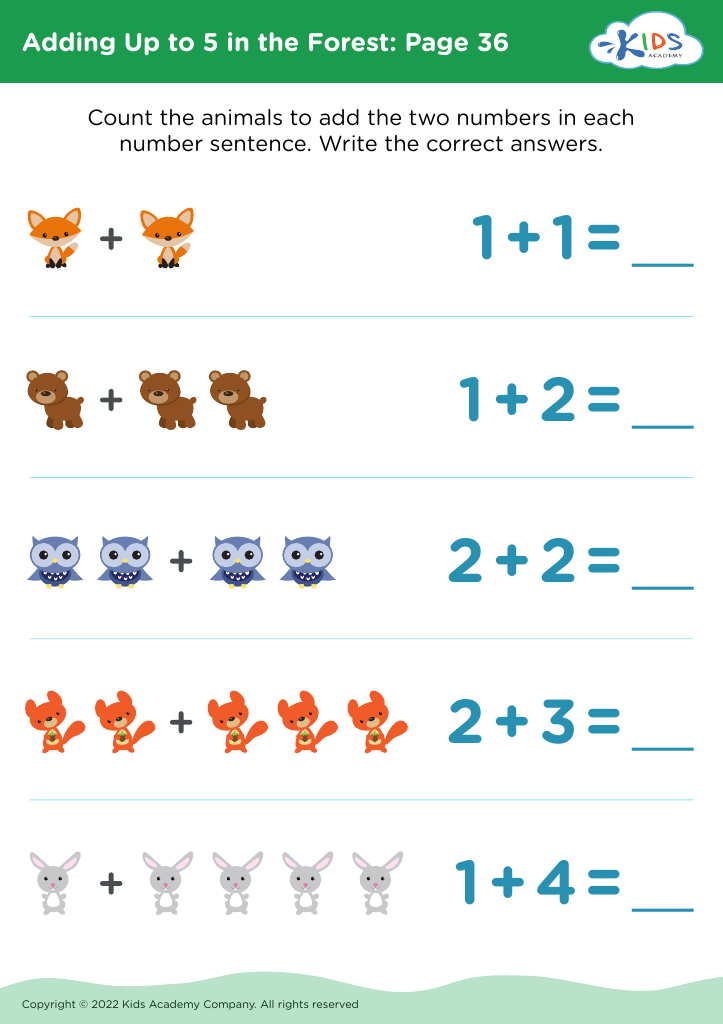
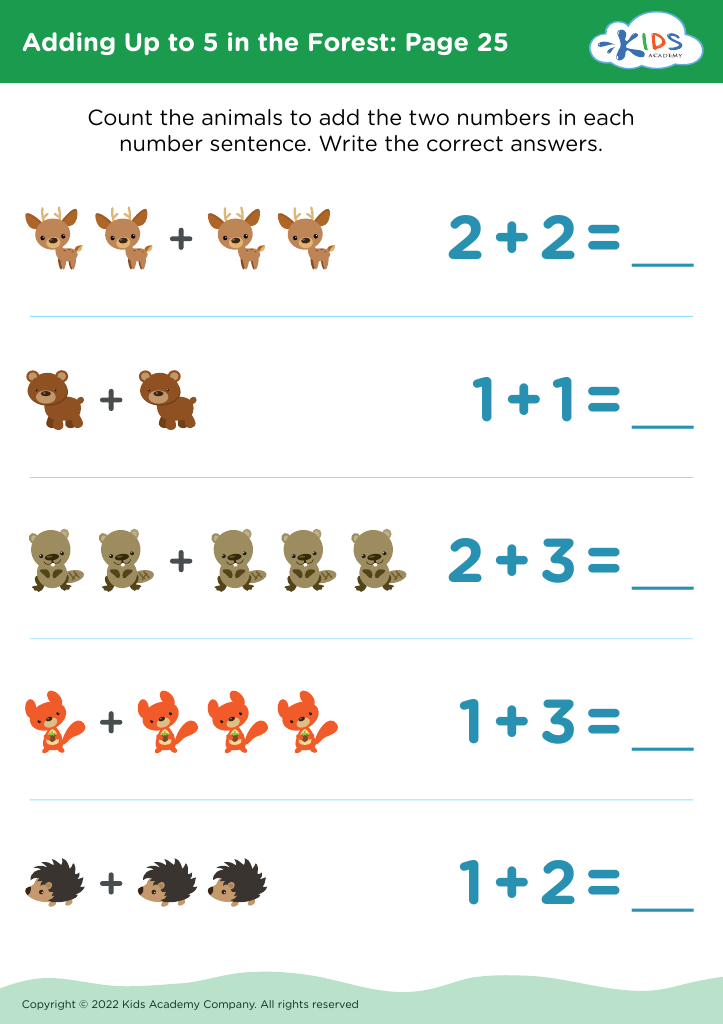
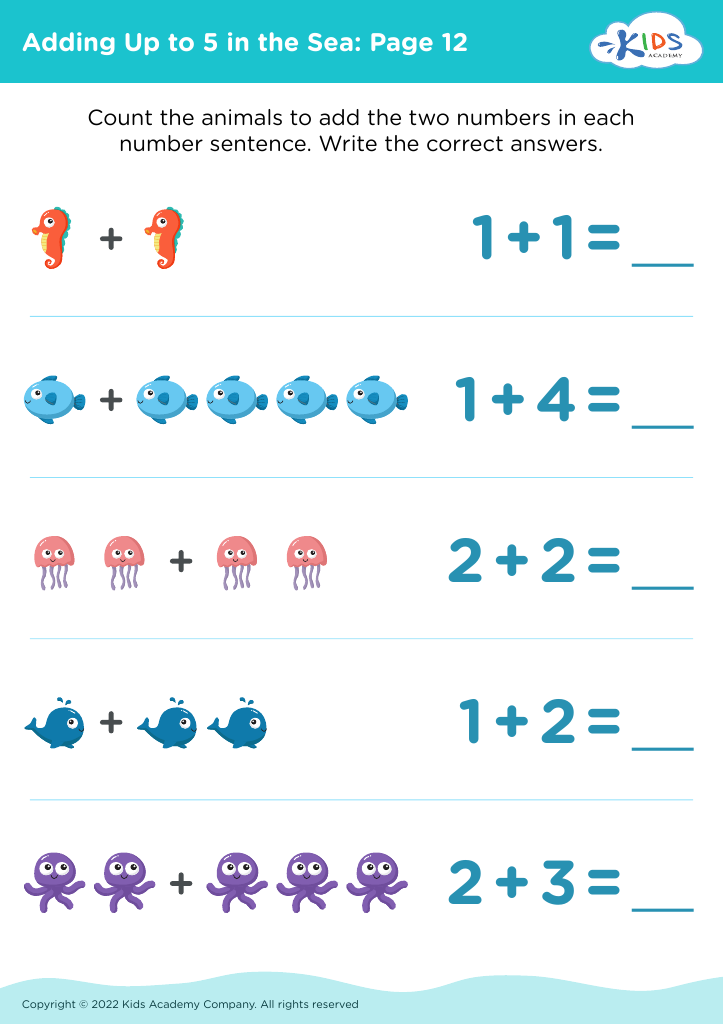
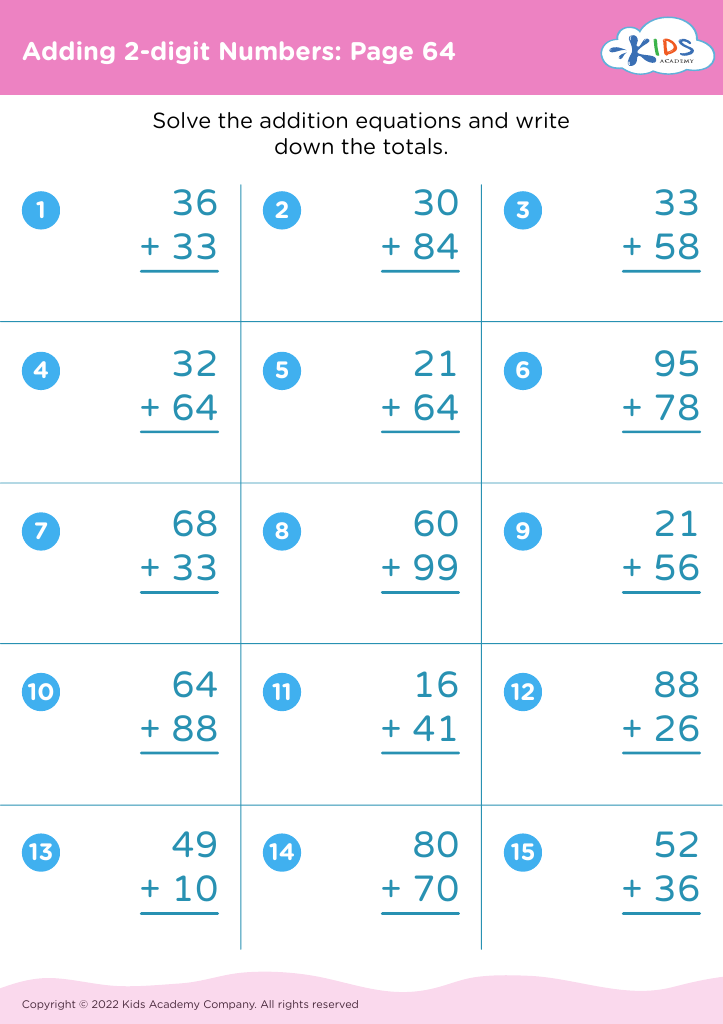








Fine motor skills, foundational abilities involving the coordination of small muscles in the hands and fingers, are essential for young children aged 3-8 as they greatly influence crucial aspects of their development. Activities like coloring, along with basic addition and subtraction tasks, offer a unique, fun, and educational means for honing these skills while promoting cognitive and social growth.
When children engage in coloring, they develop hand-eye coordination, improve dexterity, and strengthen the muscles necessary for writing, cutting, and other intricate tasks. This precise control is vital as it directly translates to academic success, where neat handwriting and the ability to properly manipulate tools and materials are frequently required.
Similarly, introducing young learners to basic addition and subtraction through playful and interactive methods boosts their cognitive abilities. These activities encourage critical thinking, problem-solving skills, and help children understand number concepts and relationships, laying the groundwork for more advanced mathematical learning.
Moreover, succeeding in these tasks enhances children's self-esteem and fosters a love for learning, which is essential for lifelong educational enthusiasm. Parents and teachers thus play a crucial role by incorporating fun practices that support these vital fine motor and mathematical skills, ensuring a balanced developmental foundation that prepares children for future academic and personal achievements.








