Fine motor skills (writing numbers) Addition & Subtraction Worksheets for Ages 3-8

Help your child enhance their fine motor skills and master math concepts with our "Fine Motor Skills (Writing Numbers) Addition & Subtraction Worksheets for Ages 3-8." These thoughtfully designed activities not only develop precise hand movements but also introduce fundamental addition and subtraction. Each worksheet encourages kids to practice writing numbers carefully while solving engaging math problems. Perfect for young learners, each exercise offers a fun and educational way to build confidence in both fine motor coordination and early math skills. Boost your child's learning journey today with our expertly crafted printable worksheets!
Check out this FREE Trial Lesson on Addition & Subtraction for age 3-8!

Short and Long Vowel Sort

Favorites
With answer key
Interactive
  • 3-8
  • Fine motor skills (writing numbers)
  • Addition & Subtraction
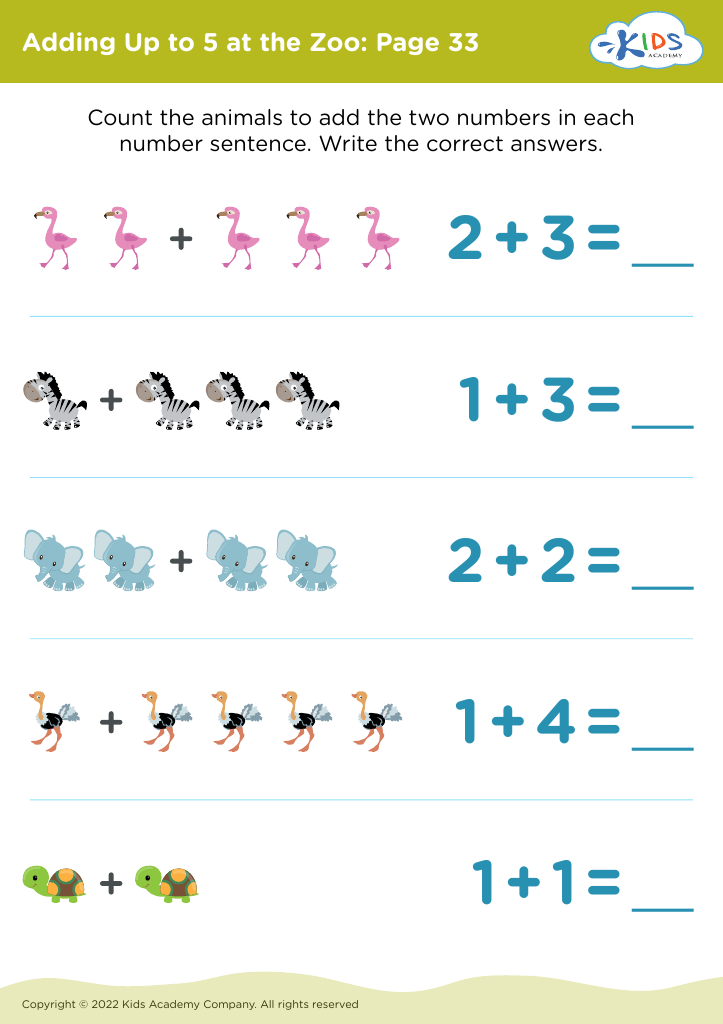
Adding Up to 5 at the Zoo: Page 33
Worksheet
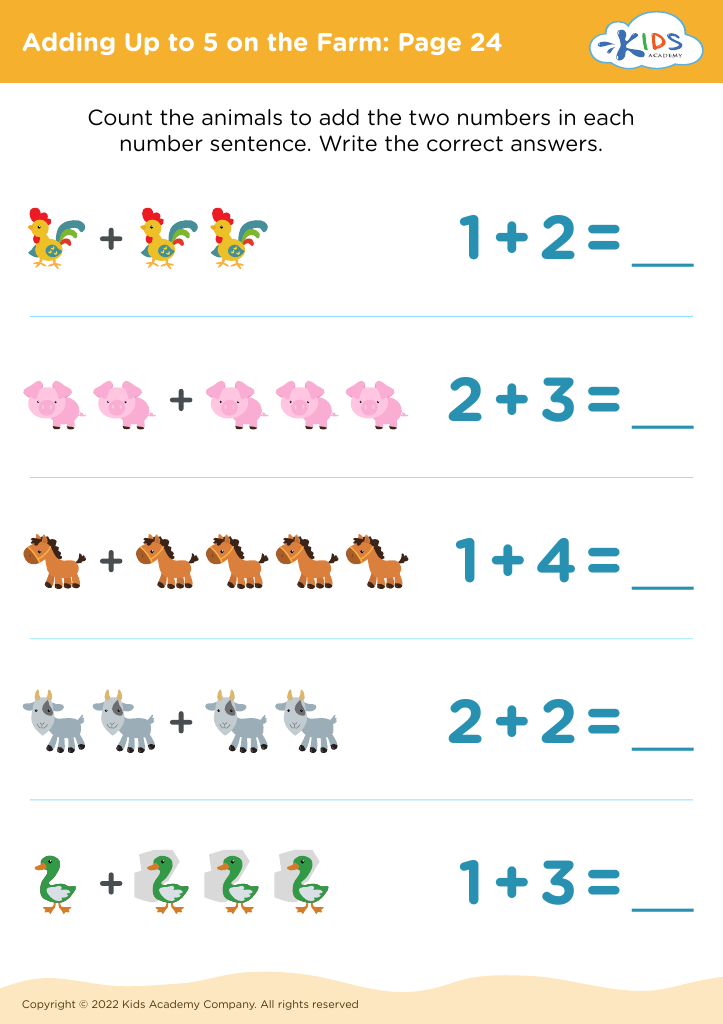
Adding Up to 5 on the Farm: Page 24
Worksheet
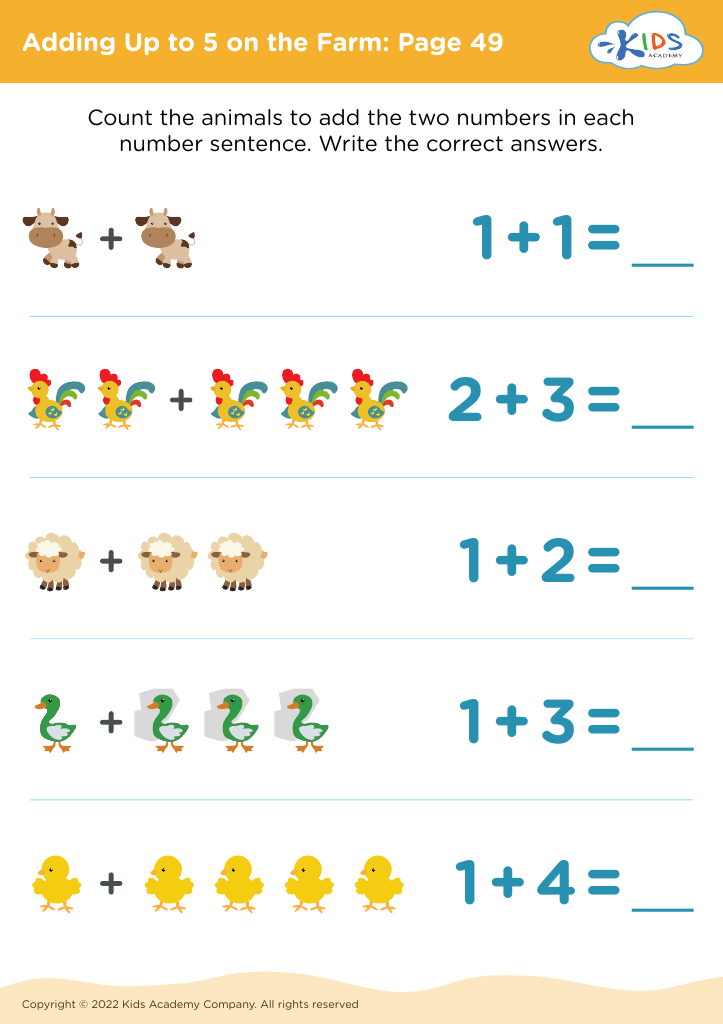
Adding Up to 5 on the Farm: Page 49
Worksheet
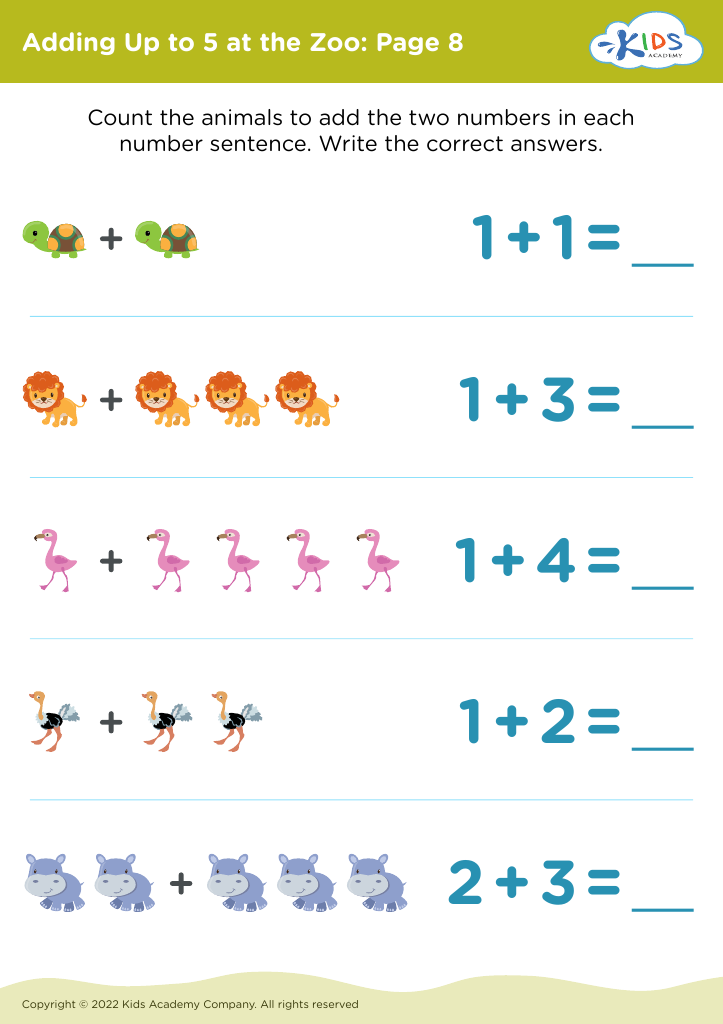
Adding Up to 5 at the Zoo: Page 8

Adding Up to 5 at the Zoo: Page 8

Adding Up to 5 at the Zoo: Page 8
Worksheet
Simple Addition PDF Worksheet

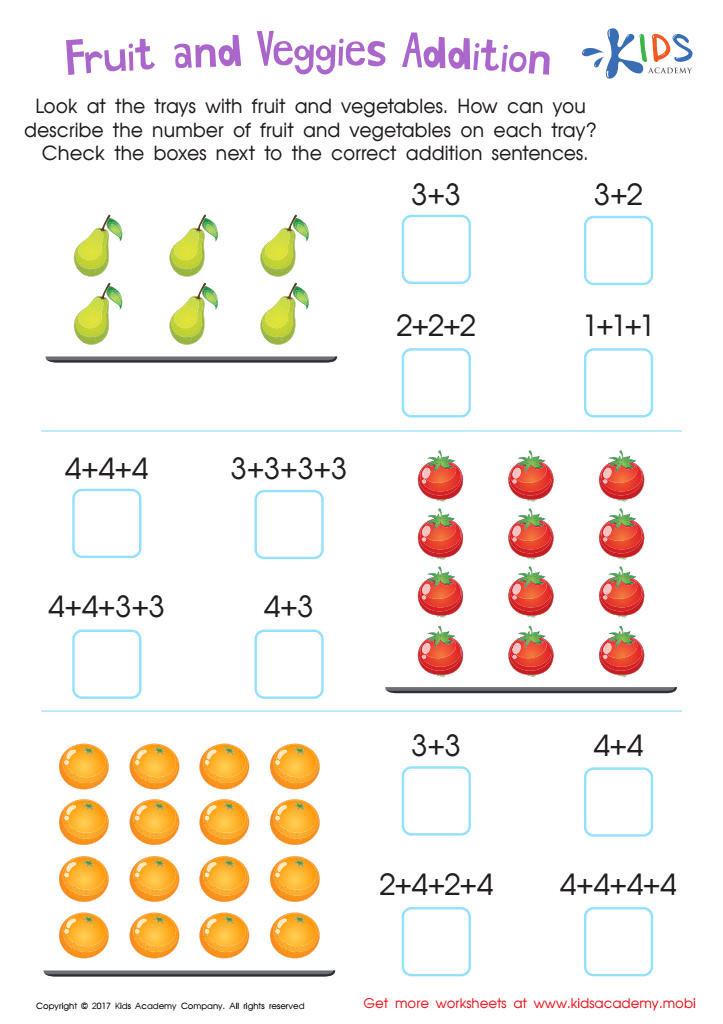
Fruit and Veggies Worksheet

It promotes problem-solving and analytical skills as kids match pictures to correct addition sentences. Help your child go beyond simple addition with this PDF worksheet!
Fruit and Veggies Worksheet
Worksheet
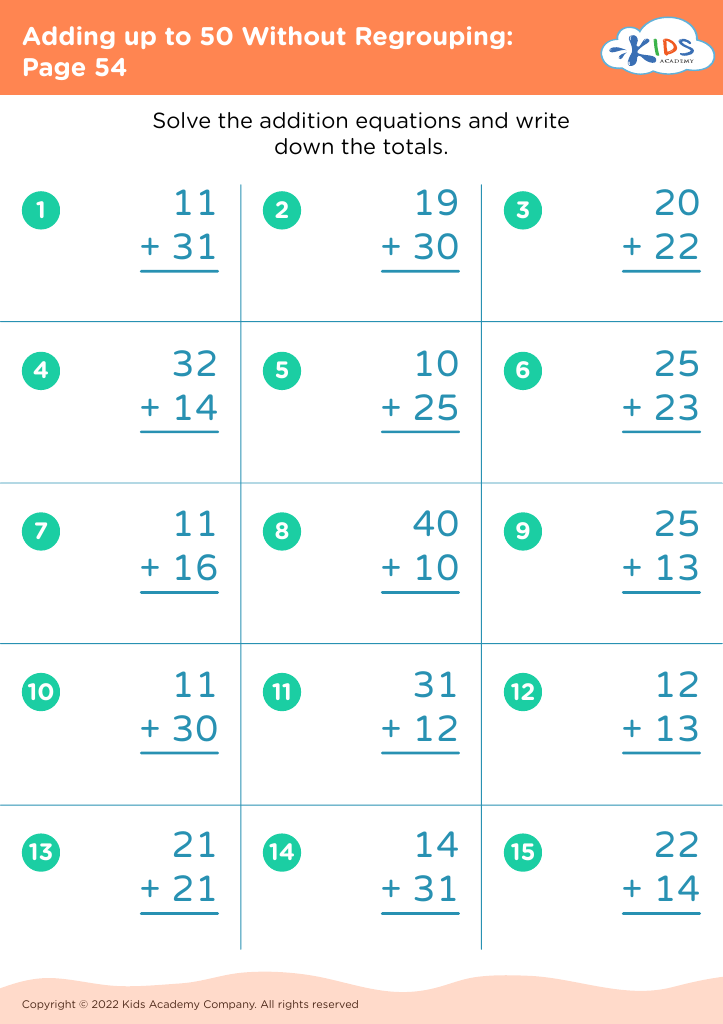
Adding up to 50 Without Regrouping: Page 54
Worksheet
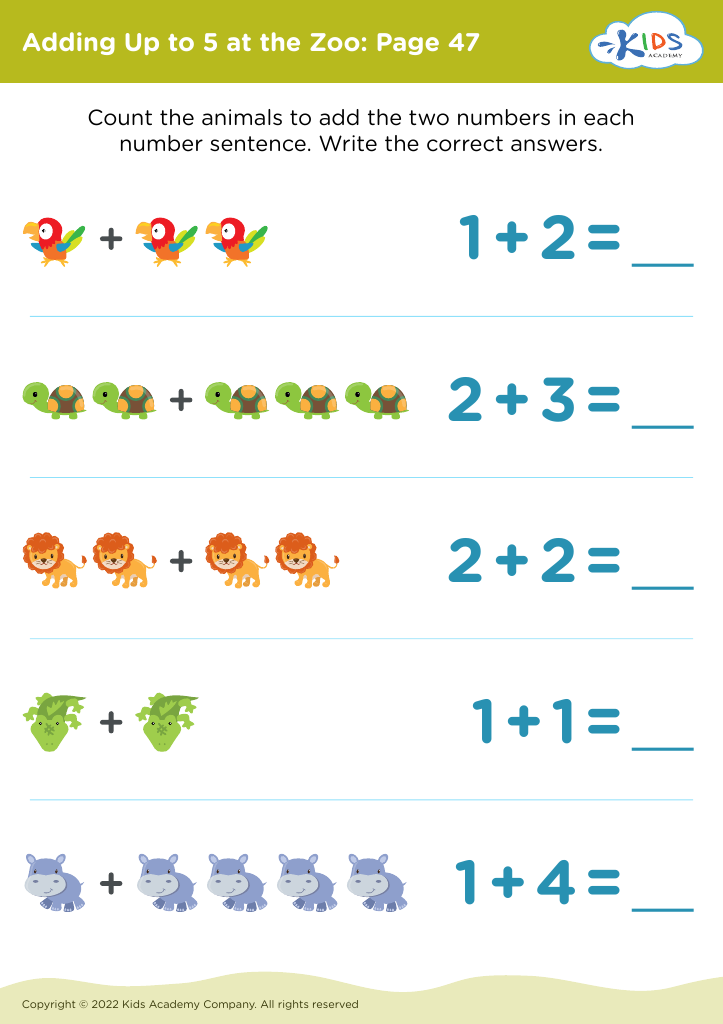
Adding Up to 5 at the Zoo: Page 47
Worksheet
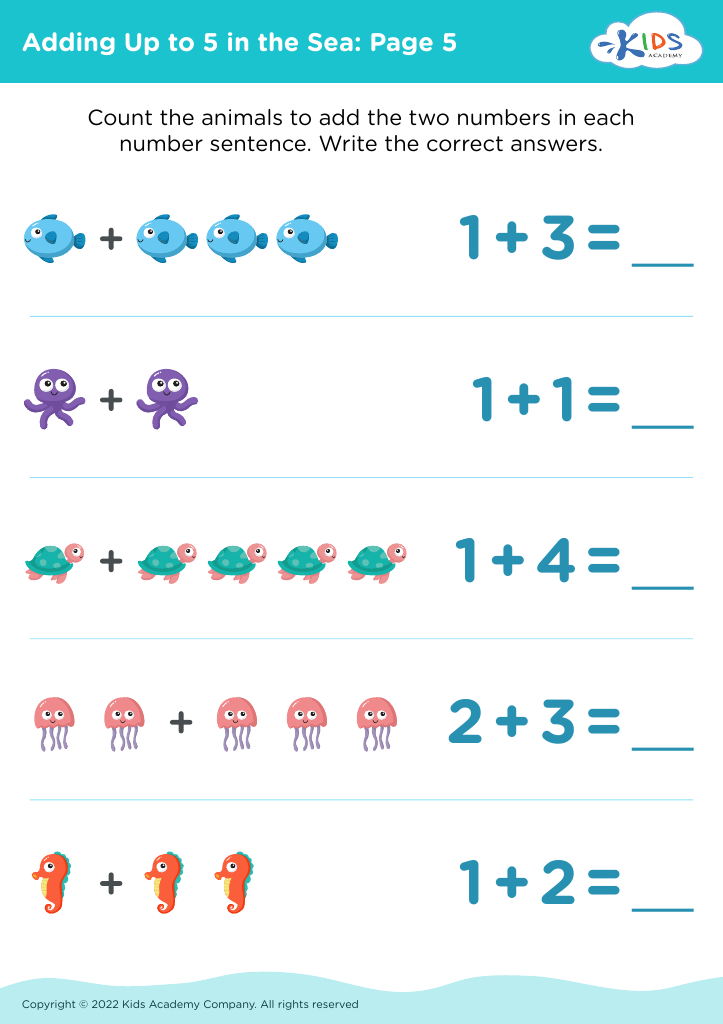
Adding Up to 5 in the Sea: Page 5

Adding Up to 5 in the Sea: Page 5

Adding Up to 5 in the Sea: Page 5
Worksheet
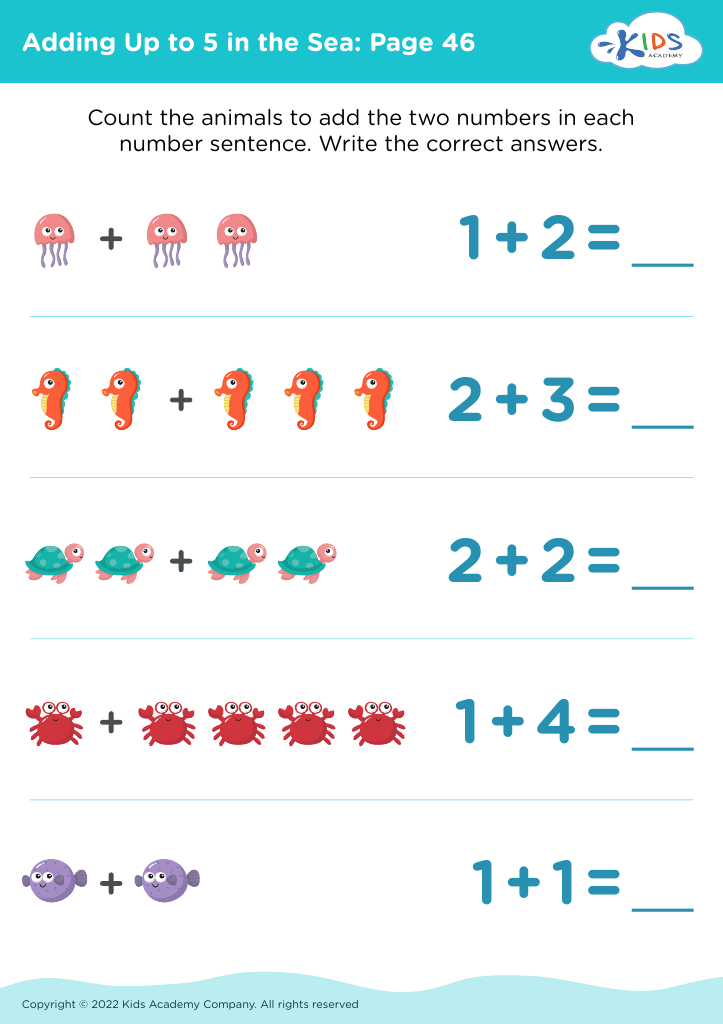
Adding Up to 5 in the Sea: Page 46
Worksheet
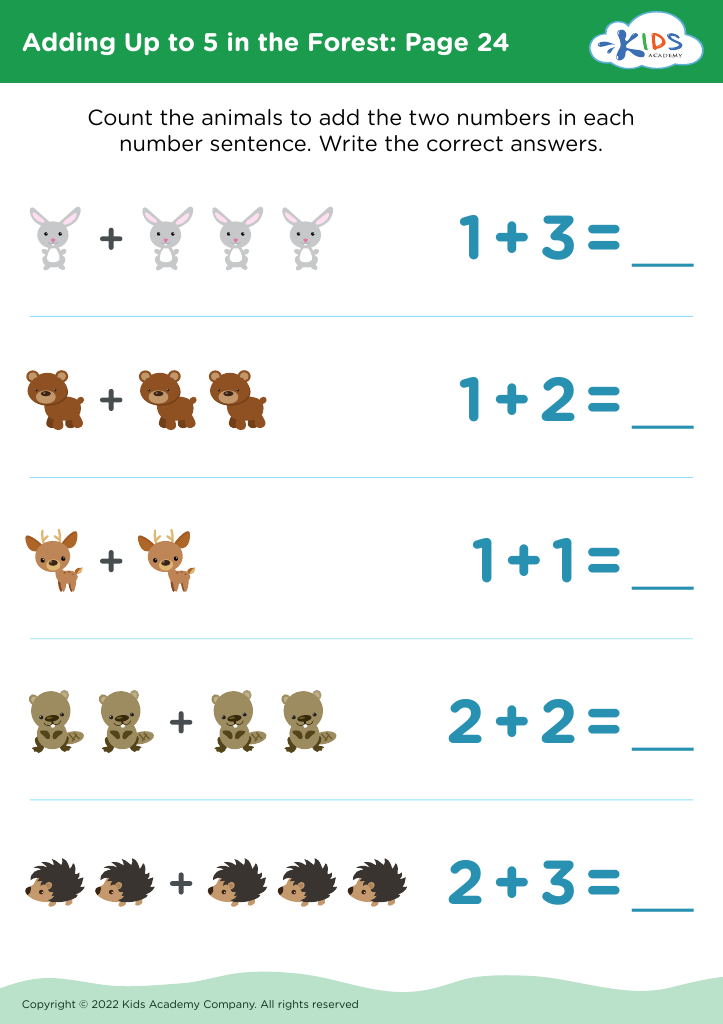
Adding Up to 5 in the Forest: Page 24
Worksheet
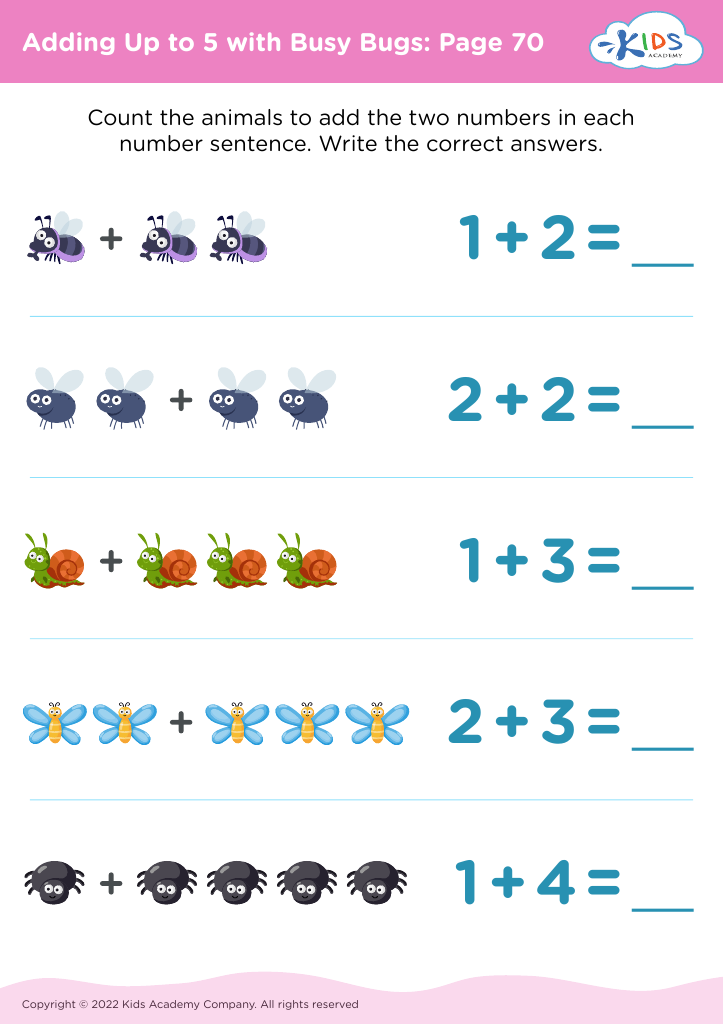
Adding Up to 5 with Busy Bugs: Page 70
Worksheet
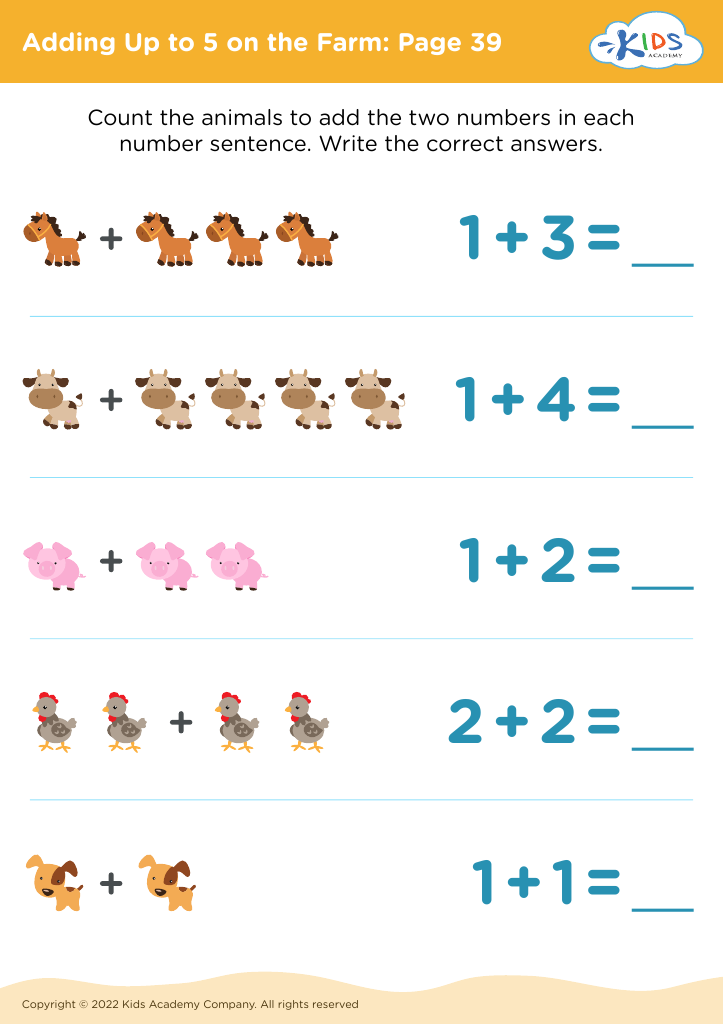
Adding Up to 5 on the Farm: Page 39
Worksheet
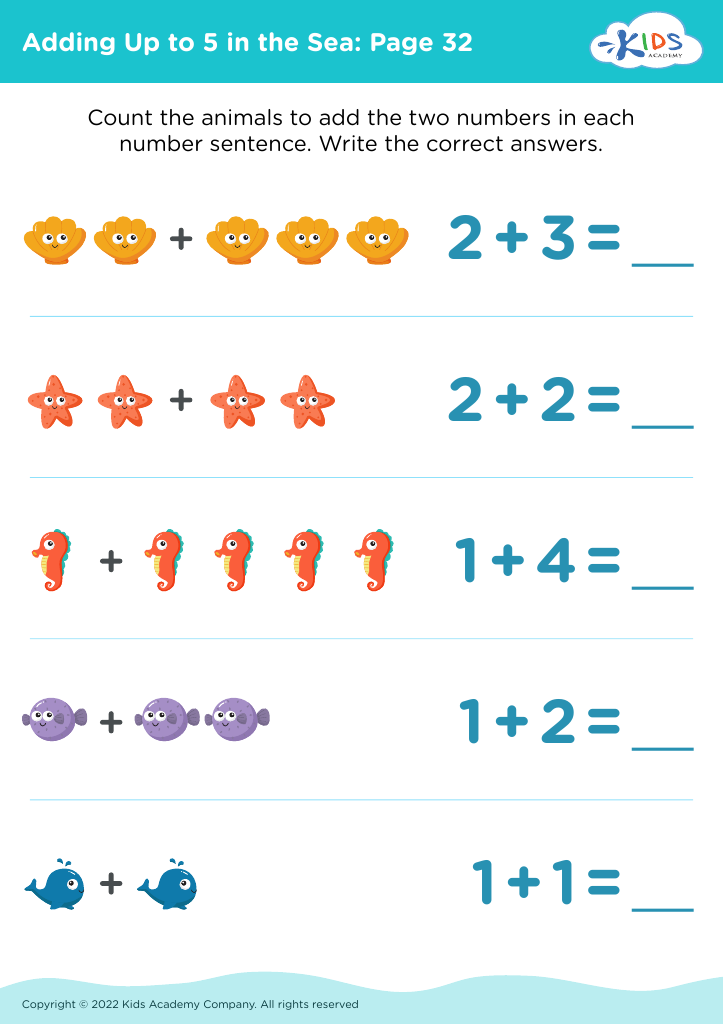
Adding Up to 5 in the Sea: Page 32
Worksheet
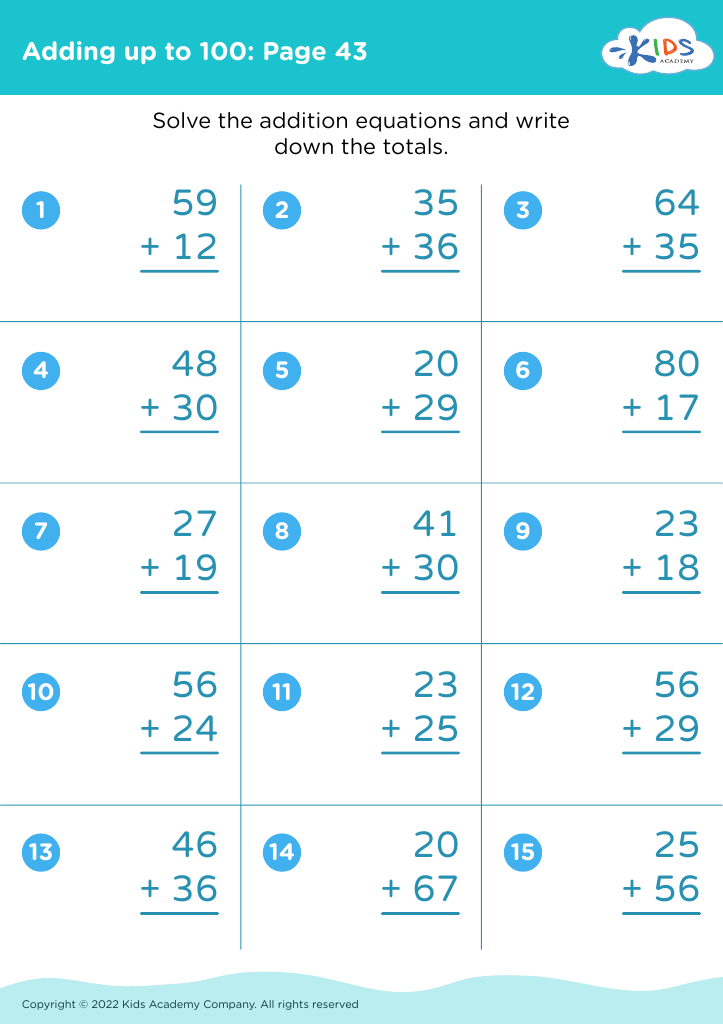
Adding up to 100: Page 43

Adding up to 100: Page 43

Adding up to 100: Page 43
Worksheet
Adding Instruments with Addison Worksheet
Adding Instruments with Addison Worksheet

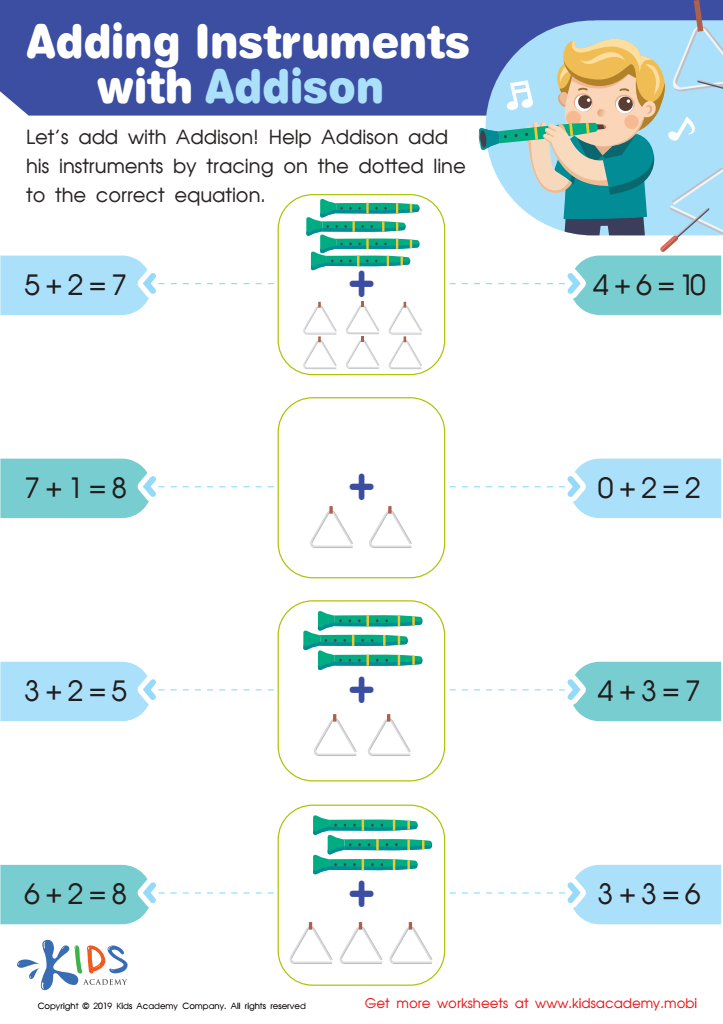
Your math stars will enjoy assisting Addison as he adds his instruments. This worksheet has 10 basic addition problems with pictures of instruments to aid children. They match the pics and sentences, then connect them to the correct problem using the lines. A fun way to learn and practice addition!
Adding Instruments with Addison Worksheet

Worksheet
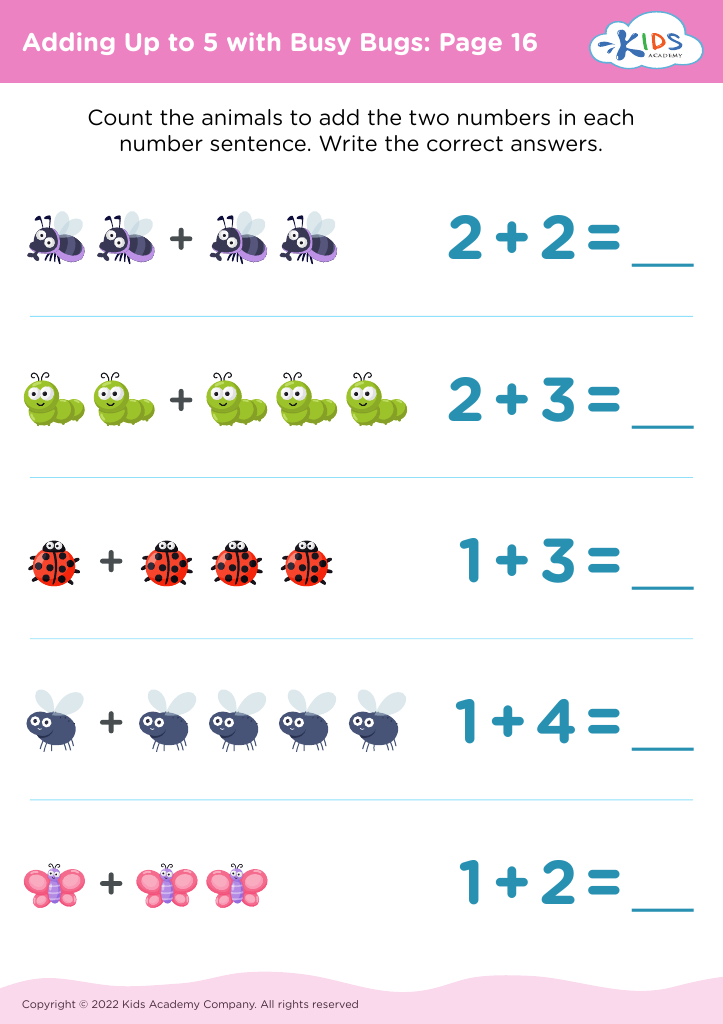
Adding Up to 5 with Busy Bugs: Page 16
Worksheet
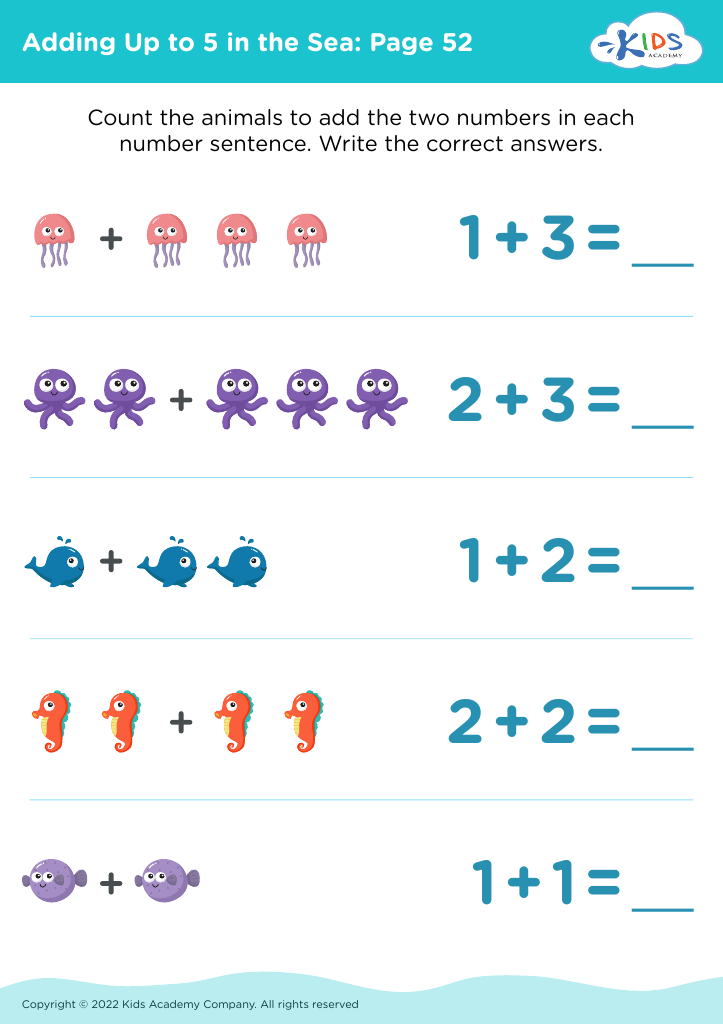
Adding Up to 5 in the Sea: Page 52
Worksheet


Fine motor skills, addition, and subtraction are foundational elements in early childhood development, crucial for ages 3-8. These skills play pivotal roles in a child's academically formative years and overall growth. Firstly, fine motor skills, such as gripping pencils and writing numbers, enable children to perform essential tasks like buttoning clothes and tying shoelaces, fostering a sense of independence. Good motor control also underpins their ability to write legibly, influencing not just future academic success, but also self-esteem and communication skills.

Equally vital, early exposure to addition and subtraction equips children with fundamental math skills critical for higher-level math understanding. Mastering these concepts enhances problem-solving abilities and logical thinking. Parents and teachers should promote these skills through engaging activities that captivate children's interest, making learning enjoyable. This can include counting games, interactive math apps, and hands-on activities like puzzle-solving.

By emphasizing fine motor skills and basic math in early education, parents and teachers provide children with tools to succeed academically and socially. Strong foundations in these areas propel them towards a love for learning, critical thinking capabilities, and a confident self-image, all of which contribute to well-rounded development into later childhood and beyond.