Improves number recognition Addition & Subtraction Worksheets for Ages 3-8
3 filtered results
-
From - To
Discover our collection of engaging addition and subtraction worksheets, carefully designed for kids ages 3-8. Our worksheets don’t just teach basic math skills; they also enhance number recognition, ensuring your little ones build a solid mathematical foundation. With a variety of fun, interactive exercises, children develop a love for learning while mastering addition and subtraction. Perfect for parents and teachers alike, these worksheets cater to young learners at all skill levels, making math both enjoyable and educational. Unlock your child's potential and make math their favorite subject today! Visit Kids Academy to get started.
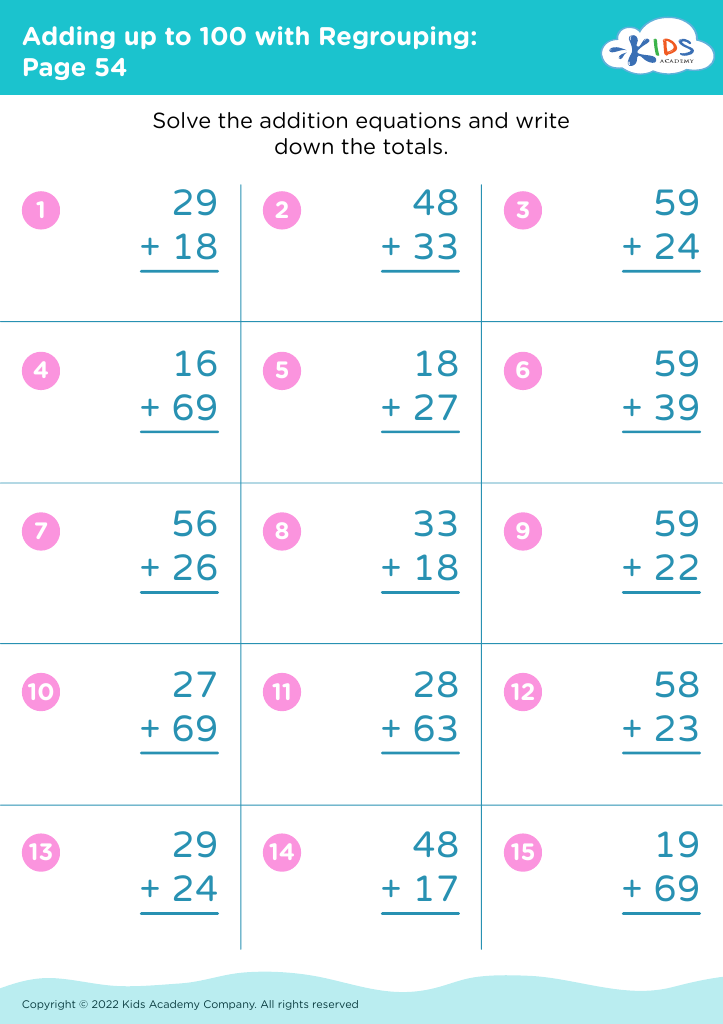
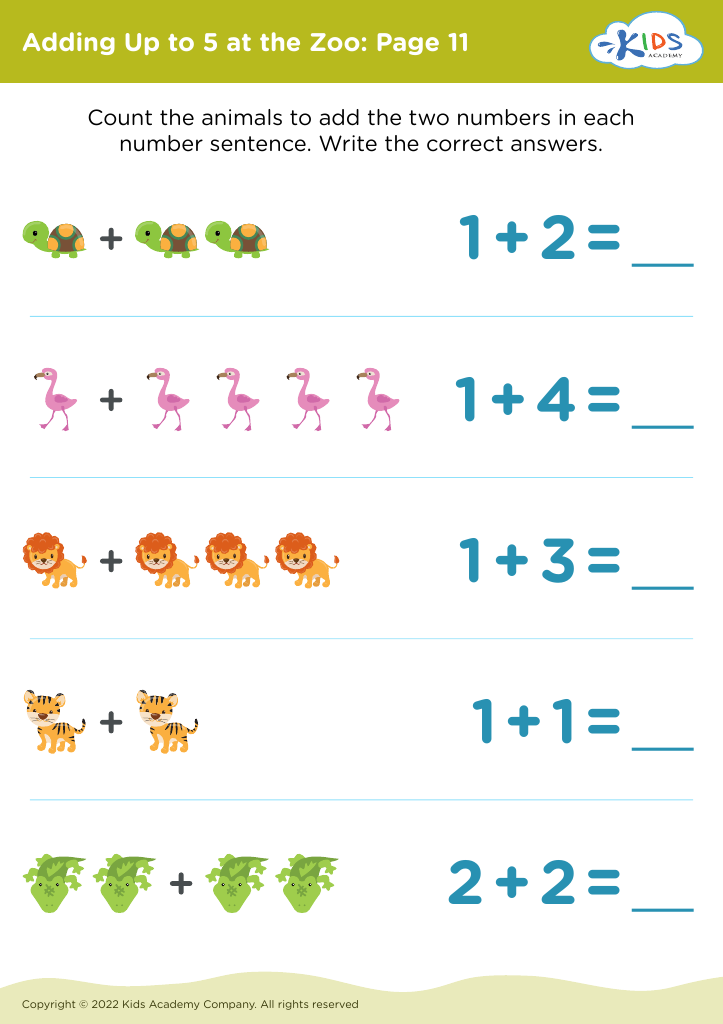
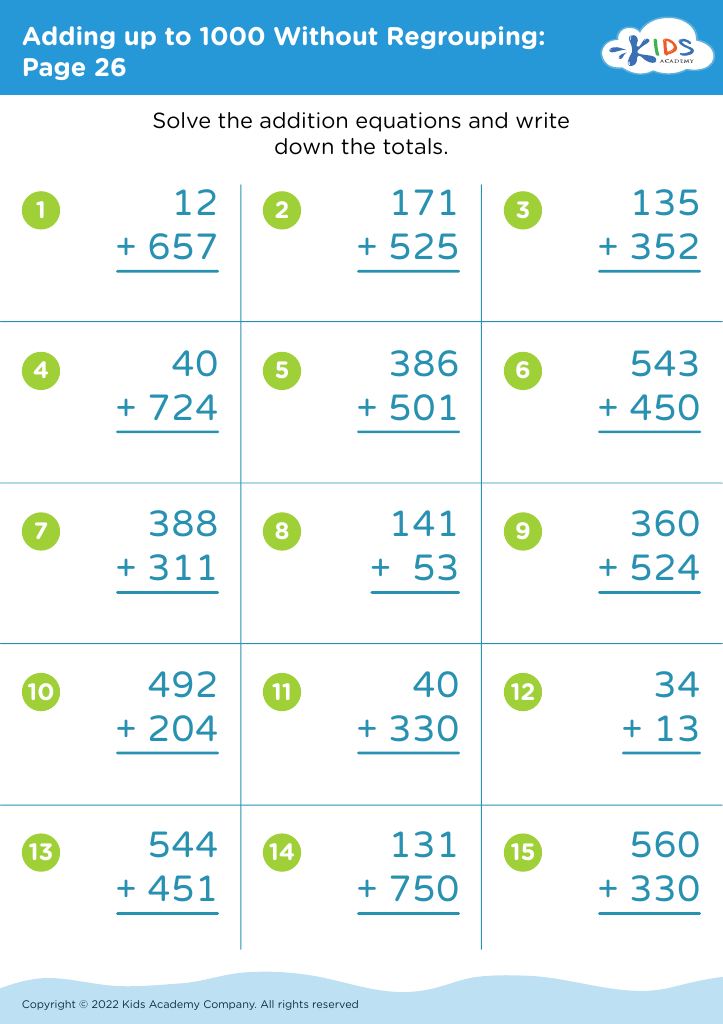








Parents and teachers play a crucial role in developing early math skills in children aged 3-8, starting with number recognition, addition, and subtraction. At this formative stage, young minds are extraordinarily receptive to learning foundational concepts that will support their future academic success. Proficiency in number recognition allows children to identify and understand numbers, which is fundamental for everyday tasks such as telling time, recognizing quantity, and understanding sequences.
Addition and subtraction skills, on the other hand, are cornerstones of arithmetic. These concepts not only prepare kids for more advanced math but also enhance their problem-solving and critical thinking abilities. Early competency in these areas cultivates a positive relationship with math, reducing anxiety and building confidence.
For parents and teachers, investing time in these basic math concepts means equipping children with tools they will use throughout their lives. Activities that promote number recognition and simple arithmetic can be fun, engaging, and easily integrated into daily routines. For instance, counting toys, identifying numbers in the environment, or playing simple math games not only reinforce learning but also encourage curiosity and the joy of discovery.
Ultimately, fostering strong math skills in early childhood sets the stage for academic achievement and practical everyday competence. It’s an investment in a child’s future that yields lifelong benefits.








