Mathematical operations Addition & Subtraction Worksheets for Ages 3-8
6 filtered results
-
From - To
Discover our engaging and educational addition and subtraction worksheets designed for children ages 3-8. With a focus on foundational mathematical skills, these printable resources from Kids Academy offer a range of activities to help young learners practice and master basic operations. Vibrantly illustrated and thoughtfully crafted, each worksheet aims to make math fun and accessible, enhancing children’s problem-solving abilities and boosting their confidence. Perfect for classroom use or at-home learning, our worksheets support early math success through hands-on practice and interactive challenges, laying a strong groundwork for future arithmetic proficiency. Explore our collection today and watch your child's math skills flourish!
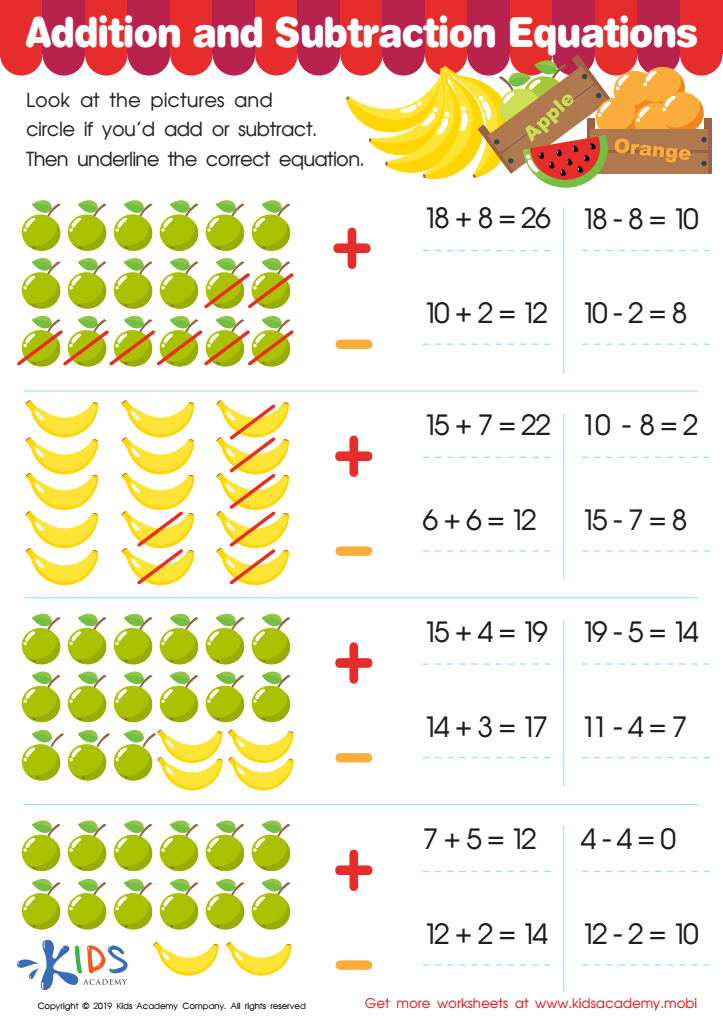
Addition and Subtraction: Equations Worksheet
 Assign to My Students
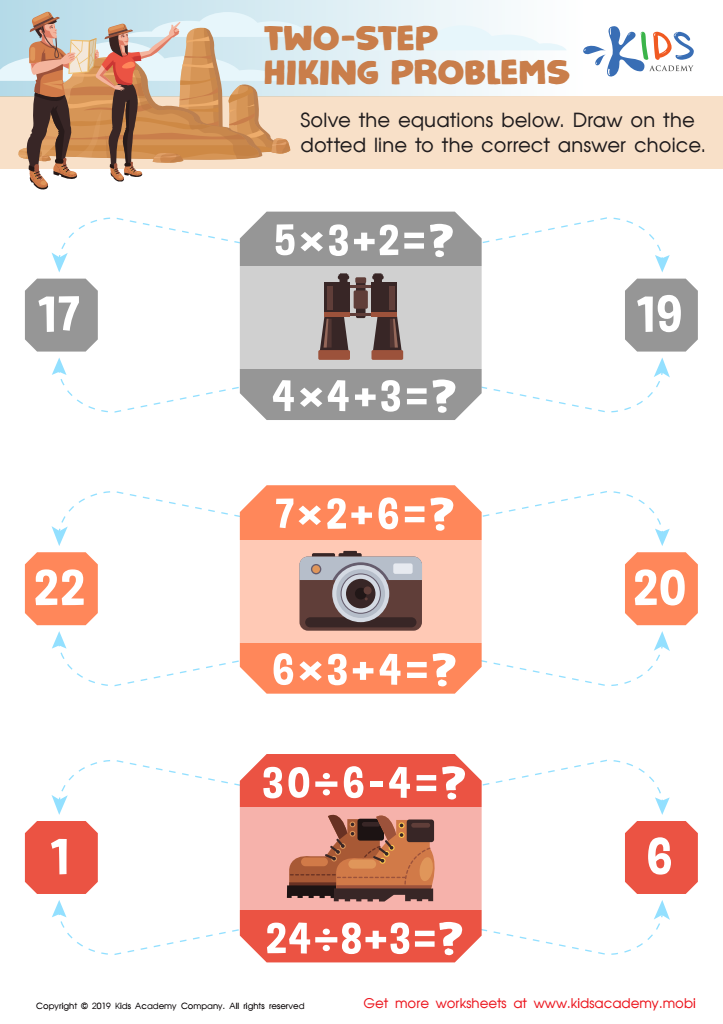
Two-Step Hiking Problems Worksheet
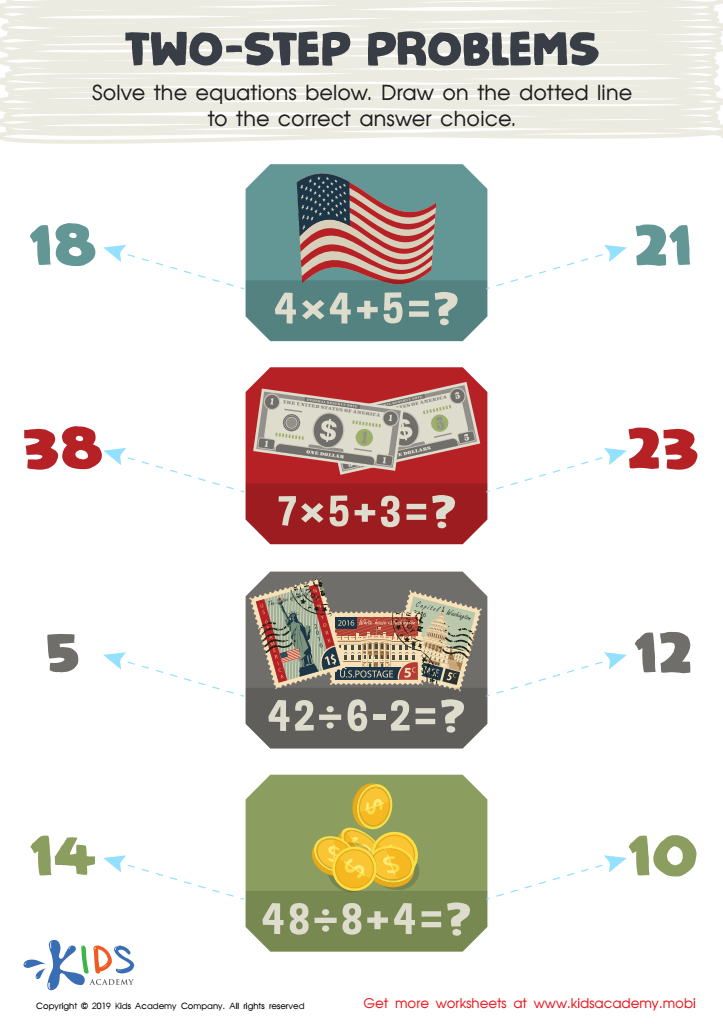
Two-Step Problems Worksheet
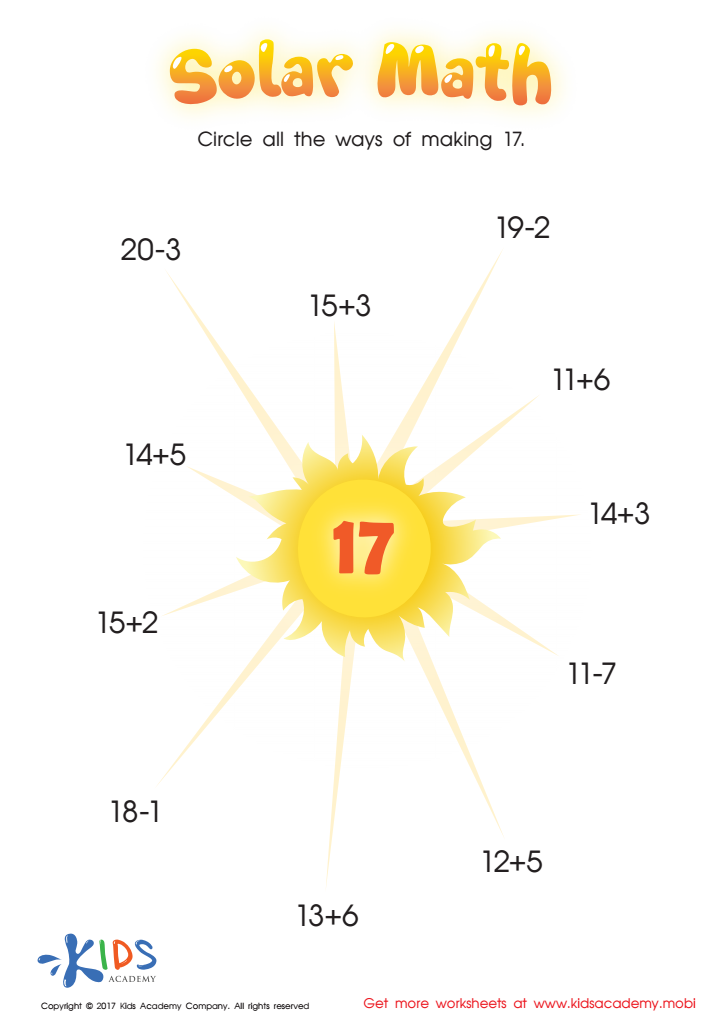
Solar Math Substraction Worksheet
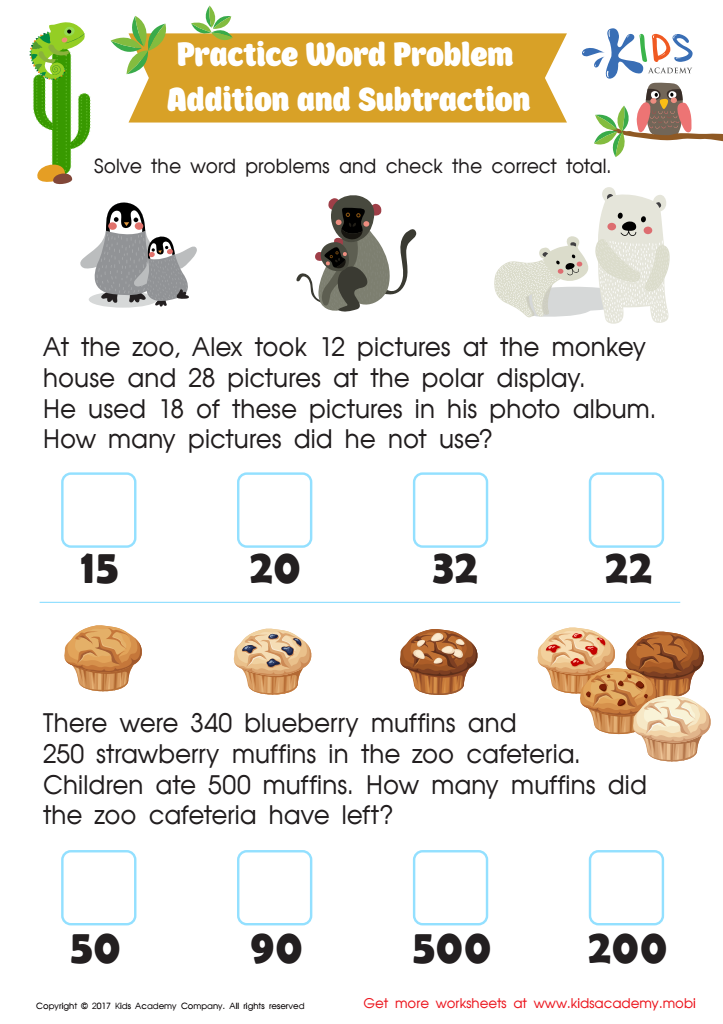
Addition and Subtraction: Word Problems Worksheet
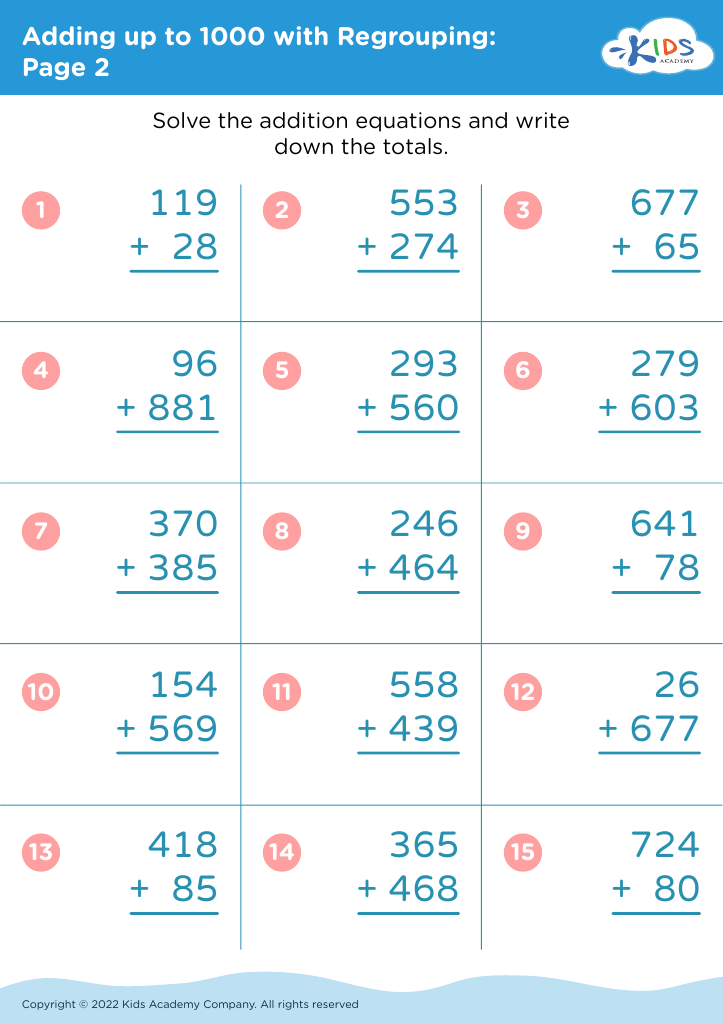








Parents and teachers should prioritize the teaching of mathematical operations such as addition and subtraction to children aged 3-8, as these skills are foundational for their overall cognitive development and future academic success. At this critical early learning stage, children begin to develop the essential skills needed for problem-solving and critical thinking. Understanding addition and subtraction helps children grasp the basic concepts of numbers and the relationships between them, which underpins more complex math topics that they will encounter in later years.
Engaging young learners in addition and subtraction activities encourages logical reasoning and enhances their ability to tackle everyday situations involving numbers, such as counting objects or dividing things fairly. Establishing competence in these areas also builds confidence and fosters a positive attitude towards learning mathematics, which can have a long-term impact on their educational trajectory.
Moreover, introducing these skills through interactive and playful approaches can also improve children's memory, attention span, and ability to follow instructions—skills invaluable across all subjects. For parents and educators, nurturing these abilities from a young age harnesses the natural curiosity of children, setting a strong mathematical foundation that will benefit them academically and in real-life applications as they grow.








