Numeracy development Addition & Subtraction Worksheets for Ages 3-8
3 filtered results
-
From - To
Welcome to our Numeracy Development Addition & Subtraction Worksheets for Ages 3-8! Designed to foster early math skills, these engaging worksheets introduce young learners to essential concepts of addition and subtraction. Perfect for children aged 3 to 8, our resources feature vibrant designs and captivating activities that make learning fun and interactive. These worksheets aim to build a strong foundation in numeracy, enhance problem-solving abilities, and boost confidence. With printable options available, educators and parents can easily incorporate these materials into at-home or classroom learning. Start your child's mathematical journey today with our diverse collection of thoughtfully crafted worksheets!
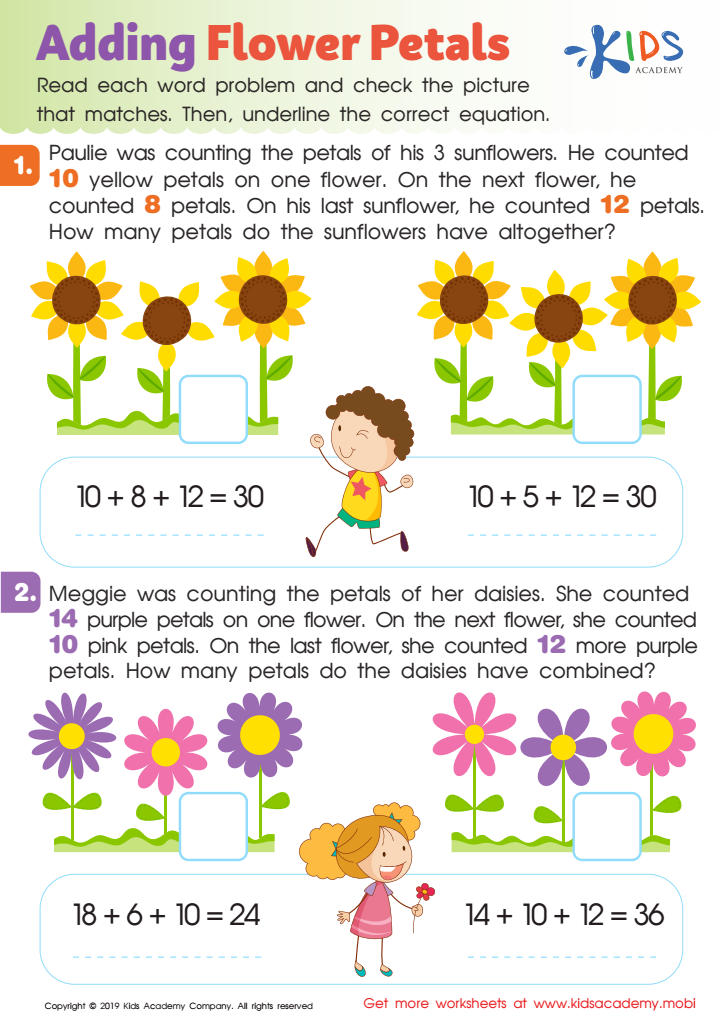
Adding Flower Petals Worksheet
 Assign to My Students
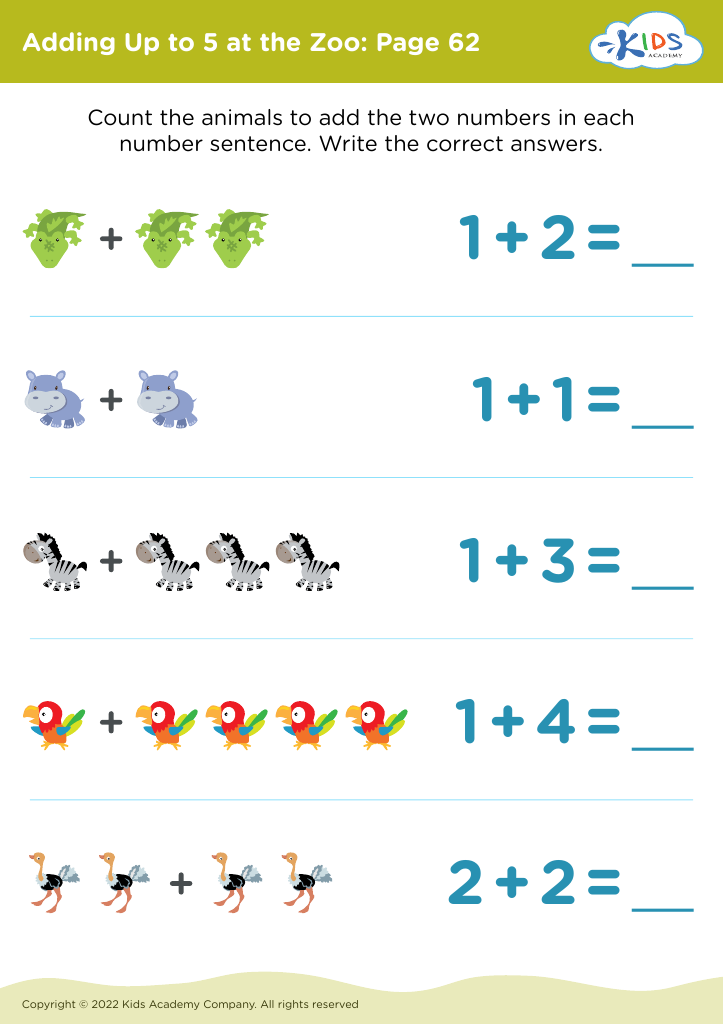
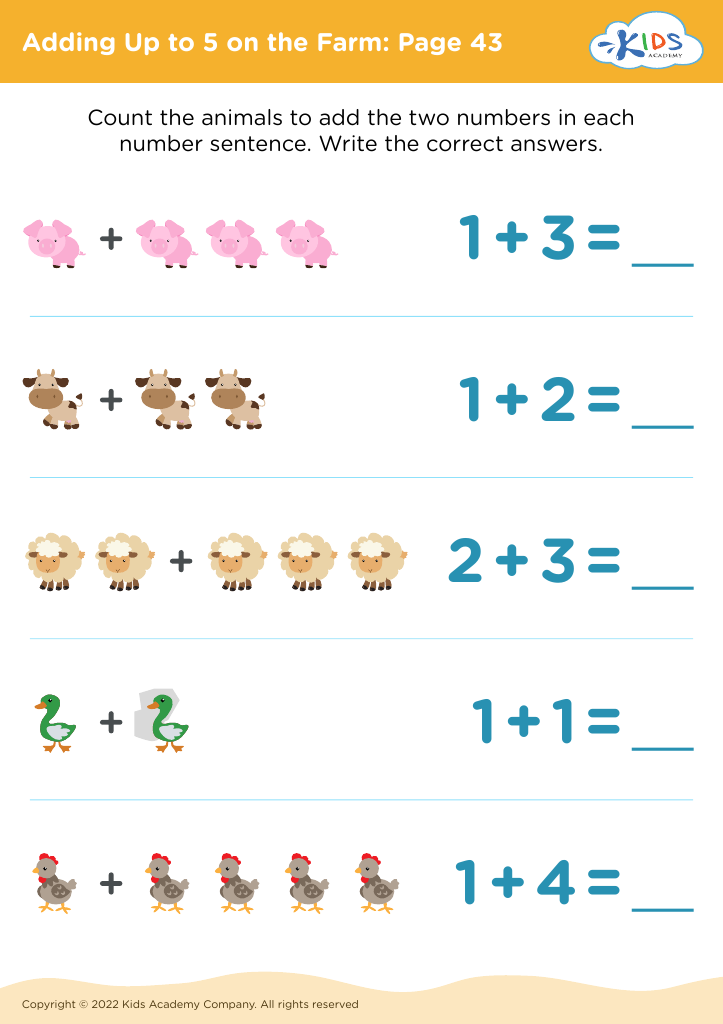








Numeracy development, particularly in addition and subtraction, is crucial for children aged 3-8 as it lays the foundation for future mathematical understanding and problem-solving skills. Early mastery of these concepts promotes cognitive development, enhancing children’s ability to think logically and critically as they grow.
For parents and teachers, fostering strong numerical skills promotes confidence and a positive attitude towards math, which is essential given that negative perceptions can hinder a child's willingness to engage with the subject in the future. Early experiences in learning addition and subtraction help children understand fundamental math concepts such as quantity, one-to-one correspondence, and number relationships, which are necessary for more complex math as they progress in school.
Additionally, incorporating numeracy into daily activities—such as counting objects during play or sharing snacks—makes learning relevant and enjoyable. It also encourages collaboration and communication, fostering social skills. Ultimately, emphasizing addition and subtraction during these formative years not only ensures that children are well-prepared for academic challenges but also equips them with essential life skills, such as budgeting and problem-solving, beyond the classroom. Engaging in numeracy development is an investment in their overall cognitive growth and academic success.








