Understanding symmetry Addition & Subtraction Worksheets for Ages 3-8
25 filtered results
-
From - To
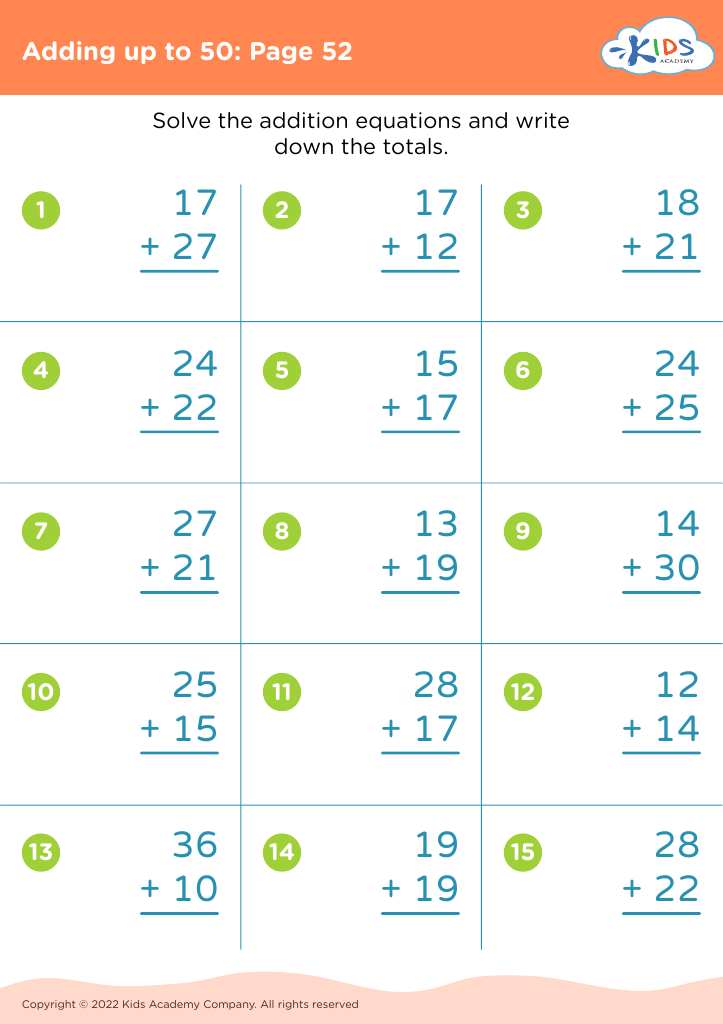
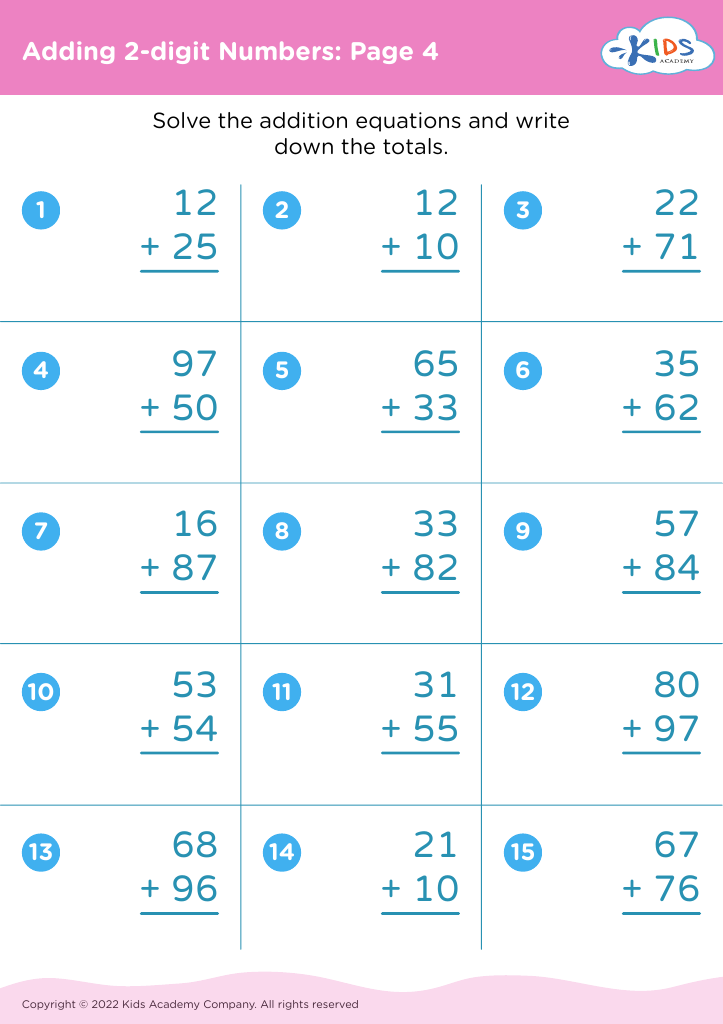
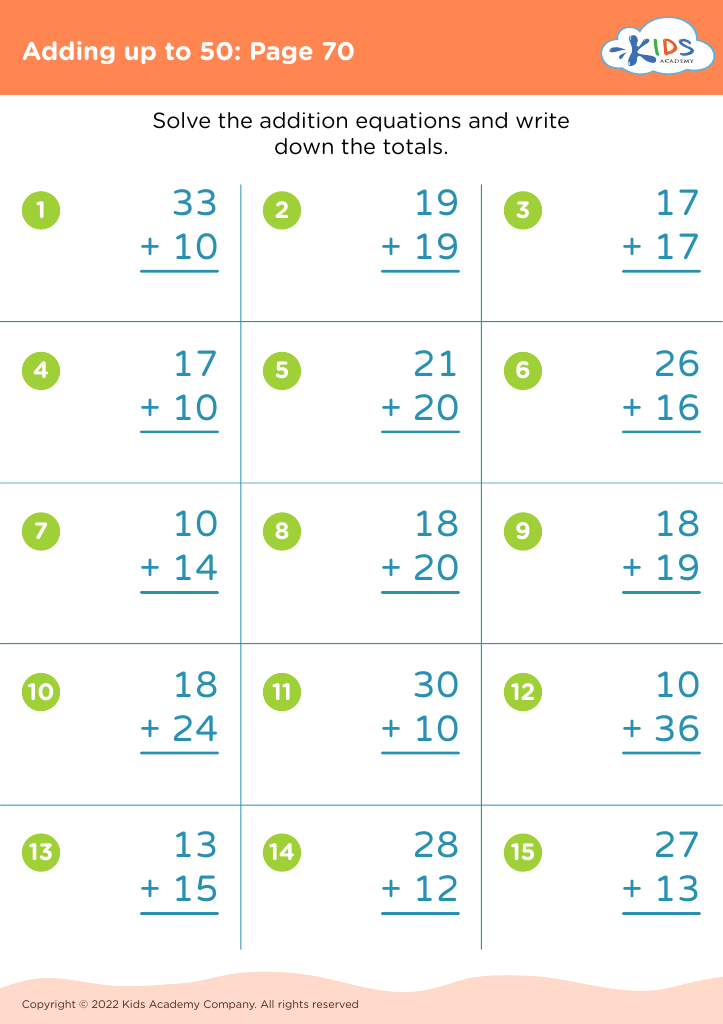
Discover our engaging "Understanding Symmetry Addition & Subtraction Worksheets" designed specifically for children aged 3-8. These interactive resources introduce young learners to the concept of symmetry while reinforcing essential math skills like addition and subtraction. Through fun activities, kids will explore symmetrical shapes, identify patterns, and practice math problems that promote both logical thinking and creativity. Each worksheet is tailored to different skill levels, ensuring appropriate challenges for every child. Join us in making math enjoyable and meaningful by helping students build a solid foundation in mathematics and spatial reasoning with these beautifully designed worksheets!
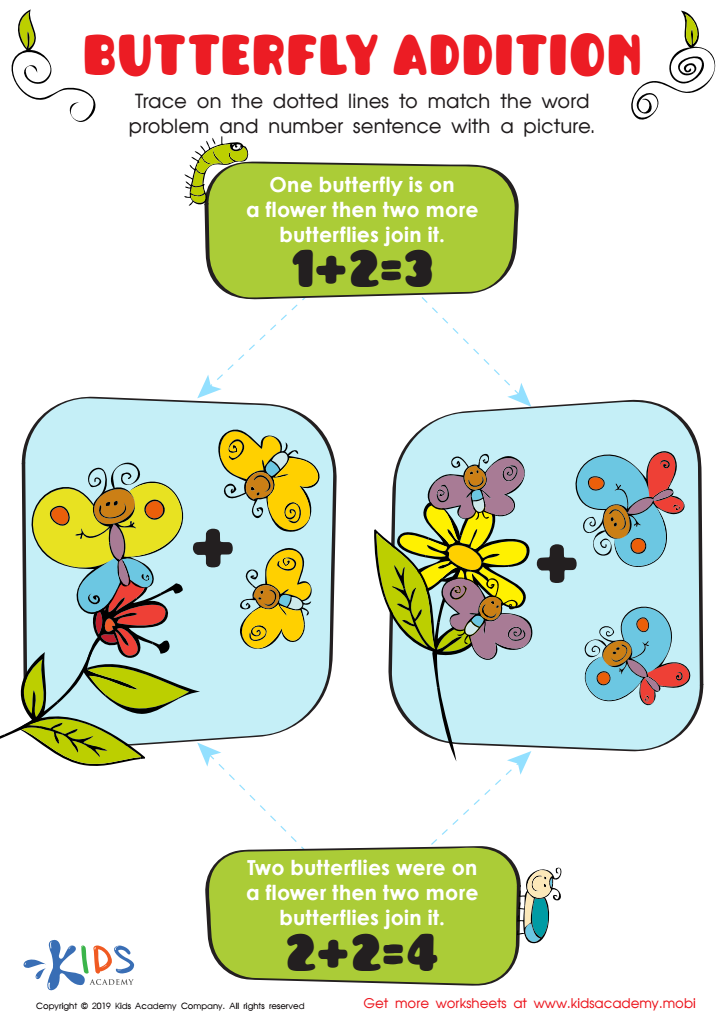
Butterfly Addition Worksheet
 Assign to My Students
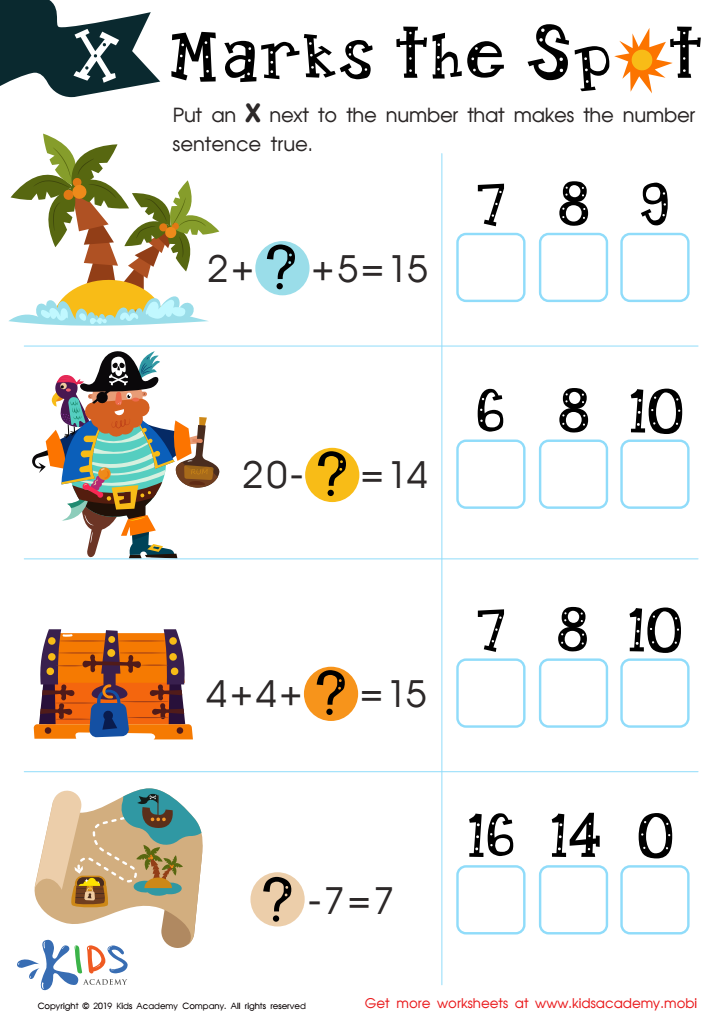
X Marks the Spot Worksheet








Understanding symmetry, addition, and subtraction is crucial for children aged 3-8 as it lays the foundation for critical thinking and problem-solving skills. At this developmental stage, children are naturally curious, and engaging them in concepts like symmetry helps to stimulate their spatial awareness, imagination, and creativity. Learning to recognize symmetrical patterns in the world around them fosters observation skills that are valuable in various subjects, from math to art.
Moreover, mastering basic addition and subtraction is vital for young learners as it forms the core of their mathematical understanding. These foundational skills not only enhance cognitive development but also build confidence in problem-solving, making mathematics less intimidating as they progress in school. By grasping the concepts of addition and subtraction, children can develop logical reasoning and learn how to approach real-life scenarios involving numbers.
Parents and teachers should emphasize these areas not only for academic success but also to inspire a love for learning. Engaging activities involving symmetry, such as art projects, combined with fun math games that use addition and subtraction, can elevate children’s enthusiasm and improve retention of these essential skills. Cultivating a strong mathematical understanding at an early age sets the stage for future learning and success.








