Basic arithmetic understanding Addition Worksheets for Ages 3-8
4 filtered results
-
From - To
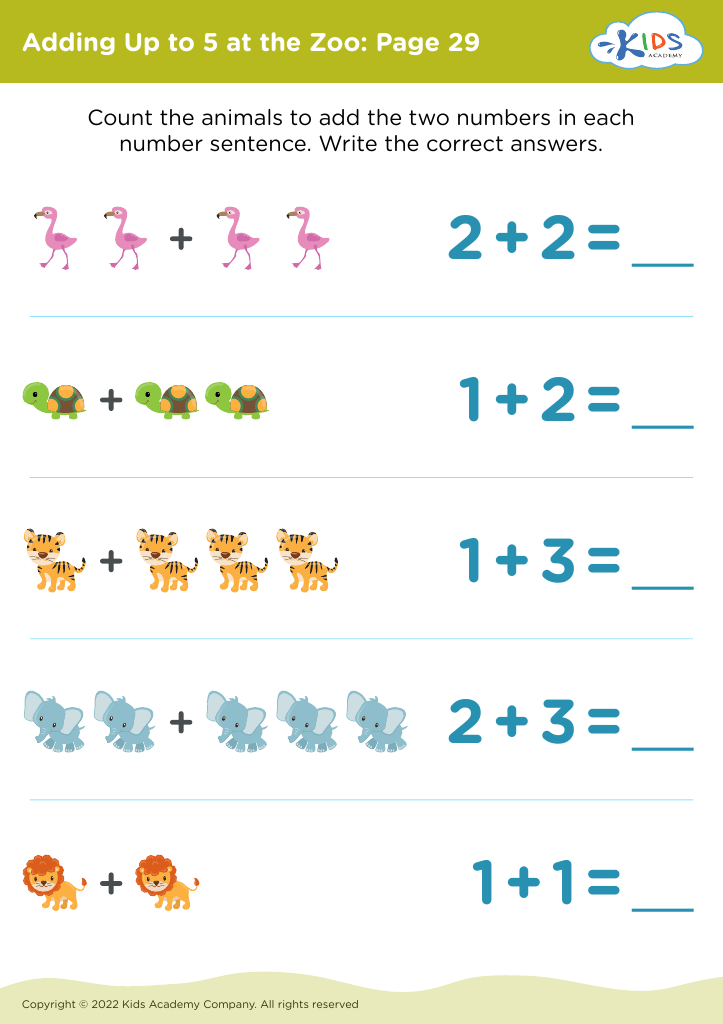
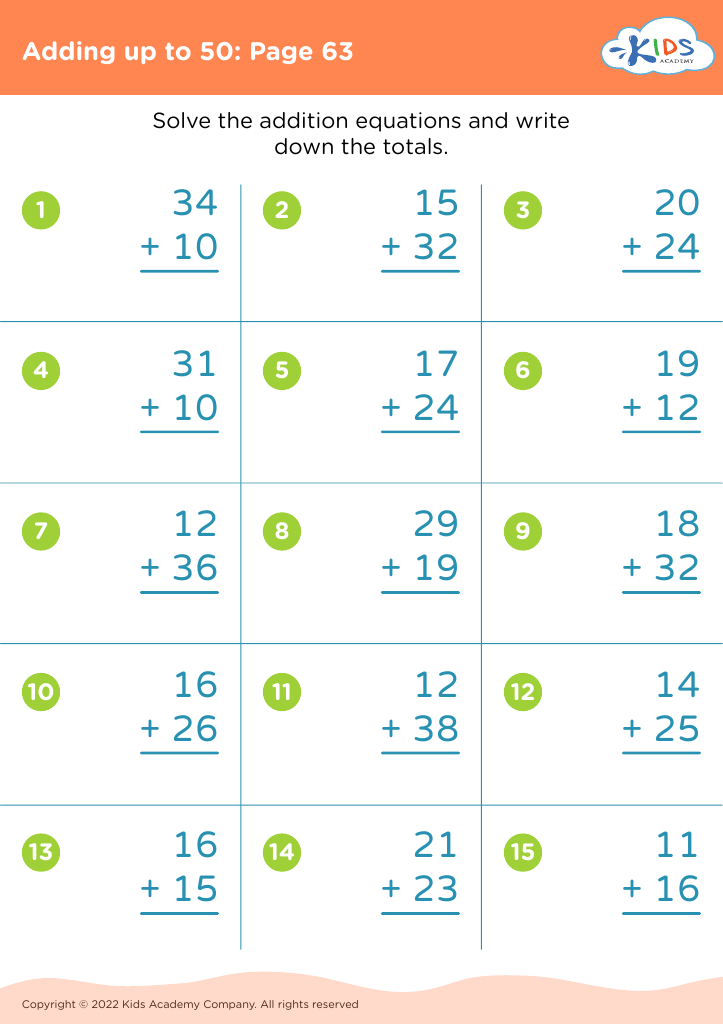
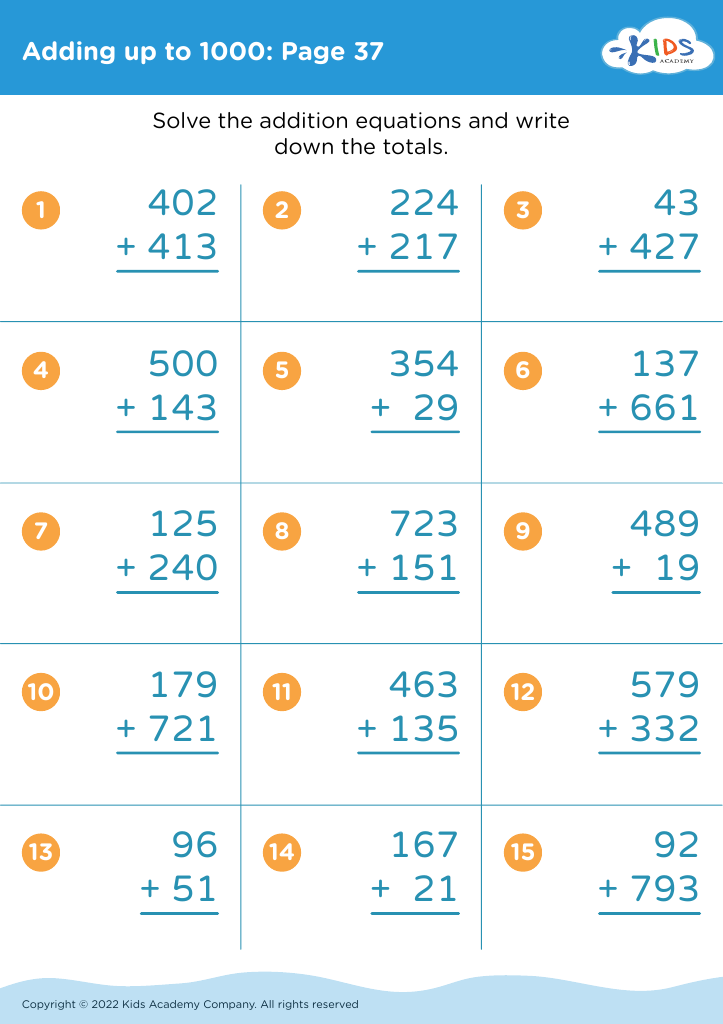
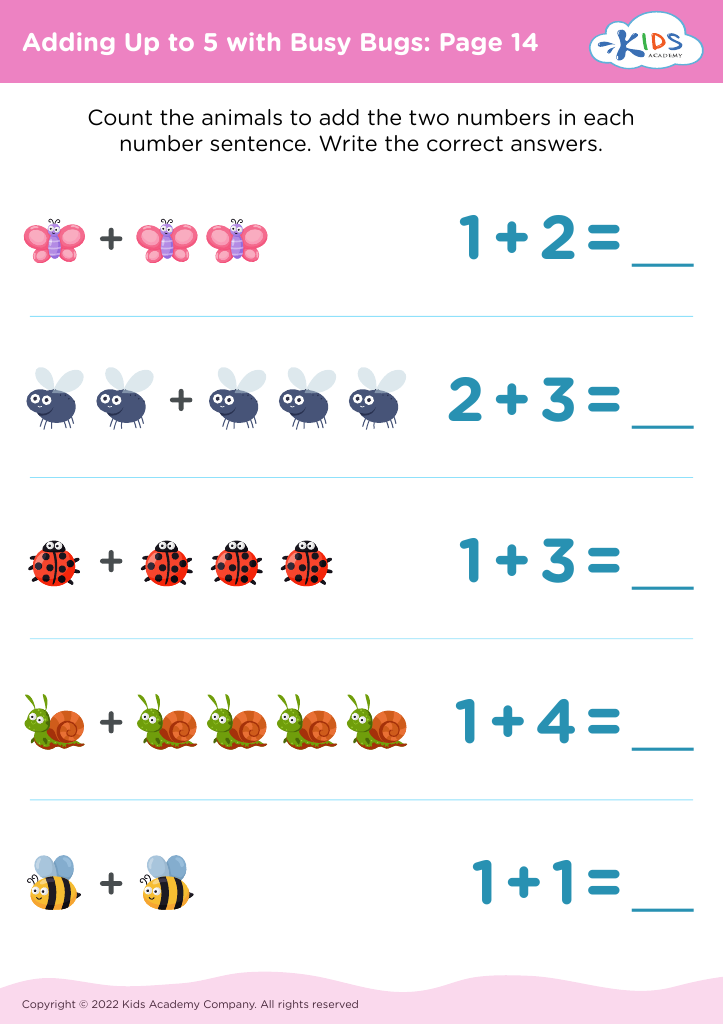
Foster early math skills with our "Basic Arithmetic Understanding Addition Worksheets for Ages 3-8." These engaging and colorful worksheets are designed to help young learners grasp foundational addition concepts. Tailored for children aged 3 to 8, our resources include fun exercises that progressively challenge their skills, from simple sums to more complex problems. Each worksheet combines learning with play, using familiar contexts like counting objects and solving pictorial puzzles. Perfect for at-home practice or classroom reinforcement, our addition worksheets inspire confidence and a love for math in young minds.Transform arithmetic learning into an enjoyable adventure today!








Understanding basic arithmetic, particularly addition, is essential for children ages 3-8, as it forms a cornerstone for their future mathematical learning and daily life skills. At this critical developmental stage, children’s brains are exceptionally receptive to learning foundational concepts. Grasping the principles of addition lays the groundwork for more complex mathematics topics, such as subtraction, multiplication, and division, utilized throughout their entire education journey and life.
Parents and teachers should recognize the importance of early addition because it promotes cognitive development and problem-solving skills. Engaging children through simple addition games and everyday counting exercises can enhance memory, attention, and logical reasoning. Moreover, addition skills support higher-level thinking processes and the ability to follow multi-step instructions, which are beneficial across all subjects.
Furthermore, early mastery of addition helps build confidence and reduces math-related anxiety. When children feel competent in their math abilities, they're more likely to adopt a positive attitude towards learning and are less hesitant to tackle new challenges.
In practice, integrating addition into fun, real-life activities—like counting toys or measuring ingredients—can make learning both meaningful and enjoyable. An early grasp of addition primes children for academic success and practical problem-solving skills that are invaluable throughout their lives.








