Color matching Addition Worksheets for Ages 3-8
3 filtered results
-
From - To
Discover an engaging way for ages 3-8 to learn addition with our Color Matching Addition Worksheets! Designed to make math fun, these interactive worksheets combine colorful visuals with simple addition problems. Children will enhance their counting and color recognition skills as they match vibrant colors to the correct numbers. Perfect for early learners, these worksheets support developing fine motor skills and cognitive abilities in an enjoyable context. Parents and educators can use these resources to create enjoyable learning experiences, ensuring kids grasp essential math concepts while having fun. Foster early math skills in a visually stimulating environment and watch your child thrive!
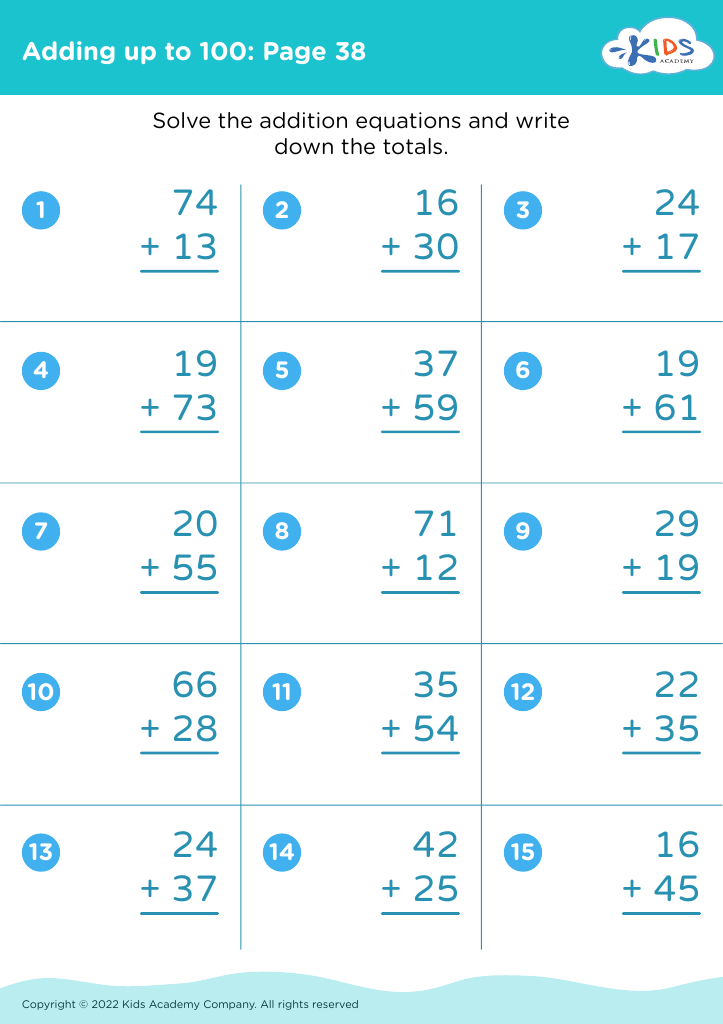
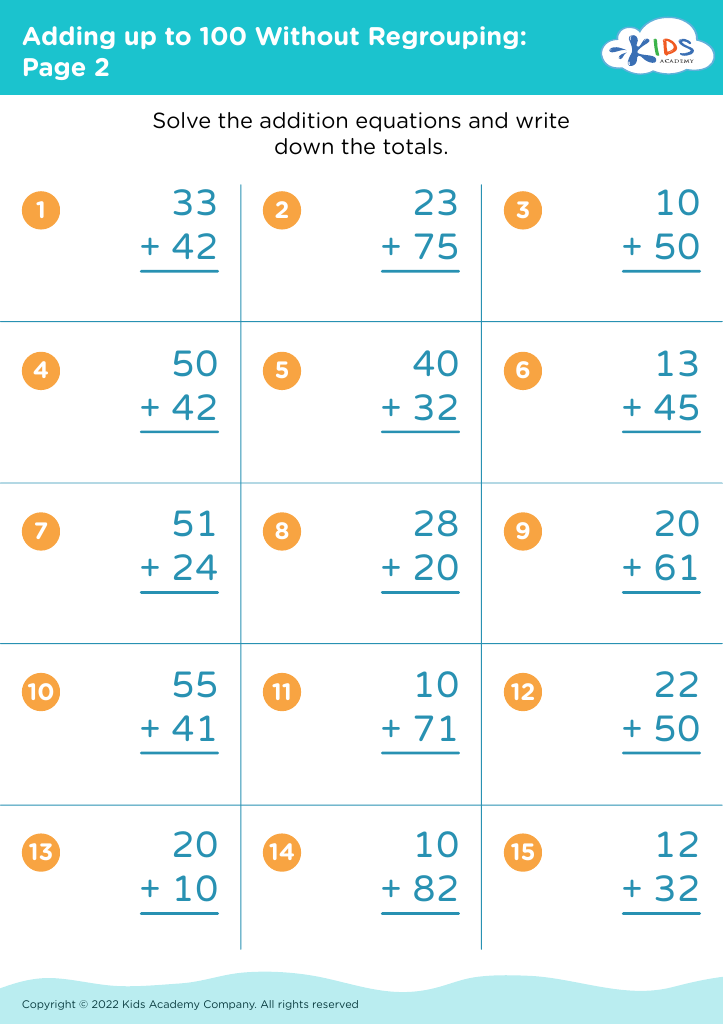
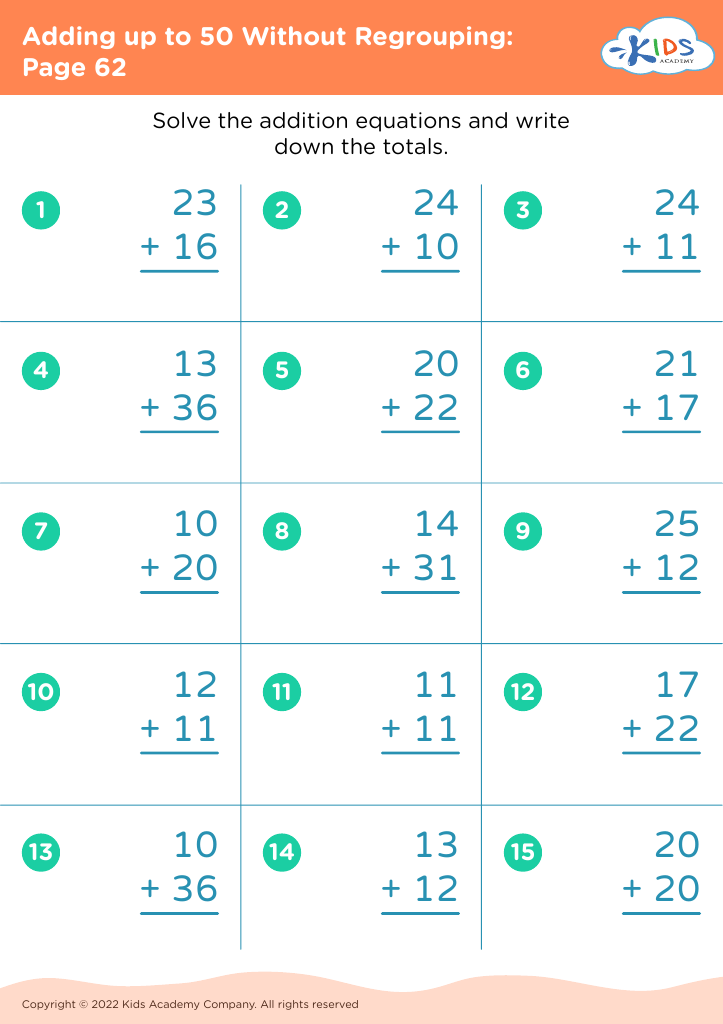








Color matching addition activities are essential for children aged 3-8 as they provide a multifaceted approach to learning that enhances both mathematical skills and cognitive development. First, these activities make learning engaging and fun by incorporating vibrant colors that capture children's attention. This enjoyment helps foster a positive attitude toward mathematics, setting the stage for future academic success.
Moreover, color matching allows children to develop early numeracy skills, such as counting, number recognition, and basic addition. By associating numbers with colors, children can visually group and categorize, which aids in understanding mathematical concepts more effectively. This hands-on approach encourages active learning, allowing children to experiment with quantities and develop problem-solving abilities.
Additionally, color matching activities promote fine motor skills as children manipulate objects and components involved in the game. This combination of learning styles—visual, auditory, and kinesthetic—caters to different learners, making mathematics accessible to all.
In summary, incorporating color matching addition in early education supports essential skills in a delightful and interactive way, leading to a strong foundation in mathematics and a lifelong love for learning. Therefore, both parents and teachers should prioritize these activities in their teaching strategies.








