Enhance counting skills Addition Worksheets for Ages 3-8
13 filtered results
-
From - To
Boost your child’s math abilities with our "Enhance Counting Skills Addition Worksheets" designed for ages 3-8. These worksheets seamlessly combine play with learning, guiding young minds through fundamental addition concepts. Engaging visuals and interactive tasks keep children motivated, while strategically structured exercises enhance counting proficiency and arithmetic foundations. Tailored to different skill levels, the exercises foster progressive learning, building confidence with each completed activity. Ideal for both classroom and at-home practice, these printable worksheets support hands-on learning and ensure a solid grasp of early math skills. Elevate your child’s counting skills effortlessly and make learning math an enjoyable journey.
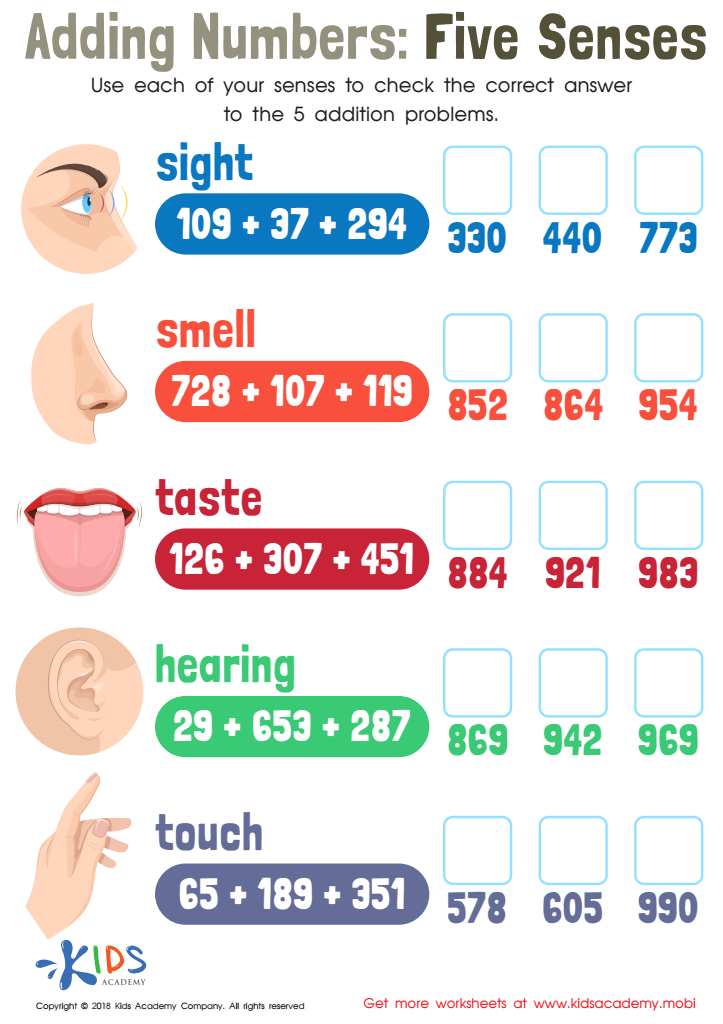
Adding Numbers: Five Senses Worksheet
 Assign to My Students
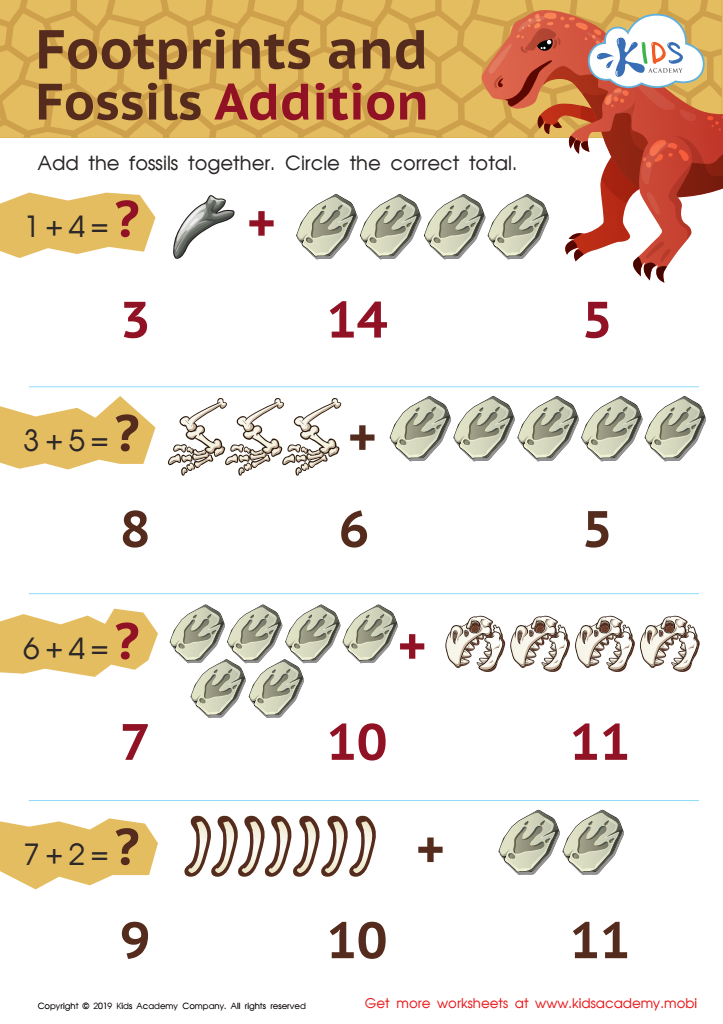
Footprints and Fossils Addition Worksheet
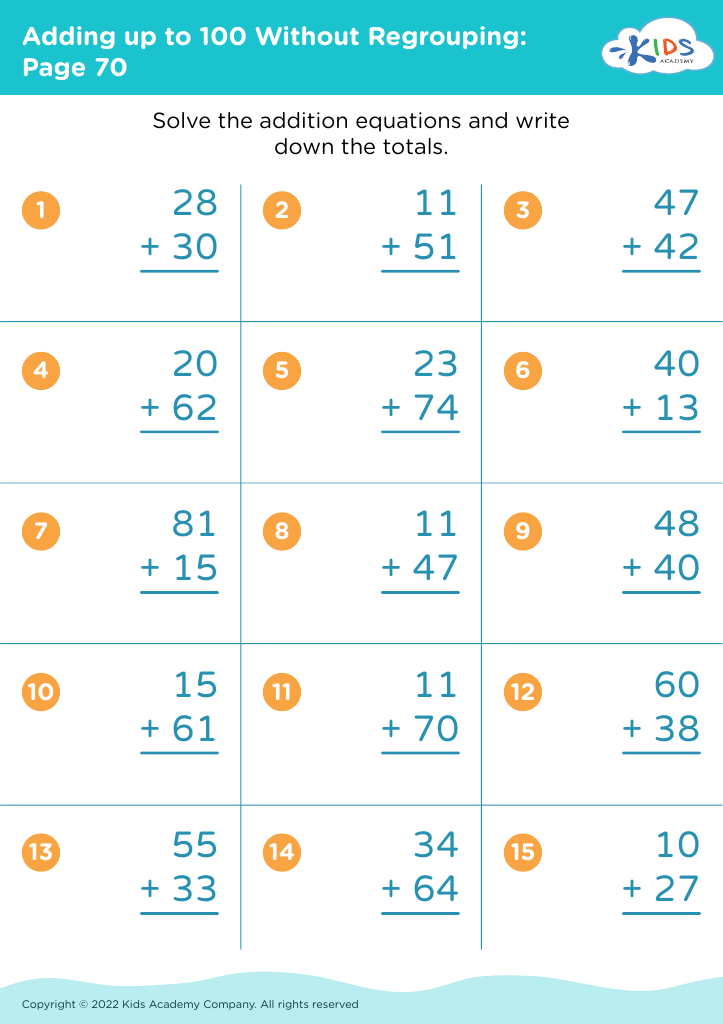








Parents and teachers should prioritise enhancing counting skills and addition for children aged 3 to 8 because these foundational skills are crucial for future academic success and everyday life proficiency. Strong counting skills help children understand the concepts of order, quantity, and the fundamental principle that numbers represent specific amounts. This comprehension is the bedrock for more complex mathematical concepts such as subtraction, multiplication, and division.
Moreover, early proficiency in addition enables young learners to engage with and solve real-life problems such as sharing evenly, dealing with money, and even in scenarios involving time management. By mastering addition, children build confidence in their problem-solving abilities, which fosters a positive attitude towards mathematics and learning in general.
Both parents and teachers play critical roles in nurturing these skills through engaging and interactive activities that make learning fun and meaningful. Activities can range from simple counting games to more formal exercises using educational tools like counting blocks or number lines. Additionally, when parents and teachers focus on these skills early on, they help identify and address any learning difficulties a child may have, ensuring that support and intervention can occur as needed. Ultimately, investing in these early math skills sets the stage for lifelong learning and academic achievement.








