Improve reading skills Addition Worksheets for Ages 3-8 - Page 2
29 filtered results
-
From - To
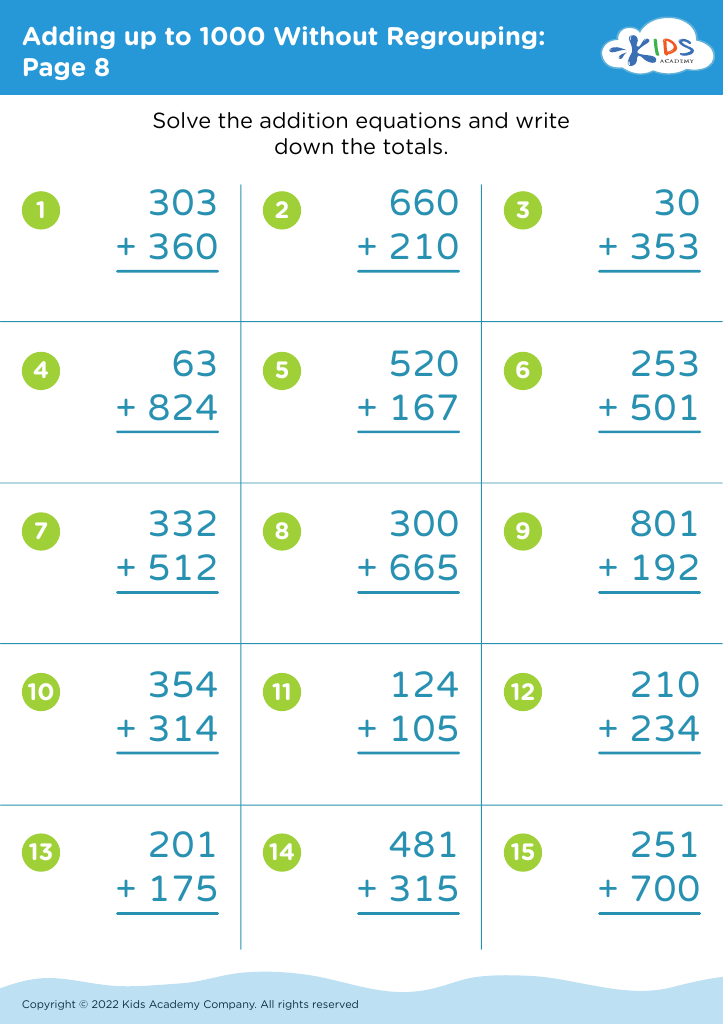
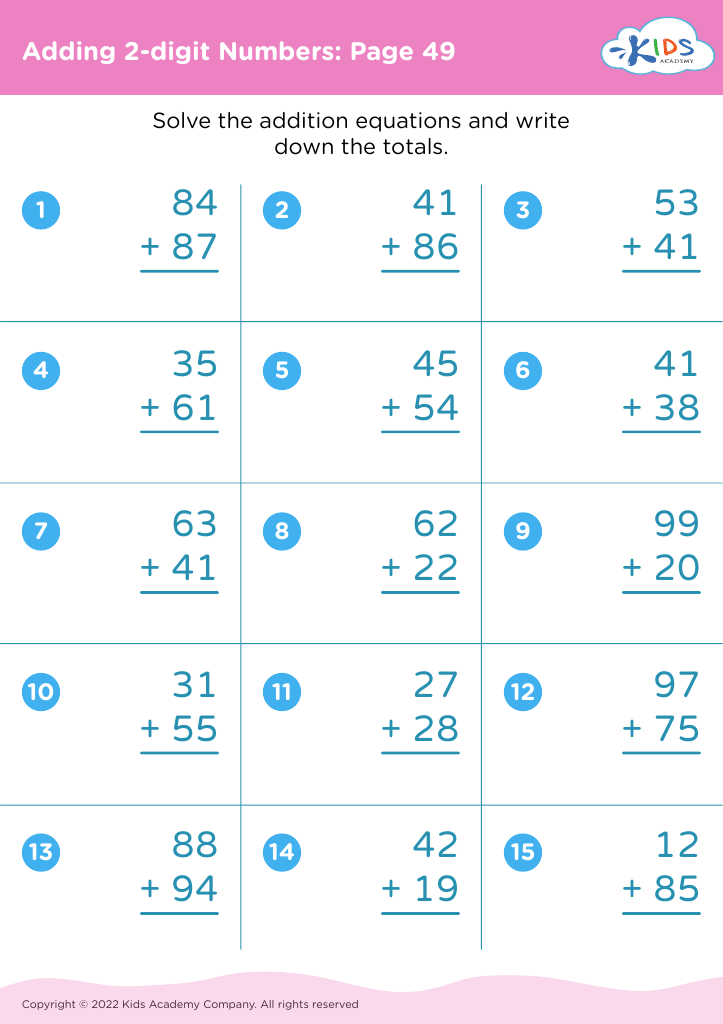
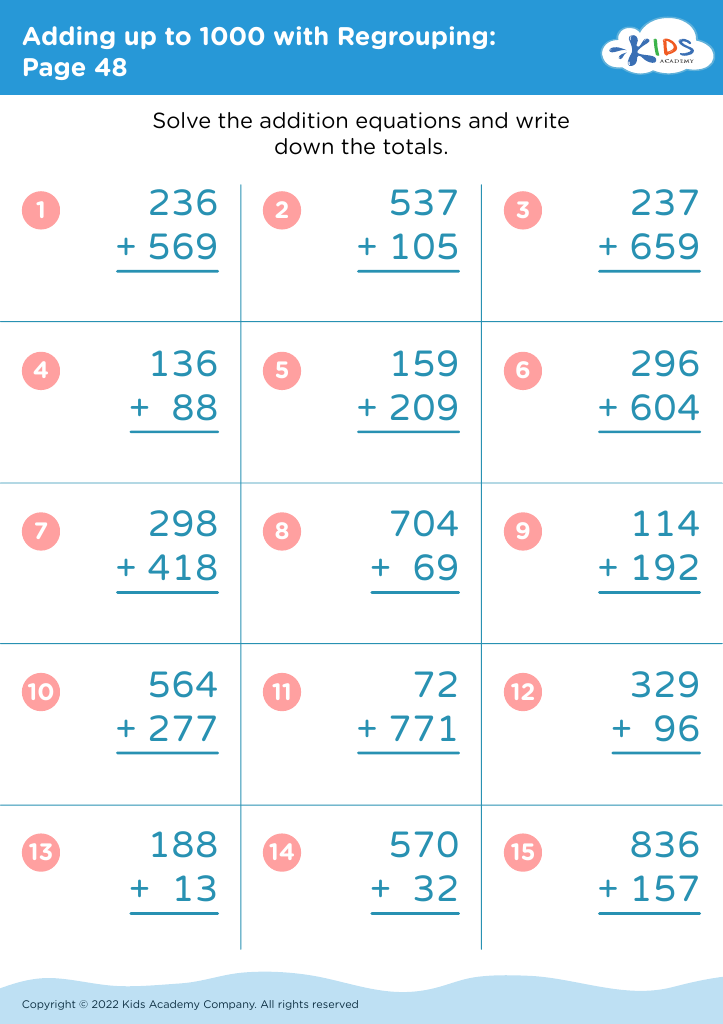
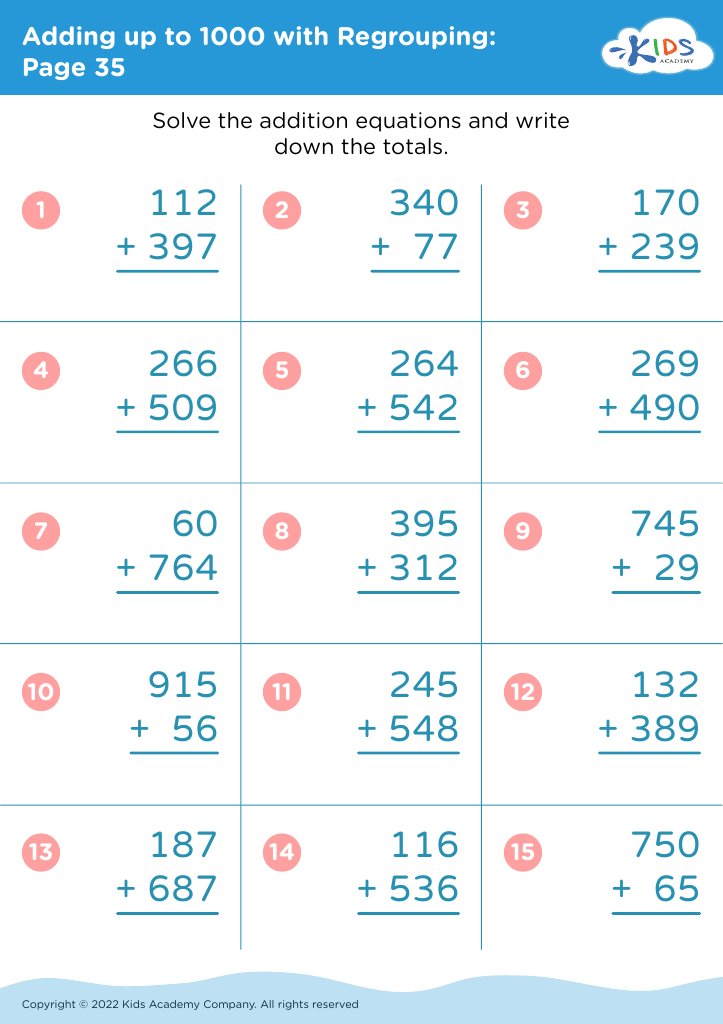
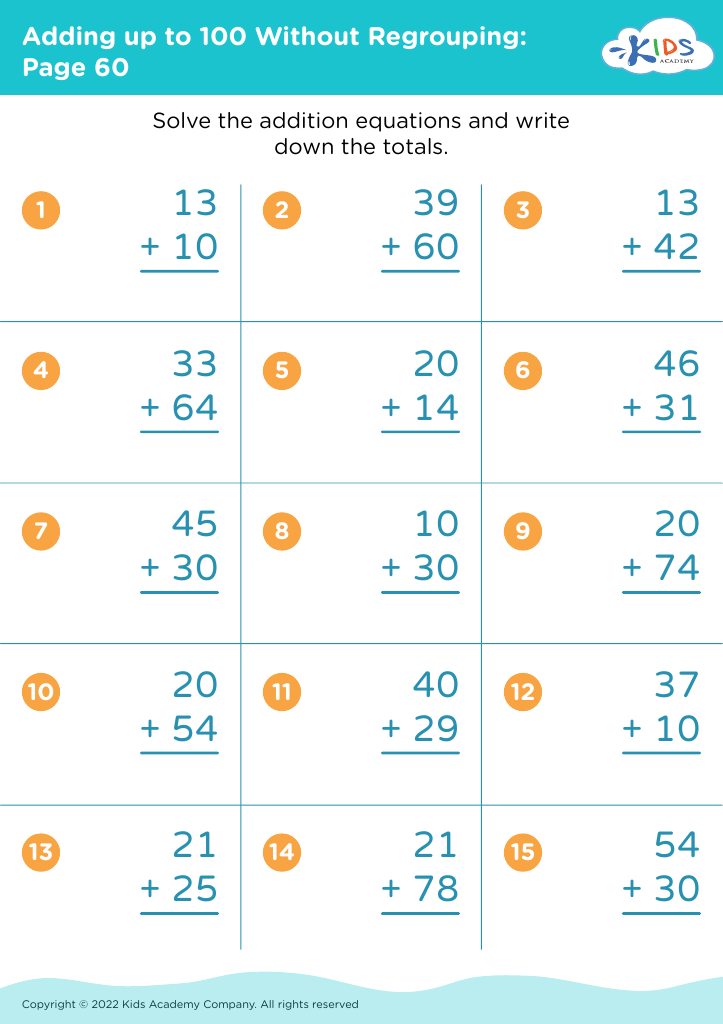








Improving reading skills and the understanding of addition for children ages 3-8 is crucial for their overall development and future success. Early literacy and numeracy provide a strong foundation for lifelong learning. Research shows that children who develop strong reading skills at an early age tend to perform better academically throughout their school years. This not only enhances their vocabulary and comprehension but also boosts their confidence as learners.
Additionally, introducing addition concepts early helps children develop critical thinking and problem-solving skills. Math is not just about numbers; it encourages logical reasoning and analytical thinking. When combined with reading, children better understand instructions, follow narratives, and engage in discussions that enhance their cognitive abilities.
Parents and teachers play a vital role in nurturing these skills. Interactive reading sessions and playful math activities can make learning enjoyable and effective. When children see their caregivers and educators valuing reading and math, they are more likely to adopt positive attitudes toward these subjects. By prioritizing improvement in these areas, parents and teachers set the stage for academic success and a love for learning, navigating children toward brighter futures. Hence, it’s imperative to foster these skills from a young age.








