Shape Recognition Comparison Worksheets for Ages 3-8
3 filtered results
-
From - To
Enhance your child's understanding of shapes with our engaging Shape Recognition Comparison Worksheets, designed specifically for ages 3-8. These interactive worksheets aid in developing essential math skills through fun comparisons of various shapes, helping young learners recognize differences and similarities. Perfect for home or classroom use, each worksheet encourages critical thinking and fine motor skills while fostering a love for learning. Whether drawing, coloring, or matching shapes, kids will enjoy hands-on activities that make learning exciting. Start your child's journey into shape recognition today and watch their confidence grow as they explore and compare their newfound knowledge!
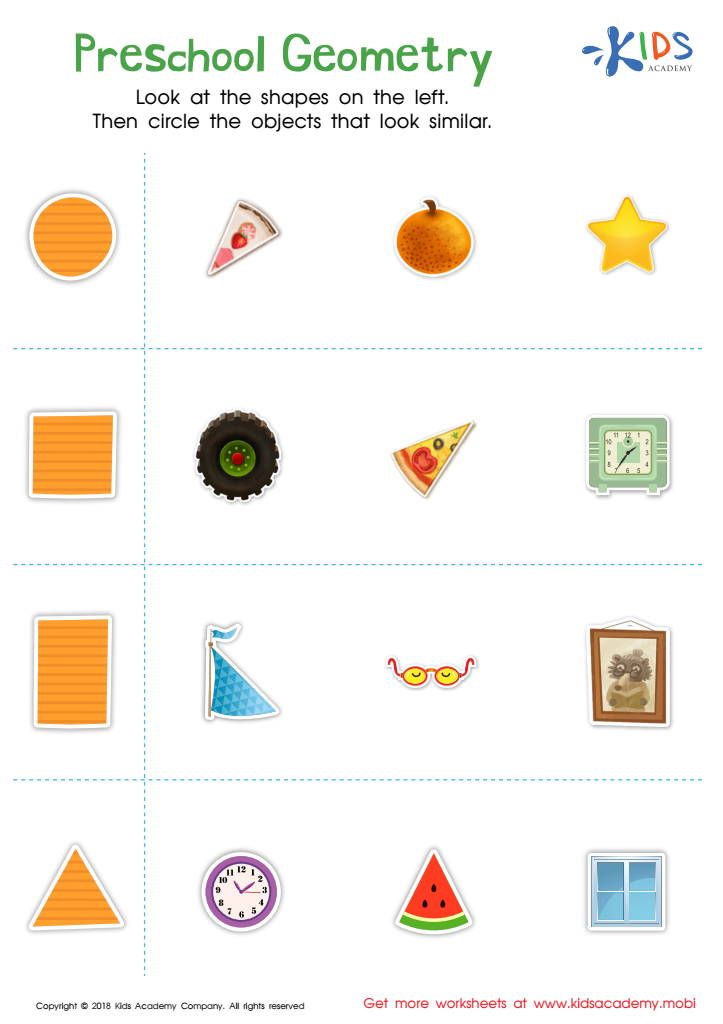
Preschool Geometry Worksheet
 Assign to My Students
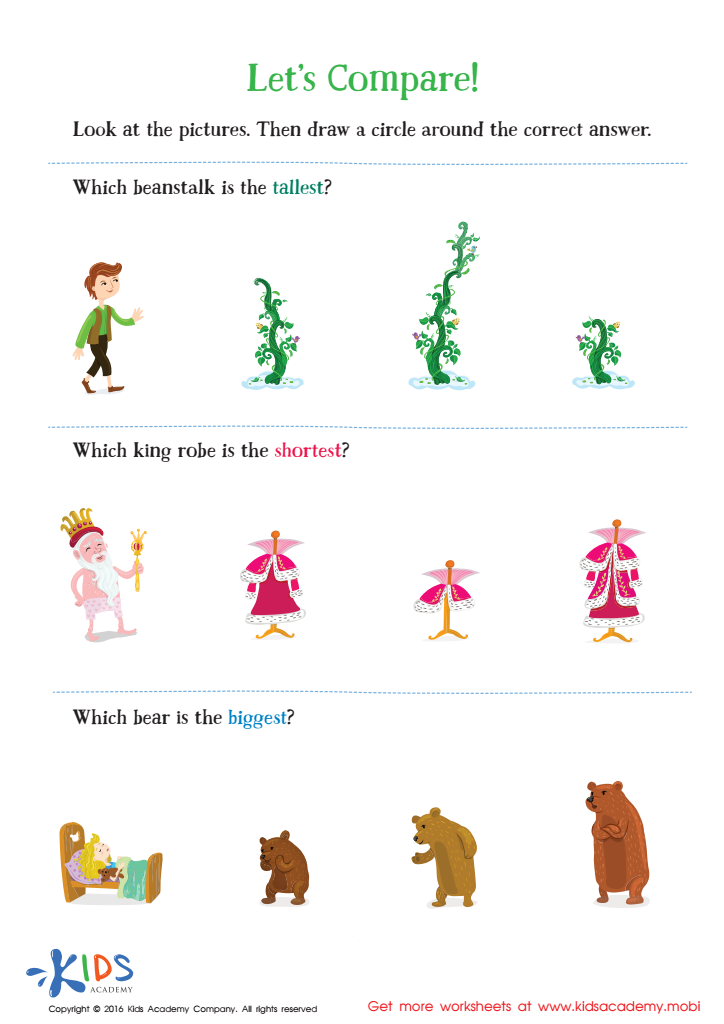
Fairy Tale Worksheet: Let's Compare
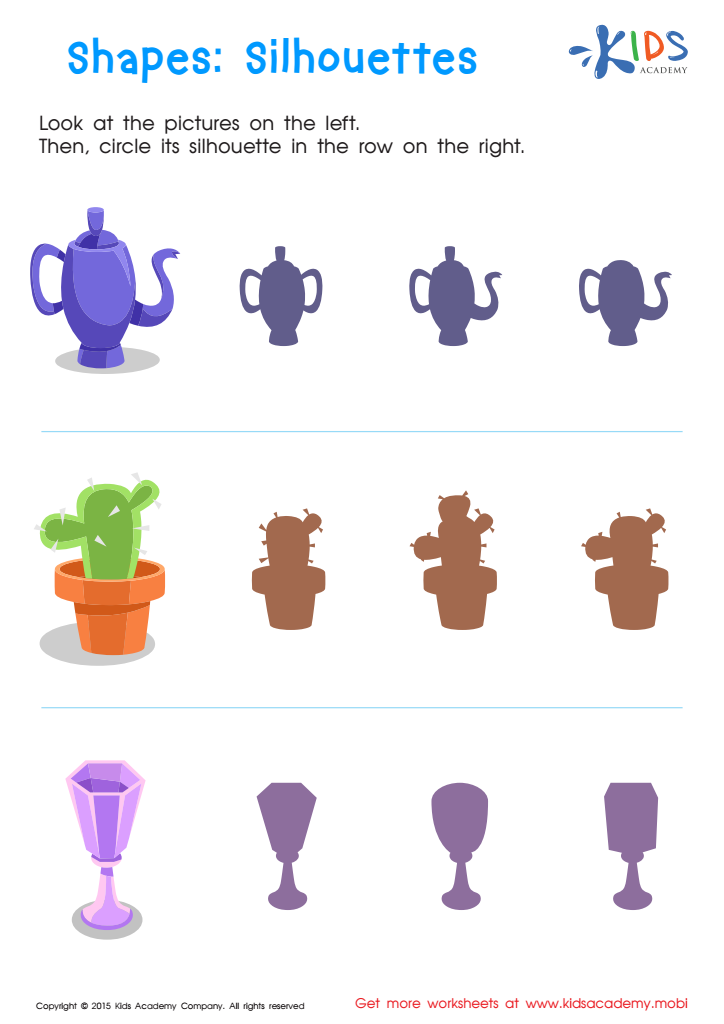
Silhouettes – Shapes Worksheet








Shape recognition comparison is an essential developmental milestone for children aged 3-8, as it lays the foundation for critical cognitive skills and problem-solving abilities. At this age, children are naturally curious and eager to explore the world around them. Understanding shapes helps them make sense of their environment and enhances their spatial awareness.
Parents and teachers should care about this concept because it promotes mathematical thinking. Identifying and comparing shapes introduces children to classifications, patterns, and relationships—all vital components of mathematical proficiency. As children learn to recognize different shapes, they also develop their observational skills and critical thinking, which are crucial for further learning in subjects like geometry and science.
Additionally, shape recognition supports language development; as children describe and discuss shapes, they expand their vocabulary and communication skills. It also fosters creativity and imagination; through activities like art and building, children can manipulate shapes, encouraging innovative thinking.
Lastly, strong early shape recognition skills correlate with success in later academic areas. By prioritizing shape recognition comparisons, parents and teachers can provide children with the tools they need to develop confidence, succeed in school, and thrive in their cognitive and social-emotional development.








