Counting skills Money Worksheets for Ages 3-8
5 filtered results
-
From - To
Welcome to our Counting Skills Money Worksheets, designed specifically for children ages 3-8! These worksheets provide an engaging way for young learners to explore the fundamentals of counting coins and understanding money. Each printable worksheet is tailored to develop counting skills through vibrant visuals and interactive activities, making learning fun and effective. Children will practice identifying, counting, and making change using various denominations, boosting their confidence in handling money. Ideal for classrooms or home learning, our resources ensure that your child builds a strong foundation in math. Start their journey to financial literacy today with our exciting counting money worksheets!
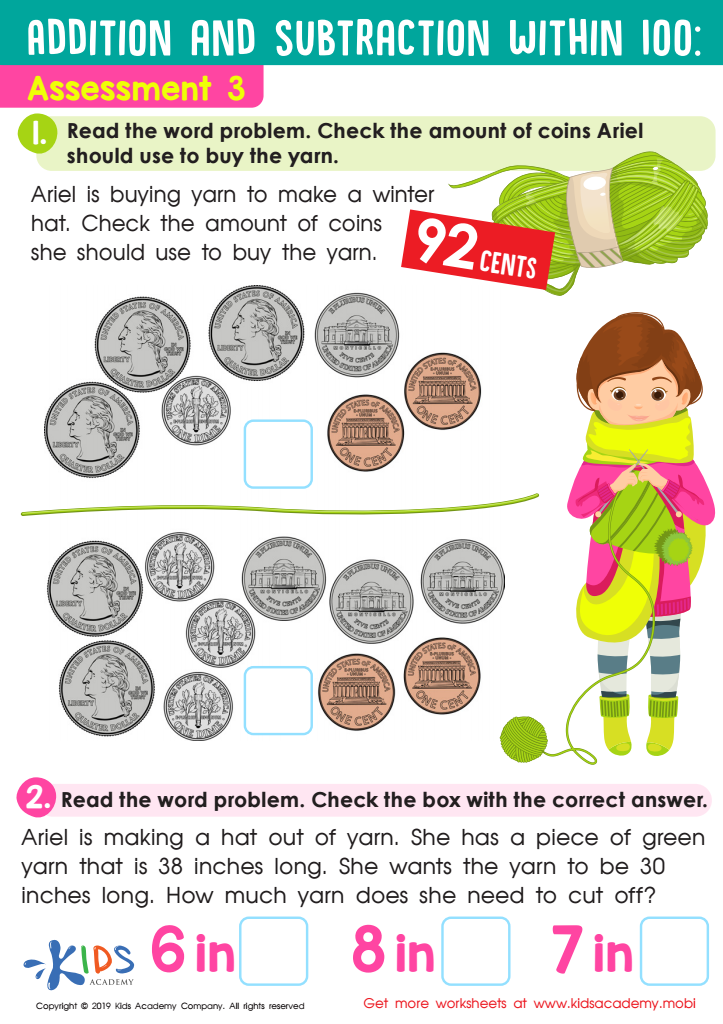
Assessment 3 Math Worksheet
 Assign to My Students
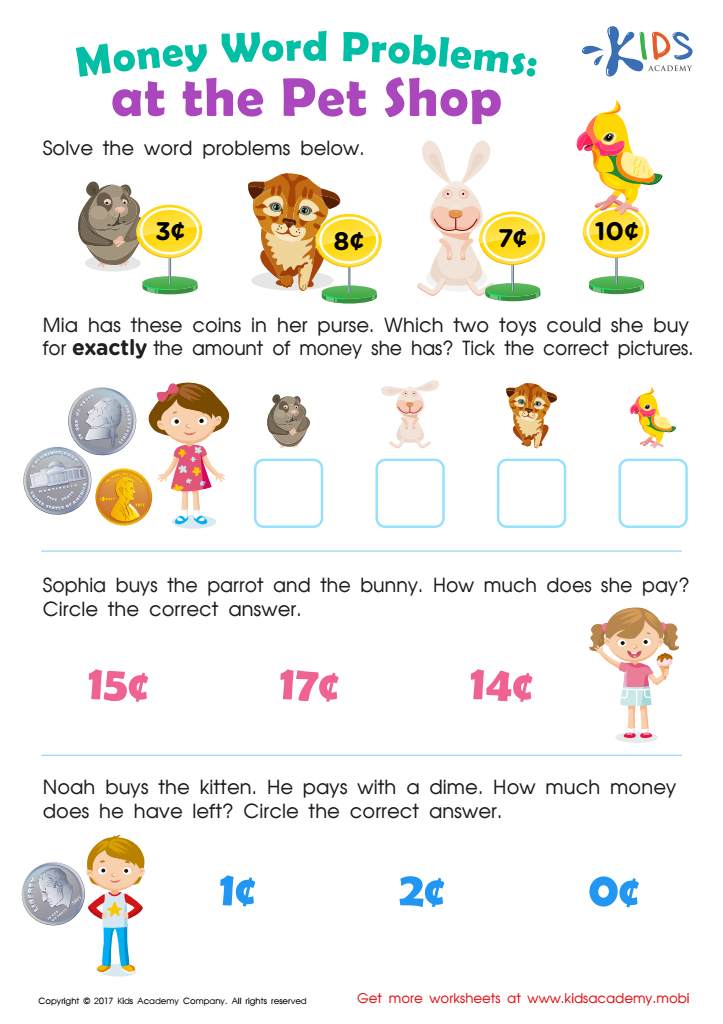
Pet Shop Worksheet
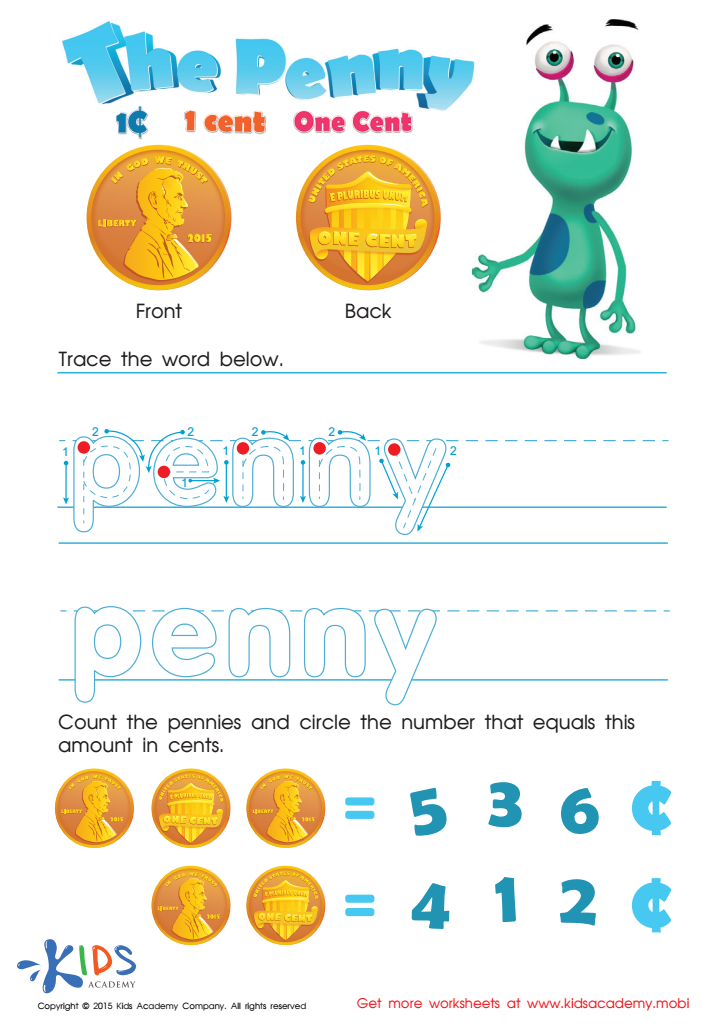
One Cent or the Penny Money Worksheet
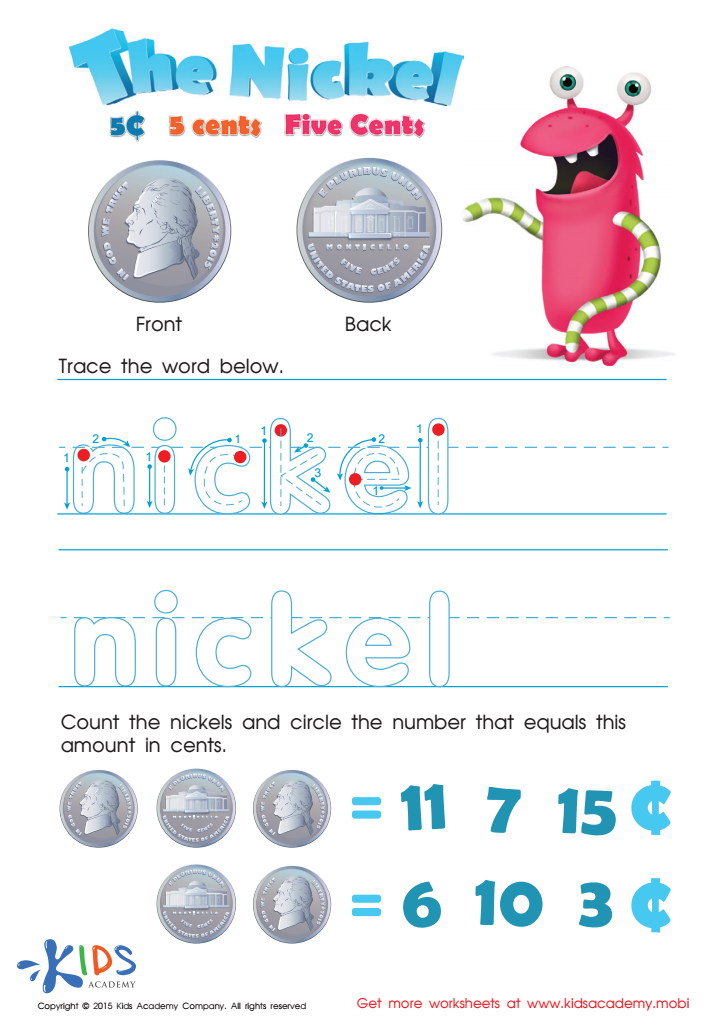
Five Cents or the Nickel Money Worksheet
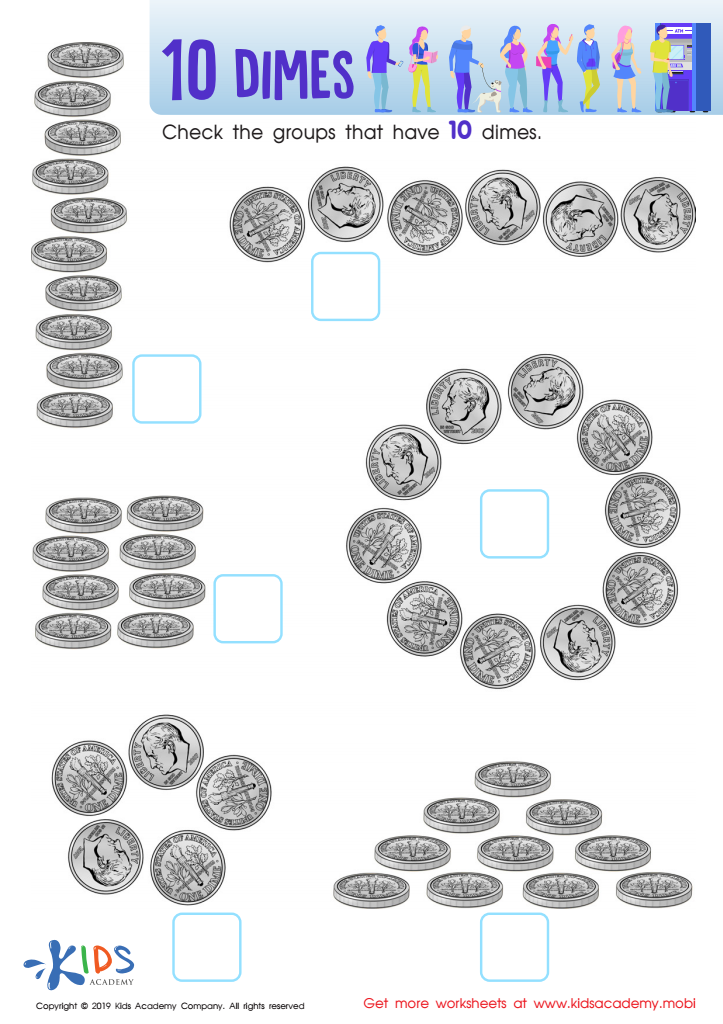
10 Dimes Worksheet








Counting skills, particularly related to money, are foundational for children aged 3-8 as they lay the groundwork for essential mathematical concepts and everyday life competencies. Starting early, children begin to understand the value of different denominations and learn to count objects, skills that are crucial for making informed decisions as they grow.
Parents and teachers should care about these skills because they foster both numerical literacy and practical financial awareness. Money-related activities help children grasp the concept of quantities, addition, and subtraction in a contextual way, making math more relevant and engaging. For instance, role-playing shop scenarios can excite a child's interest in numbers and developmentally encourage them to interact with currency confidently.
Moreover, instilling strong counting and money management skills from a young age prepares children for later financial responsibilities. As they learn how to budget their allowances or understand spending, they become more adept at making thoughtful choices.
Ultimately, these skills contribute to fostering independence, problem-solving abilities, and critical thinking, ensuring children not only excel in math but also navigate life’s complexities effectively. By engaging with counting and money activities, parents and teachers equip young learners with tools for future success.








